

Yoga asanas are the physical postures of yoga, and the easiest way to make sense of the hundreds of them is to sort them into six families: standing, seated, supine, prone, inversions and balances. Each family does a different job for your body. Once you know which job each one does, you can read any class plan, build a balanced home session, and decide which poses to approach carefully. This guide gives you that map, with tables you can screenshot.
What are the main categories of yoga asanas?
Yoga asanas fall into six main categories: standing poses build leg strength and posture, seated poses open the hips and prepare you for breathing practice, supine poses (on the back) release the spine, prone poses (on the belly) strengthen the back, inversions reverse the body’s position, and balances build focus and stability.
| Category | Main purpose | Common examples | Easy to start? | Be careful if |
|---|---|---|---|---|
| Standing | Leg strength, hips, posture, warming up | Tadasana, Trikonasana, Virabhadrasana, Utkatasana | Yes | You have sore knees; keep the bend shallow |
| Seated | Hip and hamstring flexibility, calm sitting, twists | Sukhasana, Dandasana, Paschimottanasana, Ardha Matsyendrasana | Yes, with a folded blanket under the hips | Hips or lower back are tight; sit on a cushion |
| Supine (on the back) | Spine release, gentle core, relaxation | Setu Bandhasana, Supta Baddha Konasana, Apanasana, Shavasana | Yes | You are late in pregnancy; avoid lying flat for long |
| Prone (on the belly) | Back-body strength, chest opening | Bhujangasana, Shalabhasana, Dhanurasana | Moderate | You have back pain, a recent abdominal surgery, or are pregnant |
| Inversions | Circulation, shoulder strength, a change of perspective | Viparita Karani, Adho Mukha Svanasana, Sarvangasana, Sirsasana | Only the gentle versions | You have high blood pressure, neck problems, glaucoma or are pregnant |
| Balances | Focus, ankle and core stability | Vrksasana, Garudasana, Natarajasana, Bakasana | Moderate; use a wall | You feel dizzy or have an ankle injury |
Forward folds, backbends and twists are not separate families. They are movements that appear inside the six categories. A twist can be done standing, seated or lying down, which is why a good session mixes the families and the movements.
What does asana actually mean?
Asana is a Sanskrit word meaning “seat”. In the Yoga Sutras, Patanjali describes it as a posture that is steady and comfortable. So a good asana is not the deepest or most dramatic shape, but one you can hold calmly while breathing evenly. Modern classes use the word for every pose.
That definition is useful as a test. If your breath is jerky, your face is tight or your joints complain, the pose is not yet right for you, however it looks on Instagram. Asana is the third of the eight limbs in the Yoga Sutras of Patanjali, placed there to prepare the body for sitting still. Different traditions teach the same poses differently, which is why types of yoga can feel like completely different workouts.
Walkthrough: what each family feels like and how to begin
Standing asanas. Start here. Tadasana (Mountain Pose) teaches you to stack ankles, hips and shoulders, and nearly every other standing pose is a variation of that alignment. Hold each pose for about 5 breaths, roughly 30 seconds. Our guide to standing yoga poses goes deeper into this family.
Seated asanas. These ask for patience, not strength. Sit on a folded blanket so your knees fall below your hips, and stay for 5 to 10 breaths. If your lower back rounds, raise the seat higher.
Supine asanas. Lying poses are the gentlest way to feel your spine. Bridge Pose and knees-to-chest are good entry points, and the last pose of nearly every class, Shavasana, belongs here. Give it 3 to 5 minutes at least.
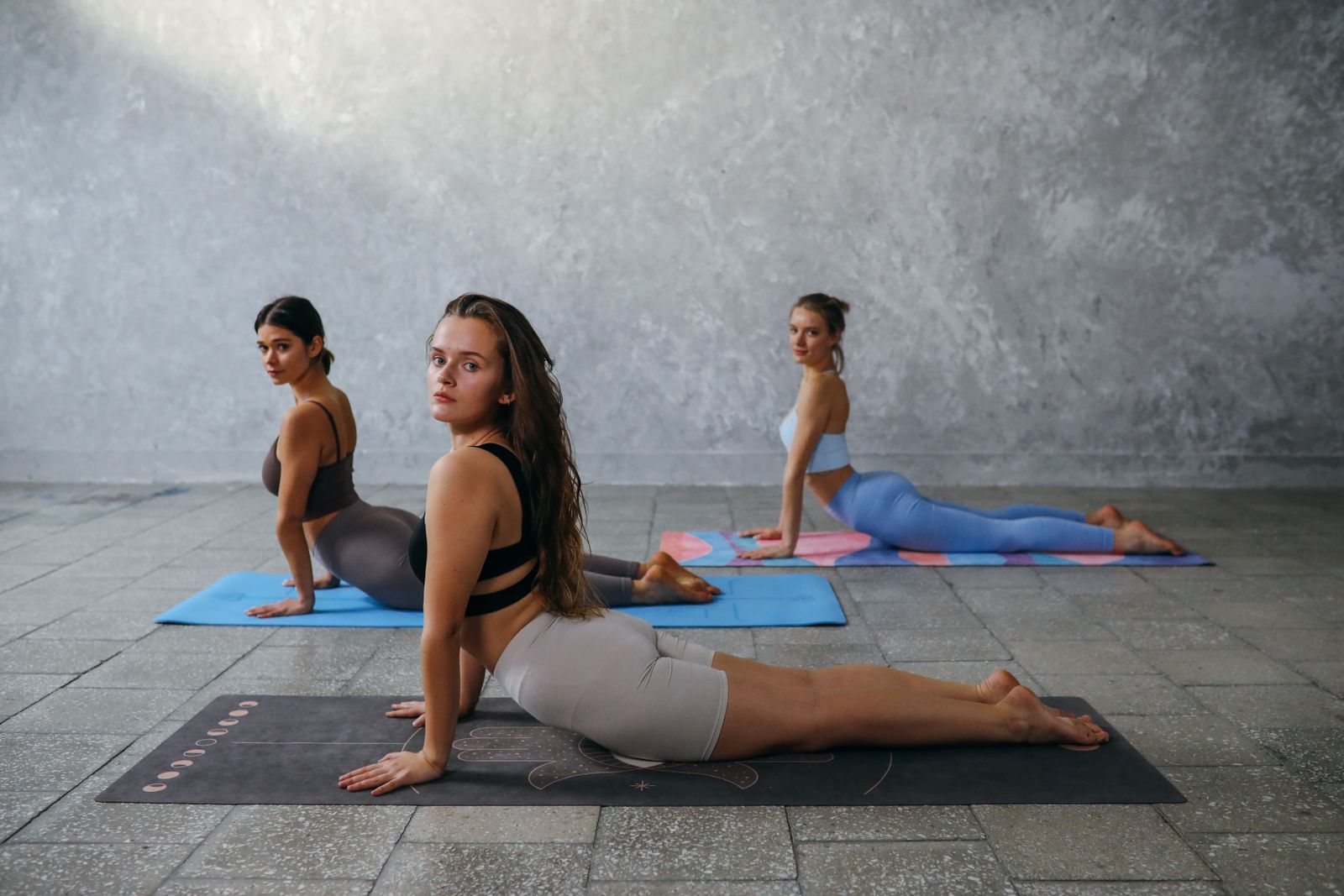
Prone asanas. Cobra, Locust and Bow strengthen the muscles along the back that fight desk slouch. Lift only as high as you can with a long neck, hold 3 to 5 breaths, and rest between rounds.
Inversions. The gentlest, Legs-Up-the-Wall, is just lying with your hips near a wall and legs resting up it for 2 to 5 minutes. Downward Dog counts too. Shoulder stand and headstand put weight on the neck and are not for beginners without a teacher.
Balances. Practise Tree Pose beside a wall, with the lifted foot on the calf or inner thigh, never on the knee. Fix your eyes on one still point and breathe. Wobbling is the practice, not a failure.
A 40-minute session built from the six families
The order matters as much as the poses. Warm joints first, work the big standing muscles, then go to the floor and finish quietly. This map works for a class or a home routine and fits well into hatha yoga, where steady pacing is the norm.
| Stage | Minutes | Category | Example poses | Breaths per pose |
|---|---|---|---|---|
| 1. Warm-up | 5 | Spine and joints | Cat-Cow, neck and shoulder rolls, side bends | 8-10 slow rounds |
| 2. Build heat | 10 | Standing | Tadasana, Utkatasana, Virabhadrasana II, Trikonasana | 5 |
| 3. Focus | 5 | Balance | Vrksasana, Garudasana | 5 each side |
| 4. Back body | 5 | Prone | Bhujangasana, Shalabhasana | 3-5, two rounds |
| 5. Hips and twists | 7 | Seated | Dandasana, Paschimottanasana, Ardha Matsyendrasana | 5-8 |
| 6. Reset | 3 | Supine or gentle inversion | Setu Bandhasana, Legs-Up-the-Wall | 5-10 |
| 7. Rest | 5 | Supine | Shavasana | Natural breath |
Experienced practitioners add Sun Salutations in stage 2 or stretch the whole session to an hour. If you are just starting, the yoga for beginners guide has a gentler progression.
Which asana family should you lean on for your goal?
Choose by what your week lacks. If you sit all day, emphasise prone and standing poses; if you feel wired, emphasise supine and seated; if you want strength, hold standing poses longer. Whatever your goal, keep at least four of the six families in every week so nothing is neglected.
| Your situation | Lean on | Do less of | Weekly target |
|---|---|---|---|
| Desk job, stiff shoulders and hips | Standing, prone, seated hip openers | Long forward folds | 3-4 sessions of 20-30 min |
| Busy mind, poor sleep | Supine, seated, gentle inversions | Fast, heat-building flows late at night | Daily 10-15 min in the evening |
| Want more strength | Standing holds, balances, prone | Only passive stretching | 3 sessions of 30-40 min |
| Stiff, new to exercise | Supine, seated with props, easy standing | Inversions, deep backbends | 3 sessions of 15-20 min |
| Over 50 or returning after a break | Standing near a wall or chair, supine | Headstand, deep twists | 3-4 sessions of 20-30 min |
For general reasons to keep going, read the benefits of yoga.
Myth: harder and more advanced poses are better poses
An advanced asana is not a better asana. It is only a more demanding one, and it carries more risk if you rush. A well-held Tadasana with even weight on both feet teaches more than a wobbly headstand done for a photo.
Another myth says you must be flexible first. Flexibility comes from practice, and props such as blocks, belts and folded blankets exist to meet you where you are. Using them is a skill, not a shortcut.
A third myth is that more poses mean a better practice. A working vocabulary of 15 to 25 poses, repeated and refined, takes most people a long way.
Breath and the number 84: two things people get wrong
Breath is not an extra. In every family, inhale to lengthen the spine and exhale to fold, twist or deepen. If you cannot breathe smoothly through the nose, come out of the pose by a third. A simple rule is to keep the exhale at least as long as the inhale, which usually means 4 to 5 seconds each way for a relaxed adult.
The number 84 comes from tradition. Texts such as the Hatha Yoga Pradipika speak of 84 significant asanas, but they do not agree on which 84, and the figure is best read as symbolic of completeness rather than a checklist. Most modern teachers rely on a working set of a few dozen poses and their variations. You do not need to collect all 84 to have a complete practice.
Troubleshooting: when a pose hurts or will not happen
- Wrists ache in Downward Dog: spread the fingers wide, press the knuckles down, and bend the knees. Try forearms on a bolster or do the pose with hands on a wall.
- Knees complain in standing or seated poses: shorten the stance, keep the knee over the ankle, and sit on a higher cushion instead of forcing cross-legged.
- Lower back pinches in backbends: lower the lift, lengthen the tailbone, and draw the belly gently in. Stop if pain is sharp or shoots down a leg.
- Cannot balance: stand beside a wall, shorten the hold to 3 breaths, and look at a fixed point.
- Dizziness after getting up: come up slowly, rest in Child’s Pose, and drink water.
Pain that is sharp, burning, tingling or lasting is a signal to stop, not push. See a doctor or physiotherapist before starting if you have high blood pressure, glaucoma, a hernia, recent surgery, a spinal condition or an injury, and before any inversion if you have neck problems. In pregnancy, join a class designed for it, such as prenatal yoga, and slower styles such as restorative yoga are often kinder while you recover from illness or injury.
If you want names and spellings to match what the teacher says, bookmark the guide to yoga poses names, and for a more flowing style, vinyasa yoga links poses with breath.
Practise with someone who can see you
Pictures and tables tell you what a pose looks like, but not whether your hips, knees and shoulders are lined up. Join a live session through our online yoga classes, mention any injuries upfront, and ask the teacher to check your standing alignment in the first week.
Frequently asked questions
What are the main types of yoga asanas?
The six main types are standing, seated, supine, prone, inversions and balances. Standing poses build strength, seated poses open the hips, supine and prone poses work the spine, inversions reverse the body’s position, and balances build focus. Twists, forward folds and backbends appear within these families.
Which yoga asana is best for beginners?
Tadasana (Mountain Pose) is the best first asana because it teaches alignment and breathing without strain. Balasana (Child’s Pose), Sukhasana (Easy Pose) and Cat-Cow are also gentle starting points. Use a folded blanket or block if any pose feels tight.
How long should I hold a yoga asana?
Most beginners hold standing and seated poses for about 5 breaths, or roughly 30 seconds, and backbends for 3 to 5 breaths. Resting poses such as Shavasana last 3 to 5 minutes or longer. Shorten any hold if your breath becomes strained.
How many days a week should I practise asanas?
Three to four sessions of 20 to 40 minutes a week is a reasonable start for most healthy adults. Short daily sessions of 10 to 15 minutes also work well. Consistency over several weeks matters more than the length of any one session.
Are inversions safe for everyone?
No. Gentle inversions such as Legs-Up-the-Wall are suitable for many people, but headstand and shoulder stand are not for beginners without a teacher. Avoid them or check with a doctor first if you have high blood pressure, neck problems, glaucoma, or are pregnant.


