

Yoga for kids works best when it looks like play: a few animal poses, slow belly breaths, a game or two and a quiet minute at the end. This guide is for parents of children aged 4 to 12. It covers session lengths by age, games, home supervision, poses to skip, and when to ask your paediatrician first. For a wider overview, see yoga for children is a good companion read.
What Is Yoga for Kids, and When Can Children Start?
Yoga for kids is a gentle, play-based version of yoga using short poses, animal names, breathing games and a brief rest. Children can start from about age 4 with simple imitation games. Sessions of 8 to 30 minutes, depending on age, two or three times a week, suit most families.
Unlike an adult class, it does not chase flexibility or perfect shapes; the aim is to move, breathe slowly and enjoy it. Poses are named after animals a child already knows, and holds last only a few breaths. It is a supplement to active play and sport, not a replacement for either, and it is not a treatment for any health condition.
How Long Should a Kids Yoga Session Be at Each Age?
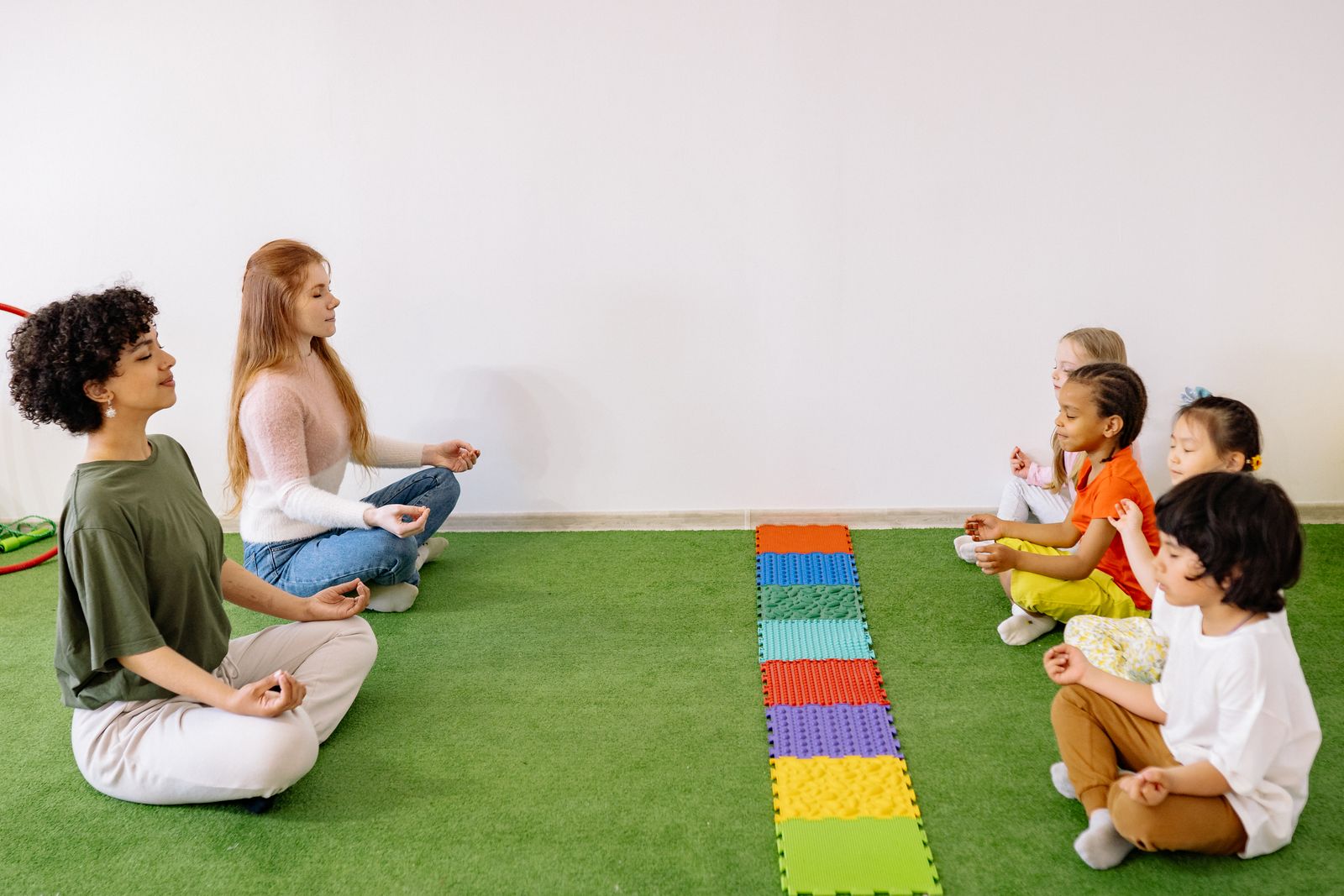
For ages 4 to 5, aim for roughly 8 to 12 minutes. Ages 6 to 7 can manage 10 to 15 minutes, ages 8 to 9 about 15 to 20 minutes, and ages 10 to 12 up to 20 to 30 minutes. Hold each pose for only 2 to 6 breaths, and stop earlier if attention fades.
These are starting points, not targets. A restless child may manage half the time, and stopping while they still want more is the best way to get a request for tomorrow.
| Age | Session length | Hold each pose | Poses per session | Closing rest |
|---|---|---|---|---|
| 4 to 5 years | About 8 to 12 min | 2 to 3 breaths | 4 to 6, mostly animal games | About 1 min |
| 6 to 7 years | About 10 to 15 min | 3 to 4 breaths | 5 to 7 | 1 to 2 min |
| 8 to 9 years | About 15 to 20 min | 4 to 5 breaths | 6 to 8, one balance pose | About 2 min |
| 10 to 12 years | About 20 to 30 min | 5 to 6 breaths | 8 to 10, simple flows | 2 to 3 min |
Which Animal-Pose Games Work Best?
Animal-pose games work because a child imitates a creature instead of copying a shape. Cat-cow, snake, puppy, flamingo and butterfly are the easiest to begin with. Each takes under a minute, needs no equipment, and can be linked into a short story such as a walk through a forest.
Pick three or four from the table below, link them with a simple storyline, and let your child choose the order. These simple yoga poses for kids are a starter set; our guide to yoga poses for kids goes through more shapes and variations.
| Animal pose | What the child does | Game idea | Safety note |
|---|---|---|---|
| Cat and cow | On hands and knees, round the back, then lift the chest slowly | Meow on the round, moo on the arch | Move slowly, no forcing the arch |
| Snake (low cobra) | Lie on the tummy, hands under shoulders, lift the chest a little | Hiss slowly on the breath out | Keep hips on the floor and the lift small |
| Puppy (downward dog) | Hands and feet down, hips up, knees soft | Wag the tail, hold for 3 breaths | Bend the knees freely; a short hold only |
| Flamingo (tree) | Stand on one leg, other foot resting on the calf or ankle | Freeze when the music stops | Practise near a wall; foot never on the knee |
| Butterfly | Sit with soles together, let the knees flap gently | Fly slowly, then land and rest | Never press the knees down |
| Lion breath | Breathe in through the nose, then roar out with the tongue out | Roar to wake the jungle, 2 or 3 times | Stop if the child feels dizzy |
| Bee breath | Hum softly on the breath out, hands over the ears if comfortable | Buzz to find the quietest bee | Keep the hum soft, never forced |
A 15-Minute Walkthrough for Ages 6 to 9
Here is a session you can run tonight, with roughly timed steps. Read the story aloud in a calm voice.
- Arrive (1 minute). Sit cross-legged or on a cushion. Place one hand on the belly and take three slow breaths in through the nose.
- Warm up (2 minutes). Cat and cow on hands and knees, then gentle side-to-side rocking like a boat.
- Animal trail (6 minutes). Snake, puppy, butterfly, then flamingo on each leg. Hold each for 3 to 5 breaths and let the child choose the order.
- Freeze game (3 minutes). Play a short song. When it stops, the child freezes in any animal shape they like and you guess which one.
- Rest (2 minutes). Lie down with a soft toy on the belly and watch it rise and fall. Dim the lights and keep your voice low.
- Close (1 minute). Sit up, take one big breath together, and finish with a thank-you to the animals.
For younger children, cut the trail to three animals. If you want a structured routine to build from, see yoga for beginners, and for setting up a corner at home, yoga at home.
Myth: Kids Need Perfect Poses and Long Holds
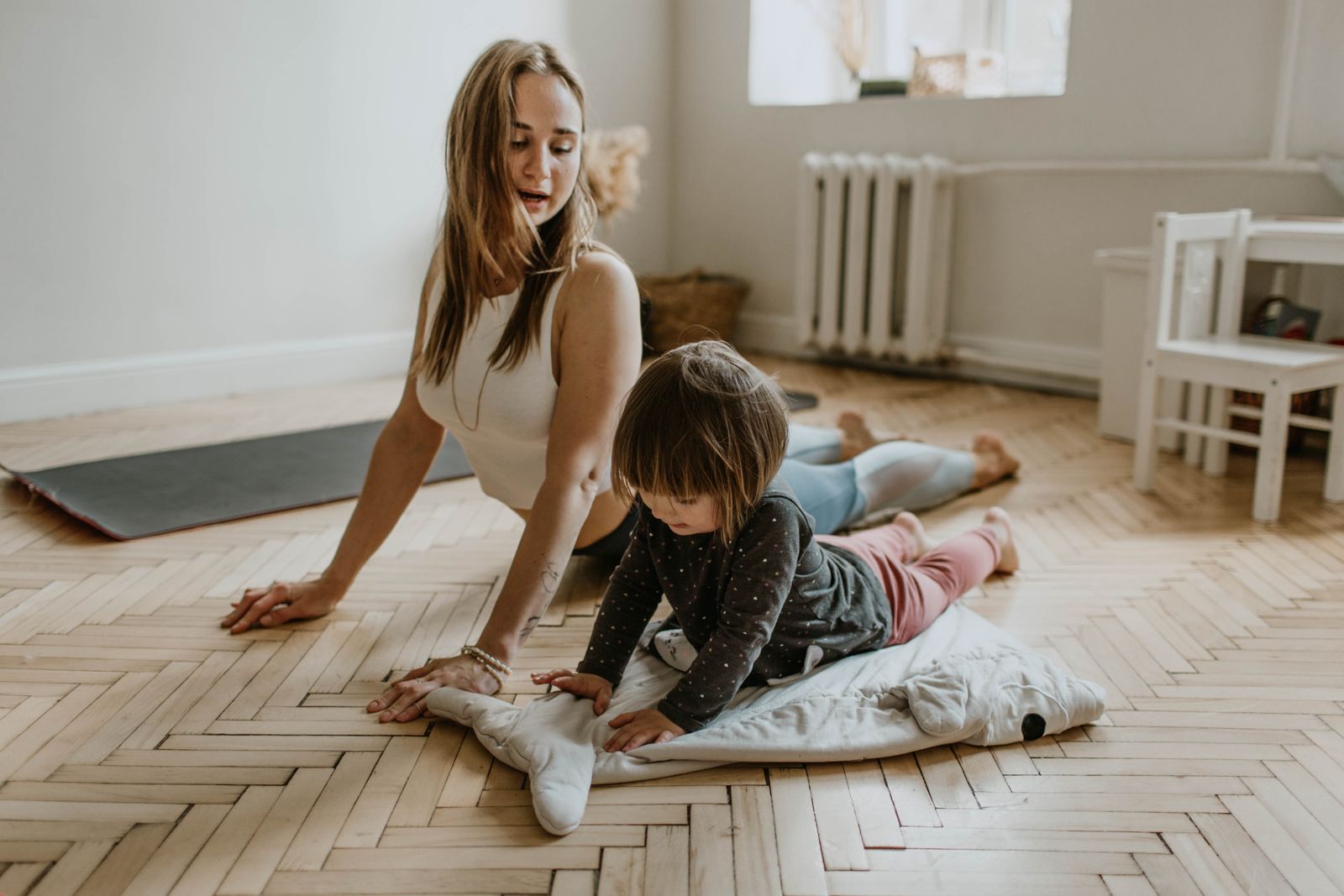
Parents often bring this idea from adult classes. Children do not need deep stretches, perfect alignment or minutes of stillness. The point is movement, breath awareness and enjoyment, and constant correction turns play into a chore.
A second myth is that yoga can stand in for outdoor play. Children are commonly advised to get about 60 minutes of active play a day, and a 15-minute mat session does not replace cricket in the gully, cycling or a park.
A third myth is that children should copy adult styles. A fast vinyasa yoga class with long holds and Sanskrit cues will lose most children within ten minutes.
How Do You Keep Kids Yoga Safe at Home?
Stay in the room and watch every session, especially for ages 4 to 8. Use a non-slip mat on a clear floor, bare feet, and loose clothing. Never push a child deeper into a stretch. Stop at the first sign of pain, dizziness or breathlessness, and leave out any pose they dislike.
A few practical rules cover most situations:
- Adult supervision every time. Be present, not distracted by your phone.
- No forcing stretches. Stop at a mild pull. Never press a child’s knees, back or legs deeper, and never let siblings push each other.
- Clear the space. Move sharp corners and loose rugs aside, and keep a wall nearby for balance poses.
- Not straight after a meal. Wait roughly 1 to 2 hours after a full meal.
- Keep breathing natural. Slow belly breathing is enough. Skip breath-holding and fast forceful breathing for children.
- Partner poses with care. Pair children of similar size and never let one bear weight on another’s back or neck.
Which Poses Should Children Avoid?
Skip headstands, shoulder stands, handstands and plough pose for children of all ages in this range. Also avoid deep backbends such as full wheel pose, forced splits, long breath-holds and fast forceful breathing. These put load on the neck, spine and joints or on breathing, with little benefit at this age.
| Practice | Verdict for ages 4 to 12 | Do this instead |
|---|---|---|
| Headstand, shoulder stand, handstand, plough | Avoid | Puppy pose with soft knees, held for only a few breaths |
| Wheel and other deep backbends | Avoid | Low snake pose, with a small, comfortable lift |
| Forced splits or being pushed into a stretch | Never | Stretch until there is a mild pull, then ease back by a little |
| Breath-holding or fast, forceful breathing | Avoid | Slow belly breathing, lion breath, soft bee breath |
| Long silent sitting | Keep very short | One to two minutes of lying rest with a soft toy on the belly |
| Downward dog, cat-cow, tree, butterfly | Fine, with short holds | Soft knees, near a wall for balance, hold for 2 to 6 breaths |
What If My Child Gets Bored, Silly or Refuses?
That is normal and usually means the session is too long or too serious. Shorten it, hand control to the child, and add a game. If they flatly refuse, stop and try another day.
- Loses interest after 5 minutes: cut the session to the animal trail and rest only, and plan 8 minutes next time.
- Siblings compete: give each a turn at choosing the next animal, and keep poses non-competitive.
- Wants to skip it: offer a choice between two animals instead of asking whether to do yoga at all.
Children who like music and big movement may enjoy a dance class more, and that is a perfectly good alternative. Our page on Zumba for kids describes it.
Yoga for Kids in Hindi and in Indian Homes
Many families teach yoga for kids in Hindi or another home language, and that works well. You can use Hindi animal names and rhymes alongside traditional pose names such as Vrikshasana for the tree. Bhramari, the bee breath, is a natural fit because the humming sound is fun.
Grandparents can join in as the supervising adult. Keep sessions before dinner rather than late at night, and plan around school and tuition timings. For children heading towards board-exam years, our guide to yoga for students picks up from where this one stops. For the wider picture, see the benefits of yoga.
If your child often feels worried, a short, calm breathing routine can be a pleasant daily habit, and the general breathing ideas in yoga for anxiety may help you understand them. It is not a treatment, though, and persistent worry is worth raising with your doctor.
Who Should Ask a Paediatrician Before Starting?
Ask your paediatrician before starting if your child has any diagnosed health condition or recent injury. This is especially important with a heart condition, asthma, epilepsy, a spine or bone problem, a recent fracture or surgery, or frequent dizziness. Yoga does not replace treatment, and a doctor can tell you which movements to avoid.
Check first if your child has:
- a heart condition, or fainting during exercise
- asthma, especially after a recent flare-up (always keep prescribed inhalers within reach)
- epilepsy or any history of seizures
- scoliosis, a back or neck problem, or very loose, easily bending joints
- a recent sprain, fracture or surgery
- frequent dizziness, balance problems, or an ear or eye condition that affects balance
- a developmental or neurological diagnosis, in which case ask the treating team what format suits the child
- fever, infection or any illness at the moment
See your doctor promptly if a child has pain that lasts after a session, repeated dizziness, headaches, unusual tiredness, or trouble breathing during practice. Seek urgent medical help for chest pain, fainting, or serious breathing difficulty. This page is general information and is not medical advice for your child. Never change or stop your child’s medicines because of yoga, and follow your doctor’s advice first.
Frequently Asked Questions About Yoga for Kids
What is the best age to start yoga for kids?
From about 4 years, children can follow simple animal games for 8 to 12 minutes. Ages 6 and over cope with slightly longer sessions and short breathing practices. There is no strict minimum, but the format must match the age, and an adult should be present.
How long should a kids yoga session be?
Roughly 8 to 12 minutes for ages 4 to 5, 10 to 15 minutes for ages 6 to 7, 15 to 20 minutes for ages 8 to 9, and up to 20 to 30 minutes for ages 10 to 12. Two or three sessions a week are enough.
Is yoga safe for children?
Gentle, supervised, play-based yoga is generally considered safe for most healthy children. Avoid headstands, deep backbends and forced stretches, keep holds short, and stop if there is pain or dizziness. Ask a paediatrician first if your child has a health condition.
Can kids do headstands or other inversions?
It is best to skip headstands, shoulder stands and handstands for young children, since they load the neck and spine. Puppy pose with soft knees is a far gentler alternative.
Can yoga treat ADHD, autism or asthma in children?
No. Yoga is not a treatment for ADHD, autism, asthma or any other condition, and it should never replace medical care or prescribed medicines. If your child has a diagnosis, ask their doctor or treating team whether gentle yoga is suitable and how to adapt it.
Next step: Try one 10-minute animal-pose session this week. If you want a teacher to guide it, read our notes on online yoga classes for kids, then explore FitStrot’s online yoga classes and ask the team which format fits your child’s age.


