

Starting yoga for children is not about shrinking an adult class. It is play with structure: animal poses, slow breathing games, short stories and a calm ending, all sized to a child’s attention span. For most Indian families the easiest start is 10 to 15 minutes at home on a clean cotton rug, with a parent joining in. This guide covers what to do at each age, which poses work as games, how to keep sessions safe, and what your role as the adult really is.
What does yoga for children actually involve?
Yoga for children is a short, playful mix of simple poses, slow breathing games and a quiet finish, usually 10 to 30 minutes depending on age. Poses are named after animals or objects, holds last only three to five breaths, and the adult leads by demonstrating rather than correcting. The aim is body awareness and calm, not flexibility.
A typical home session has four parts. First comes a minute of “arriving”, where the child sits and notices their breath. Then a few animal poses, a short story or game that links them, and finally lying down quietly for a minute or two. Sanskrit names can wait; “cat”, “cobra” and “tree” are enough for a six-year-old.
The difference from ordinary playtime is mostly pace: nothing is scored or timed. If you are new to the practice yourself, our guide to yoga for beginners explains the basic postures at an adult pace, which helps you understand what you are asking your child to try. For a wider view of why people practise at all, see the benefits of yoga.
What age can children start yoga, and what changes at each stage?
Children can start gentle yoga from about age two or three, as breathing games and very simple poses led by a parent. Sessions grow from roughly 5 to 10 minutes for toddlers to 30 to 45 minutes for teenagers. Younger children need play and stories; older ones can handle longer holds and quieter breathing practice.
There is no single “right” age, and every child develops at their own pace. Use the table as a rough guide and let your child’s mood set the real limit.
| Age band | Session length | What it looks like | How the adult helps |
|---|---|---|---|
| 2 to 3 years (yoga for toddlers) | 5 to 10 minutes | Copying animals, belly breathing with a soft toy on the tummy, rolling and stretching | Join in on the floor, keep it silly, stop the moment interest fades |
| 4 to 5 years (yoga for preschoolers) | 10 to 15 minutes | Story-led flow of 4 to 5 poses, balloon breathing, simple balance games | Demonstrate each pose, offer choices (“cat or cow first?”), praise effort |
| 6 to 10 years | 20 to 30 minutes | Longer sequences, partner poses, counting breaths, a short rest at the end | Watch form, remind them to breathe, keep holds to 3 to 5 breaths |
| 11 to 17 years (yoga for teenagers) | 30 to 45 minutes | Standing poses, gentle flows, quiet breathing, close to a beginner adult class | Offer, do not insist; never push for flexibility |
As children move into school-going years and exam pressure, practice can shift towards the themes in our guide to yoga for students.
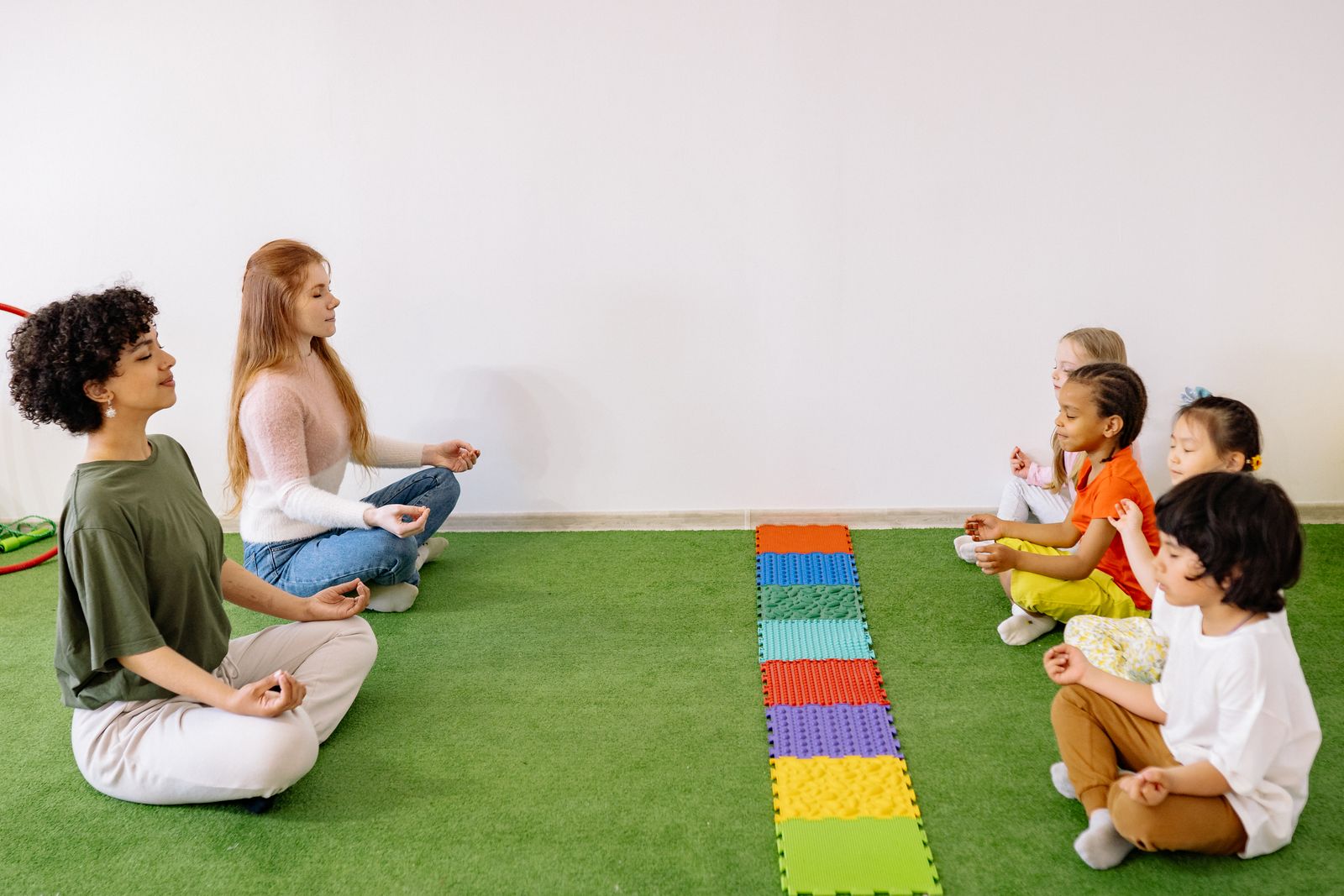
Which poses work best as games for young children?
The best poses for young children are simple, low-risk and easy to turn into a game: child’s pose, cat-cow, downward dog, tree, butterfly and star. Hold each for three to five breaths, name it after something familiar, and skip anything that needs a deep stretch, a long hold or going upside down.
| Pose | Game name | Hold | Safety cue |
|---|---|---|---|
| Cat-cow | Angry cat, happy cow | 5 to 8 slow rounds | Move gently; wrists under shoulders, knees under hips |
| Downward dog | Stretching dog | 3 breaths | Knees can stay soft and bent; it need not look like an adult’s |
| Tree | Tall tree in the wind | 3 to 5 breaths per side | Foot on the calf or ankle, never on the knee; stand near a wall |
| Butterfly | Flapping wings | 5 breaths | Sit tall; do not press the knees down |
| Cobra | Friendly snake | 3 breaths | Keep hands light, chest lifts only a little, no straining |
| Child’s pose | Sleeping seed | As long as comfortable | Use it any time they need a break |
| Star | Twinkling star | 3 to 5 breaths | Feet wide but comfortable, arms out, smile |
For a bigger library of poses with sequencing ideas, read our guide to yoga poses for kids, and see yoga for kids for a general overview. As for style, hatha yoga suits most young beginners because the holds are short and the pace is steady. Faster, flowing styles like vinyasa yoga can be added later for older children who enjoy movement.
Myth check: “Children are so flexible that yoga cannot hurt them”
This is only half true. Young children often move easily, but their bones and joints are still developing, and loose joints are not the same as strong, protected ones. Being flexible makes it easier to go too far without noticing. Two related myths are worth correcting too.
- “A deeper pose means better yoga.” For children, depth is irrelevant. A pose is done well when the child can breathe comfortably and smile.
- “Headstands and shoulder stands are the fun part.” For young children, skip them. Keep practice on the floor and on two feet.
- “Breathing practices are all the same.” Forceful or breath-holding techniques are for adults under guidance. Children should only do soft, natural breathing games such as balloon breath.
The safe version is simple: gentle stretches, short holds, an adult nearby and a child who is free to stop at any point.
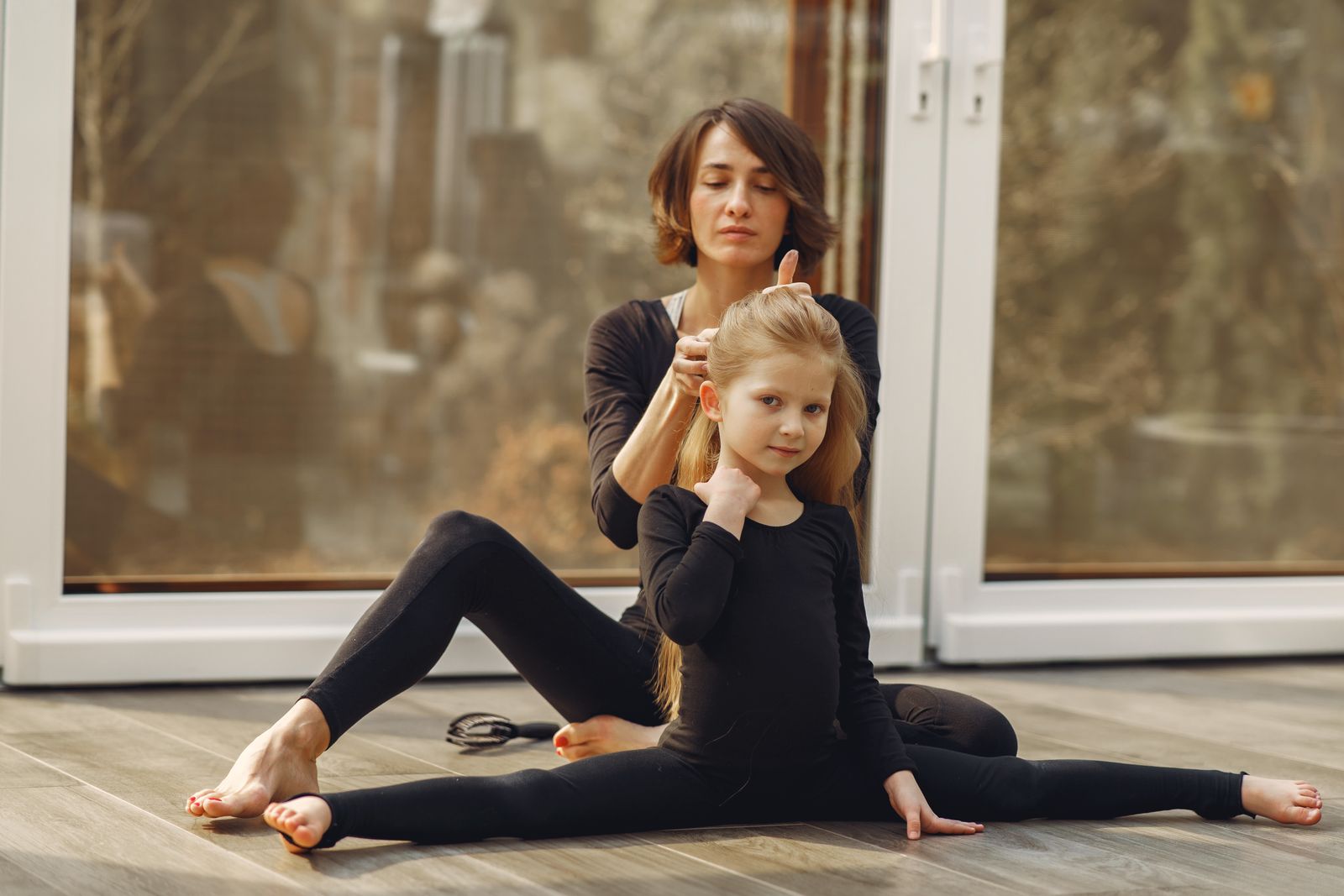
How do you run a first yoga session for children at home?
Pick a quiet, clear floor space, wait roughly one to two hours after a heavy meal, and keep the first session to 10 to 15 minutes. Start with three slow breaths, do four or five animal poses for three to five breaths each, and finish lying down quietly for one to two minutes.
Here is a ten-minute walkthrough you can read aloud as a story.
- Arrive (1 minute). Sit cross-legged or on a cushion. Put a hand on the tummy and feel it rise and fall for three breaths.
- Wake up the body (2 minutes). Reach up like a tall tree, then fold forward and “melt” like ice cream, slowly and without bouncing.
- Jungle walk (4 minutes). Cat, cow, dog, cobra and butterfly, three to five breaths each, with a tiny story connecting them.
- Balance game (1 minute). Tree pose beside a wall, a few breaths on each side. Wobbling is part of the fun.
- Starfish rest (2 minutes). Lie on the back with arms and legs spread. Ask them to listen for the quietest sound they can hear.
This week-one plan keeps things light.
| Day | Focus | Time |
|---|---|---|
| Day 1 | Belly breathing and starfish rest only | 5 minutes |
| Day 2 | Cat-cow and child’s pose with a story | 8 to 10 minutes |
| Day 3 | Rest day, or just three calm breaths before bed | 2 minutes |
| Day 4 | Tree, star and butterfly | 10 minutes |
| Day 5 | Full ten-minute walkthrough above | 10 to 15 minutes |
| Day 6 | Child picks and teaches you their favourite poses | 10 minutes |
| Day 7 | Family session, everyone together, then rest | 15 minutes |
After week one, two to three short sessions a week is a realistic rhythm. Consistency matters more than duration, and no routine guarantees results. Quiet breathing practice is also a gentle bridge to meditation for beginners and, later, mindfulness meditation.
What is the parent’s role in children’s yoga?
A parent’s role is to be the safe, playful guide: set up a clear space, join in, demonstrate poses, watch for strain and stop the moment a child is unhappy. You do not need to be an expert. Your calm presence matters more than your pose quality.
- Practise alongside, not above. Children copy what they see.
- Supervise every session. For under-tens especially, an adult should be in the room and watching, particularly during balance poses.
- Prepare the space. A clean cotton dari, folded bedsheet or non-slip mat on a flat floor is enough. Keep furniture and sharp edges clear.
- Praise effort, not shape. “I loved how slowly you breathed” builds a better relationship with movement than “great stretch”.
- Keep it optional. A child who feels forced will link yoga with pressure.
Troubleshooting: when your child will not cooperate
- “I’m bored.” The session is probably too long or too still. Cut it to five minutes and add a story or a game.
- Silliness and giggling. That is normal and often healthy. Join in, then bring the energy down with slow breathing.
- Refusal after a long school day. Try before dinner or on weekend mornings, not when they are tired or hungry. Let them watch first.
- A teenager who rolls their eyes. Offer a choice of online class or a short routine before study. Interest often returns on its own terms.
Is yoga safe for children, and when should you see a doctor?
Yoga is generally considered a gentle activity for healthy children when poses are age-appropriate, holds are short, breathing is natural and an adult supervises. It should never cause pain. If your child has any health condition, check with their paediatrician before starting.
Keep these safety rules in mind.
- Stay within a comfortable stretch. Pain, pinching, dizziness or breathlessness means stop.
- Avoid headstands, shoulder stands, deep backbends and any forced or breath-holding practices.
- Skip yoga when your child has a fever, feels unwell or is recovering from an injury.
- Avoid practising straight after a big meal, and keep water nearby, especially in hot weather.
See your doctor or paediatrician first if your child has asthma or another breathing condition, a heart condition, epilepsy, a joint or spine problem, a recent injury or surgery, a developmental condition, or has been diagnosed with anxiety, ADHD or any other condition. Yoga can sit alongside medical or therapeutic care as a calm daily habit, but it is not a treatment and must never replace advice, therapy or medication from your child’s doctor. If your child is struggling with worry or low mood, our yoga for anxiety guide is an adult-focused starting point, but a professional’s guidance comes first. Please speak to your doctor about any persistent concern.
Can children learn yoga online?
Yes. A live online class lets a child follow an instructor from home, with no travel, in a session of about 20 to 30 minutes. It works best with a parent nearby, a clear floor space and a camera angle that lets the teacher see the child’s posture.
The main advantage is convenience around school and tuition. The main risk is less individual attention, so choose a teacher who talks to children, uses clear safe cues, keeps holds short and never pressures them to perform. Our guide to online yoga classes explains how to compare formats and what to expect in a first session.
Questions parents ask about yoga for children
What is the best age to start yoga for children?
There is no fixed best age. Children can try gentle breathing and animal-pose games from about two or three, with a parent joining in. Structured sequences with balance poses suit ages five and above, and teenagers can follow shorter versions of beginner adult classes.
How long should a children’s yoga session last?
Toddlers do well with 5 to 10 minutes, preschoolers with 10 to 15, and primary-school children with 20 to 30. Teenagers can manage 30 to 45 minutes. Stop earlier if your child loses interest; short, frequent sessions work better than one long weekly class.
Does my child need a yoga mat?
No. A folded cotton dari, thick bedsheet or soft rug on a flat, clean floor works well for beginners. A non-slip mat becomes useful for balance poses as children grow, but it is an optional extra rather than a requirement.
Is yoga better for children than other exercise?
Not better, just different. Running, cycling, swimming and sport build stamina and teamwork, while yoga adds body awareness, calm breathing and gentle mobility. Children are generally best served by a mix of active play and quieter practices like yoga.
Can yoga replace treatment for anxiety or attention problems?
No. Yoga can be a calming daily routine alongside professional care, but it does not replace therapy, medical advice or medication. If you are worried about your child’s mood, focus or behaviour, speak to your paediatrician or a qualified mental health professional first.
Start with one short session this week
If you would like guided, age-appropriate sessions for your family, look at Fitstrot’s online yoga classes and book a trial to see whether the pace suits your child.


