

The yoga mistakes to avoid are mostly small, quiet habits: holding your breath, forcing a stretch, locking joints, skipping the warm-up and comparing yourself with the next mat. None of them looks dramatic in one session, but repeated across weeks they turn into sore knees, cranky wrists and a practice that feels stuck. This guide lists twelve common errors with a fix for each, shows the alignment cues that matter most, and explains when to modify a pose or stop.
What Are the Most Common Yoga Mistakes to Avoid?
The most common yoga mistakes are holding the breath, forcing flexibility, locking the elbows or knees, rounding the back in forward folds, skipping a 5 to 10 minute warm-up, practising straight after a heavy meal, avoiding props, rushing into backbends or inversions, and skipping rest. Each has a simple fix, listed below.
| # | Mistake | What it looks like | Quick fix |
|---|---|---|---|
| 1 | Holding the breath | Jaw tight, shoulders creeping up, breath stops in hard poses | Breathe in and out through the nose; if you cannot, ease the pose |
| 2 | Forcing the stretch | Bouncing, pulling hard on the foot, sharp pinch | Stop at mild tension and hold steadily |
| 3 | Locking elbows or knees | Joints pushed straight and “clicked” back in plank, dog or forward fold | Keep a micro-bend and spread the effort into the muscles |
| 4 | Front knee collapsing in lunges | Knee drifts inward past the big toe side | Track the knee over the second toe; shorten the stance |
| 5 | Rounding the back in folds | Chasing the floor with a curved spine and straight legs | Bend the knees and hinge from the hips |
| 6 | Skipping the warm-up | Jumping into deep folds or backbends cold | Spend 5 to 10 minutes on cat-cow, hip circles and slow sun salutations |
| 7 | Practising on a full stomach | Nausea, cramping or burping in twists | Leave 2 to 3 hours after a full meal |
| 8 | Comparing yourself with others | Copying the deepest version in a video | Choose the version that suits your body today |
| 9 | Avoiding props | Hands hovering above the floor, rounded spine | Use a block, strap or folded blanket without apology |
| 10 | Rushing backbends and inversions | Wheel or headstand attempted in the first weeks | Build up with bridge, cobra and wall-supported work first |
| 11 | Never taking a lighter day | Sore wrists and shoulders from daily intense flows | Keep at least one gentle or rest day each week |
| 12 | Skipping final relaxation | Rolling up the mat straight after the last pose | Lie still for 3 to 5 minutes at the end |
Why Do Yoga Mistakes Matter More When You Practise at Home?
Home practice has no teacher to spot a collapsing knee or tense shoulders, so errors get repeated unchecked. Three sessions a week means roughly 150 repetitions of the same habit in a year. That is why home practitioners need a short self-check routine, which this guide covers further down.
If you follow videos or online yoga classes, remember the instructor often shows the full expression of a pose. Treat that as one option, not the target. Good yoga at home is built on awareness first and depth second.
How Do You Fix Breathing Mistakes in Yoga?
To fix breathing mistakes, breathe through the nose at a steady pace, roughly 4 seconds in and 4 to 6 seconds out, in every pose. If the breath turns jerky or stops, the pose is too intense. Back off by about 10 to 20 percent until the breath smooths out again.
- Check the breath first. Before you chase depth, ask whether you could comfortably say a short sentence in the pose. If not, ease off.
- Lengthen the exhale. A slightly longer out-breath tends to help the shoulders and jaw soften.
- Link breath to movement. In flowing styles such as Vinyasa yoga, inhale for lifting and opening movements, exhale for folding and lowering.
- Do not force fancy breathing. Advanced breathing practices need guidance; plain smooth nasal breathing is enough while you learn.
Which Yoga Alignment Mistakes Show Up in Popular Poses?
Alignment errors cluster in a handful of poses: Downward Dog, Warrior II, Triangle, standing forward folds, Cobra and Plank. The table gives one cue and one modification for each. The goal is joints stacked so muscles share the load, not a picture-perfect shape.
| Pose | Common mistake | Alignment cue | Modification |
|---|---|---|---|
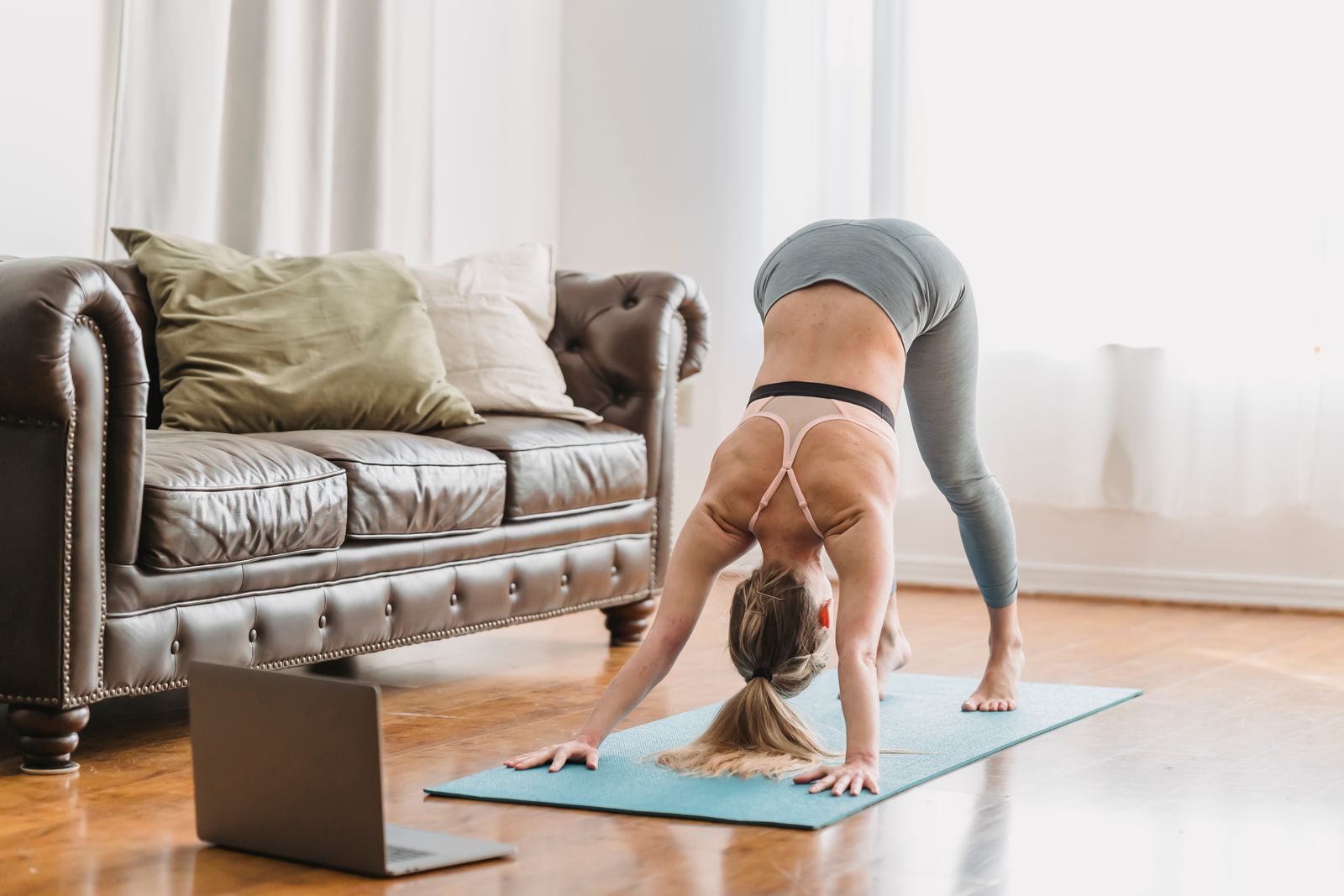
| Downward Dog | Shoulders hunched, heels forced down, spine rounded | Press the floor away, lengthen the spine, heels need not touch | Bend the knees generously; rest hands on a wall if wrists complain |
| Warrior II | Front knee caves in; torso leans over the front leg | Knee over the ankle, pointing toward the second toe; shoulders above hips | Shorten the stance so the front thigh is not forced to level |
| Triangle | Locked front knee, collapsing chest | Soft front knee, long side body, chest open | Rest the lower hand on the shin or a block, not the floor |
| Standing forward fold | Rounding from the waist with locked knees | Hinge at the hips, bend the knees, let the head hang | Hands on a chair or on blocks |
| Cobra (Bhujangasana) | Cranking up with the arms, crunching the neck | Elbows slightly bent, lift from the back muscles, gaze forward | Stay low with forearms down (sphinx) |
| Plank and low push-up | Sagging hips, elbows flaring, hyperextended elbows | Straight line from head to heels, elbows tucked back | Drop the knees to the mat |
| Easy seat (Sukhasana) | Knees far above the hips, rounded lower back | Hips higher than knees, spine tall | Sit on a folded blanket or firm cushion |
Myth Check: Is Deeper Always Better in Yoga?
No. Depth depends mostly on bone shape, joint structure and past injuries, not effort or skill. Two equally committed people can fold very differently. A pose is “right” when it feels steady, the breath flows and nothing pinches, whatever it looks like from outside.
These myths sit behind many of the yoga mistakes beginners make, and they cause real trouble:
- “Props are for people who are bad at yoga.” Experienced practitioners use blocks, straps and bolsters routinely to keep alignment honest.
- “Yoga should never feel like anything.” A mild stretching sensation is normal. Sharp, pinching or shooting pain is not.
- “If I can’t touch my toes, I’m not flexible enough.” Flexibility changes gradually with regular practice; it is not a gate you must pass first. If flexibility is your goal, yoga for flexibility covers a gentle progression.
- “More days means faster progress.” Wrists, shoulders and lower back need recovery, especially with strong flows.
Is It a Mistake to Do Yoga on a Full Stomach?
Yes, for most people. Twists, deep folds and inversions compress the abdomen, so practising right after a full meal can cause nausea or cramps. Leave about 2 to 3 hours after a heavy meal and 30 to 60 minutes after a light snack such as a banana or a few soaked almonds.
In an Indian routine, that means a morning practice before breakfast works well, while an evening session should come well after a heavy lunch or at least 2 hours before dinner. See foods to avoid in yoga for what sits heavily, and read about the best time to do yoga and a steady morning yoga habit if your schedule is flexible. Stiff morning bodies need a longer warm-up, so give them closer to 10 minutes.
Which Poses Need Extra Care, and Who Should Modify?
Inversions, deep backbends, strong twists and long breath holds need extra care for people with neck or back problems, high blood pressure, eye conditions such as glaucoma, pregnancy or recent surgery. If any of these apply, check with your doctor before trying them, and tell your instructor so they can offer alternatives.
- Neck problems: skip headstand and shoulder stand, and do not turn the head in supported variations.
- High blood pressure: avoid long head-below-heart holds and strong breath retention unless your doctor clears them.
- Pregnancy: avoid lying flat on the belly, deep closed twists and strong abdominal compression; practise only with approved, pregnancy-aware guidance.
- Hypermobile joints: stop at the muscle-working range and avoid hanging in locked elbows and knees.
- Recent surgery, hernia or a disc problem: wait for medical clearance and avoid deep folds and backbends.
Yoga may help build body awareness, mobility and calm, but it is not a substitute for medical care, and no pose guarantees a result.
Troubleshooting: What Should You Do When a Pose Feels Wrong?
When a pose feels wrong, separate a normal stretching ache from a warning sign. Mild tension in a muscle that fades within minutes is usually fine. Sharp joint pain, numbness or pain lasting hours means stop, exit slowly and modify the pose before trying it again.
| What you feel | What it usually means | What to do |
|---|---|---|
| Mild stretch in the belly of a muscle, easing when you leave the pose | Normal working range | Keep breathing; hold steadily without pushing |
| Pinching at the front of the hip in a lunge or fold | Joint compression, not a stretch | Widen the stance, bend the knees, use a block or cushion |
| Sharp or shooting pain in a knee, wrist or shoulder | Joint is overloaded | Come out slowly; skip the pose today and try a gentler version later |
| Tingling or numbness in hands or feet | Pressure on a nerve or reduced circulation | Change position and shake it out; if it recurs, see a doctor |
| Dizziness when you come up | Rising too fast or holding the breath | Sit, breathe normally, rise slowly; skip inversions that day |
| Lower back ache lasting hours or days | Too deep a backbend or rounded folds | Reduce depth, bend knees, and consult a physiotherapist if it persists |
How Can You Check Your Own Form Without a Teacher?
You can check your form at home by filming one pose from the side for 20 to 30 seconds, comparing it with the cue, then fixing one thing at a time. Do this once a week for the first month; it is the simplest answer to how to do yoga correctly without a teacher. A mirror or wall helps, but a phone propped against a water bottle works too.
- Record a side view of Downward Dog, Warrior II or a forward fold and check the spine and knees.
- Make props from the house. A stack of firm books can stand in for a block, a long dupatta for a strap, and a folded blanket for a bolster. A standard mat is about 4 to 6 mm thick; thinner ones make kneeling poses hard on the joints.
- Pick the right style. Slow styles suit stress relief, flowing styles build heat and stamina. The types of yoga guide helps you match style to goal.
- Keep a simple order. A repeatable yoga routine of warm-up, main poses and relaxation makes errors easier to spot.
Mistakes also differ from other workouts. A heavy lifting error often hurts immediately, while a yoga alignment habit may take months to show up, which is why awareness matters more than intensity. For a broader comparison, see yoga vs exercise and yoga vs gym.
Yoga Mistakes FAQs
What is the most common mistake beginners make in yoga?
Holding the breath is the most common beginner mistake, usually when a pose becomes demanding. It increases tension and makes the pose feel harder. Breathe smoothly through the nose in every pose, and if the breath becomes strained, reduce the intensity until it flows again.
Can yoga mistakes cause injury?
Yes, though problems usually build gradually. Repeated poor alignment, forced stretching and skipped warm-ups can strain the knees, wrists, shoulders and lower back over weeks. Sharp pain or numbness is a signal to stop, and anything that persists is worth showing to a doctor or physiotherapist.
Is it a mistake to use props like blocks and straps?
No. Props are a normal tool that help you keep correct alignment at your current level of flexibility and strength. Skipping them to reach a deeper version of a pose, with a rounded back or locked joints, is the bigger mistake.
How long should I wait after eating before yoga?
Wait about 2 to 3 hours after a full meal and roughly 30 to 60 minutes after a light snack. Twists and folds compress the belly, so a full stomach can cause nausea or cramps. Individual tolerance varies, so adjust to what feels comfortable.
How do I know if I am doing yoga correctly at home?
Check three things: your breath stays smooth, nothing pinches or shoots, and your joints are not locked. Filming yourself from the side once a week and comparing with the cues above helps. Persistent pain means modify the pose or ask an instructor.
Want live corrections instead of guessing? Join a small session of FitStrot’s online yoga classes and have an instructor check your breath and alignment in real time.


