
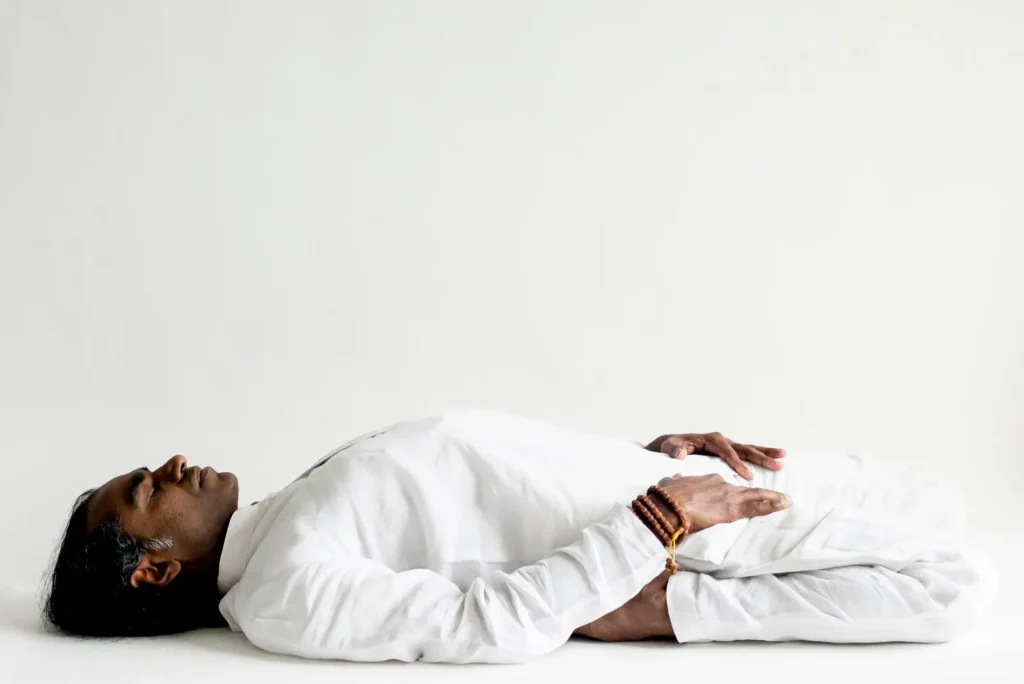
Shavasana (also spelled savasana, and called corpse pose in English) is the closing rest in a yoga class. You lie flat on your back, arms a little away from your body, palms turned up, eyes closed, and stay still for roughly 5 to 10 minutes while your breathing settles. It looks like doing nothing, which is why many teachers call it the hardest pose to learn. This guide covers how to do shavasana step by step, how long to hold it, what it can and cannot do, and how to fix a racing mind, an aching back and cold feet.
What does shavasana mean and why is it called corpse pose?
Shavasana is a Sanskrit word made of “shava” (corpse) and “asana” (pose or seat), so it translates as corpse pose. It is a deep-rest posture done lying down, usually for 5 to 10 minutes at the end of practice. Savasana is simply another accepted spelling of the same word and the same pose.
The name is deliberately blunt. A corpse holds no tension and makes no effort, and that is the quality the pose asks you to borrow for a few minutes. You are not trying to look peaceful or to empty your mind. You let the muscles that gripped and pushed earlier stop working, while a small part of your attention stays awake and watches.
How do you do shavasana step by step?
Lie on your back on a mat or firm surface, let your feet fall about a mat-width apart, rest your arms 15 to 20 cm from your torso with palms up, close your eyes, soften your jaw and forehead, and let your breath run on its own. Stay at least 3 to 5 minutes, then exit slowly.
- Settle the base. Lower yourself onto your back. If your lower back feels crunched, draw both knees in once and slide the legs out long again.
- Open legs and arms. Let the feet drop outward without effort and the fingers curl loosely, palms facing the ceiling.
- Soften the face. Unclench the jaw, leave the tongue wide and flat, and smooth the skin between the eyebrows.
- Scan from toes to head. Move attention through feet, calves, thighs, hips, belly, chest, hands, shoulders, neck and face, releasing any holding you find.
- Leave the breath alone. Do not deepen or slow it on purpose. That is what separates shavasana from pranayama, where you steer the breath.
- Come out slowly. Deepen the breath, wiggle fingers and toes, stretch the arms overhead, roll onto your right side, pause for a few breaths, then press up to sitting.
Shavasana setup checklist: what each part of the body should do
Most people lose the pose in the first minute because one small thing is off. Use this table as a quick body check before you settle in.
| Body part | Where it should be | Common fault | Quick fix |
|---|---|---|---|
| Head and neck | Centred, chin slightly toward chest | Chin tilts up, neck strains | Thin folded towel under the head |
| Shoulders | Dropped away from the ears | Shrugged up | Roll shoulders back and down once, then release |
| Arms and hands | 15 to 20 cm from torso, palms up | Fists, or arms pressed to the sides | Shake hands out, let fingers curl |
| Lower back | Resting on the floor, natural curve | Arched and sore | Bend the knees or put a bolster under them |
| Legs and feet | About a mat-width apart, feet rolled out | Legs together, feet stiff | Widen the heels slightly, let feet flop |
| Jaw and eyes | Teeth apart, eyes heavy behind closed lids | Clenched jaw, scrunched brow | Open the mouth slightly, then close it softly |
| Temperature | Comfortably warm | Cold hands and feet | Light shawl, dupatta or blanket |
How long should you hold shavasana?
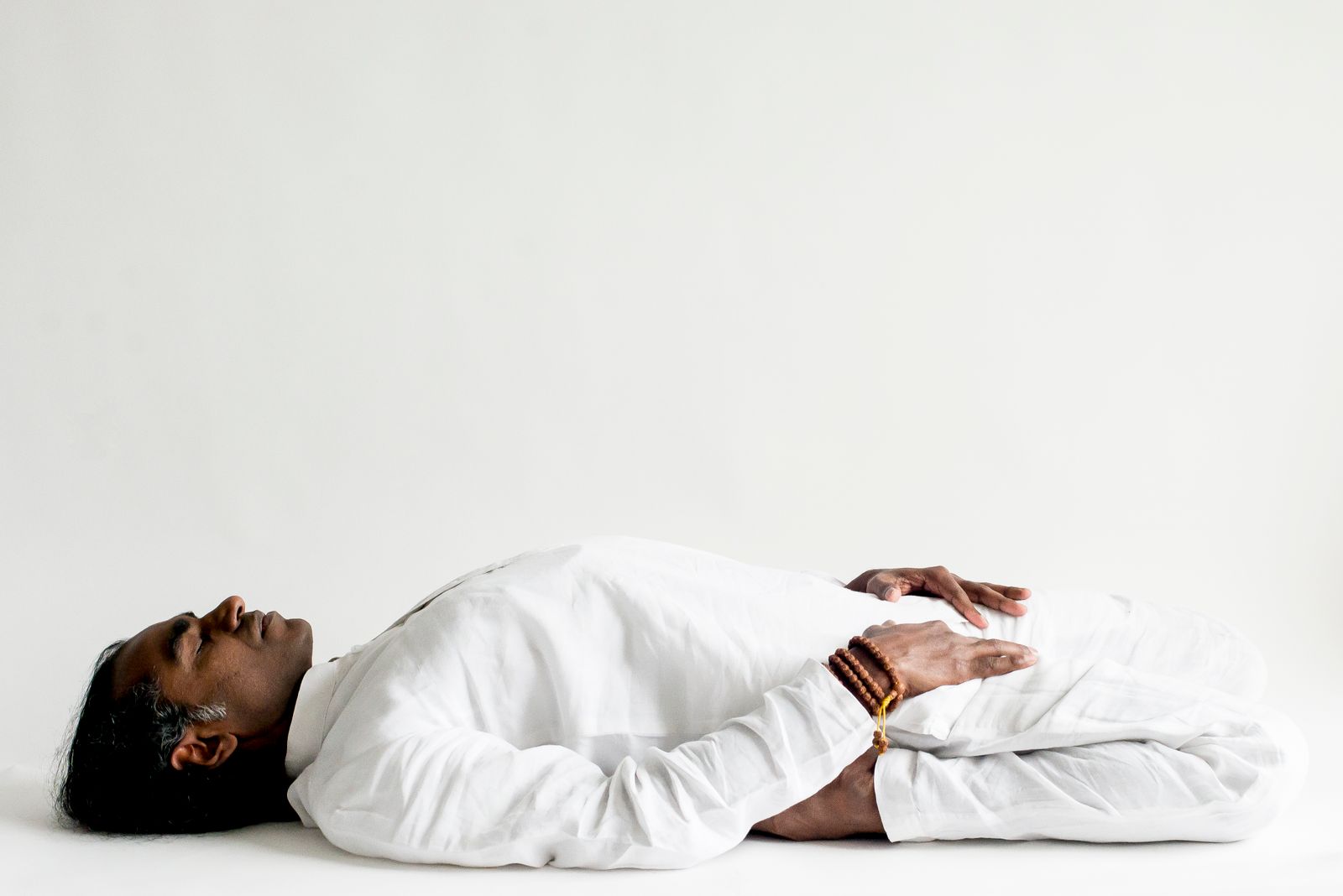
Hold shavasana for about 5 to 10 minutes after a regular class. A handy rule of thumb is roughly 1 minute of rest for every 10 minutes of active practice, so a 60-minute class ends with about 5 to 6 minutes. If you are short on time, even 3 minutes of real stillness is worth keeping.
| Practice length | Suggested shavasana | Notes |
|---|---|---|
| 15 to 20 minutes (quick morning flow) | 2 to 3 minutes | Short, but still worth doing |
| 30 to 45 minutes | 3 to 5 minutes | Typical for beginner online classes |
| 60 minutes (vinyasa or hatha) | 5 to 8 minutes | The standard studio closing rest |
| 75 to 90 minutes | 8 to 10 minutes | Harder sessions need a longer settle |
| Restorative or yin class | 10 to 20 minutes | Rest is the main event here |
| Stand-alone, no other practice | 5 to 15 minutes | Fine for stress breaks or bedtime |
What are the benefits of shavasana (and what it will not do)?
Shavasana helps the body shift out of effort mode: muscles release, breathing slows and many people feel calmer afterwards. It needs no strength or flexibility, so almost anyone can do it. It is not a treatment for any medical condition and it does not burn meaningful calories.
- Physical letting go. Tired muscles get a chance to stop working. Many people notice tight shoulders and jaws soften once they pay attention to them.
- Calmer breath. Lying still with unforced breathing tends to move the body toward its “rest and digest” state.
- Practice at noticing. The body scan trains you to spot tension early, which helps at a desk or in traffic.
The honest limits matter. Shavasana burns roughly what you burn at rest, about 1 kcal per minute for a 60 kg person, so do not count it as exercise. It will not cure anxiety, high blood pressure or insomnia. If you have a diagnosed condition, treat the pose as a calming habit alongside medical care, never instead of it. For the wider picture, see our guide to the benefits of yoga.
Shavasana myths, corrected
“It is just lying down, so it is optional.” Lying down is the shape, not the skill. The skill is staying aware while the body lets go, which is why teachers treat it as a core part of class.
“If my mind wanders, I am doing it wrong.” A wandering mind is the normal starting point. Noticing that you drifted and coming back to the body is the practice itself.
“Falling asleep means success.” Dozing off occasionally is common and means you needed rest. But the aim is relaxed wakefulness, so if you nod off every time, try a firmer surface, a cooler room or an earlier time of day.
“Longer is always better.” Beyond about 15 to 20 minutes, most people simply fall asleep. Five to 10 focused minutes beats an hour of drifting.
Why can’t I relax in shavasana? Troubleshooting
Restlessness, wandering thoughts and discomfort are the usual complaints, and most come down to setup, timing or expectations rather than any fault in you.
| Problem | Likely cause | What to try |
|---|---|---|
| Racing thoughts, to-do lists | Mind has nothing to hold on to | Do the body scan slowly, or count 10 natural breaths and start over |
| Fidgeting, urge to get up | Body still wound up from the day | Start with 2 to 3 minutes, add a minute each week |
| Lower back ache | Tight hamstrings, tilted pelvis | Bend the knees or place a bolster or rolled blanket under them |
| Cold hands and feet | Body temperature dips when still | Cover up, and move out from under the ceiling fan |
| Falling asleep every time | Tiredness, warm room, late practice | Practise earlier, use a firm mat, keep light awareness on the breath |
| Anxious or tearful | Stillness lets feelings surface | Keep the eyes softly open, shorten the hold, and speak to a doctor or therapist if it keeps happening |
Shavasana variations and props
Props are not a sign of weakness. They remove small physical distractions so attention can settle, and most are easy to find at home.
- Bent-knee shavasana: feet flat, knees leaning together, a simple choice when the lower back complains.
- Bolster under the knees: a firm pillow or tightly rolled bedsheet eases pressure on the lumbar spine.
- Eye cover: a folded dupatta or light scarf blocks light and adds gentle pressure.
- Side-lying shavasana: a pillow between the knees and another under the head, useful in later pregnancy and for reflux.
- Legs-up variation: calves resting on a chair or sofa seat for about 5 minutes takes load off the lower back.
Who should adjust or avoid flat shavasana?
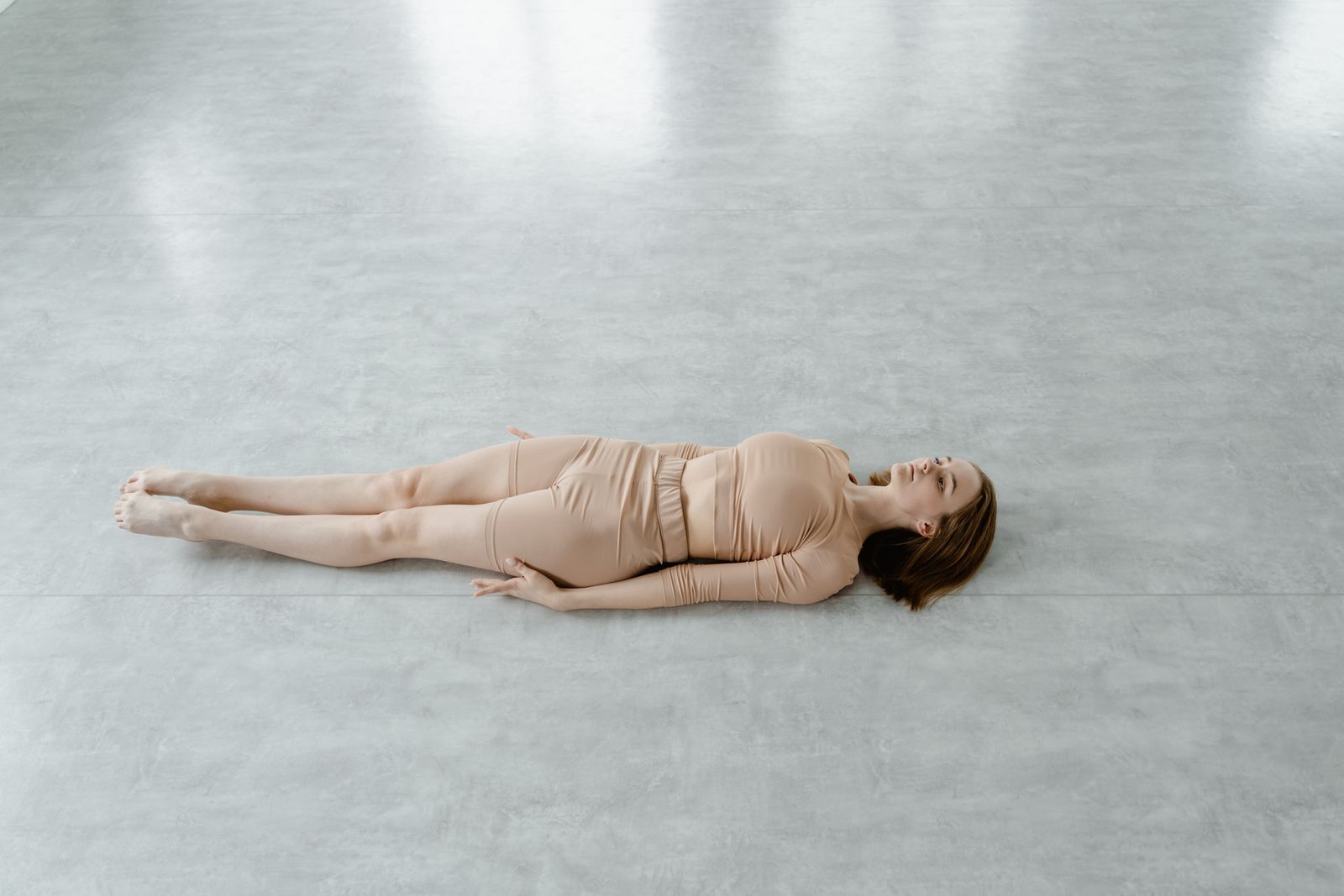
Shavasana is among the gentlest poses, but some people should modify it. Pregnant women, people with acid reflux, and anyone with back pain, breathing difficulty or a heart or blood pressure condition should adjust the position and check with their doctor first.
- Pregnancy: many teachers advise avoiding long stretches flat on the back after the first trimester and lying on the left side instead. Follow your own doctor’s advice.
- Acid reflux: leave about 2 to 3 hours after a full meal, and raise the head and chest on a bolster or folded blankets.
- Back pain or sciatica: use bent knees or a bolster. If pain travels down the leg, numbs the foot or worsens as you rest, stop and get it examined.
- Anxiety or trauma history: keep the eyes softly open, shorten the hold and build up slowly.
If you want a trainer to watch your alignment and adjust props for your back, knees or pregnancy stage, 1-on-1 personal training lets that happen live.
How does shavasana fit into a full yoga practice?
Shavasana always comes last, after standing poses, balances, backbends and twists. The earlier poses stimulate the body and the closing rest lets your system absorb that work before you return to your day. Skipping it often leaves people feeling hurried and scattered.
Different classes make it feel different. After vinyasa yoga or a heating sequence like surya namaskar, it feels like a deep exhale. In a slower hatha yoga class the transition is gentler, and in restorative yoga the whole session behaves like an extended shavasana with props.
Think of it as the far end of an effort scale. At one end are poses needing full focus, such as tadasana (mountain pose, which looks easy but asks for active alignment) and vrksasana (tree pose, a balance that rewards steadiness). In the middle sit soft grounding shapes like balasana (child’s pose). At the other end, shavasana holds no shape at all. A well-sequenced class travels along that scale, which is part of why students leave both energised and calm. New to all this? Our overview of yoga poses shows how they fit together.
Is shavasana the same as meditation?
No. Shavasana is a supported lying-down practice that trains relaxed awareness, while seated meditation holds the spine upright and trains focused attention. They overlap, and many teachers see shavasana as a bridge between active poses and formal meditation, but neither replaces the other.
Shavasana FAQ
Is it normal to fall asleep during shavasana?
Yes. Falling asleep now and then is common, especially if you are short on sleep or new to the practice, because the pose creates real physical relaxation. It is a sign your body needed rest. Over time, try to stay in a light, aware state instead of full sleep, since the benefit of the pose comes from resting while awake.
Can I do shavasana without doing a full yoga class first?
Yes. Shavasana works as a stand-alone relaxation practice, and many people use it for 5 to 10 minutes during a stressful day or as a bedtime wind-down. You will not get the effect of the preceding poses, but the settling effect of the pose itself is there whether or not you move first.
Why is shavasana considered the hardest yoga pose?
It asks for no physical effort, so a busy mind has nothing to hold on to. In active poses the body gives the brain a task. In shavasana you must stay present without one, and that skill builds gradually with repeated practice. It is not something most people arrive with.
What is the difference between shavasana and savasana?
There is no difference. Shavasana and savasana are two accepted Roman-alphabet spellings of the same Sanskrit word, and both refer to corpse pose. Studios, apps and teacher trainings use them interchangeably, so you will see both across the yoga world.
Should shavasana be done at the beginning or end of a yoga class?
The main, longer hold belongs at the very end, after all the active poses, so the body can absorb the work. Some teachers add a brief one to two minute rest at the start of class to help you arrive from the day, but the closing rest is the essential one.
Want someone to guide the breath, timing and sequence that lead into your final rest? Join a live session with FitStrot’s online yoga classes and ask your instructor to coach your shavasana setup.


