

Balasana, or Child’s Pose, is the kneeling forward fold you drop into when a class gets hard and you need a breather. You sit back toward your heels, fold your torso over your thighs, rest your forehead down and let your arms reach forward or settle beside you. Done well, balasana is a quiet stretch for the hips, thighs, ankles and lower back. This guide gives you the alignment cues, prop options, hold times, counter-poses and cautions.
What does balasana mean in Sanskrit and Hindi?
Balasana comes from “bala”, meaning child, and “asana”, meaning seat or pose, so it translates as Child’s Pose. In Hindi it is written बालासन and pronounced roughly “baa-laa-sa-na”. The name points to the curled, tucked shape small children often rest in.
How do you do balasana step by step?
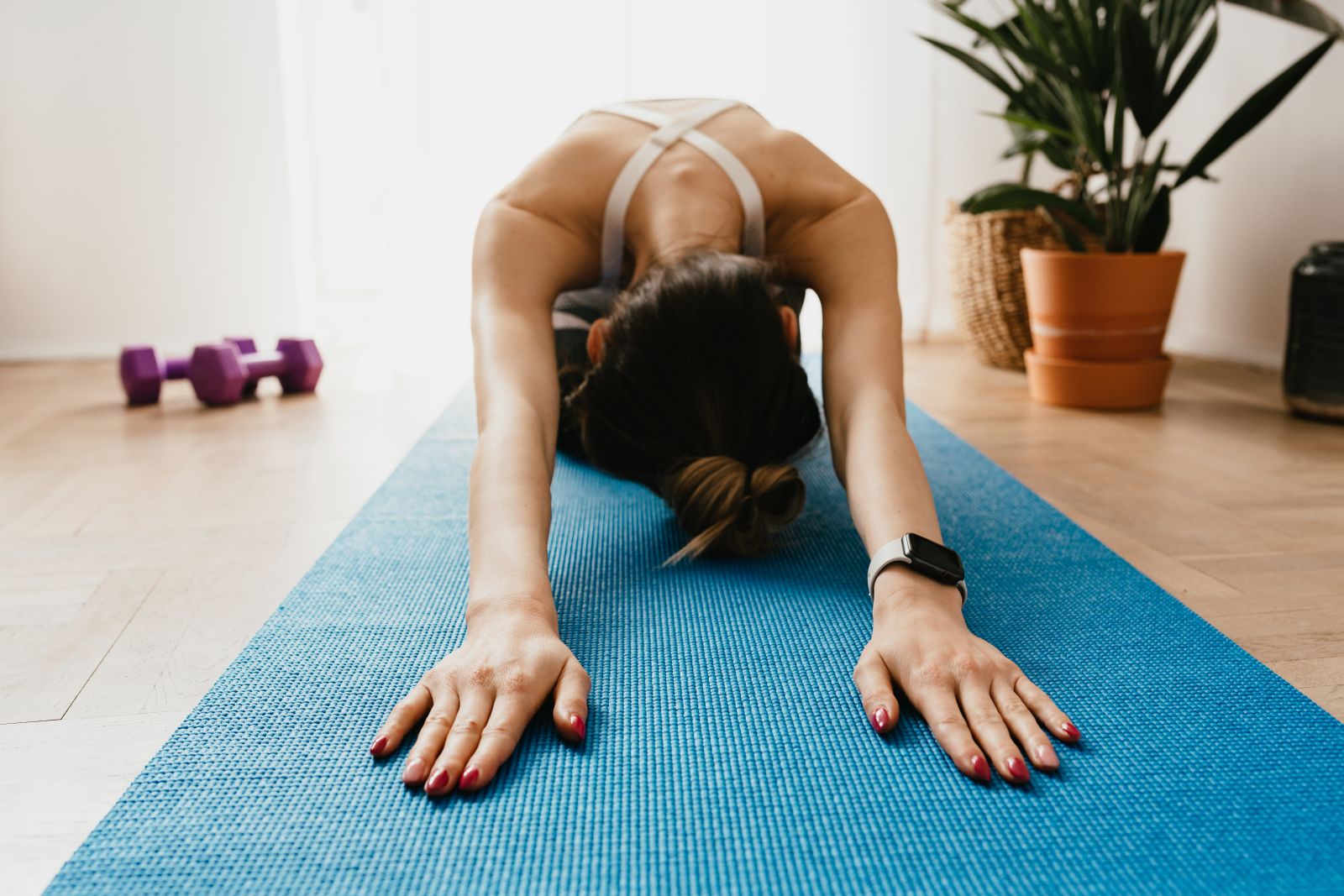
Kneel with big toes touching and knees about hip-width or wider, sit your hips back toward your heels, then fold forward on an exhale until your forehead rests on the mat. Reach the arms forward or rest them by your sides, and breathe slowly through the nose for 30 seconds to a few minutes.
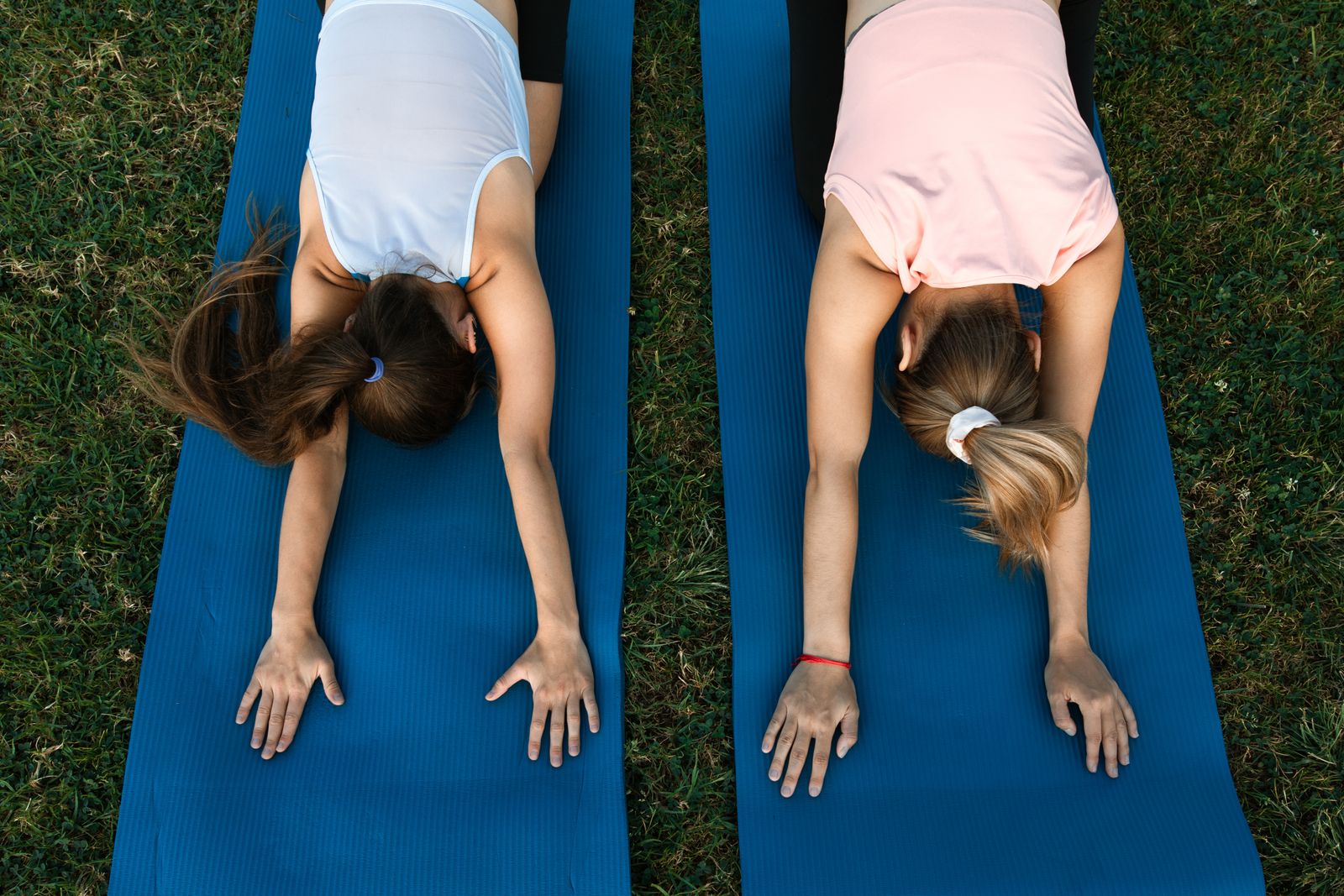
Here is the full walkthrough, with the cue that matters at each step.
- Set up on all fours. Start on hands and knees on a mat, wrists under shoulders and knees under hips. If your knees feel pinched, fold the mat or a blanket under them first.
- Place your feet and knees. Bring the big toes together behind you. Take the knees hip-width apart for a closed version, or as wide as the mat for a roomier fold that suits most beginners and anyone with a fuller belly or thighs.
- Send the hips back. Exhale and sit the hips back toward the heels. Move the hips, not the hands. If the hips stop short of the heels, that is fine; see the prop options below.
- Fold the torso down. Lengthen the spine as you fold, so the chest travels forward and down rather than the back rounding sharply. Let the belly rest between or on the thighs.
- Land the forehead. Rest the forehead on the mat, a block or stacked fists. Keep the back of the neck long, with no tight chin tuck.
- Choose your arms. Stretch them forward with palms down for more shoulder and side-body stretch, or bring them back beside the legs with palms up for a softer, more passive version.
- Breathe into the back body. Inhale and feel the ribs and lower back widen slightly; exhale and let the weight sink.
- Come out slowly. Walk the hands in, press into the palms and roll up one vertebra at a time, head last.
Balasana variations and prop modifications
Balasana adapts to very different bodies, which is why teachers offer it as the default rest pose. Use this table to match the version to what you actually feel.
| Variation | How to set it up | Best when |
|---|---|---|
| Wide-knee balasana | Knees as wide as the mat, big toes touching, torso folds between the thighs | You want room for the belly or chest, or closed knees feel tight |
| Closed-knee balasana | Knees together, torso rests on top of the thighs | You want a gentler stretch for the back and a more compact fold |
| Blanket between thighs and calves | Roll a folded blanket or small cushion and tuck it behind the knees | Your hips do not reach your heels or the front of the knees feels compressed |
| Bolster or pillow under the torso | Place a bolster or stacked cushions lengthwise under the chest and belly | You want a long restorative hold or find the floor too far away |
| Block, cushion or fists under the forehead | Stack until the forehead rests without any neck strain | Your forehead does not reach the mat comfortably |
| Seated alternative | Sit on a chair and fold forward over the thighs with arms hanging or resting on a desk | You cannot kneel because of knee or ankle limits |
How long should you hold child’s pose?
Hold balasana for about 20 to 30 seconds (roughly 5 to 8 slow breaths) when using it as a rest between active poses. For a dedicated relaxation or wind-down, 1 to 5 minutes is common. Restorative and yin-style classes sometimes hold it longer with a bolster, but there is no need to chase long holds.
- Quick reset in a flow: 5 to 8 breaths, or about 20 to 30 seconds.
- Warm-up or cool-down: 1 minute, long enough to settle the breath.
- Relaxation block: 3 to 5 minutes, ideally with props so nothing strains.
If you feel pins and needles in the feet, sharp knee pain or any numbness, come out and shake the legs out. Staying longer is not better.
Common balasana mistakes and how to fix them
Most discomfort in this pose comes from a handful of small habits. Match what you feel to the fix below.
| What you notice | Likely cause | Quick fix |
|---|---|---|
| Neck feels cramped | Chin tucked hard, or forehead not supported | Lift the floor to you with a block or cushion and keep the back of the neck long |
| Hips float off the heels | Reaching the hands too far forward | Walk the hands back a little and sit the hips down first |
| Wrists or shoulders strain | Hips lifted, so weight shifts onto the arms | Place a blanket under the hips or take the arms back beside the legs |
| Knees ache or pinch | Knees closed, thin mat or limited knee bend | Widen the knees, pad them, or tuck a rolled cloth behind the knees |
| Breath feels short or tight | Pressing the belly hard into the thighs | Widen the knees to give the belly room and breathe into the back ribs |
| Stretch feels like pinching in the lower back | Rounding hard instead of lengthening first | Lengthen the spine on an inhale, then fold; stop if the pain is sharp |
Myth check: is child’s pose always a relaxing, safe pose?
Not always. Balasana has a reputation as the “easy” pose, and many classes treat it as the default rest position. But rest for one body can be strain for another. Deep knee flexion, a full forward fold and pressure on the belly do not suit everyone.
Many people find the pose calming, and slow breathing in it can feel soothing, but it is a gentle stretch and a place to rest, not a treatment for any condition. For back tightness from sitting or a hard workout, a comfortable balasana can feel good. If your back pain is sharp, radiates down a leg or began after an injury, a deep fold may not help, so see a doctor or physiotherapist and read our wider guide to yoga for back pain.
Who should avoid or modify balasana?
Most healthy adults can practise balasana, but a few situations call for changes or a skip. If you have an injury, are pregnant or manage a medical condition, check with your doctor or physiotherapist before holding it. This table summarises the common cases, and it is a guide, not a diagnosis.
| Situation | Why it matters | What to do |
|---|---|---|
| Recent knee surgery, acute knee injury or knee replacement | Deep knee bend puts direct load on the joint | Skip it or ask your doctor first; use the chair version if cleared |
| Ankle injury or severe ankle stiffness | The feet are pressed into deep flexion or extension | Pad the ankles, or choose a seated forward fold instead |
| Pregnancy | Closed-knee folds press on the belly | Use wide knees with a bolster under the chest, and check with your doctor or prenatal instructor first |
| Disc problems, sciatica or sharp back pain | Deep forward flexion can aggravate some back conditions | Ask a doctor or physiotherapist before trying it; stop at any radiating pain |
| Uncontrolled high blood pressure, or dizziness | The head sits lower than the heart for a while | Keep the hold short, rise slowly and get medical advice first |
| Recent abdominal surgery or a hernia | Compression of the belly against the thighs | Use wide knees with a bolster, or skip the pose until cleared by your doctor |
Mild stretching sensations that ease as you adjust are normal. Sharp, burning, pinching or radiating pain, numbness or tingling is a signal to come out. If you have any injury, are pregnant or are managing a medical condition, see your doctor before adding balasana to your routine.
Is balasana the same as Ananda Balasana or Shashankasana?
No. Balasana is a kneeling forward fold. Ananda Balasana (Happy Baby) is done lying on your back, holding the feet with knees toward the armpits. Shashankasana (Hare or Moon pose) is closely related to balasana and often taught as a near twin, sometimes with the arms stretched further forward.
Different schools use these names differently, so follow your teacher’s cue. If you searched for Happy Baby, look that pose up separately because the setup is completely different.
Where does balasana fit in a sequence, and what are the counter-poses?
Balasana fits almost anywhere: at the start to settle the breath, between rounds of Surya Namaskar, after standing work such as Tadasana or Vrksasana, and just before final rest. Counter-poses are gentle backbends or a neutral spine, such as cat-cow or cobra.
- In a flow: in Vinyasa Yoga or Power Yoga it is the default pause when you need to catch your breath without leaving the mat.
- After backbends or twists: a short balasana lets the spine release forward.
- In slow practice: Yin Yoga classes may hold it longer, often with a bolster.
- After the pose: roll up slowly, then move through a few rounds of cat-cow or a gentle cobra to open the front of the body.
Many people finish with a calm, breath-led cool-down, which pairs naturally with Pranayama. If you are using yoga to unwind from a stressful day, see also yoga for anxiety for more gentle sequences.
Balasana at home: how beginners can start
Balasana suits beginners because it asks for no strength or balance. It is a good first pose in a home routine, and it fits a short morning yoga session or a break from desk work. You can find more starter postures in our guide to yoga poses.
A simple 5-minute reset looks like this:
- Start in wide-knee balasana for 5 slow breaths with a cushion under the forehead.
- Come to all fours for 5 rounds of cat-cow.
- Return to balasana for 5 breaths with the arms extended forward.
- Press up to sitting and finish with 5 deep breaths.
Without a teacher watching, it is easy to overdo a stretch or hold a position that does not suit you. Check that the neck stays long and stop if anything pinches.
Balasana FAQ
Can I do balasana every day?
Yes, most healthy people can. Because balasana is a passive, low-effort stretch, it works as a daily reset for the back, hips and breath. Keep each hold comfortable, and if your knees or ankles feel sore from repeating it, change the props or shorten the hold.
Why can’t my hips reach my heels in balasana?
Tight thighs, stiff ankles or simply the shape of your hips and legs are the usual reasons. It does not mean you are doing it wrong. Tuck a folded blanket or cushion between your calves and thighs so the hips can rest, and widen the knees if that feels better.
Is balasana safe during pregnancy?
Many pregnant people use a wide-knee version with a bolster under the chest, which leaves room for the belly. Avoid closed knees and deep belly pressure. Because every pregnancy is different, check with your doctor or a certified prenatal yoga teacher before continuing any forward fold.
Is balasana the same as Shashankasana?
They are closely related. Shashankasana (Hare pose) is often taught as a near-identical kneeling fold, sometimes with the arms stretched further forward. Many teachers use the names interchangeably, though some lineages treat Shashankasana as its own pose, so follow the cues your teacher gives.
Does balasana help with back pain?
It can feel relieving for general tightness from sitting or a hard workout, because the spine lengthens gently without load. It is not a treatment, and if your pain is sharp, shoots down the leg or follows an injury, see a doctor or physiotherapist first.
If you want a teacher to check your alignment and suggest the right props, book a live session with Fitstrot’s online yoga classes and bring this pose to your first class.


