

Pranamasana, or prayer pose, is the standing posture in which you press your palms together at the centre of your chest with your feet grounded and your spine tall. It is the first and last position in Surya Namaskar, so most people meet it long before any other asana. It asks for no flexibility and very little strength. What it offers is a deliberate pause: a few slow breaths and a clear intention before you start moving. This guide covers exact alignment, common mistakes, props and modifications, who should go carefully, and how to fit the pose into a daily routine.
What is pranamasana?
Pranamasana is a standing yoga pose in which the palms join at the chest in Anjali Mudra while the body stays upright and still. The name comes from the Sanskrit “pranam” (to bow or salute) and “asana” (pose), so it is usually translated as prayer pose or salutation pose. It opens and closes every round of Surya Namaskar.
Unlike most asanas, pranamasana is not meant to stretch a muscle group or test strength. It works as a threshold: teachers use it at the start of class so students arrive on the mat in body and mind, and at the end to close the session calmly. It is the default opening shape across the wider list of yoga poses, and a seated version is common before meditation.
How do you do pranamasana step by step?
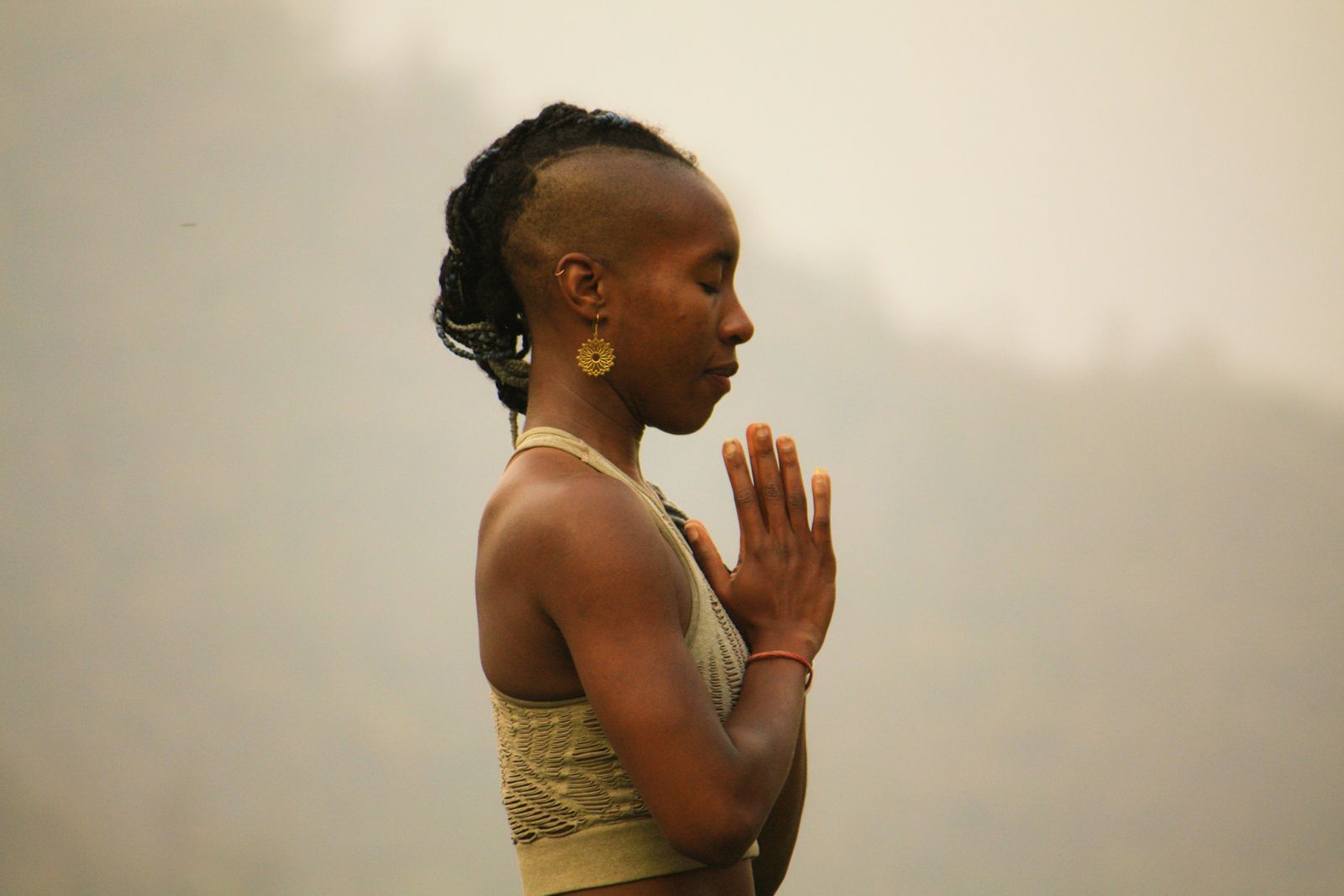
Stand at the front of your mat with feet together or hip-width apart and weight even across both feet. Lengthen your spine, relax your shoulders, and bring your palms together at the chest with thumbs resting against the breastbone. Keep the elbows soft and breathe evenly for 3 to 5 breaths. The whole pose takes roughly 20 to 40 seconds.
- Set your feet. Stand with the big toes touching or the feet hip-width apart, using the same grounded base as Tadasana. Spread the toes and feel the weight sit evenly on the heel and the ball of each foot.
- Soften the knees. Keep a tiny bend rather than locking the joints back. Tuck the tailbone very slightly so the lower back stays long.
- Stack the ribs over the pelvis. Draw the lower ribs in a little instead of pushing the chest forward, and lengthen up through the crown of the head.
- Roll the shoulders back and down, away from the ears.
- Bring the palms together at the centre of the chest, fingers pointing up, thumbs lightly against the breastbone.
- Let the elbows hang heavy, pointing down and slightly out, with forearms roughly level or angled gently upward.
- Settle the gaze on a still point ahead or close your eyes if your balance is steady, then take 3 to 5 slow, even breaths and set a one-word intention.
Alignment cues at a glance
Use this table as a quick head-to-toe checklist before you start.
| Body part | What to aim for | Common slip |
|---|---|---|
| Feet | Together or hip-width, weight even, toes spread | Leaning into one heel or one leg |
| Knees | Soft, a very small bend | Locked back, which strains the joint |
| Pelvis and ribs | Tailbone slightly tucked, lower ribs drawn in | Arched lower back, ribs flaring forward |
| Shoulders | Down and back, away from the ears | Hunched up towards the neck |
| Elbows | Relaxed, pointing down and slightly out | Flared high or pinned tight to the ribs |
| Palms and wrists | Even, light contact, wrists in a straight line | Crushing the hands together, tensing the forearms |
| Neck and gaze | Chin level, face soft, jaw unclenched | Chin poking forward or dropped to the chest |
| Breath | Slow, even, through the nose, about 4 counts in and 4 to 6 out | Holding the breath while concentrating |
Fixing common pranamasana mistakes
Because it looks effortless, pranamasana is often rushed. These are the slips teachers correct most, with the fix for each.
- Pressing too hard. If your wrists or forearms ache, the palms are being crushed together. Reduce the pressure to about half and imagine holding a small piece of paper between the hands.
- Shoulders creeping up. This is usually daily desk tension showing up. On an exhale, let the shoulder blades slide down the back, then check again after two breaths.
- Swaying with closed eyes. Open the eyes and fix them on one spot, or widen the feet to hip-width. Return to closed eyes only when you feel steady.
- Arching the lower back. Lift the pubic bone slightly, draw the lower ribs in and imagine the tailbone dropping towards the floor.
- Rushing through it. Treat it as the first real pose of the session. Even one full, unhurried breath changes how the next movement feels, especially in flowing styles such as vinyasa yoga.
Props and modifications
You do not need equipment, but a few simple adjustments make the pose comfortable for more bodies. Useful props are a wall, a sturdy chair, a folded blanket or cushion, and a non-slip mat. Make a change whenever the standard shape causes pain, dizziness or strain.
| Situation | Modification | Why it helps |
|---|---|---|
| Wrist, thumb or hand discomfort | Let only the fingertips touch, or hold the hands loosely cupped at the chest | Removes pressure from sore joints while keeping the gesture |
| Wobbly balance or light-headedness | Stand with your back a few centimetres from a wall, feet hip-width, eyes open | Gives a safety net and a wider base |
| Tight shoulders or upper back | Lower the hands towards the lower chest and let elbows widen slightly | Reduces strain on the shoulder joints |
| Standing is tiring, or knee, hip or back pain | Sit on a chair with both feet flat, or cross-legged on a folded blanket | Keeps the breath and focus without loading the legs |
How long should you hold pranamasana?
Hold pranamasana for 1 to 2 breaths when it sits inside a Surya Namaskar round, and about 5 to 8 slow breaths (roughly 30 to 60 seconds) when you use it as a standalone centring pose before practice. As a calming pause during the day, 1 to 3 minutes is plenty. There is no benefit in forcing longer.
| Context | Typical hold | Breaths |
|---|---|---|
| Inside a Surya Namaskar round | A few seconds | 1 to 2 |
| Start of a yoga or workout session | 30 to 60 seconds | 5 to 8 |
| Standing break during a work day | 1 to 3 minutes | 8 to 15 |
| Seated, before meditation | 2 to 5 minutes | Natural, unhurried breathing |
Is pranamasana really beneficial, or just a ritual?
Pranamasana is not a workout and will not build strength, burn meaningful calories or correct posture on its own. Its value is modest and practical: many people find the pause helps them slow their breathing, notice how they are standing and begin practice with attention. Treat the benefits below as helpful habits, not treatments for any condition.
- Settling attention. One simple action, pressing the palms and following the breath, gives a busy mind a single place to rest. Many practitioners say this makes the next few minutes of practice feel less scattered.
- Posture awareness. Standing tall with the weight even teaches you what balanced standing feels like, which you can carry into walking and sitting.
- A gentle breathing cue. With no movement to coordinate, it is an easy place to practise even inhales and exhales, the groundwork for pranayama and for steady breathing through forward folds and lunges.
- Light muscular work. The thighs, deep core and muscles between the shoulder blades switch on mildly to hold you upright, and pressing the palms uses the forearms and chest lightly. It is awareness, not training.
The gains come from the habit of pausing before you move, one thread in the broader benefits of yoga. If you want strength, fat loss or flexibility, you will need other poses and sessions alongside it.
How is pranamasana different from Tadasana and Anjali Mudra?
Pranamasana is a full standing pose, Tadasana is the neutral standing pose with arms by the sides, and Anjali Mudra is only the hand gesture of palms joined at the chest. Pranamasana is essentially Tadasana with Anjali Mudra added, plus the intention of marking the start or end of practice.
In a typical class, a teacher moves from Tadasana into pranamasana: the first sets physical alignment, the second adds the mental cue of beginning. The same tall, grounded base supports balance work such as Vrksasana (tree pose) and appears again and again in other standing yoga poses.
Who should go carefully with pranamasana?
Anyone with wrist or hand problems, shoulder injury, dizziness or low blood pressure, knee, hip or back pain, recent surgery or pregnancy should modify the pose and check with a doctor or qualified teacher first. For most healthy adults it is very low risk, but gentle does not mean right for everyone. Details:
- Wrist, thumb or hand problems, such as arthritis, carpal tunnel symptoms or a recent injury. Use the fingertip-only version, or rest the hands in your lap.
- Shoulder or neck injury. If bringing the hands to the chest pinches or aches, lower them or stop.
- Dizziness, low blood pressure or vertigo. Keep the eyes open, stand near a wall, or sit. Come out of the pose slowly.
- Knee, hip, ankle or back pain, or recent surgery. Practise seated until your doctor or physiotherapist says standing is fine.
- Pregnancy. The pose is usually comfortable because there is no compression or twisting, but balance changes, so widen the feet and use a wall if needed. Your doctor has the final say.
Stop and rest if you feel sharp pain, numbness, tingling or light-headedness. Pranamasana is a practice, not a treatment, and it should never replace medical advice or care.
Pranamasana for beginners, desk workers and older adults
Beginners. Start with 3 breaths a day for the first week, adding a few seconds as it feels easy. It pairs well with a simple routine from our guide to yoga for beginners, where it becomes the habit that opens each session.
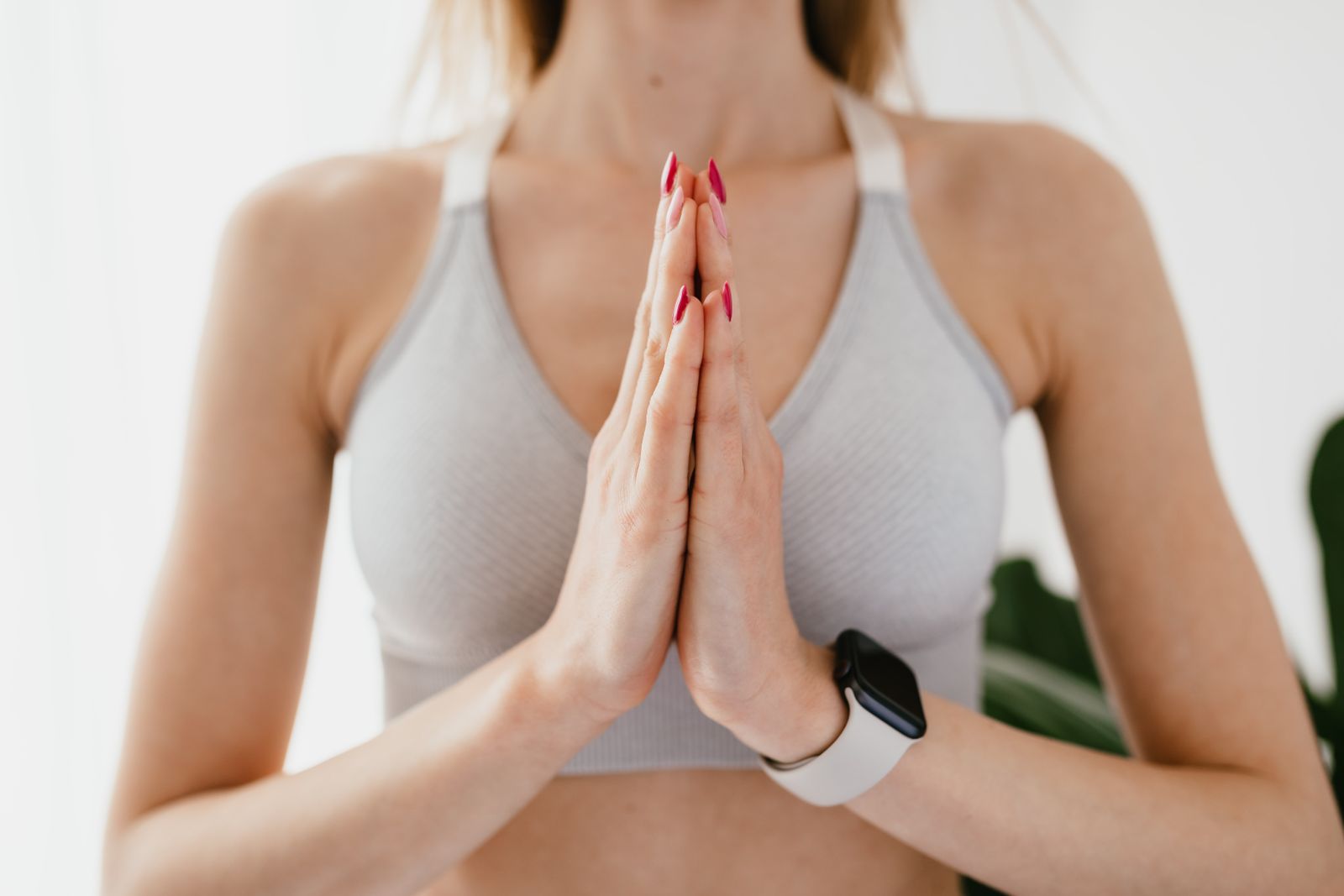
Desk workers. Stand up from your chair, plant both feet and take 5 to 8 slow breaths in pranamasana. It takes under a minute, needs no space, and gives your shoulders and eyes a short break from the screen.
Older adults. Practise beside a wall or in a chair, keep the eyes open and press the palms lightly. The goal is steady breathing and upright posture, not a perfect shape.
Regular yoga students. Treat the pose as the “first rep” of every session, whether it is a flowing class, hatha yoga or any of the other types of yoga.
Anjali Mudra, namaste and what the gesture means
Anjali Mudra is often translated as “salutation seal” or “offering gesture.” Palms joined at the chest, fingers pointing up, is recognised across South and Southeast Asia as a greeting and a sign of respect, and it is closely linked with the spoken “namaste,” which is commonly understood as a respectful bow. You do not need to adopt any belief to practise it; many people use it as a purely secular moment of stillness, while others treat it as a bow to the teacher or to their own effort that day.
Pranamasana FAQs
What is the meaning of pranamasana?
Pranamasana means prayer pose or salutation pose in English, from the Sanskrit “pranam” (to bow or salute) and “asana” (pose). It describes the standing posture with palms joined at the chest in Anjali Mudra. It is used to begin and end yoga practice, most famously Surya Namaskar.
Is pranamasana the same as Anjali Mudra?
Not exactly. Anjali Mudra is the hand gesture, palms pressed together at the chest. Pranamasana is the complete standing pose that uses that gesture with a specific stance and breath focus. Anjali Mudra can also be used in seated meditation or at the end of class without being called pranamasana.
Is pranamasana the first step of Surya Namaskar?
Yes. Pranamasana is the first position of Surya Namaskar and also the last. You stand at the front of the mat with feet together, palms joined at the chest, and take a few settling breaths before raising the arms into the next position, Hasta Uttanasana.
Can I practise pranamasana without the full sun salutation?
Yes. Many people use pranamasana alone as a short centring ritual before a workout, a class, a meeting or sleep. Standing or sitting with palms joined for 30 seconds to 2 minutes is enough to slow your breathing and set an intention, with no other poses required.
Is pranamasana safe for beginners and older adults?
For most people, yes. It needs no flexibility, the arms stay close to the body and both feet stay planted. If you have wrist pain, balance problems, dizziness or an injury, modify it by sitting, using a wall or touching only your fingertips, and check with your doctor if unsure.
Want someone to check your alignment and breathing live? Join an instructor-led session through FitStrot’s online yoga classes and begin every practice with one mindful minute of pranamasana.


