
Good nutrition for pregnant women is less about eating more and more about eating better as the weeks pass. Your plate barely changes in the first trimester, gains a little energy plus more iron and calcium in the second, and grows a bit again in the third, when the baby puts on most of its weight. This guide gives you a trimester-wise plate, Indian food swaps, and a plain list of what to eat, limit and avoid.
Every pregnancy is different, so treat this as a map, not a prescription. Your gynaecologist or a registered dietitian knows your reports, and their advice always comes first. Planning a baby rather than expecting one? Start with our guide to fertility nutrition, because several of the same foods matter before conception.
What should a healthy pregnancy plate look like?
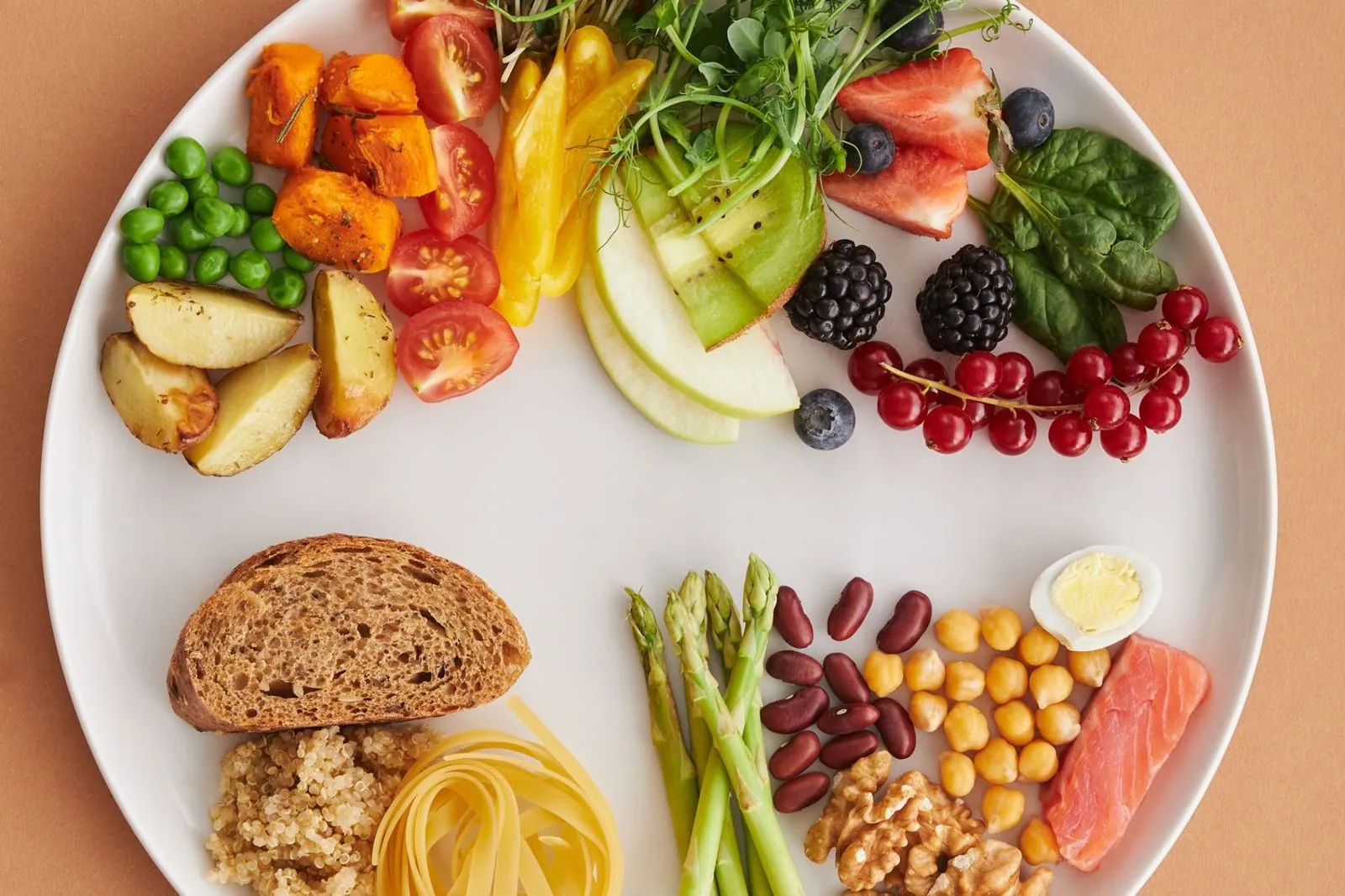
A healthy pregnancy plate is about half vegetables and fruit, about a quarter whole grains such as roti, brown rice or millets, and about a quarter protein such as dal, paneer, eggs or fish, with curd or milk alongside. Eat three meals and two or three small snacks a day, and sip water between them.
In everyday Indian terms, that means one or two rotis or a small katori of rice, a katori of dal or rajma, a katori of sabzi, a bowl of salad and a katori of curd. Add a fruit and some nuts at snack time. If you want the single-nutrient detail behind this plate, our guide to nutritional needs goes further than one article can.
Trimester by trimester: the plate at a glance
The table shows how the plate shifts. Energy figures are rough averages that your doctor may adjust.
| Stage | Extra energy a day | Focus | Indian examples | Watch for |
|---|---|---|---|---|
| First (roughly weeks 1 to 12) | About 0 extra kcal | Folate, fluids, small meals | Moong dal, palak, orange, lemon water, plain khichdi | Nausea, food aversions |
| Second (roughly weeks 13 to 27) | About 300 to 350 extra kcal | Iron, calcium, protein | Ragi roti, rajma, paneer, curd, til, methi | Tiredness, low iron |
| Third (roughly weeks 28 to 40) | About 400 to 450 extra kcal | Protein, iron, fibre, small frequent meals | Dal, eggs, fish, fruit with skin, vegetable daliya | Heartburn, constipation |
What should you eat in the first trimester when nausea hits?
In the first trimester you need no extra calories, so focus on folate-rich foods, fluids and small meals you can keep down. Dal, leafy greens and citrus fruit supply folate, while poha, khichdi, banana, dry toast and ginger-lemon water are common choices on queasy days. Eat about every two to three hours instead of waiting for hunger.
Here is a simple walkthrough for bad mornings:
- Before you get up: keep a few plain biscuits or roasted chana by the bed and nibble slowly.
- Between meals: sip water, nimbu pani, coconut water or buttermilk in small amounts instead of one big glass.
- At meals: choose cold or room-temperature foods such as curd rice or fruit, which smell less than hot cooking.
- When an aversion hits: swap the food, not the nutrient. If dal is off the table, try besan chilla or a glass of milk.
Aim for consistency, not perfection. For more on folate and other early priorities, see our pregnancy nutrition guide.
How do your needs change in the second trimester?
From roughly week 13, you need about 300 to 350 extra kcal a day, which is about a glass of milk plus a bowl of chana chaat. Iron, calcium and protein rise the most, so build meals around dal, rajma, leafy greens, curd, paneer, eggs or fish, and ragi or other millets.
Iron: blood volume expands during pregnancy, so iron-rich foods matter. Good Indian sources include methi, palak, rajma, chana, bajra, ragi, dates, til and, for non-vegetarians, eggs and well-cooked meat or fish. Pair them with vitamin C, such as a squeeze of lemon, an amla slice or a guava, and keep tea and coffee at least an hour away from main meals because they reduce iron absorption.
Calcium: milk, curd, paneer, ragi, til and almonds are everyday sources. Aim for about two to three servings of dairy or a calcium-rich equivalent daily. Our calcium nutrition guide lists more options.
How much protein do you need in pregnancy?
Many pregnant women do well with roughly 60 to 80 grams of protein a day in the later months, depending on body weight and medical advice. A katori of cooked dal gives about 7 grams, an egg about 6 grams, and 50 grams of paneer about 9 grams. Our protein and nutrition guide covers more sources.
What does the third trimester need?
The third trimester needs about 400 to 450 extra kcal a day, steady protein, iron and calcium, and plenty of fibre and fluids. The baby gains most of its birth weight now, while a crowded stomach makes large meals uncomfortable, so five or six small meals usually work better than three heavy ones.
Fibre helps with constipation: choose whole wheat or millet rotis, fruit with the skin, vegetables, salads and enough water, roughly 2.5 to 3 litres of total fluids a day unless your doctor says otherwise. Eat your last big meal about two to three hours before lying down to ease heartburn. Our nutrition during pregnancy guide shows how targets move across all three stages.
What does a full day on an Indian pregnancy plate look like?
A day on an Indian pregnancy plate usually has three meals and three small snacks, protein at every sitting, and iron-rich foods paired with vitamin C. Treat the sample below as a pattern, not a rule: swap foods you like, and adjust with your dietitian if you have a medical condition.
| Meal | Sample plate | Why it helps |
|---|---|---|
| On waking | 1 glass of milk or nimbu pani, about 2 plain biscuits or a few soaked almonds | Settles the stomach, adds about 8 g protein with milk |
| Breakfast | Vegetable poha with peanuts, or 2 besan chillas, plus 1 fruit | Folate, fibre and about 10 g protein |
| Mid-morning | 1 katori (about 150 g) curd or buttermilk, or a handful of nuts | Calcium and protein |
| Lunch | 2 rotis (wheat or ragi), 1 katori dal, 1 katori sabzi, salad with lemon, 1 katori curd | Iron with vitamin C, about 20 g protein |
| Evening | Chana or sprout chaat (sprouts steamed), or 1 boiled egg, plus tea at least an hour from lunch | Protein, iron, fibre |
| Dinner | 1 or 2 rotis, paneer or fish curry or rajma, 1 katori sabzi, light khichdi on heavy days | Protein and calcium, eaten early for heartburn |
| Bedtime | 1 glass warm milk, or a banana if heartburn allows | Calcium, steady energy |
Which foods are safe, and which should you avoid?
Most home-cooked Indian food is safe in pregnancy. Avoid alcohol, raw or undercooked eggs, meat and fish, unboiled milk, high-mercury fish such as shark and swordfish, and unripe papaya. Limit tea and coffee to about 200 mg of caffeine a day, roughly one to two small cups, and check herbal remedies with your doctor first.
| Food or drink | Verdict | Why, and how to make it safer |
|---|---|---|
| Boiled milk, curd, buttermilk, fresh paneer from boiled milk | Eat | Calcium and protein; boil milk and avoid unpasteurised dairy |
| Eggs | Eat, fully cooked | Cook until the yolk is firm; skip runny eggs and raw-egg mayonnaise |
| Small fish such as sardines and rohu | Eat with care | Cook through; about 2 servings a week is a common guide |
| Shark, swordfish, king mackerel | Avoid | Higher mercury can affect a baby’s developing nervous system |
| Raw sprouts, cut roadside fruit, chaat with untreated water | Avoid or cook | Higher infection risk; steam sprouts and wash fruit yourself |
| Unripe or semi-ripe papaya | Avoid | Commonly advised against; ask before eating even ripe papaya |
| Tea and coffee | Limit | About 200 mg caffeine a day; keep away from iron-rich meals |
| Liver and organ meat | Limit | Very high in vitamin A; ask your doctor before including it |
| Alcohol, tobacco, paan with tobacco | Avoid | No amount is known to be safe |
| Herbal kadha, ayurvedic powders, home remedies | Ask first | Many are not tested in pregnancy |
Pregnancy food myths: what is actually true?
- Myth: you must eat for two. You need about 300 to 450 extra kcal in the later months, not double. Eating far more than that does not make the baby healthier.
- Myth: extra ghee makes delivery easier. A teaspoon or two in dal or roti is fine, but extra ghee does not ease delivery and adds calories fast.
- Myth: kesar milk changes the baby’s skin colour. Skin tone is inherited, so a pinch of saffron in milk is simply a flavouring.
- Myth: all papaya and pineapple are dangerous. Unripe papaya is the one commonly advised against. For ripe papaya and pineapple, many doctors accept small portions, but confirm with yours.
What if you are vegetarian, vegan or Jain?
A well-planned vegetarian pregnancy can meet most needs. The nutrients to watch are protein, iron, vitamin B12, calcium and omega-3 fats, so combine dal with rice or roti, add dairy or fortified alternatives, and include nuts, seeds and flaxseed. Vitamin B12 comes mainly from animal foods, so ask your doctor how to cover it.
Jain and vegan plates need extra planning, since root vegetables or dairy may be off the list, so a registered dietitian can map iron, calcium and protein onto your food rules. Our guides to nutritional requirements during pregnancy and vitamin nutrition explain what each nutrient does.
Do you need a prenatal supplement?
Most doctors prescribe a prenatal supplement, usually with folic acid, iron and calcium, because food alone can fall short, especially early on. Take only what your doctor prescribes, at the amount they set, since too much of some nutrients can be harmful. Food comes first; a supplement fills gaps and never replaces meals.
Troubleshooting: heartburn, constipation and low appetite
- Heartburn: eat smaller meals, avoid very spicy or fried food late at night, and stay upright after eating.
- Constipation: add vegetables, fruit with skin, whole grains and water; a short walk after meals helps if your doctor agrees.
- Low appetite: eat small, energy-dense foods such as nuts, banana milkshake, besan chilla or khichdi with a little ghee.
- Swelling in the face or hands, sudden weight changes, or severe headache: do not treat these with diet changes. Call your doctor.
When should you see your doctor or a registered dietitian?
See your doctor or a registered dietitian if you cannot keep fluids down, are losing weight, have been told your blood sugar, haemoglobin or blood pressure needs attention, are carrying twins, follow a restricted diet, or have a thyroid or kidney condition.
Never change or skip prescribed medicines or supplements because of something you read online, including here.
If your doctor has cleared gentle movement, our guide to yoga for pregnant women explains what is typically considered suitable, and our online yoga classes can be taken at a gentle pace once you have your doctor’s approval.
Frequently asked questions
Do you really need to eat for two during pregnancy?
No. You need about 0 extra kcal in the first trimester, about 300 to 350 in the second and about 400 to 450 in the third. That is roughly a glass of milk and a snack, not a second meal, so focus on food quality instead of volume.
How much water should you drink daily during pregnancy?
Many pregnant women aim for roughly 2.5 to 3 litres of total fluids a day, including water, buttermilk, nimbu pani, coconut water and soups. Needs rise in summer or with exercise. If you notice swelling or unusually little urine, ask your doctor for a personal target.
Is tea or coffee safe during pregnancy?
In small amounts, yes. A common limit is about 200 mg of caffeine a day, roughly one to two small cups of tea or coffee. Remember that chocolate and cola also contain caffeine, and keep tea or coffee about an hour away from iron-rich meals.
Can you eat fish during pregnancy?
Yes, if it is fully cooked and low in mercury. Small fish such as sardines and rohu are common choices, at about two servings a week. Avoid raw fish and large predators such as shark and swordfish, and ask your doctor if you are unsure.
Which Indian foods help with iron in pregnancy?
Methi, palak, rajma, chana, bajra, ragi, dates and til give iron, as do eggs and cooked meat or fish. Pair them with lemon, amla or guava and keep tea about an hour away. Your doctor decides whether you also need a supplement.
Want a pregnancy meal plan built around your reports, your food habits and your doctor’s advice? Book an online nutritionist consultation with Fitstrot.


