

A morning routine for wellness is a short, repeatable set of habits you do in the first 30 to 60 minutes after waking: water, daylight, gentle movement, a few minutes of slow breathing and one clear intention for the day. It does not need a 5 a.m. alarm or an hour of free time. This guide gives you a realistic minute-by-minute plan, three tiers for busy days and a simple way to make it stick.
What is a realistic morning routine for wellness, and how long should it take?
A realistic morning wellness routine takes 10 to 45 minutes and combines four things: a glass or two of water, a few minutes of daylight, 5 to 20 minutes of gentle movement such as yoga, and 3 to 5 minutes of slow breathing. Pick two or three to start, then build up over a few weeks.
The best length is the one you can repeat on a bad day. A routine that only works when everything goes perfectly is a plan, not yet a habit. That is why it helps to design three versions in advance and drop down a tier when the morning is rushed, instead of skipping it altogether.
| Tier | Total time | What it includes | Best for |
|---|---|---|---|
| Minimum | 10 minutes | 1 glass of water, 2 minutes at a window or balcony, 5 minutes of stretching, 1 minute of slow breaths | Early commutes, school-run mornings, low-energy days |
| Standard | 30 minutes | Water, 5 minutes of daylight, 15 minutes of yoga flow, 3 minutes of breathwork, 1 line of intention or journaling | Most working days |
| Full | 45 to 60 minutes | Standard routine plus a slower yoga practice, a short walk and a calm breakfast before screens | Weekends, holidays, work-from-home days |
Why does the first hour after waking matter?
The first hour sets your pace for the day. Your body naturally releases more cortisol shortly after waking, which helps you feel alert, and how you meet that window shapes how reactive or steady you feel. Light, water and movement support that natural rhythm, while an instant stream of messages tends to make mornings feel rushed.
A routine also removes small decisions. What to do first, whether to exercise, whether to check email: each unplanned choice uses a little mental energy. When the first 30 minutes run on autopilot, many people feel calmer and more in control, even on busy days. Be honest about the limits, though. A morning routine is a supportive habit, not a treatment for any medical or mental health condition.
What does a 30 to 60 minute morning routine look like, minute by minute?
A balanced 45-minute routine runs: water and daylight in the first 5 minutes, breathing for minutes 5 to 8, yoga movement for minutes 8 to 28, a short walk or stillness for 10 more minutes, then 5 minutes for intention and a screen-free breakfast. Trim from the end if you are short on time.
| Minutes | Block | What to do | Why it earns its place |
|---|---|---|---|
| 0 to 5 | Hydrate and light | Drink 250 to 500 ml of water; open the curtains or stand at a window | Replaces fluids lost overnight and signals “day” to your body clock |
| 5 to 8 | Breath | Box breathing or slow nostril breathing, 3 minutes | Settles the nervous system before demands begin |
| 8 to 28 | Move | Gentle yoga flow (see the sequence below) | Loosens stiff joints and builds body awareness |
| 28 to 38 | Walk or sit | 10-minute walk outdoors, or quiet sitting by the window | Adds daylight and easy movement |
| 38 to 43 | Intention | Write one priority and one thing you are grateful for | Points your attention at your own agenda first |
| 43 to 60 | Breakfast | Eat without a phone: for example vegetable poha, idli-sambar or a bowl of fruit with nuts | Keeps the routine screen-free |
How much water should you drink first thing in the morning?
One or two glasses, roughly 250 to 500 ml, is a comfortable amount for most healthy adults after 7 to 8 hours without fluids. Plain or lukewarm water is enough. Sip it before your first tea or coffee, and spread the rest of your daily intake across the day.
Honest framing matters here: morning water will not “detox” you or melt belly fat. It simply rehydrates you and is an easy habit to anchor the rest of the routine to. If you have kidney, heart or other conditions with fluid advice from your doctor, follow that advice instead of a general number. A tea or coffee afterwards is fine for most people, and many find that having water first makes caffeine feel less jittery.
Which yoga poses work for a gentle morning flow?
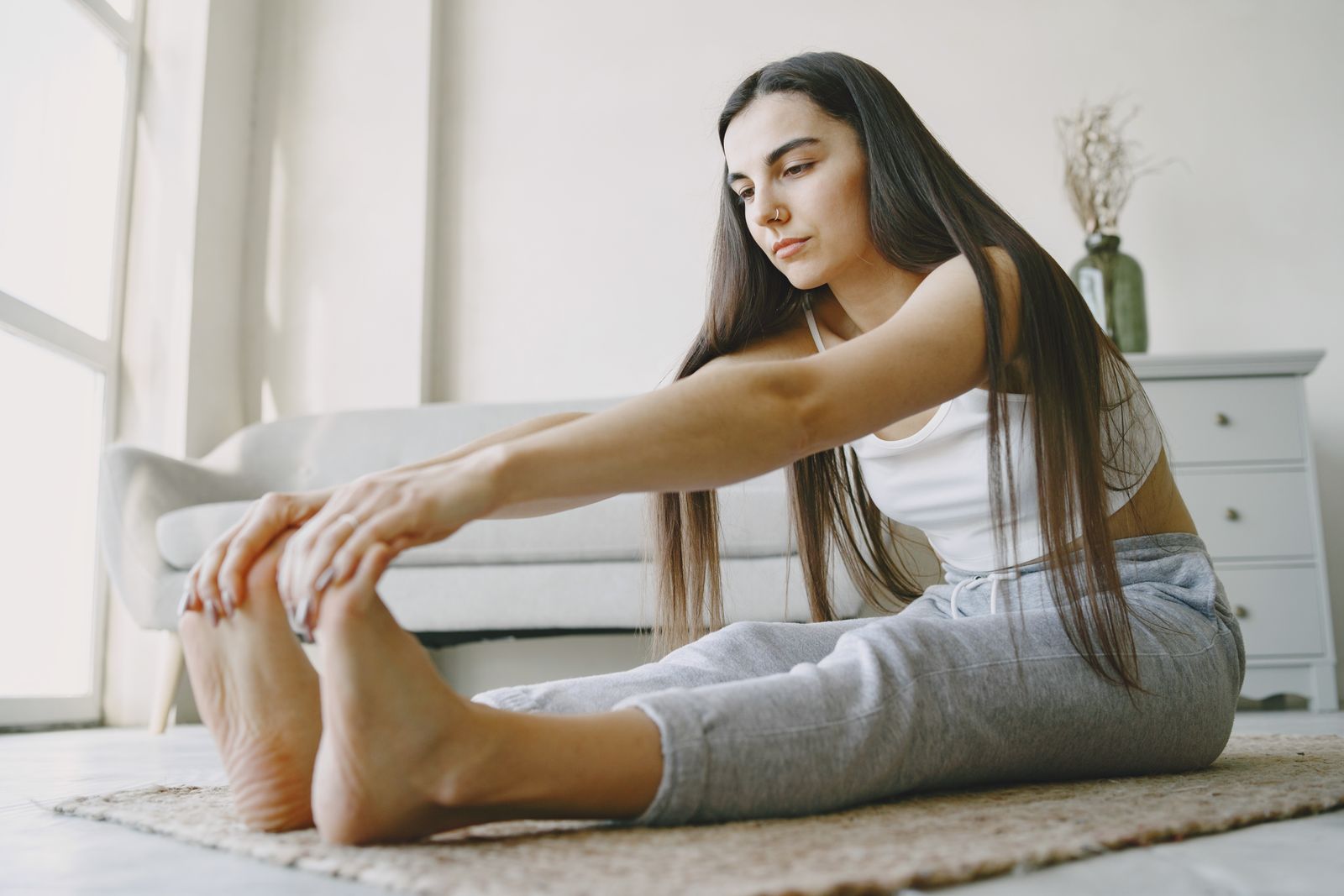
A good morning flow is slow and low-impact: cat-cow, child’s pose, low lunge, downward dog and a soft forward fold, held for 5 to 8 breaths each. The aim is to wake the spine, hips and shoulders, not to push your limits. Intense styles are usually better later in the day.
| Pose | Time | Form cue | Easier option |
|---|---|---|---|
| Cat-cow | 8 to 10 slow rounds | Move with your breath; keep wrists under shoulders | Do it seated on a chair |
| Child’s pose | 5 to 8 breaths | Sit back toward your heels; relax the jaw and shoulders | Place a pillow under your hips or forehead |
| Low lunge (each side) | 5 breaths | Front knee stacked over ankle; lengthen through the spine | Rest the back knee on a folded mat |
| Downward dog | 5 breaths | Press the floor away; bend knees if hamstrings are tight | Hands on a wall or counter |
| Standing forward fold | 5 to 8 breaths | Soft knees; let the head hang heavy | Hold elbows and sway gently |
| Mountain pose with arm sweeps | 5 rounds | Inhale arms up, exhale down; stand tall | Do it seated |
If you like a defined structure, a short hatha session is a good fit, and our guides to hatha yoga and vinyasa yoga explain the slow-hold and flowing styles. Our types of yoga overview helps you pick one. For a full sequence built for early hours, see morning yoga. Skip any pose that causes sharp pain, and ask a qualified teacher to adapt poses if you have an injury, high blood pressure or are pregnant.

How do you add breathwork to your morning routine?
Try box breathing for 2 to 3 minutes: inhale for four counts, hold for four, exhale for four, hold for four. Alternate nostril breathing (nadi shodhana) is another gentle option. Breathe through the nose, keep the shoulders soft, and stop if you feel dizzy.
Slow breathing does not erase your natural morning cortisol rise, and it is not meant to. It helps stop that alert state from tipping into a jittery, reactive one. If you are pregnant, or have high blood pressure, a heart or lung condition, or find breath holds uncomfortable, skip the holds and simply breathe slowly in and out, or check with your doctor first.
Does morning light really matter?
Yes, daylight in the first hour helps set your body clock, which supports alertness now and sleep later. Even 5 to 10 minutes near an open window, balcony or terrace is useful. Outdoor light is brighter than indoor lighting, but a window is much better than none.
That link to sleep is why a steady wake-up time matters as much as the habits themselves. A consistent morning makes a consistent bedtime easier, so the routine quietly improves your evenings too. If you are working on the evening side, our guide to digital detox with yoga covers calming the screen habit that often wrecks both ends of the day.
Myth check: do you need to wake at 5 a.m. or take a cold plunge?
No. A 5 a.m. alarm, cold showers and a one-hour ritual are popular online but not required. The core habits work at any wake time. What matters is a short, unhurried window before the phone and the to-do list take over, whether that starts at 5 or at 8.
- Myth: longer is better. Reality: a 10-minute routine done 6 days a week beats a 60-minute one you quit in 10 days.
- Myth: you must do everything. Reality: any two pillars make a complete routine.
- Myth: a missed day ruins it. Reality: a missed morning is just one data point. Resume the next day without “making up” for it.
How do you build a morning routine that sticks?
Start with one habit for two to three weeks, anchor it to something you already do, and set it up the night before. For example, leave your mat out and place a glass of water on the table. Add a second habit only when the first feels automatic.
- Anchor it: “right after I switch off my alarm, I drink water” works better than “sometime in the morning”.
- Prepare the night before: clothes, mat, journal and a charged phone kept outside arm’s reach.
- Write your minimum version so a rushed day shrinks the routine instead of cancelling it.
- Track gently: tick a calendar, but do not chase streaks. Missing a day is not failure.
- Add meaning: a line of gratitude turns a checklist into a practice. See yoga and gratitude for simple ways to pair the two.
For a deeper self-care sequence to use as the movement block, try our self-care yoga routine.
How should you adapt it for work-from-home, office, parent or beginner mornings?
Keep the same pillars and flex the format. Commuters can do the minimum tier at home and stretch on arrival; parents can move while the kettle boils; remote workers can add a longer flow. Beginners should start smaller, and experienced practitioners should simplify when the routine grows heavy.
- Remote workers: use the extra commute time for the full tier, then build movement breaks into the day with yoga for work from home.
- Office workers: keep mornings to 10 to 15 minutes and carry the benefits through the day with desk yoga for office workers.
- Parents and carers: anchor one habit to a fixed moment, such as water while the tea brews and three breaths at the school gate.
- Beginners: one habit, same time daily, for two to three weeks. Five minutes of stretching and a glass of water counts.
- Experienced practitioners: review every few months and drop steps that no longer serve you, because routines tend to accumulate.
What mistakes quietly undermine a morning routine?
The biggest are checking your phone before you start, over-designing the routine before testing it, and choosing a hard first workout. Phones add other people’s priorities in seconds, and a complicated plan usually collapses within days.
High-intensity movement straight after waking is another common error: your body is still warming up and your joints are stiff. Styles like power yoga are better later in the day, while a slow flow or yin yoga suits the first movement of the day. Finally, treating the routine as a performance score recreates the stress it was meant to reduce.
Frequently asked questions
What is the best morning routine for wellness?
There is no single best routine. The best one is the combination of water, daylight, gentle movement and slow breathing that you can repeat most days. Start with two habits for 10 to 15 minutes and add more only once the first feels automatic.
How early should I start my morning wellness routine?
There is no required wake time. You only need enough unhurried minutes before other obligations begin. For many people that means waking 15 to 30 minutes earlier than strictly necessary, but consistency matters more than an early alarm.
Can a morning routine help with anxiety?
Many people find that predictable, calming steps such as slow breathing and gentle movement reduce morning tension. A routine is a supportive habit, not a treatment. If anxiety is persistent or affects daily life, speak to a doctor or mental health professional.
What if I miss a day of my morning routine?
Missing a day does not undo your progress. Treat it as one data point and resume the next morning. If mornings often go wrong, use your 10-minute minimum version instead of skipping the routine completely.
How is a morning routine different from a self-care yoga routine?
A morning routine is the wider structure of water, light, movement, breath and intention. A self-care yoga routine is one possible movement block within it. Many people use a short self-care yoga sequence as the 15 to 20 minute movement part.
Next step: if you would like a teacher to guide your morning flow and adapt it to your body, join one of our online yoga classes and build your first 15-minute routine this week.


