

You can eat healthy while dining out without ordering a sad salad while everyone else enjoys the good stuff. Three habits do most of the work: read the cooking method on the menu (tandoor, grilled and steamed beat fried and creamy), keep sauces and gravies in your control, and treat the plate in front of you as more than one serving. A restaurant meal is a normal part of life, not an exam you can fail.
Most restaurant guilt comes from all-or-nothing thinking: order the “clean” dish and feel smug, or order what you want and feel you have ruined the week. This guide gives you a middle path: rough numbers, an Indian menu cheat sheet, a table-side game plan and fixes for the awkward situations that derail people.
Why do restaurant meals pack more calories than home-cooked ones?
Restaurant meals usually carry more calories because kitchens add extra oil, butter, cream and sugar for taste, and the plates are bigger than a home serving. One rich meal of a curry, bread, rice and a dessert can reach about 1,000-1,500 kcal, while a similar home-cooked meal often lands around 500-700 kcal.
This is not a flaw in your choices. Restaurants compete on flavour and “value for money”, and the cheapest way to make food taste rich is fat and sugar. A ladle of gravy is never measured, and a plate that looks like one dish is often closer to two servings. A little planning beats willpower once the food arrives. If your other meals are balanced, one heavy dinner is easy to absorb; our guide to healthy eating habits to build covers the everyday basics that make eating out low-stakes.
How do you read a menu in 60 seconds?
Read the cooking verb first. Grilled, tandoor, steamed, roasted and boiled usually mean less oil; fried, crispy, creamy, makhani and loaded usually mean more. Pick one protein dish cooked with a dry method, add a dal or vegetable side, and keep bread or rice to a single portion. That takes about a minute and needs no calorie app.
| Menu word | What it usually means | Better pick or tweak |
|---|---|---|
| Tandoori, tikka, grilled | High heat, little oil, marinated in curd and spices | Good protein choice; ask for extra onion and lemon, skip the buttery dip |
| Makhani, butter, malai, creamy | Cream, butter or cashew paste in the gravy | Share it, or pair a small portion with plain dal and sabzi |
| Crispy, fried, golden, batter | Deep-fried, absorbs a lot of oil | Share one portion across the table instead of ordering one each |
| Salad, bowl, “wellness” | Depends entirely on dressing, toppings and fried extras | Dressing on the side; add a grilled protein; skip croutons and crispy noodles |
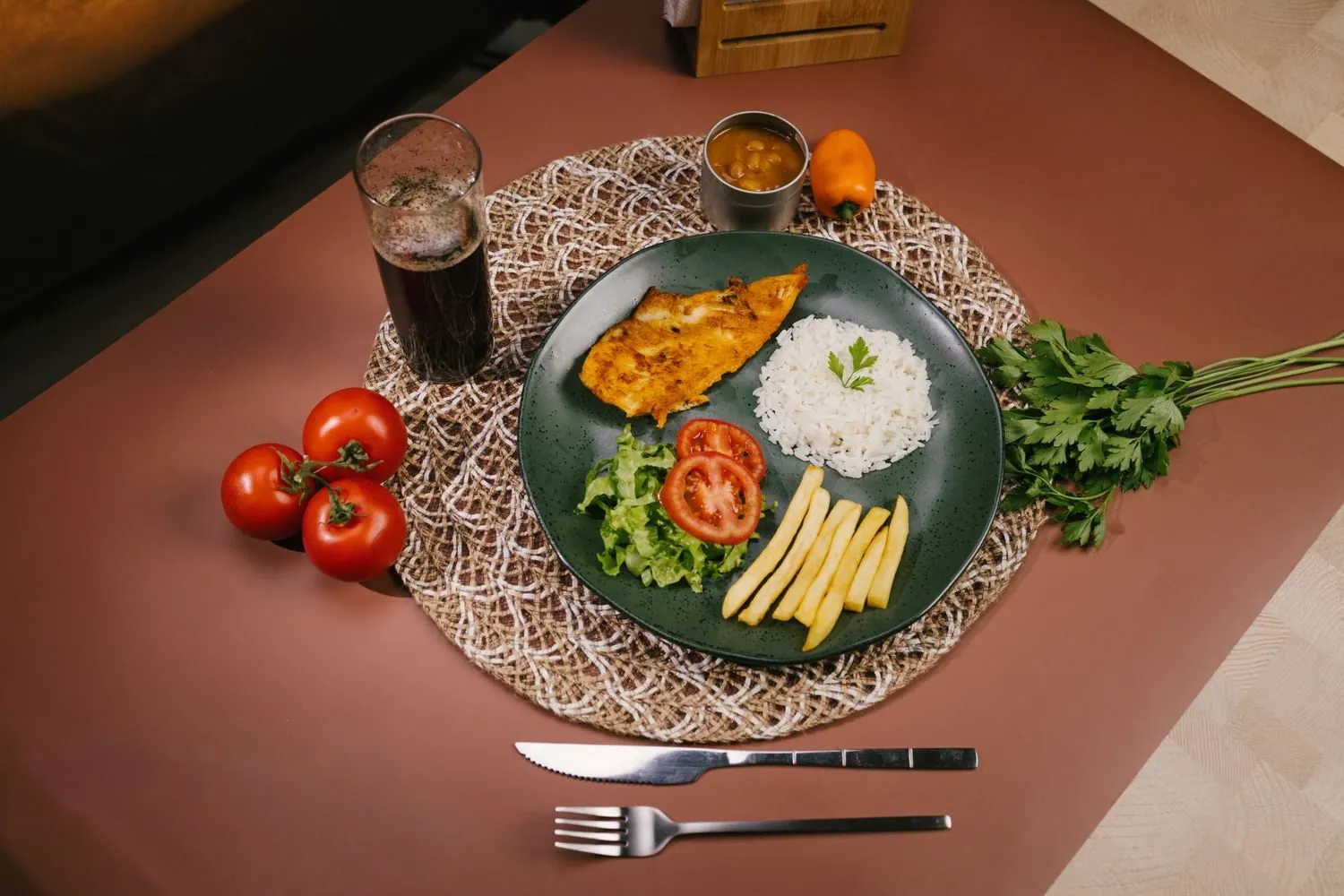
Three short requests solve most problems, and most kitchens agree without fuss: “Could the sauce come on the side?”, “Can this be made with a little less oil?” and “Please skip the butter on top.” Sauce on the side does not mean skipping it; you decide the amount, which is usually far less than the default pour. Slowing down to taste the food helps too, and mindful eating and how to start is a gentle place to begin.
What should you order at an Indian restaurant?
At an Indian restaurant, pick a tandoori or dal-based main, add one sabzi or raita, and take one or two rotis instead of naan. A plate built this way usually lands around 650-850 kcal with roughly 25-40 g of protein, versus about 1,000-1,400 kcal for a butter gravy, two naans, a full plate of biryani and dessert.
Indian menus have a huge gap between the lightest and richest versions of the same meal. The figures below are rough ranges for typical servings; kitchens vary, so use them as a guide to relative weight, not exact counts.
| Item (typical serving) | Rough energy | Lighter swap or tip |
|---|---|---|
| Tandoori chicken, 4 pieces | About 250-350 kcal | Already a strong choice; add a vegetable side |
| Dal tadka, 1 katori (about 150 g) | About 150-200 kcal | Best-value side; adds fibre and some protein |
| Paneer butter masala or butter chicken, 1 katori | About 300-450 kcal | Take a smaller scoop and fill the plate with sabzi and dal |
| Mixed vegetable sabzi, 1 katori | About 100-180 kcal | Order one per person, not one for the table |
| Plain roti, 1 piece | About 80-120 kcal | Tandoori roti is usually the lightest bread on the menu |
| Naan or paratha, 1 piece | About 250-350 kcal | Butter on top adds more; split one between two people |
| Steamed rice, 1 katori (cooked) | About 150-220 kcal | Fine as an accompaniment; no need to finish a mound |
| Chicken or veg biryani, full plate | About 600-900 kcal | Share one plate and add raita and a salad |
| Fried samosa, 1 piece | About 200-300 kcal | One to share is plenty; choose a tandoori starter instead |
The pattern behind those numbers: tandoor cooking uses little oil, while samosas and anything “crispy” soak it up. Dal and sabzi give fibre and protein for few calories. Naan is refined flour, often brushed with butter, so it outweighs roti. And rice is calorie-dense in bulk, so a biryani is a meal on its own, not a side.
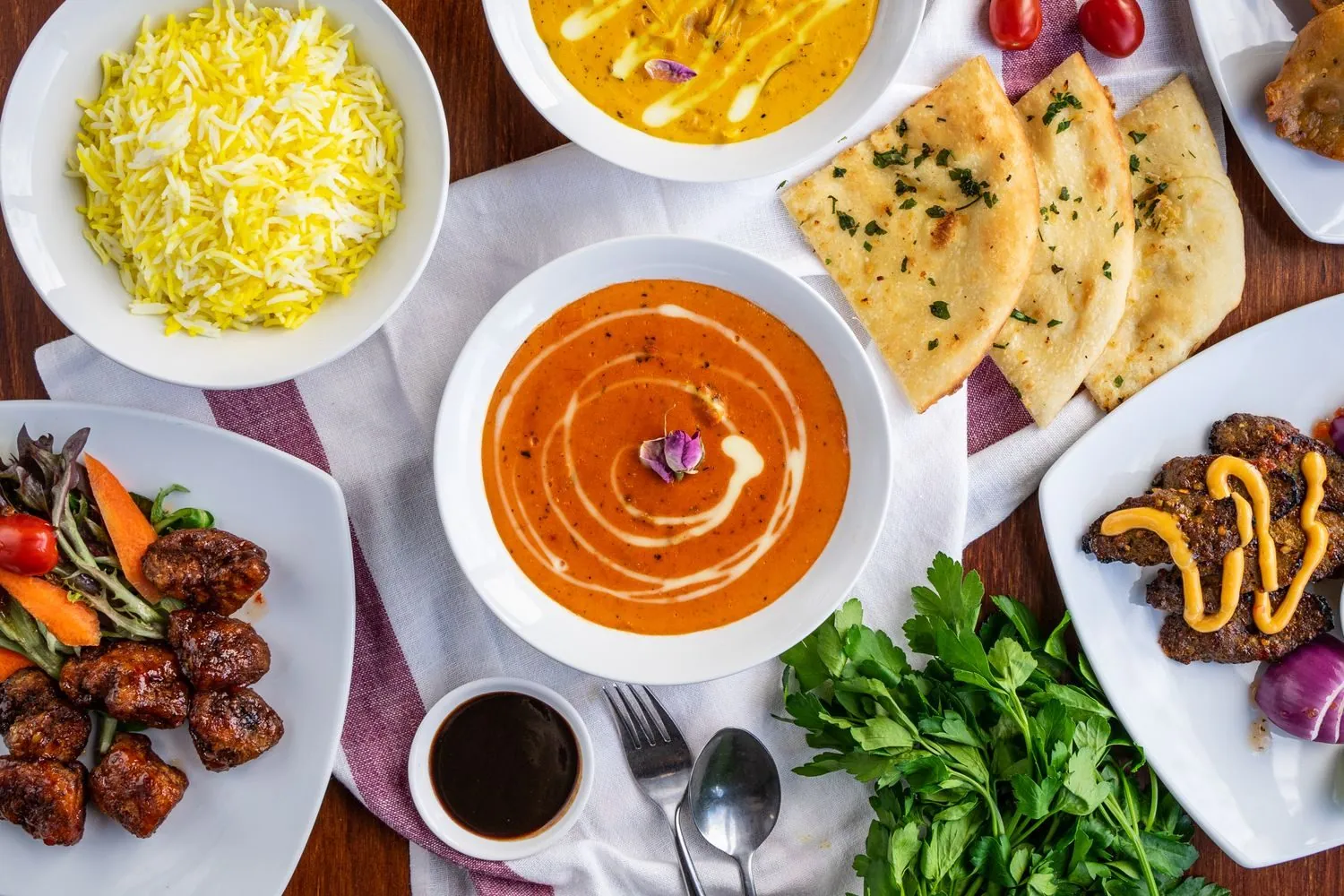
For a simple template, how to build a healthy plate suggests about half vegetables or salad, a quarter protein and a quarter carbohydrate, even when you did not cook the plate yourself.
Four restaurant myths worth dropping
“A salad is always the safe order.” With creamy dressing, cheese, fried toppings and croutons it can reach about 500-800 kcal and leave you hungry in an hour. Grilled chicken or paneer, dressing on the side and a roti or soup works far better.
“Skipping lunch saves room for dinner.” It backfires: you arrive ravenous, order more and eat faster. Have a normal lunch, or a fruit or handful of roasted chana if dinner is late.
“Vegetarian means light.” Paneer butter masala, malai kofta and cheese-loaded starters can be heavier than a tandoori chicken plate. Check the cooking method and gravy, not just the word “veg”.
“Healthy-sounding names mean healthy food.” “Wholesome”, “multigrain” and “protein bowl” describe marketing, not oil, sugar or portion. Ask what is in the sauce.
Your table-side game plan, from booking to bill
- Check the menu online first. Two minutes at home beats ten minutes of pressure at the table. Decide your main and one backup.
- Eat normally earlier. If the booking is late, have a small snack around 5 or 6 pm so you are hungry, not desperate.
- Drink water on arrival. A glass of water or unsweetened nimbu pani slows the first reach for the bread basket.
- Order early in a group, before you get anchored by the loudest order, and share one or two starters, at least one steamed or grilled.
- Build the main: one protein (tandoori, grilled fish, paneer tikka, dal, rajma or chole), one vegetable side and one carbohydrate portion.
- Use your three requests: sauce on the side, less oil, no butter on top.
- Pause halfway. Fullness signals take roughly 20 minutes to catch up, so put the fork down and check in.
- Box the rest early, before you start eating if the portion is huge.
- Share dessert, then walk. One dessert and four spoons satisfies the craving, and a 10-15 minute stroll closes the evening nicely.
Dessert-menu cravings are normal; how to control food cravings explains how to ride them out.
Troubleshooting: heavy menus, wedding buffets and late dinners
Sometimes nothing on the menu is light, or the buffet makes portion control feel impossible. The goal is damage limitation, not perfection: find the least-fried protein, load up on vegetables, and be deliberate about the two or three things you actually came for.
| Situation | What usually goes wrong | What to do |
|---|---|---|
| Wedding or party buffet | Several plates of mixed rich dishes, eaten while standing and chatting | Do one slow scan of every counter first, take one plate, fill half with salad and vegetables, and pick your two favourites |
| Dinner after 9:30 pm | Late, heavy food and poor sleep | Skip the bread, pick a lighter main such as dal and sabzi or grilled protein, and finish early in the evening if you can |
| Food court or fast food | Combos upsize the drink, fries and sauce | Pick a grilled or baked item, skip the combo, drink water, and ask for sauces separately |
| Travel with few options | Skipping meals, then eating everything at once | Eat regular meals, pick dry preparations and curd-based sides; see our tips in staying active on the road |
Healthy choices need not cost more: dal, sabzi, roti and curd are often the cheapest items on the menu. Our guide to eating healthy on a budget in India keeps that pattern going at home.
Adjusting your order to your goal
If you are trying to lose weight: follow the game plan, keep carbohydrate to one portion, and favour tandoori, dal and sabzi. Strict bans on favourite foods tend to end in a binge; a steady, modest deficit across the week matters far more than one dinner. For structure and accountability, an online weight loss trainer can plan your week around your social calendar.
If you lift or train hard: protein is the priority: a palm-sized to double palm-sized portion of tandoori chicken, fish, paneer, eggs, dal or rajma, plus carbohydrate to match your activity. See what to eat after a workout for timing.
If you are vegetarian or vegan: protein is the gap. Combine dal or chole with curd or raita, and order paneer tikka or soya chaap grilled rather than in gravy.
If you manage a medical condition: if you have diabetes, a heart condition, kidney disease, a food allergy or other dietary restrictions, see your doctor or a registered dietitian for personal restaurant rules before relying on general advice. For heart health, see how to eat with heart disease. This article is general guidance, not medical advice.
How do you enjoy eating out without feeling guilty afterward?
Enjoy eating out guilt-free by treating one meal as just one meal. Plan the one or two choices that matter (cooking method and the carbohydrate portion), then eat slowly for at least 20 minutes and stop at comfortable fullness. One restaurant dinner does not undo a week of balanced eating, and skipping meals afterwards usually backfires.
Social meals belong in a healthy life. A few mindset shifts help:
- Drop the clean-plate rule. Restaurant portions were designed to look generous, not to match your appetite. Stopping when satisfied is a habit worth building.
- Do not “compensate”. Skipping the next meal or doing a punishing workout turns food into a transaction. Return to your normal routine at the next meal.

For that deeper work, intuitive eating for beginners is a good starting point, so that dining out stops feeling like a high-stakes event.
FAQ
How often can I eat out and still be healthy?
Your overall pattern over weeks matters far more than any single meal. Eating out two or three times a week fits a healthy lifestyle if most of your other meals are balanced and you apply the basics: pick dry cooking methods, control sauces and keep carbohydrate to one portion.
Is it rude to ask for sauce on the side or less oil?
No. Restaurants get these requests all the time, and most kitchens are happy to oblige. Ask politely when you order, not after the dish arrives. If a dish is made in a pre-mixed gravy and cannot be changed, simply take a smaller scoop and fill the rest of your plate with dal, sabzi or salad.
Is naan really that much heavier than roti?
Yes. A plain roti is about 80-120 kcal, while a naan or paratha is usually about 250-350 kcal, more if butter is brushed on top. Naan is made with refined flour and often cooked with fat, while roti is whole wheat and cooked dry. Neither is forbidden; naan is simply the richer choice.
Should I skip lunch to save room for a restaurant dinner?
No. Skipping meals usually leaves you ravenous, which leads to faster eating, bigger orders and less awareness of fullness. Eat a normal lunch, and if dinner is late, have a small snack such as a fruit or a handful of roasted chana so that you can order calmly.
What is the single best change to make when eating out?
Choose by cooking method. Picking grilled, tandoori, steamed or roasted dishes over fried or creamy ones has the biggest effect for the least effort, because most of the extra calories in restaurant food come from oil, butter and cream rather than from the main ingredient itself.
If you want a personal eating-out plan built around your favourite restaurants, your schedule and your goal, book an online nutritionist consultation and bring your usual orders along.


