
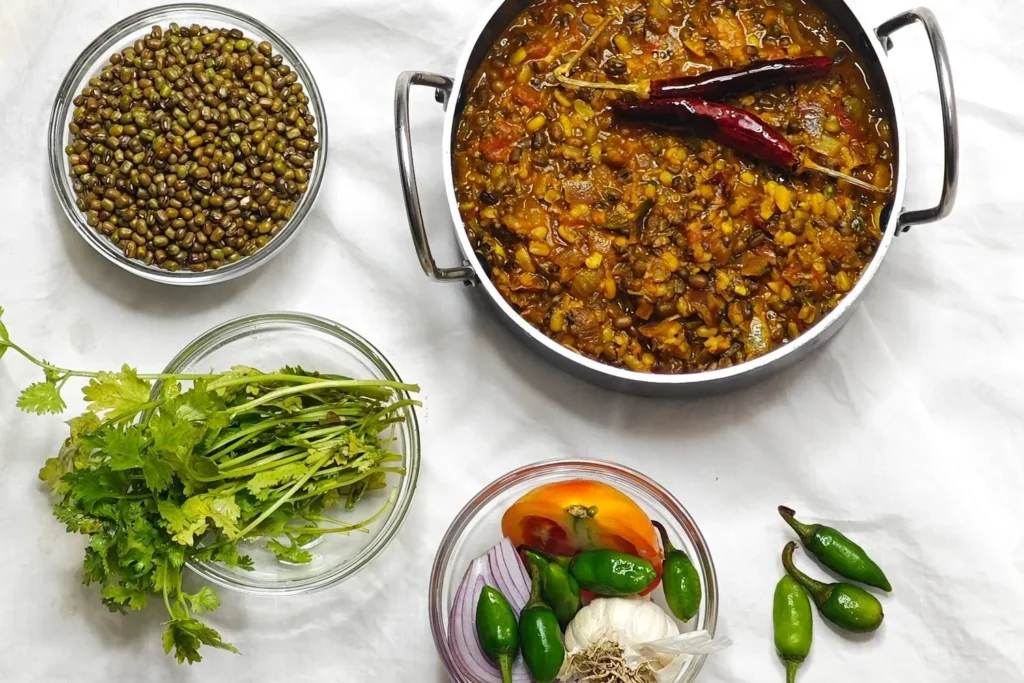
You can eat healthy on a budget in India without quinoa, protein bars or a single imported superfood. The cheapest foods in an Indian kitchen, namely dal, eggs, soya chunks, atta, curd, peanuts and whatever sabzi is in season, are also some of the most nutritious per gram. This guide shows which foods carry the most protein per rupee, how much to buy in a week, and how to stop a budget plan from falling apart by Thursday.
What does healthy eating on a budget in India actually look like?
Healthy eating on a budget in India means building each meal from a whole grain, a dal or other protein, plenty of vegetables and a little fat, all bought in season. For one adult that is roughly 300 to 400 g of vegetables, 60 to 80 g of raw dal or equivalent protein, and 150 to 200 g of raw grain a day.
Nothing on that list needs a specialty store. For the visual version of the plate, see our guide on how to build a healthy plate shows the split in detail.
Money enters in three places: which protein you anchor on, whether vegetables are in season, and how much goes to packaged items with a health label. Fix those and the rest mostly follows.
Which cheap protein sources in India give the most protein per rupee?
Dry soya chunks, dal, eggs and sprouted moong give the most protein for the least money in India. About 40 g of dry soya chunks, 90 g of raw dal or three eggs each deliver roughly 18 to 21 g of protein, and all sit in the cheap price band, well below paneer, protein bars or branded shakes.
The table compares what it takes to reach about 20 g of protein from each source. Cost bands are relative, since prices shift by city and season.
| Food | Amount for about 20 g protein | Cost band | Good to know |
|---|---|---|---|
| Soya chunks (dry) | About 40 g | Cheap | Soak in hot water; weight roughly triples |
| Toor, moong or masoor dal (raw) | About 90 g | Cheap | Pair with rice or roti for a fuller amino acid mix |
| Eggs | 3 whole eggs | Cheap | About 6 g protein each; boil in batches |
| Sprouted moong or chana (dry weight) | About 85 g | Cheap | Home sprouting adds almost no cost |
| Roasted peanuts | About 80 g | Cheap to mid | Calorie-dense, around 450 kcal for that amount |
| Milk | About 600 ml | Mid | Also gives calcium |
| Curd (dahi) | About 500 g | Mid | Homemade is cheaper than flavoured cups |
| Paneer | About 110 g | Mid to pricier | Good, but use it as a treat protein, not the daily base |
| Packaged protein bar | Often 1 to 2 bars | Pricier | Protein per bar varies a lot; read the label |
The pattern is clear: minimally processed staples beat packaged protein on cost per gram almost every time. If your target is higher, for example while training, the high-protein Indian diet plan shows how to stack these foods across a full day.
Myth check: do you need quinoa, protein bars and superfoods to eat well?
No. Most “healthy” packaged products cost far more per gram of nutrition than the kitchen staples they imitate. Quinoa is nutritious, but so are bajra, jowar and ragi. Chia is fine, but flaxseed, peanuts and sesame do a similar job locally. The label sells the story; the food rarely changes your results.
- Protein bars and shakes: fine for travel, poor value as a daily habit.
- Imported seeds and berries: swap for amla, flax, til and seasonal fruit.
- “Diet” or low-fat packaged snacks: often have extra sugar or refined starch to make up for taste.
- Cold-pressed juices and detox kits: a whole fruit costs less and keeps the fibre.
- Flavoured yoghurt and malted health drinks: plain homemade dahi has less added sugar and costs a fraction.
None of these are harmful in moderation; they are just poor value. If weight loss is part of your goal, our nutrition for weight loss guide explains why “diet” labels can mislead on calories.
How do you build a budget thali, step by step?
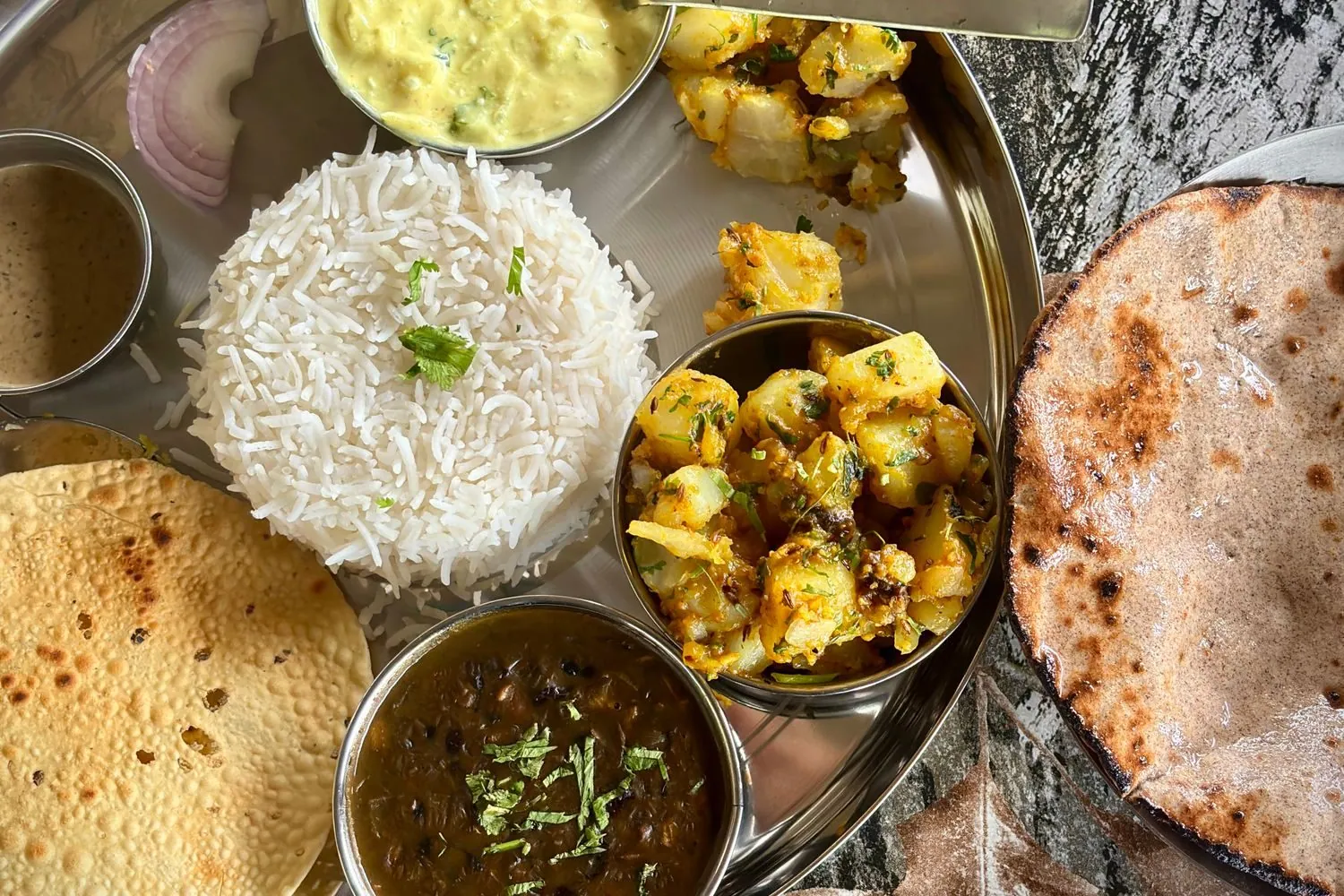
Build a budget thali in four steps: fill half the plate with vegetables, a quarter with whole grain, a quarter with dal or another protein, then add a teaspoon of ghee or oil. This keeps a meal near 450 to 600 kcal for most adults, with about 15 to 20 g of protein, using cheap staples.
- Vegetables first, about 150 g per meal. Pick whatever is cheapest that week: lauki, cabbage, pumpkin, spinach, beans, carrot. Add one raw item such as cucumber, onion or tomato.
- One whole grain, about 60 to 80 g raw. That is two rotis or roughly one katori of cooked rice.
- One protein anchor. Roughly 30 g raw dal (about 7 g protein), or two eggs, or 25 to 30 g dry soya chunks. Add 100 g curd for another 3 to 4 g.
- Small fat. One teaspoon of ghee or oil in cooking and a few peanuts or til. You do not need nut butters.
Cook dal in a big pot and reheat it across two days to save gas and time. For habits that make this stick, see healthy eating habits to build.
A 7-day budget meal plan you can screenshot
This plan uses the same staples all week, with the protein anchor rotating so you do not get bored. Vegetarians can swap eggs for more dal or a little paneer.
| Day | Breakfast | Lunch | Dinner | Protein anchor |
|---|---|---|---|---|
| Mon | Vegetable poha with peanuts, 1 fruit | 2 roti, toor dal, lauki sabzi, salad | Rice, rajma or dal, cabbage sabzi | Dal and rajma |
| Tue | 2 egg bhurji, 1 roti | Veg khichdi, curd | 2 roti, soya chunk curry, salad | Eggs and soya |
| Wed | Besan chilla with onion, tomato | 2 roti, moong dal, bhindi | Veg pulao, raita | Besan and moong |
| Thu | Sprouts chaat, tea | Rice, kadhi, seasonal sabzi | 2 roti, masoor dal, salad | Sprouts and masoor |
| Fri | Oats or dalia porridge with milk | 2 roti, chana curry, salad | 2 boiled eggs, vegetable soup, 1 roti | Chana and eggs |
| Sat | Stuffed paratha (1), curd | Dal tadka, rice, sabzi | Soya pulao, raita | Soya and curd |
| Sun | Idli or dosa with sambar | Clear-out-the-fridge vegetable curry, roti | Moong dal khichdi, papad, curd | Sambar dal and moong |
For turning this into a repeatable routine, read our meal planning guide.
What should one adult buy for a week of budget healthy eating?
One adult eating three home meals a day needs roughly 1.2 to 1.5 kg of atta or rice, 500 g of dal and legumes, 2.5 to 3 kg of vegetables, and 2 to 3 litres of milk or curd a week. That covers most nutrition needs; eggs, soya and peanuts top up protein cheaply.
| Item | Weekly amount (one adult, roughly) | Cost band |
|---|---|---|
| Atta, rice, millets | 1.2 to 1.5 kg combined | Cheap |
| Dals and whole legumes | About 500 g | Cheap |
| Seasonal vegetables | 2.5 to 3 kg | Cheap to mid |
| Milk or curd | 2 to 3 litres | Mid |
| Eggs (optional) | 7 to 10 | Cheap |
| Soya chunks | 100 to 150 g | Cheap |
| Peanuts | 100 to 150 g | Cheap |
| Cooking oil or ghee | About 150 to 200 g | Mid |
| Seasonal fruit | 7 pieces, one a day | Cheap to mid |
Does seasonal and bulk buying really save money?
Yes, both help. Out-of-season vegetables are often cold-stored or transported far, so they cost noticeably more than the same item in season. Staples like atta, rice, dal and oil also cost less per kg in larger packs, as long as you finish them before they go stale.
For vegetables, shop at the local sabzi mandi rather than a premium store, and plan around what is cheapest that week instead of a fixed list. When peas, lauki or greens hit a seasonal low, buy extra and freeze after a quick blanch.
For staples, a few ground rules keep bulk buying honest:
- Buy only what you can finish within shelf life. Dal and rice keep for months; atta is best within 6 to 8 weeks.
- Skip bulk spices and ready masalas. They lose potency before you finish them.

Troubleshooting: why does a budget meal plan keep falling apart?
Most budget plans fail from boredom, tiredness or waste, not from lack of willpower. The fix is usually small: rotate two dals, prep one batch on Sunday, and keep a cheap emergency snack at home. A plan that survives a bad day beats a perfect plan that lasts three.
- “I am bored of dal-roti.” Change the format: khichdi, chilla, dal paratha, sambar. Rotate two or three dals and vary the tadka.
- “I have no time on weekdays.” Boil eggs, soak chana and chop vegetables on Sunday. Cooked dal keeps a day or two in the fridge.
- “I get hungry by 4 pm.” Lunch probably had too little protein or vegetables. Add curd or a boiled egg, and keep roasted chana or peanuts handy as a cheap snack. More ideas in healthy snacks on the go.
- “Vegetables go bad before I cook them.” Use leafy greens early in the week, hardy vegetables later, and plan one midweek clear-out curry.
- “I eat out too often.” A simple local thali is usually cheaper and more balanced than a “healthy” bowl; our guide on how to eat healthy while dining out has practical swaps.
How can students, PG residents and busy professionals eat healthy on a low budget?
Students and people living alone can eat healthy on a low budget with a pressure cooker or electric kettle, a small stock of dal, eggs and oats, and one bulk purchase of atta or rice. Two cooked meals and one simple snack a day, built around about 15 to 20 g of protein per meal, is a realistic target.
- Hostel or PG with limited cooking: dalia, oats, poha, boiled eggs, roasted chana, peanuts, bananas and curd need little or no equipment.
- Working professional with a mess or tiffin: add a boiled egg or curd on the side and ask for extra sabzi, so the plate matches the half-vegetable rule.
- Fasting days: keep protein up with curd, milk, peanuts and makhana; see what to eat during fasting.
What a budget diet cannot fix, and when to get help
Cheap food is not a shortcut to a specific body result, and no meal plan guarantees weight loss, muscle gain or lab improvements. Eating less than you need to save money can leave you tired and short of protein, iron and calcium, so reduce waste and packaged extras, not the plate itself.
If you have diabetes, kidney disease, thyroid issues, anaemia, a history of disordered eating or you are pregnant, do not copy a generic plan. See your doctor or a registered dietitian first. A personalised plan can still be built from the same inexpensive staples, such as those in an online nutritionist consultation.
Frequently asked questions
Is dal or eggs better for protein on a tight budget?
Both work, and they work best together. Three eggs give roughly 18 g of complete protein, while about 90 g of raw dal gives around 20 g plus fibre. Dal is usually the cheapest base, eggs add quality and convenience. Rotating them across the week gives better variety than relying on just one.
Can vegetarians eat high-protein meals affordably in India?
Yes. Dal, soya chunks, sprouts, rajma, chana, curd and a little paneer can cover a full day of protein without eggs or meat. Soya chunks and dal are the cheapest anchors. Pair dal with rice or roti and aim for roughly 15 to 20 g of protein per main meal.
Are protein powders necessary for a healthy diet in India?
For most people, no. A varied diet with dal, eggs, dairy and legumes can meet daily protein needs for less money. Powders can be a convenience for very active people or travellers, but they are not a budget default. Food first, supplements only if a gap remains.
How do I eat healthy on a budget if I eat out often?
Choose a plain local thali, with dal, sabzi, roti or rice and curd, over packaged “diet” combos or premium salad bowls. Ask for extra sabzi, skip fried sides and fizzy drinks, and carry a cheap snack like roasted chana to avoid impulse buys between meals.
Does eating seasonal produce really make a nutritional difference?
The bigger difference is cost. Seasonal vegetables and fruit are usually fresher and cheaper, which makes it easier to eat plenty of them. They may also have travelled and been stored less, which helps retain vitamins, but the main benefit is that you actually buy and eat more variety.
Start this week with one change: pick two dals, one protein anchor and the three cheapest vegetables at your mandi, then cook from that list. If you want a plan matched to your budget, food preferences and health goals, book an online nutritionist consultation with Fitstrot.


