

The best healthy snacks on the go are dry, compact and stable at room temperature: roasted makhana, bhuna chana, roasted peanuts, almonds, khakhra, and whole fruit like apples and bananas. Whether you are on a Mumbai local, a 14-hour train to Kolkata or a daily office commute, the right dabba in your bag keeps you away from the station samosa and the sugary chai-biscuit loop. This guide gives you a tested list, portions in grams, a packing plan by trip length and a 30-minute weekly prep routine.
What makes a snack good for travel?
A good travel snack passes three tests: it stays safe for 6-8 hours without a fridge, it survives being squashed in a bag, and it gives roughly 5-10 g of protein or 3-5 g of fibre within about 150-200 kcal. Dry, low-moisture foods such as makhana, chana, nuts and whole fruit pass. Curd, cut fruit and paneer usually do not.
Most “healthy” snacks fail on portability, not nutrition. Cut fruit leaks, curd and paneer need a cold pack, and cooked food should not sit out for more than about two hours, and less in peak Indian summer heat. That is why the best healthy snacks for travel are dry-roasted, low-moisture foods that sit in a bag all day without worry.
If weight loss is your goal, pair this portability lens with the portion and timing advice in our guide to healthy snacks for weight loss.
Which healthy snacks on the go work best without a fridge?
The most reliable healthy snacks on the go in India are roasted makhana, bhuna chana, roasted peanuts, almonds, khakhra, plain thepla, and whole apples or bananas. Each gives roughly 90-170 kcal per portion, stays fresh from a day to several weeks outside the fridge, and needs no spoon, plate or washing up.
| Snack | Portion | Approx. kcal | Approx. protein | Keeps outside the fridge |
|---|---|---|---|---|
| Dry-roasted makhana | 30 g (a large handful) | about 105 | about 3 g | 1-2 weeks, airtight |
| Bhuna chana (roasted chickpeas) | 30 g | about 110 | about 6 g | 1-2 weeks, airtight |
| Roasted peanuts | 30 g | about 170 | about 8 g | 1-2 weeks, away from heat |
| Almonds | 10-12 nuts (about 15 g) | about 90 | about 3 g | Weeks, airtight |
| Homemade murmura-chana chivda (light oil) | 40 g | about 160 | about 4 g | 1-2 weeks, airtight |
| Khakhra (plain or methi) | 2 pieces | about 110 | about 3 g | 2-3 weeks, if kept dry |
| Plain thepla (little oil) | 1 medium | about 110 | about 3 g | 1-2 days |
| Apple | 1 medium | about 90 | under 1 g (3-4 g fibre) | Several days |
| Banana | 1 medium | about 105 | about 1 g | About a day (bruises easily) |
These are rounded estimates for plain, home-style versions. Adding a teaspoon of ghee or oil to makhana or chivda adds roughly 40-45 kcal. Salted and masala versions add sodium, which matters if you watch your blood pressure.
For more protein-forward options beyond travel, see our high-protein snacks list. Keep nuts and peanuts for people without allergies, and remember that oily nuts go rancid faster in heat, so buy small quantities in summer.
Are protein bars, “multigrain” chips and packaged juice really healthy travel snacks?
Not automatically. A protein bar is a decent backup only if it gives at least 8-10 g of protein for 150-200 kcal with little added sugar. Many carry 15 g or more of sugar, about 4 teaspoons. “Multigrain” chips are still fried, and a 200-250 ml juice pack holds roughly 20-25 g of sugar with little fibre.
Here is a quick label check before you toss anything into your bag:
- Look at added sugar, not just total sugar. Sugar from dates is not the same as glucose syrup and a chocolate coating.
- Check the protein-to-calorie ratio. Well under 8 g protein per 150-200 kcal means you are eating a granola bar, not a protein snack.
- Read the ingredient list. A short list of nuts, seeds and dates beats 20 ingredients with gums and flavours.
- Treat bars as emergency stock. Two in the bag for the day you could not prep is sensible. A bar every day is a habit worth reviewing.
The same logic applies to namkeen and bhujia: a 30 g handful is about 150-170 kcal with under 5 g of protein, and it is easy to finish the whole packet without noticing.
How many snacks should you pack for a train, flight or road trip?
Pack roughly one 150-200 kcal snack for every 3 hours of travel, plus one spare, and carry a proper meal for anything over 6 hours. A 14-hour train ride needs about 4-5 portioned dry snacks plus a spare, because delays are common and station food is rarely the healthiest choice.
| Trip | Snacks to pack | Good picks | Skip |
|---|---|---|---|
| Office commute or day out (2-4 hours) | 1 snack + 1 fruit | Apple, 30 g bhuna chana | Cut fruit, curd cups |
| Half-day outing (6-8 hours) | 2 snacks + 1 spare | Makhana, almonds, khakhra, banana | Cream biscuits, cold drinks |
| Overnight train or bus (12-16 hours) | 4-5 snacks + 1 spare, plus meals | Peanuts, chivda, thepla (first day only), apples | Boiled eggs and paneer after the first couple of hours |
| Flight with layover (6+ hours) | 2-3 snacks + 1 spare | Chana, nuts, khakhra, whole fruit | Liquids and pastes over the limit, strong smells |
| Road trip in summer | 1 snack per 3 hours, in the cabin | Almonds, makhana, apples | Chocolate-coated bars, anything left in a hot boot |
Train and bus: for any snacks for a long journey, pack everything dry and in small containers so you are not passing one open packet around. Wipe or sanitise your hands before eating, since washing is not always possible. Whole fruit is the safest option when you have nowhere to wash up.
Flights: solid snacks like chana, makhana, nuts and khakhra are generally fine in cabin bags, but liquids, gels and pastes face limits, especially on international routes where 100 ml is the common cap. Single-serve nut butter pouches can count as a paste. Rules vary by airport and airline, so check before you fly, and remember that some countries restrict nuts, seeds and fresh fruit at the border. Carry an empty bottle and fill it after security, because cabin air is dry and thirst often feels like hunger.
Road trips: keep snacks in the cabin, not the boot or on the dashboard. A parked car in an Indian summer easily turns peanuts oily and bars into paste.
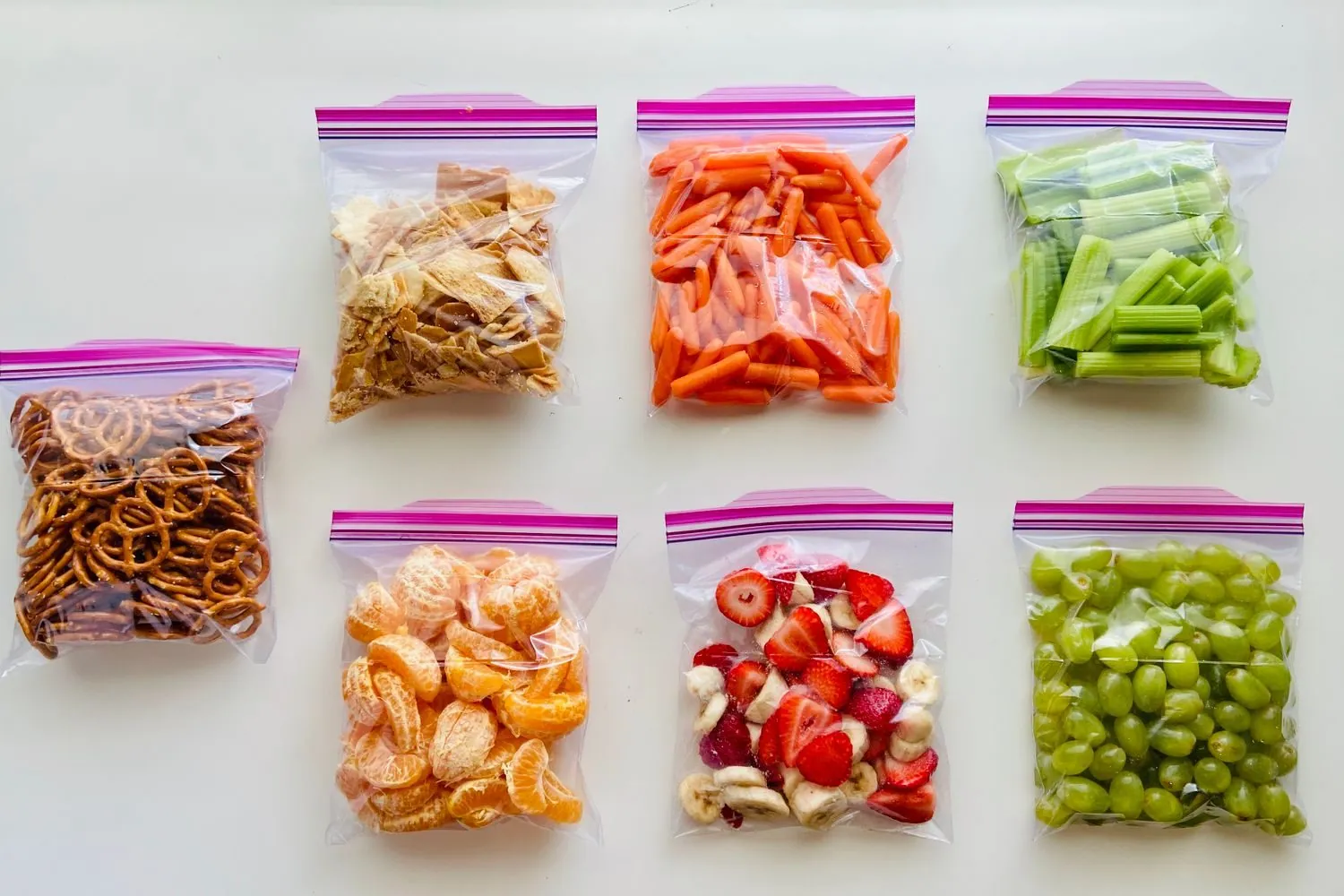
How do you batch-prep a week of healthy travel snacks in 30 minutes?
Pick one day, buy or dry-roast your staples, and portion them into 25-30 g containers. About 6-8 portions of makhana, chana and a nut mix for the week take roughly 30 minutes. Keep them in one grab box near the door so the decision is made before the morning rush.
- Choose one prep slot. Sunday evening works for most people. Pair it with your weekly meal planning so it becomes one habit instead of two.
- Dry-roast or buy plain. Roast makhana in a pan for 4-5 minutes on low heat until it snaps, with no oil or just half a teaspoon. Buy bhuna chana and peanuts plain or lightly salted.
- Make one homemade mix. Dry-roast about 2 cups of murmura, then toss with 2 tablespoons bhuna chana, 1 tablespoon peanuts, a teaspoon of oil, curry leaves, a pinch of turmeric and a little salt.
- Portion before you pack. Use small steel dabbas or resealable pouches, 25-30 g each. This one step prevents most overeating on trips.
- Fill a grab box. Keep 5-7 portions in one box or basket, and add a fresh apple or banana on the morning itself.
Troubleshooting: soggy makhana, rancid peanuts and the mindless-munching problem
- Makhana or murmura has gone soft. Humidity is the cause, especially in monsoon. Re-crisp it in a dry pan for 2-3 minutes, let it cool fully, and store it airtight. Open the box only to refill your portion pouches.
- Peanuts or nuts smell bitter or sharp. That is rancid fat. Throw them away rather than hoping, and buy smaller packs in summer.
- Bananas arrive black and mushy. Pack them in a hard box or switch to an apple on travel days.
- You finish the whole bag within an hour. You were eating from a large pack. Portion in advance, eat sitting down, and decide before you open the box how many portions you will have.
- Nothing keeps you full. Your meals may be too light on protein and fibre. Rebuild your lunch around protein, fibre and vegetables before adding more snacks.
Smart swaps: what to grab instead of the usual station snacks
| Instead of | Approx. kcal and protein | Pick this | Approx. kcal and protein |
|---|---|---|---|
| Packaged bhujia or namkeen, 30 g | 150-170 kcal, under 5 g protein | Bhuna chana, 30 g | about 110 kcal, about 6 g protein |
| Fried chips, 30 g | about 160 kcal, about 2 g protein | Dry-roasted makhana, 30 g | about 105 kcal, about 3 g protein |
| Cream biscuits, 4-5 pieces | 150-200 kcal, little protein | 1 banana + 10 almonds | about 165 kcal, 3-4 g protein, more fibre |
| Packaged fruit juice, 200-250 ml | 100-120 kcal, 20-25 g sugar, little fibre | 1 medium apple | about 90 kcal, 3-4 g fibre |
| Fried samosa from the platform | about 250 kcal or more | 1 plain thepla + water | about 110 kcal |
All numbers are approximate and vary by brand and recipe. The point is the direction: dry-roasted and whole foods give you more protein and fibre for fewer calories than fried or sugary options.
Snack picks by lifestyle: commuters, students, evening travellers
Office commuters. For healthy snacks for office days, keep a 30 g pouch of chana or makhana in your desk drawer and a fruit in your bag. If your day starts early and you skip breakfast, our quick healthy breakfast ideas will help more than any snack.
Students and long-distance travellers. Money is usually tight, and the cheapest options are also among the best: bhuna chana, peanuts, seasonal fruit and homemade chivda. Our guide to eating healthy on a budget in India shows how to stretch this further.
Evening travellers. Late commutes are when cravings peak. A small portion of nuts with a fruit is steadier than chai and biscuits, and our healthy evening snacks list has more ideas for that window.
People managing blood sugar. Dried fruit, juice, sweet bars and large banana portions can push sugar up quickly, so portion and pairing matter more. Start with our diabetes-friendly snacks guide. If you have diabetes, kidney disease, a nut allergy or any other medical condition, ask your doctor or a registered dietitian which snacks are safe for you, and do not change medication because of what you read here.
Anyone counting calories. Snacks are not a weight-loss tool on their own. Two 150-200 kcal snacks add 300-400 kcal to your day, so count them, and do not replace meals with snacks. A snack that makes you skip lunch is not helping.
FAQs about healthy snacks on the go
What are the best healthy snacks on the go for a long train journey?
Choose dry, portioned foods: bhuna chana, roasted makhana, peanuts, almonds, khakhra and whole apples. Pack about one 150-200 kcal snack per 3 hours plus a spare. Eat perishable items like thepla, boiled eggs or paneer within the first couple of hours, and rely on dry snacks after that.
How long do roasted makhana and chana stay fresh in a bag?
Dry-roasted makhana and bhuna chana usually stay crisp for about 1-2 weeks in an airtight container kept away from sunlight, heat and moisture. In monsoon humidity they soften sooner, so portion them into small sealed pouches and open one at a time.
How many calories should a travel snack have?
For most adults, 150-200 kcal per snack, with about 5-10 g of protein or 3-5 g of fibre, is a sensible target. That is roughly 30 g of bhuna chana, a medium apple with a few almonds, or two khakhra with a small portion of nuts. Your needs may be higher if you are very active.
Can I carry homemade snacks on a flight?
Solid dry snacks such as chana, makhana, nuts and khakhra are generally accepted in cabin bags. Liquids, gels and pastes, including some nut butters, face limits on many routes, commonly 100 ml on international flights. Rules differ by airport, airline and destination country, so check before you travel.
How do I stop overeating snacks when I am bored on a trip?
Portion your snacks into 25-30 g pouches before you leave instead of carrying a large pack. Decide how many portions you will eat for each leg of the journey, eat sitting down, and drink water first. Boredom eating is easier to control when the box is small.
If your commute, shifts or travel keep breaking your eating routine, book an online nutritionist consultation with Fitstrot and get a snack and meal plan built around your actual schedule.


