

Done well, meal planning in nutrition is simply deciding, ahead of time, what your household will eat over the coming week, then shopping and cooking to match. In most Indian homes that means a small rotation of dals, sabzis, one or two proteins and a grain, part-cooked on Sunday and finished fresh on busy days. This guide gives you a copy-and-use weekly template, portion maths in grams, a batch-cooking order and a grocery rhythm that keeps vegetables fresh and waste low.
What is meal planning, and is it the same as a diet plan?
Meal planning is choosing what you will eat for the week, then buying and prepping to match. It is not a diet plan. A diet sets calorie or food targets, while a meal plan is a practical schedule of meals, groceries and cooking time that can serve any goal, from fewer daily decisions to eating more protein.
A workable plan has four parts: a quick stock check of your kitchen, a short list of meals or components, a grocery list built from them, and a fixed slot for prep. Skip one and the plan usually collapses by midweek. It sits inside your wider diet and nutrition habits, and it only works if it fits the week you actually have, not the week you wish you had.
How do you build a 7-day Indian meal plan template?
Pick two anchor proteins, such as toor dal and paneer or eggs, add one grain base per meal and a different sabzi each day, and let leftovers cover about two meals a week. Fill roughly half the plate with vegetables, a quarter with protein and a quarter with roti or rice.
Here is a template you can copy and edit. Many meals reuse the same dal, chana or sabzi, which keeps shopping and cooking short.
| Day | Breakfast | Lunch | Dinner | Prep note |
|---|---|---|---|---|
| Mon | Vegetable poha, curd | Toor dal, rice, bhindi sabzi, salad | Roti, mixed-veg sabzi, curd | Dal comes from the Sunday batch |
| Tue | Besan chilla, mint chutney | Leftover dal and sabzi, roti | Paneer bhurji, roti, cucumber salad | Paneer dish takes about 15 minutes |
| Wed | Idli or dosa with sambar | Chana masala, rice, salad | Moong dal khichdi, curd | Use the boiled chana from Sunday |
| Thu | Oats upma with peanuts | Leftover chana masala, roti | Egg curry or soya chunk curry, roti | Top up fresh greens today |
| Fri | Stuffed vegetable paratha, curd | Dal tadka, rice, aloo-gobi | Vegetable pulao, raita | One-pot night, minimal washing up |
| Sat | Sprouts chaat or boiled eggs | Flexible meal or eating out | Clear-out dinner from the fridge | Deliberately unplanned slot |
| Sun | Masala omelette or upma | Simple lunch while batch cooking | Light khichdi or vegetable soup | Plan, shop and prep for next week |
You do not need seven different dinners. Two or three repeating meals, one clear-out night and one unplanned meal is a plan most people can sustain.
How much should you cook per person?
For one adult meal, cook about 30 to 40 g raw dal, about 50 to 70 g raw rice or 2 to 3 rotis (about 25 to 30 g atta each), and about 150 to 200 g raw vegetables. Add about 80 to 100 g paneer or 2 eggs. Adjust to appetite and goals.
Weighing raw ingredients for a week or two teaches your eye what a sensible portion looks like, after which you can stop measuring.
| Food | Raw amount per person per meal | Roughly what it looks like cooked |
|---|---|---|
| Dal (toor, moong, masoor) | About 30 to 40 g | About one medium katori |
| Chole, rajma or whole chana | About 40 to 50 g | About one small katori |
| Rice | About 50 to 70 g | About one cup |
| Atta for rotis | About 25 to 30 g per roti | 2 to 3 rotis |
| Paneer | About 80 to 100 g | A palm-sized slab, cubed |
| Eggs | 2 | Bhurji, curry or boiled |
| Chicken or fish, boneless | About 120 to 150 g | One palm-sized portion |
| Vegetables for sabzi | About 150 to 200 g | One generous katori, plus a bowl of salad |
| Curd | About 100 to 150 g | One katori |
| Cooking oil | About 1 to 2 tsp | Per person, per cooked dish |
If you track energy intake, repeating meals makes it far easier, because the numbers are known instead of re-estimated daily. Our guide to nutrition and calories explains how to read those numbers sensibly.
Walkthrough: a 90-minute Sunday batch-cooking session
Batch cooking means one focused block of prep so that a Tuesday dinner takes about 15 minutes instead of 45. Start whatever takes longest and let it cook while you do the hands-on jobs.
- Minutes 0 to 10: start the slow items. Put a pressure cooker of toor dal on, and chana or rajma (soaked overnight) in a second cooker. Set rice to cook last.
- Minutes 10 to 40: chop while the cookers work. Dice onions, tomatoes and sabzi vegetables for the first three days, and grate carrot or cabbage for parathas and chilla.
- Minutes 40 to 60: make the bases. Cook one onion-tomato masala and keep half aside. It becomes chana masala, egg curry or paneer gravy within minutes.
- Minutes 60 to 80: cook one dry sabzi and knead dough. Dough keeps well for about a day in the fridge. Beyond that, roll and freeze plain parathas instead.
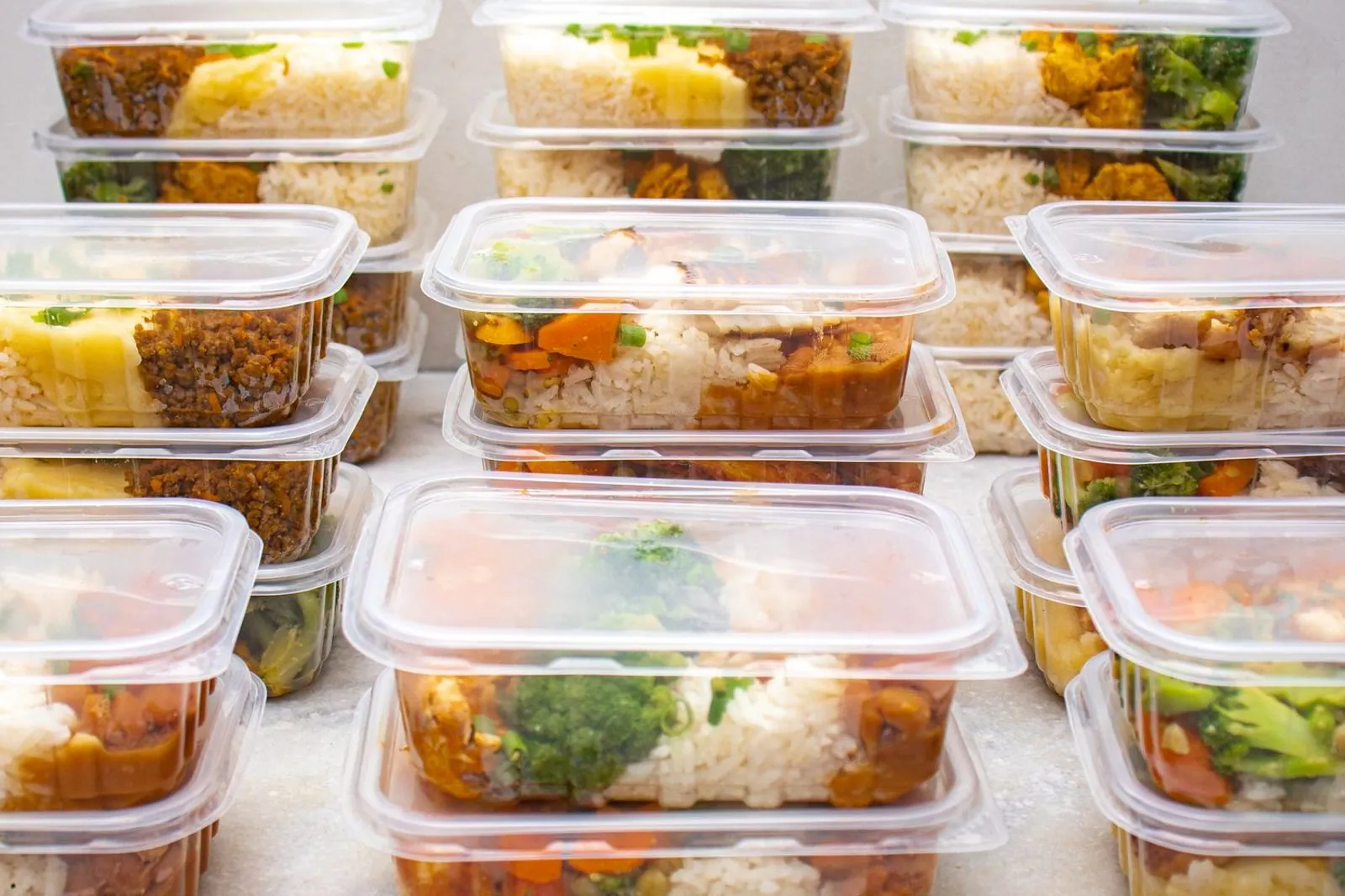
- Minutes 80 to 90: cool, portion and label. Spread food in shallow containers so it cools fast, and label the cooking day.
On storage, a conservative home rule works well. Cooked dal, sabzi and curries usually keep for about 2 to 3 days in clean, airtight containers in the fridge. Refrigerate rice within about 1 to 2 hours of cooking and reheat it only once, until steaming hot. Freeze anything you will not finish within about 3 days, and use frozen portions within about 1 to 2 months.
What is the best grocery rhythm for a weekly meal plan?
Split shopping by shelf life: buy dry staples about once a month, do one planned weekly shop for sturdy vegetables, eggs and paneer, and make one small midweek top-up for leafy greens, herbs and fruit. Write the list in the order of your store sections and check your kitchen before you write a single item.
| Group | How often | Examples | Why this timing |
|---|---|---|---|
| Dry staples | About once a month, checked weekly | Atta, rice, dals, besan, poha, oats, oil, spices | Long shelf life, and larger packs usually cost less per kg |
| Sturdy produce and proteins | Once a week, on a fixed day | Onion, potato, carrot, cabbage, gourds, lemons, ginger, garlic, eggs, paneer | Lasts about a week if stored properly |
| Delicate produce | Midweek top-up (about 2 to 3 days) | Palak, methi, coriander, mint, bhindi, fruit | Wilts fast, so overbuying is a quiet source of waste |
| Dairy | Daily or every 2 to 3 days | Milk, curd | Freshness and fridge space |
| Backup stock | Replenish when used | Frozen peas, boiled chana portions, poha, a few cooked-and-frozen parathas | Rescues the nights when the plan falls through |
Buy for the meals on your plan, not for a vague idea of healthy eating, and consolidate ingredients so one bunch of coriander serves four meals. Shopping by section also pulls you toward whole foods, the practical side of a nutrition and balanced diet approach.
Three meal-planning myths, corrected
Myth: planning means eating the same thing all week. Plan components, not fixed dishes. A base of dal, rice and a roasted or sauteed vegetable becomes khichdi, a rice bowl or stuffed paratha filling, and a different chutney or tadka changes the whole meal.
Myth: prepped food is stale and less nutritious. Properly cooled and stored food eaten within the safe window is fine. The bigger risk is no plan, when tired evenings turn into biscuits, instant noodles or delivery.
Myth: a meal plan is only for weight loss. It helps with budgets, waste and family routines. For fat loss, see nutrition for weight loss, and be wary of any plan promising guaranteed results in a fixed number of days. Safe progress is gradual and differs from person to person.
Why does a meal plan fall apart by Wednesday?
Most plans fail because of structure, not willpower: too many different dishes, no slack for a late meeting, no backup meal, and no check of what is already in the kitchen. Fix those four and the plan usually becomes a habit.
- Problem: seven different dinners. Fix: repeat two or three meals and add one clear-out night.
- Problem: vegetables rot before you use them. Fix: put delicate vegetables in the first half of the week and sturdy ones later.
- Problem: a missed prep day. Fix: a 30-minute rescue prep midweek, with just dal, rice and one sabzi base, beats giving up.
- Problem: protein is an afterthought. Fix: choose the protein first and build the plate around it. Our guide to protein and nutrition covers the basics.
- Problem: the plan takes too long. Fix: allow about 15 to 20 minutes for planning and the list, and about 60 to 90 minutes for prep. If that is too much, plan just three dinners and leave the rest loose.

How to adapt the plan for your situation
Working professionals. Prep on Sunday, pack lunch the night before, and keep two backup meals in the freezer.
Students and hostel residents. A rice cooker or induction plate can handle khichdi, poha and upma. Keep roasted chana, peanuts and fruit handy so late-night hunger does not default to packaged snacks.
Families with different tastes. Cook one shared base and let people customise at the table. Adults add chutney or extra chilli, and children get a milder version.
Vegetarians and vegans. Pair dal with grains, add curd or paneer if you eat dairy, and include sprouts, soya and nuts. Our vegan nutrition guide goes deeper on plant-only plates.
Women and active people. Needs shift with life stage and training load, so read women nutrition and sports nutrition before cutting portions, and consider a trainer to align food with your workouts through online weight loss coaching.
When should you see a doctor or registered dietitian?
A general template is not medical advice. See your doctor or a registered dietitian before planning meals if you have diabetes, thyroid problems, kidney or liver disease, high blood pressure, food allergies or a history of disordered eating, or if you are pregnant, breastfeeding or on regular medication. Never change a prescribed medicine to fit a meal plan.
Seek help sooner if you notice unexplained weight change, constant fatigue, dizziness, or if planning meals has started to feel stressful or obsessive instead of helpful.
Frequently asked questions
How far ahead should I plan my meals?
One week is the sweet spot for most people. It is long enough to shop and batch cook efficiently, and short enough that vegetables stay fresh. If a week feels like too much, start with three dinners and grow from there. Planning a full month rarely helps unless you are stocking a freezer.
Can I meal plan for one person without wasting food?
Yes. Cook smaller batches of dal or rice, freeze single portions in labelled containers, and choose vegetables that last, such as carrots, cabbage and gourds. Cooking one base for two days and changing the dish on the second day keeps meals interesting without leftovers piling up.
How long does cooked food stay good in the fridge?
As a cautious rule, cooked dal, sabzi and curries last about 2 to 3 days in clean airtight containers. Cool rice quickly, refrigerate it within about 1 to 2 hours, and reheat it only once. Freeze portions you will not finish within about 3 days, and discard anything that smells or looks off.
Do I need to count calories when meal planning?
No. A plate with about half vegetables, a quarter protein and a quarter grain is a good guide for most healthy adults. Calorie counting can help for specific goals, but it is optional, and anyone with a medical condition or past disordered eating should set targets with a professional.
What if my family eats different foods?
Plan one shared base, such as dal, rice and a seasonal sabzi, and add personal extras on the side, like an extra egg, a bowl of curd or a different chutney. This avoids cooking several separate meals while still respecting different tastes, appetites and dietary choices.
A plan only helps if it fits your kitchen, your schedule and your health. If you would like a weekly template built around your food habits and goals, book an online nutritionist consultation and start with a single planned week.


