
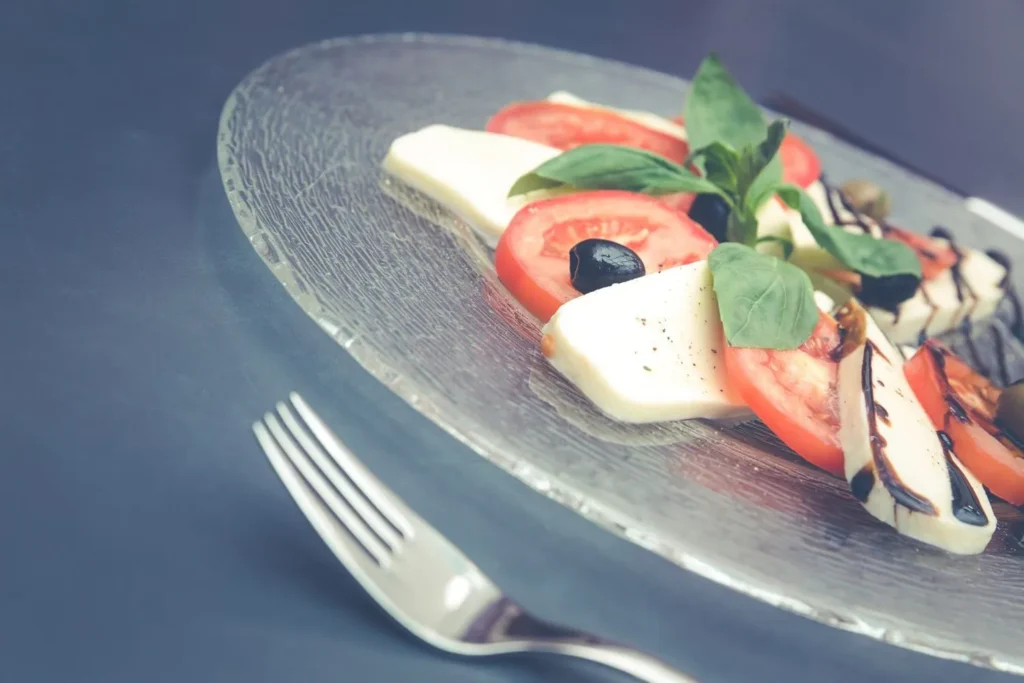
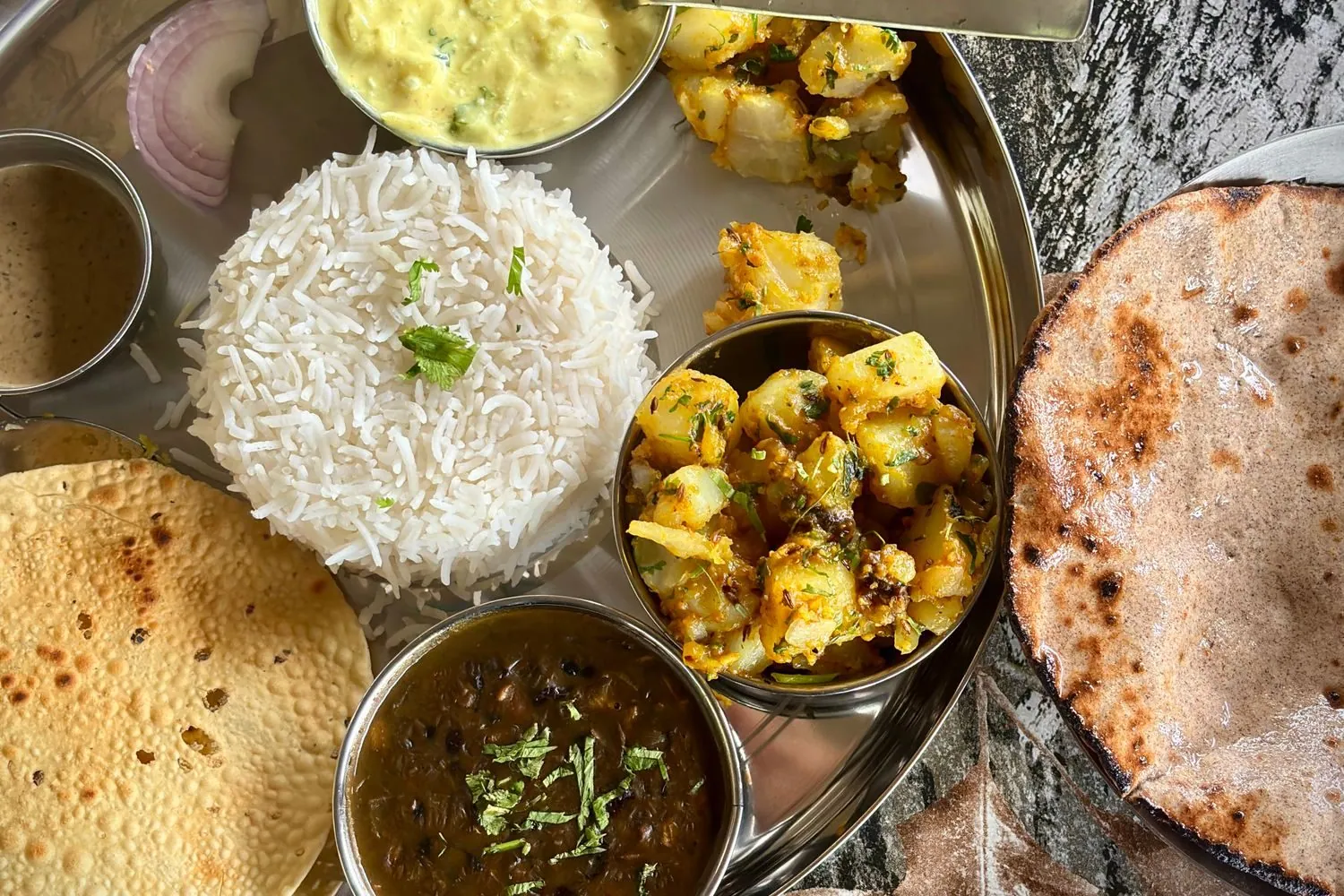
If you want to know how to build a healthy plate without weighing food or logging meals, start with your thali. Fill about half of it with vegetables and salad, about a quarter with protein such as dal, paneer, eggs or fish, and about a quarter with roti, rice or millets, then add a small amount of ghee or oil. It works with food you already eat.
Most of us do not overeat because of weak willpower. We overeat because the plate is quietly tilted: a mound of rice, a basket of rotis and a spoonful of sabzi squeezed into the corner. This guide shows how to flip that ratio, with proportions, sample plates for vegetarian and non-veg eaters, and fixes for the situations where the healthy plate method gets awkward, like biryani, mess food and office tiffins.
How do you build a healthy plate with an Indian thali?
Split the plate into zones: about half for vegetables and salad, about a quarter for protein (one katori of dal, or 75 to 100 g of cooked paneer, fish, chicken or egg), and about a quarter for grains (one to two rotis, or about three-quarters of a cup of cooked rice), plus one to two teaspoons of ghee or oil.
The zones are by area, not weight, so you do not need a scale. Vegetables are bulky and light, so they can fill half the plate without making the meal heavy. The table turns the idea into portions you can picture.
| Plate zone | Share of plate | What goes here | Typical amount per meal (about) |
|---|---|---|---|
| Vegetables and salad | About half | Sabzi, leafy greens like palak or methi, cucumber, tomato, onion, carrot | 1.5 to 2 cups, from at least two vegetables |
| Protein | About a quarter | Dal, rajma, chana, sprouts, paneer, tofu, eggs, fish, chicken | 1 katori (150 ml) dal, or 75 to 100 g cooked paneer, fish or chicken, or 2 eggs |
| Grains and starch | About a quarter | Whole wheat roti, brown or red rice, jowar, bajra, ragi, oats | 1 to 2 rotis, or about 3/4 cup cooked rice (120 g) |
| Fat and flavour | A thumb-sized amount | Ghee, oil, a few nuts or seeds, a spoon of chutney | 1 to 2 tsp ghee or oil, small handful of nuts |
| Drink | On the side | Water, plain buttermilk, unsweetened tea | 1 glass with the meal |
Dal and curd carry both protein and some carbohydrate, so the quarters will never be perfectly clean. That is fine. Aim for a plate that looks roughly like this most days.
Plating a thali in five steps
Here is the order that makes the proportions almost automatic. Serve in this sequence and the plate balances itself, because the part you add last is the part with the least room left.
- Start with vegetables. Cover half the plate with sabzi and a raw salad before anything else touches it. Include a green leafy vegetable on most days.
- Add the protein quarter. A full katori of dal, rajma or chana, or a palm-sized piece of fish, chicken or paneer. Treat dal as a main, not a token spoonful.
- Serve the grain last. One to two rotis or a small bowl of rice. If you want both, halve each portion rather than taking two full servings.
- Add fat on purpose. The ghee or oil already used in cooking usually covers it. A teaspoon of ghee on dal or a few almonds is plenty.
- Pause before a refill. Wait ten minutes, drink water, and refill vegetables or dal first if you are still hungry.
Eating slowly makes step five easier, since fullness takes a few minutes to register. Our piece on what is mindful eating and how to start covers simple ways to slow down without turning dinner into a project.
What does a balanced plate look like at each meal?
A balanced plate at lunch or dinner has roughly half vegetables, a quarter protein and a quarter grains, and delivers about 20 to 30 g of protein for most adults. Breakfast follows the spirit rather than the exact split: a grain, a protein source and fruit or vegetables, such as a moong chilla with curd.
The table gives five sample plates, each with a vegetarian and a non-veg version. Protein figures are rough, since katori sizes, thickness of rotis and recipes vary from home to home.
| Meal | Vegetarian plate | Non-veg plate | Protein (about) |
|---|---|---|---|
| North Indian lunch | 2 rotis, 1 katori rajma, big katori of bhindi sabzi, cucumber-tomato salad, 100 g curd | 2 rotis, chicken curry with 100 g chicken and light gravy, lauki sabzi, salad | Veg 20 to 25 g, non-veg 30 to 35 g |
| South Indian lunch | 3/4 cup rice, sambar, cabbage or beans poriyal, kosambari salad, 1 katori curd | 3/4 cup rice, fish curry with 100 g fish, poriyal, salad | Veg 15 to 20 g, non-veg 25 g |
| Light dinner | 1 to 2 rotis, paneer bhurji (75 g paneer) with capsicum, small bowl dal palak, salad | 1 roti, 2-egg bhurji with onion and tomato, mixed vegetable sabzi, small bowl dal, salad | Both about 20 to 25 g |
| Breakfast | 2 moong dal chillas with mint chutney, 100 g curd, a fruit | 2-egg vegetable omelette, 1 to 2 multigrain rotis or toast, a fruit | Veg 15 to 20 g, non-veg 18 to 22 g |
| Tiffin or office lunch | 2 rotis, mixed vegetable sabzi, chana salad, curd in a small box | 2 rotis, egg or chicken sabzi, cucumber and carrot sticks | Veg 18 to 22 g, non-veg 25 to 30 g |
If you eat vegetarian, the protein quarter takes a little more planning than for non-veg eaters. Pair dal with a grain, add curd or paneer, and use sprouts or soya chunks as a boost. Our guide to meal planning in nutrition shows how to repeat a few reliable plates across the week instead of inventing every meal from scratch. For lighter breakfast options, see these quick healthy breakfast ideas.
Is rice or roti the problem on my plate?
No. Rice and roti are not the problem; the proportion is. A quarter plate of grains, about one to two rotis or three-quarters of a cup of cooked rice, is a normal part of a balanced meal. Trouble starts when grains cover half the plate and vegetables and dal shrink to a garnish.
A few myths cause most of the confusion:
- Myth: rotis are always better than rice. A small bowl of rice with plenty of dal and vegetables beats three rotis with a spoonful of sabzi. What surrounds the grain matters more than which grain it is.
- Myth: skip carbs at dinner. Cutting the grain entirely often leads to late-night snacking. A smaller portion, one roti instead of three, with extra vegetables and dal usually works better.
- Myth: dal is only protein. Dal carries protein, fibre and some carbohydrate. It earns the protein quarter, but it is not a substitute for eggs, fish or paneer in grams of protein, so size the katori generously.
- Myth: fruit can replace vegetables. Fruit is a good add-on, ideally one medium fruit a day, but the half-plate of vegetables does the heavy lifting for fibre and bulk.
Choosing whole wheat atta over maida, and mixing in jowar, bajra or ragi, gives the grain quarter more fibre. If you are still building routine around meals, healthy eating habits to build is a good companion read. If steady energy after meals is a concern, how to lower the glycemic index of meals explains how order and pairing change what a plate does to you.
What if your meal is biryani, khichdi or a restaurant thali?
Apply the same ratio to the ingredients rather than to separate zones. For one-pot meals like biryani or khichdi, load the pot with vegetables and a protein source, keep the rice portion to about three-quarters of a cup, and add a side salad or raita. For restaurant thalis, ask for extra sabzi and take less rice.
Some common situations and quick fixes:
- Khichdi: cook it with moong dal and plenty of vegetables, and serve with curd and a salad. It is already a one-bowl protein-plus-grain meal.
- Biryani: treat it as the grain-plus-protein part, keep the portion modest, and fill the rest of the plate with raita and cucumber salad.
- Mess or canteen food: you cannot change what is cooked, but you can change what you take. Ask for a second helping of sabzi, skip the third roti, and add curd if protein looks thin.
- Restaurant thali: these arrive rice-heavy. Push the rice to one side, eat the dal and vegetables first, and take the rice last.
- Dosa, idli or paratha meals: pair them with sambar, chutney and a vegetable side so the plate does not become all starch. Add an egg or curd for protein.
The same logic works for between-meal hunger. If a gap is long, a planned snack beats grabbing biscuits; our list of healthy snacks on the go has options that fit a bag or a desk drawer.
Adjusting the healthy plate for your routine
The half-quarter-quarter split is a starting point, not a rule that suits everyone equally. Activity, goals and food preferences all shift where the plate bends. Change one zone at a time and give it a couple of weeks.
| Your situation | What to adjust | Example |
|---|---|---|
| Desk job, low movement | Keep the grain quarter on the smaller side; keep vegetables at half | 1 roti, extra sabzi, dal, salad |
| Workout days (gym, Zumba, yoga) | Keep the grain quarter full and make sure the protein quarter is a real portion | 2 rotis, dal, paneer or egg, vegetables, curd |
| Fat loss goal | Trim the grain quarter slightly, keep protein and vegetables generous, do not cut whole food groups | 1 roti, large dal katori, double vegetables |
| Vegetarian with low protein | Stack two protein sources in the quarter | Dal plus curd, or chana plus paneer |
| Teens and older adults | Keep the full structure; do not shrink protein or dairy | Dal, curd or milk, vegetables, whole grain roti |
If you train regularly, a balanced plate supports recovery whether your sessions are online Zumba classes or strength work. For fat loss, the plate is a base to build on rather than a complete plan; see nutrition for weight loss for the bigger picture, and remember that results depend on your body, sleep, activity and consistency. No plate guarantees a number on the scale, and crash diets are not a safe shortcut.
For the heart-conscious, the plate already points in a good direction: more vegetables, pulses and whole grains, and less fried food. Our heart healthy diet plan adds the finer points.
When to check with a doctor or dietitian first
A general plate guide suits most healthy adults, but it is not medical advice. See your doctor or a registered dietitian before changing how you eat if you have diabetes, kidney disease, a liver condition, high blood pressure, a thyroid disorder, PCOS, a history of eating disorders, or you are pregnant, breastfeeding or on regular medication. Portions of grains, protein and potassium-rich vegetables sometimes need adjusting for these conditions, and that should be done by someone who knows your reports. Never change medication because of a diet article.
Frequently asked questions
Can the plate method help with weight loss?
Yes, for many people. Vegetables and protein fill you up for fewer calories than refined grains, so a plate that is half vegetables tends to reduce intake without counting. It is a base habit rather than a guarantee, and results vary with activity, sleep and consistency.
Do I need to follow the plate method at breakfast?
Not exactly. The half-quarter-quarter split is easiest at lunch and dinner. At breakfast, follow the spirit: pair a grain such as oats, poha or roti with a protein like eggs, curd, paneer or sprouts, and add fruit or vegetables where you can.
How much dal counts as the protein quarter?
One katori, about 150 ml, is a sensible portion at a meal, giving roughly 6 to 8 g of protein. Because that is modest, most people do better adding curd, paneer, an egg or sprouts alongside it rather than relying on dal alone.
Can a vegetarian plate get enough protein?
Yes, with some planning. Combining dal or chana with curd, paneer, tofu, sprouts or soya chunks at each meal can bring a vegetarian plate to roughly 20 g of protein or more. If you are unsure about your needs, a dietitian can check your intake against your goals.
Do I need to measure food to use the plate method?
No. The method is built around eyeballing proportions on the plate. Measuring a few times with a katori and a kitchen scale can calibrate your eye, but after that, a quick visual check of half, quarter and quarter is enough.
The plate method is a lens for meals you already eat, not a diet. At your next thali, look at it before you eat, compare it to half vegetables, a quarter protein and a quarter grains, and fix one zone. If you want a plate plan built around your own goals, foods and health conditions, book an online nutritionist consultation with Fitstrot.


