

Doing zumba while traveling is easier than most people expect. All you need is a phone, a clear patch of floor about two metres by two, and 15 to 20 minutes. A hotel room, a homestay, a relative’s spare room or a terrace can all work if you shrink the moves instead of skipping the session. This guide covers how much space you really need, a five-day trip plan, how to keep a hotel room session quiet, and what to do about jet lag, heat and slippery floors.
How much space do you need for zumba while traveling?
You need roughly 2 m by 2 m of clear floor, about the size of a small rug. With less space, shorten the steps and keep the rhythm going. Below about 1.5 m by 1.5 m, switch to in-place moves and big arm choreography for 10 to 15 minutes instead of cutting the session.
| Where you are | Clear space | What to change | Session length |
|---|---|---|---|
| Standard hotel room | About 2 m x 2 m | Shorten side steps, keep arm movements big | 15 to 20 min |
| Small lodge or budget room | About 1.5 m x 1.5 m | Step-touch in place, no travelling steps, no jumps | 10 to 15 min |
| Homestay or relative’s house | 2.5 m or more | Near-normal choreography, but check how slippery the floor is | 20 to 30 min |
| Hotel terrace, park or beach | Open space | Full moves, softer landings on sand or grass, wear shoes | 20 to 30 min |
| Shared room with family | Whatever you can clear | Low-impact version, earphones in, volume low | 10 to 15 min |
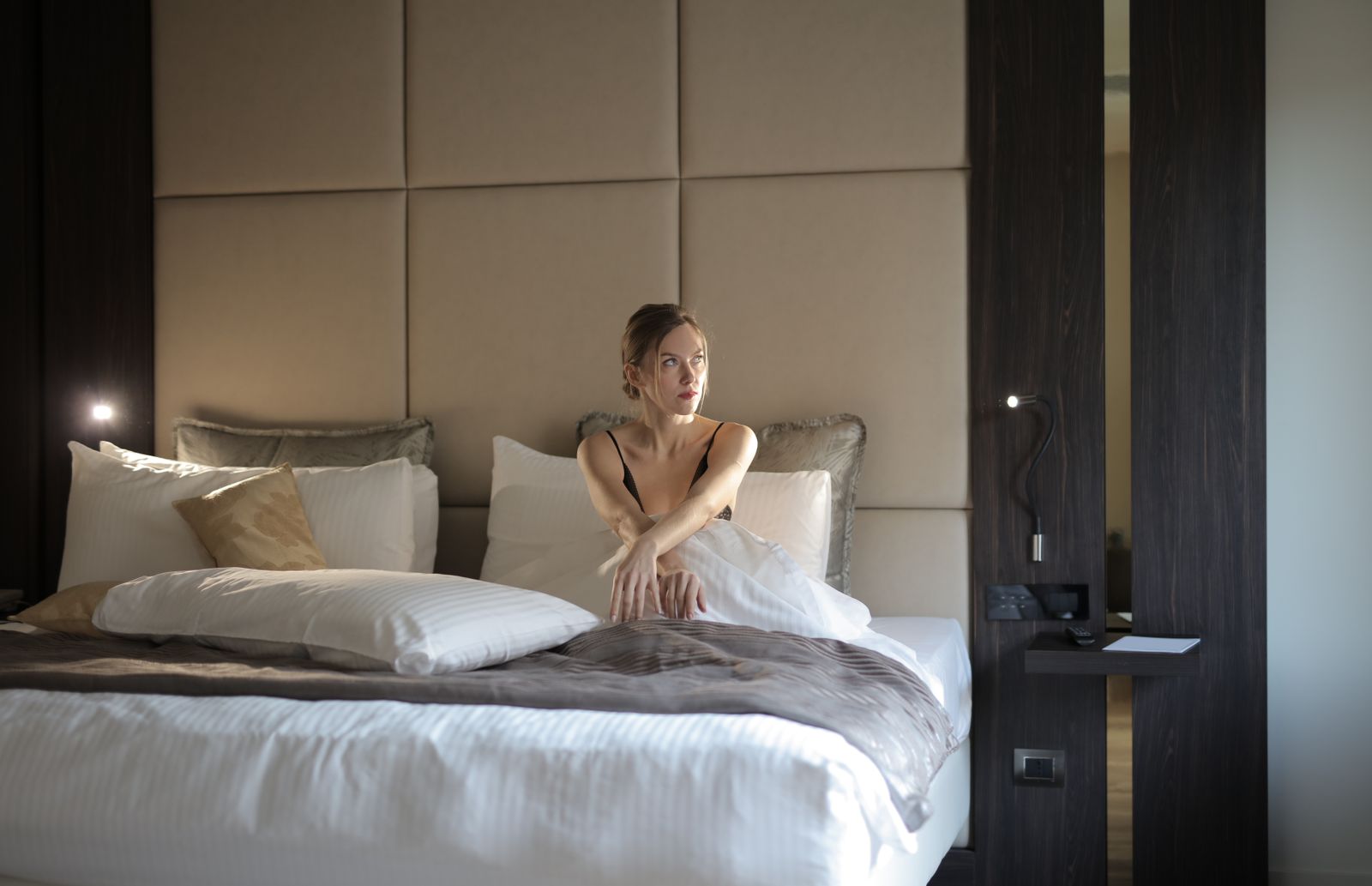
Setting up zumba in a hotel room, step by step
A hotel room workout takes about two minutes to set up if you do it in the same order every time. Once the routine is automatic, you stop negotiating with yourself about whether the room is “good enough” and simply start.
- Clear the floor. Push the chair against the wall, move your suitcase onto the bed and check that nothing sits in the path of your steps.
- Check the surface. Marble and polished tile get slippery, especially in socks. Wear trainers with a grippy sole. On thick carpet, avoid pivots because your foot can stick while your knee keeps turning.
- Sort the audio before you leave home. Hotel wifi is unreliable, so download a playlist or a recorded class to your phone beforehand and keep the volume low enough for the next room.
- Turn on the fan or AC first. A closed room heats up fast, and in humid cities you will start sweating within five minutes.
- Warm up for three minutes. March in place, roll the shoulders, circle the hips and do a few gentle knee bends. Travel stiffness is real, and cold hips plus a tiled floor is a poor mix.
- Dance in short blocks. Aim for three to four blocks of roughly 3 to 4 minutes, with 30 seconds of water and breathing between them.
- Cool down for two to three minutes. Slow the movement, then stretch calves, hips and shoulders. Our Zumba and yoga guide shows how the two fit together for this.
Small-room and low-impact versions of common Zumba moves
Most Zumba choreography can be shrunk without losing the point of the session, which is keeping your heart rate up with rhythm. The table below shows how to adapt common move types for tight space or thin walls.
| Standard move | Small-room version | Quiet, low-impact version | Form cue |
|---|---|---|---|
| Travelling side steps | Step-touch in place, one small step each side | Same, with no bounce | Keep knees soft |
| Forward-and-back salsa steps | Step forward and back within about 1 m | Slide the foot instead of stepping | Weight through the middle of the foot |
| Marching or merengue steps | March in place with big arms | Same, landing softly | Stand tall, ribs over hips |
| Jumps and hops | Quick step-ups on the spot | Quarter-squat sways | Land quietly, heel down |
| Spins and pivots | Quarter turns only | Small weight shifts side to side | Never twist on a planted foot |
| Big arm reaches and circles | Keep them, they cost no floor space | Keep them | Shoulders down, not up |
How long should a travel Zumba session be?
Aim for 15 to 20 minutes on a normal travel day and about 10 minutes on a hard one. A short session still raises your heart rate and breaks up long hours of sitting. Keep 30 to 45 minutes for slow mornings and rest days, when you have more time and space.
The trap on trips is the all-or-nothing rule: if you cannot do your usual 45-minute class, you do nothing. A fixed minimum solves this. Decide before you leave that your floor is 10 minutes, and anything above that is a bonus. If you want the longer-term thinking behind this, our guide to building a Zumba routine that sticks explains why a routine that survives disruption matters more than one that only works in perfect conditions.
A five-day trip plan you can follow
Use this as a template, not a prescription. Swap days around to fit your meetings, sightseeing or family functions, and drop any session if you are unwell or very tired.
| Day | Situation | Session | Aim |
|---|---|---|---|
| Day 1 | Travel day by flight, train or long drive | 10 minutes, easy pace, after you check in | Loosen stiff hips and back; do not push |
| Day 2 | First full day, fresh energy | 20 minutes before breakfast or before leaving the room | Set the pattern for the trip |
| Day 3 | Packed day of meetings or sightseeing | 10-minute burst, or a brisk walk if the day collapses | Keep the streak without adding stress |
| Day 4 | Free day, outdoor space available | 25 to 30 minutes on a terrace, in a park or on the beach | Enjoy the longer, bigger-movement session |
| Day 5 | Departure day | Optional 10 minutes, mostly gentle, then stretch | Ease out before sitting for hours |
Myth check: does a travel workout have to be “proper” to count?
No, and several common beliefs about holiday exercise are worth correcting.
“A short session is pointless.” It is not. Ten minutes of continuous dancing is real activity, and it is far better than a zero-day. Short sessions also keep the habit alive, which is the hard part of exercising on the road.
“Zumba will burn off the holiday food.” This framing causes more trouble than it solves. A 20-minute session burns roughly 100 to 200 kcal depending on your body weight and effort, which is less than many people assume. Enjoy the trip’s food, and treat the session as a way to feel good rather than as a punishment.
“A few days off will undo my progress.” It will not. Fitness changes slowly in both directions, and a few quieter days make little real difference. What matters is the next several months, not one holiday.
“I need a studio-size space.” You do not. Smaller steps with big arms and good rhythm give you most of the cardio benefit. The space table above shows the minimum for each setting.
Troubleshooting: noise, slippery floors, jet lag and heat
Noisy neighbours or a floor below you. Switch to the low-impact column in the move table, wear soft-soled shoes and use earphones. Avoid early-morning and late-night sessions in hotels with thin walls. A ground-floor room is usually the easiest, but it is not something you can always choose.
Slippery tile or marble. Shoes with grip beat bare feet or socks. Cut out spins and quick direction changes on polished stone, and keep your steps small until you trust the floor.
Jet lag or an overnight journey. Many people find that gentle movement and daylight in the morning help them feel more alert. Keep the first session after a long journey easy, and avoid a hard, sweaty session close to bedtime in the new time zone because it can keep you awake.
Heat and humidity. In coastal or monsoon destinations, lower the intensity, take water breaks every few minutes and keep the room cool. Stop if you feel dizzy, sick or unusually breathless.
High-altitude destinations. In hill stations and mountain regions, go gentler than usual for the first day or two and shorten the session. If you get a headache, nausea or unusual breathlessness, stop and speak to a doctor rather than pushing through.
Knee, ankle or back niggles. Remove jumps and pivots first. If pain is sharp, or lasts beyond the session, skip dancing and see a doctor or physiotherapist when you can.
Zumba while traveling for business trips, family holidays and solo travel
Business travel. The constraint here is time, not space: unpredictable meetings and a wish not to arrive sweaty. Do a 10 to 15 minute session at a gentle pace the evening before, or very early, and shower after. Our guide to Zumba for busy professionals covers shorter formats and realistic expectations for time-crunched weeks, and it applies directly to work trips.
Family holidays and weddings. You often share a room, and the schedule belongs to everyone else. Pick the quietest hour, use the low-impact version and do not turn it into another thing to feel guilty about. If you are travelling with older relatives who want to join, the gentler pace of Zumba Gold is a good reference for a lower-impact session.
Solo travel. You have the most freedom here. Use outdoor spaces such as a courtyard, terrace or beach when they are safe and private enough, and use your morning session to anchor the rest of the day.
Home practice you can repeat anywhere. If you are building the habit from scratch, our guide on how to do Zumba at home covers the same set-up basics that travel uses, just with more room.
Keeping up zumba with a trainer while you are away
Recorded classes are the simplest option, because you can download them once and play them offline. Live online classes give you a trainer’s cues and fixed timing, which helps when you are tired and tempted to skip. For many travellers a mix works: live classes when your schedule allows, and a downloaded class or your own short routine on the other days.
Fitstrot’s lead Zumba trainer is Yash Pathak, who is ZIN Licensed, ACE Certified and Strong Nation Certified. If you are choosing between formats, our guide to online Zumba classes explains what to expect, and the online Zumba classes service page lists what Fitstrot offers. If your hips and back feel tight after long journeys, a few sessions of online yoga classes are a useful complement.
Frequently asked questions about zumba while traveling
Can I do Zumba in a hotel room without disturbing the neighbours?
Yes, with a few changes. Use the low-impact versions of moves, replace jumps with quarter squats or step-ups, wear soft-soled shoes and keep your music in earphones. Avoid early-morning and late-night sessions, and choose a part of the room that is not directly above a lobby or another guest’s bed.
Is it safe to do Zumba on a tiled or marble hotel floor?
It can be, if you manage the grip. Wear trainers with a good sole, keep steps small and avoid fast spins and sudden direction changes. Bare feet and socks on polished stone are the main hazard. If the floor feels slippery in your first minute, move to carpet or a different area.
Will skipping Zumba on holiday set me back?
Not in any meaningful way. A few days of lower activity make little difference to your fitness, and you usually pick up quickly afterwards. If you want a safety net, set a 10-minute minimum on busy days. Enjoy the rest of the trip without guilt.
Do I need any equipment to do Zumba while traveling?
No. Zumba is built on bodyweight movement and music, so a phone, earphones and supportive shoes are enough. Carry a small towel and a water bottle if you can. Download your class or playlist beforehand so hotel wifi does not decide whether you exercise.
Can Zumba help with jet lag or travel fatigue?
It may help you feel more awake. Many people find that gentle movement and daylight in the morning help after a long journey. Keep the session easy, finish it well before bedtime in the new time zone, and skip it if you are exhausted or unwell.
Take your Zumba with you on the next trip
Before you pack, download one class and save a 10-minute routine on your phone. Then join a live session from wherever you are through Fitstrot’s online Zumba classes and see how the same routine feels in a different room.


