

Zumba for busy professionals works because the format scales down. A focused 15 to 20 minute session at home still lifts your heart rate, clears your head and counts towards your weekly activity, even when your calendar is wall-to-wall with calls. You do not need a spare hour. You need a plan that survives a Tuesday with three deadlines and a delayed commute.
This guide covers which session lengths are worth doing, four slots that fit a real workday, a minute-by-minute 15-minute routine, and what to do when the week falls apart. One honest caveat up front: short sessions build fitness and a habit, not rapid fat loss, and nobody can promise you a specific result.
Is a 15-minute Zumba session worth doing on a busy day?
Yes. A 15-minute Zumba session burns roughly 75 to 135 kcal for most adults, keeps your heart rate raised and clears your head after back-to-back calls. It will not match a full class for fitness gains, but four short sessions a week beat one hour-long class you keep postponing.
The reason is simple: you can repeat it. Zumba is built from repeating steps such as the merengue march, the grapevine and basic salsa steps, so a good routine trims down to 10 or 15 minutes without losing its structure of warm-up, hard dancing, cool-down. What shrinks is the length of the middle, not the quality of the movement.
The usual adult guideline is about 150 minutes of moderate activity a week, and it can be added up across the day in short bouts. Five 15-minute sessions give you 75 minutes towards that, a solid start while you build up. If you have a heart condition, are pregnant or have joint trouble, speak to your doctor first and choose low-impact versions of every step.

Four slots that fit a workday, compared
Not every slot suits every person. Use this table to pick the one that is least likely to be eaten by your actual schedule, then protect it like a meeting.
| Slot | Length | What it looks like | Works best if | Watch out for |
|---|---|---|---|---|
| Before work | 15 to 20 min | Online class or saved routine in the living room | Your mornings are fixed and quiet | Skipping the warm-up when stiff |
| Lunch break | 10 to 15 min | Low-impact routine in a spare room or empty meeting room | You work from home or have a flexible office | Dancing straight after a heavy thali |
| Between meetings | 5 to 10 min | Short, low-impact burst plus water | You have gaps but no long block | Meetings overrunning into the gap |
| After work | 20 to 30 min | Fuller session or live online class | Evenings are yours and mornings are not | Tiredness and the sofa winning |
Early morning tends to have the best completion rate because nothing has had a chance to derail it yet. Evenings are the most fragile slot, since a long day can swallow them whole. The best slot is simply whichever one survives your real week for a month, not the one that looks best on paper.
Myth check: “If I cannot do a full hour, it does not count”
This is the all-or-nothing trap, and it quietly ends more fitness plans than any injury does. People wait for an uninterrupted hour, the hour never arrives on a demanding week, and zero sessions get done. Your body does not check whether a session was long enough to deserve credit.
A second myth is that a short session must leave you flat on the floor. It should not. Aim for a hard effort of about 7 out of 10 at the peak, where you can speak only in short phrases, and finish feeling better than when you started. If a session leaves you dizzy, nauseous or with chest pain, stop and get medical advice rather than pushing through.
The honest limit: if your goal is large fat loss or serious fitness gains, short sessions alone will not get you there, and food, sleep and weekly volume matter just as much. Short sessions are how you keep the habit alive while life is full, and then build up when it is not.
How do you structure a 15-minute Zumba workout at home?
Use five blocks: a 2-minute warm-up, 3 minutes of basic steps, 5 minutes of high-energy combinations, 3 minutes of a second push at similar effort, and a 2-minute cool-down. Keep the peak effort near 7 out of 10, and make every move low-impact if your joints or neighbours need it.
| Minutes | Block | Effort (1 to 10) | Form cue |
|---|---|---|---|
| 0 to 2 | Warm-up: marching, shoulder rolls, side steps | 3 to 4 | Loosen neck, hips and ankles |
| 2 to 5 | Basics: merengue march, grapevine, easy salsa steps | 5 to 6 | Soft knees, keep breathing steadily |
| 5 to 10 | Main block: combinations with big arm movements | 7 | Tight core, land softly through the whole foot |
| 10 to 13 | Second push: repeat the combinations a little faster | 7 to 8 | Keep the chest lifted, do not collapse forward |
| 13 to 15 | Cool-down: slow walk, calf and hip-flexor stretch, deep breaths | 2 to 3 | Let the heart rate settle before you sit |
You need roughly a two-metre square of clear floor, supportive sports shoes (not bare feet on tiles) and a bottle of water. Replace jumps with step-touches and heel digs whenever knees, back or a downstairs neighbour object; the workout is still real. If you enjoy interval-style work, the Zumba in the Circuit format mixes dance with strength segments, and Zumba toning adds light resistance for a more muscular focus.
New to the steps? Our Zumba for beginners guide walks through the basics so the first week feels easy rather than confusing.
Zumba for different working lives: desk, hybrid, shifts and long commutes
Your job shapes your best format more than your fitness level does. This table matches the common patterns we see among working adults in India to a realistic slot and a fallback for bad days.
| Work pattern | Best slot | Session | Fallback on a bad day |
|---|---|---|---|
| Desk job, fixed hours | Early morning, or right after logging off | 15 to 20 min at home | 10 minutes of chair Zumba at the desk |
| Work from home or hybrid | Lunch break | 10 to 15 min | One 5-minute burst between calls |
| Long commute | Before you leave, or straight after arriving home | 15 min, online so there is no extra travel | Do the warm-up and first block only |
| Shifts or on-call | Soon after waking, before the shift | 15 to 20 min | A 10-minute low-impact version |
| Caregiver or parent | After the children sleep, or with them nearby | 15 min | Three 5-minute bursts across the day |
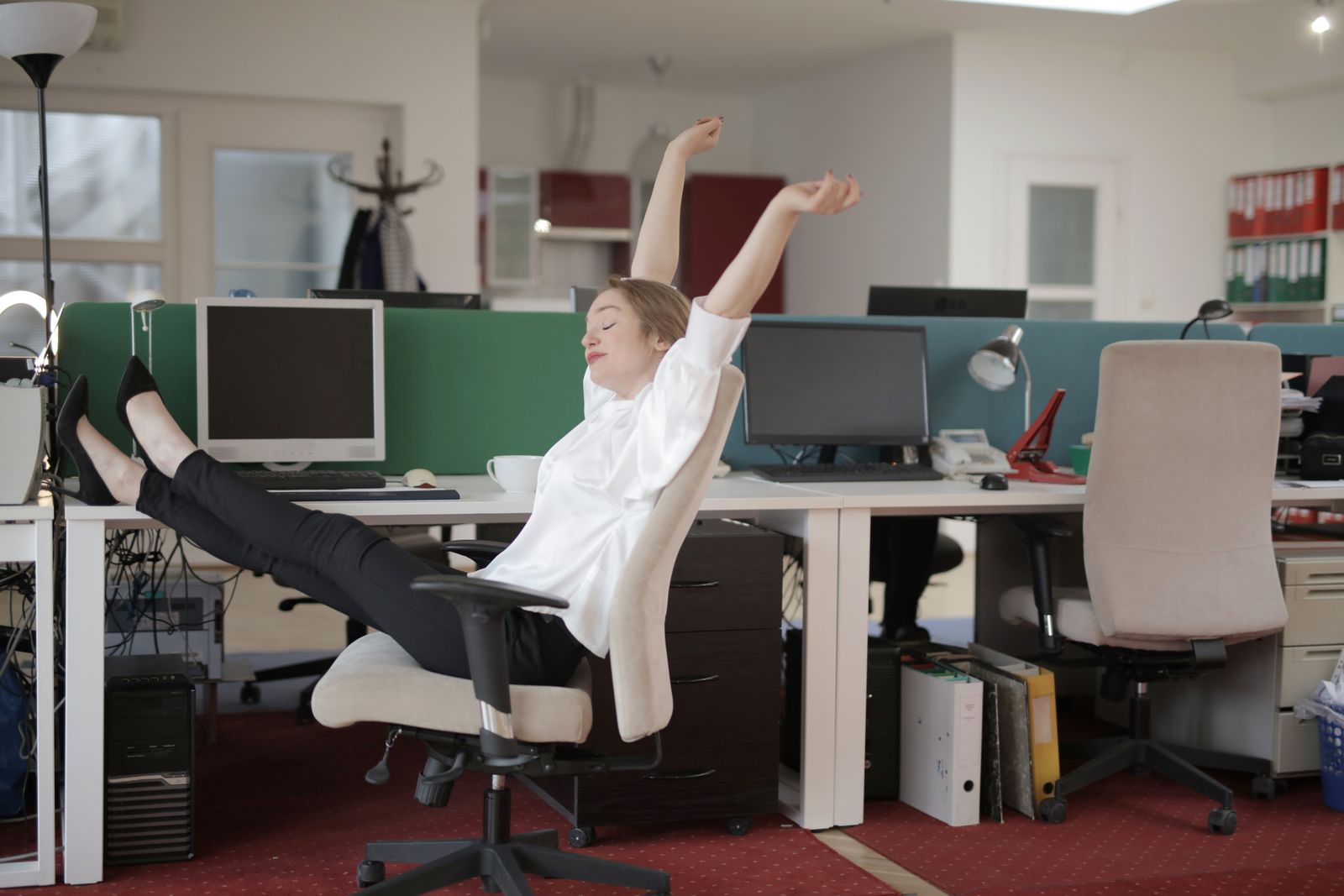
Chair Zumba, the modified seated version, is worth knowing even if it is not your main format. It uses seated arm patterns, leg extensions and torso turns, and it gives you a genuine option for office days or any day a standing session is not possible. It is gentler on the heart rate than a standing session, so treat it as a fallback that protects the habit, not a replacement.
If work takes you out of town often, our guide to Zumba while traveling shows how to keep a version of the routine going from a hotel room with no equipment.
When the plan keeps breaking: five common blockers and fixes
- Meetings overrun: shrink the target before the day starts. Decide that the minimum is the warm-up plus one 5-minute block, so a 10-minute gap is still enough.
- No time to freshen up: keep the effort at 5 to 6 out of 10 on workdays, wear breathable cotton, and save the 7-out-of-10 sessions for mornings or evenings when you can shower.
- Too tired after work: commit only to the first two minutes. Most people carry on once they are moving; if you really do stop, you still did something.
- Noise or space limits: choose low-impact steps, wear shoes with some cushioning and clear a small patch of floor. Heavy jumping is optional, not required.
- You missed a week: restart with a 10-minute session, not a guilt-driven double workout. A rough fortnight is an interruption, not a reset to zero.
The deeper fix is a schedule built to survive disruption. Our guide to building a Zumba routine that sticks shows how to design one around your worst week rather than your best.
How many calories does a short Zumba session burn, and what should you eat?
Most adults burn about 5 to 9 kcal a minute in Zumba, so a 15-minute session uses roughly 75 to 135 kcal and a 30-minute one about 150 to 270 kcal. Heavier people and harder efforts sit at the top of the range. A medium banana, at about 100 kcal, is enough fuel beforehand.
Treat those numbers as estimates, not a calorie-credit system. A short session is not licence for a large snack afterwards, and it will not cancel a day of eating well above what you need. What it does is add up: several sessions a week improve stamina, sleep and mood, which makes the food side easier to manage.
For a morning session, a banana or a small handful of soaked almonds about 20 to 30 minutes before is plenty; many people are fine on water alone for 15 minutes. After a lunchtime session, eat a normal meal built around dal, curd, eggs or paneer with roti or rice, rather than relying on snacks. If you want help fitting meals around a demanding schedule, a registered dietitian can build a plan around your office hours through online nutritionist consultation.
Live class or saved video: which keeps busy people consistent?
A live class usually wins for consistency, because a fixed time works like a calendar meeting and an instructor can correct your form. A saved video wins for flexibility on unpredictable days. Most busy people do best with a mix: one or two live sessions a week plus short on-demand sessions as fillers.
Online sessions also remove the commute, which is often the real time cost of a gym or studio class in Indian cities. If you are weighing options, our overview of online Zumba classes explains what to look for, and Fitstrot’s online Zumba classes let you train from home around your day.
Instructor quality matters more when your time is short, because you cannot afford to learn bad habits. Fitstrot’s lead Zumba trainer is Yash Pathak, who is ZIN Licensed, ACE Certified and Strong Nation Certified. Beginners, people returning from a break and anyone managing a joint issue benefit from a trained eye on their form. If you have an injury or a medical condition and want the movements adapted, 1-on-1 personal training gives you that individual attention.
FAQs about Zumba for busy professionals
Is a short Zumba session actually worth doing if I cannot attend a full class?
Yes. A 15 to 20 minute session still raises your heart rate, lifts your mood and adds to your weekly activity. Consistent shorter sessions usually produce better long-term results than occasional full classes squeezed in only when a rare free hour appears.
Can I do Zumba at my desk or in a small office space?
Chair Zumba, a seated version, is designed for exactly this. It uses arm patterns, leg extensions and torso turns, and works in a small space. It is lower in intensity than standing Zumba, so use it as a useful fallback rather than a full substitute.
Can I split one Zumba workout into two or three shorter bursts?
Yes. Two or three bursts of 10 to 15 minutes, for example one before work and one at lunch, add up and suit fragmented schedules. Warm up briefly each time, keep the peak effort near 7 out of 10, and cool down before sitting.
Can I do Zumba on a workday without needing a shower?
Yes, if you keep the effort at about 5 to 6 out of 10, wear breathable clothes and finish with a slow cool-down. Save higher-intensity sessions for mornings or evenings when you can freshen up afterwards.
What if I can only manage Zumba two or three times a month during a busy season?
That is still better than nothing. Treat the reduced schedule as temporary rather than a failure, keep a 10-minute fallback session for the worst days, and return to your normal routine as soon as the busy stretch ends.
Start with one 15-minute session this week
Pick one slot from the table above, block it in your calendar, and do the five-block routine once before the week ends. When you want a trainer to guide you, join a live session through Fitstrot’s online Zumba classes and build from there.


