

The idea of ahara in yoga is intake: the food you eat, and by extension everything you let into your body and mind. Yoga texts treat it as part of practice, not a side topic, because a restless stomach and a restless mind tend to arrive together. This guide explains the idea in plain language, separates ahara from mitahara and pratyahara, and shows how to apply it with ordinary Indian meals, without fads or health claims.
What does ahara mean in yoga?
Ahara is the Sanskrit word for food or intake. In yoga it covers what you eat, how much, when, and with what attention. Traditional teachers also stretch the word to include sights, sounds and company. The practical meaning is simple: eat in a way that keeps the body light and the mind steady for practice.
Notice that this is a framework for living, not a diet plan with calorie targets. Classical texts speak about quality, quantity and timing of meals. They say very little about grams of protein, because that language belongs to modern nutrition. So treat ahara as a set of habits to try and observe, and use modern nutrition for specifics such as protein and portion sizes.
If you are curious about the wider food system built on these ideas, our guides to the yogic diet and the sattvic diet go deeper. This page stays with the principle of ahara itself and how to use it day to day.
Ahara, mitahara and pratyahara: what is the difference?
Ahara is intake in general. Mitahara is measured, moderate eating. Pratyahara is withdrawing the senses from outside stimulation, the fifth limb of yoga. They share a root word, so teachers often discuss them together, but each asks you to do something different.
| Term | Meaning | Where it appears | What it looks like in daily life |
|---|---|---|---|
| Ahara | Intake: food, and by extension impressions | Used across yoga and Ayurveda traditions | Eating at regular times, sitting down, paying attention |
| Mitahara | Measured or moderate eating | Hatha Yoga Pradipika, which names it among the key yamas | Stopping before you feel heavy; leaving some room in the stomach |
| Yukta ahara | Balanced, well-judged eating | Bhagavad Gita, which speaks of moderation in eating and sleeping | Neither fasting hard nor overeating; fitting food to your day |
| Pratyahara | Withdrawal of the senses | Fifth of the eight limbs in the Yoga Sutras | Five quiet minutes without screens before sitting for meditation |
For the sutra side of this, see meditation for beginners, which shows how to turn withdrawn attention into a short sitting practice.
How do the three gunas describe food?
Yogic and Ayurvedic tradition sorts food into three qualities: sattvic (calm, light), rajasic (stimulating) and tamasic (heavy, dull). The Bhagavad Gita describes them in its seventeenth chapter. This is a traditional classification of how food is believed to affect temperament, not a scientific grading, so use it as a prompt for awareness rather than a rulebook.
| Quality | Traditional description | Everyday Indian examples | How to use it |
|---|---|---|---|
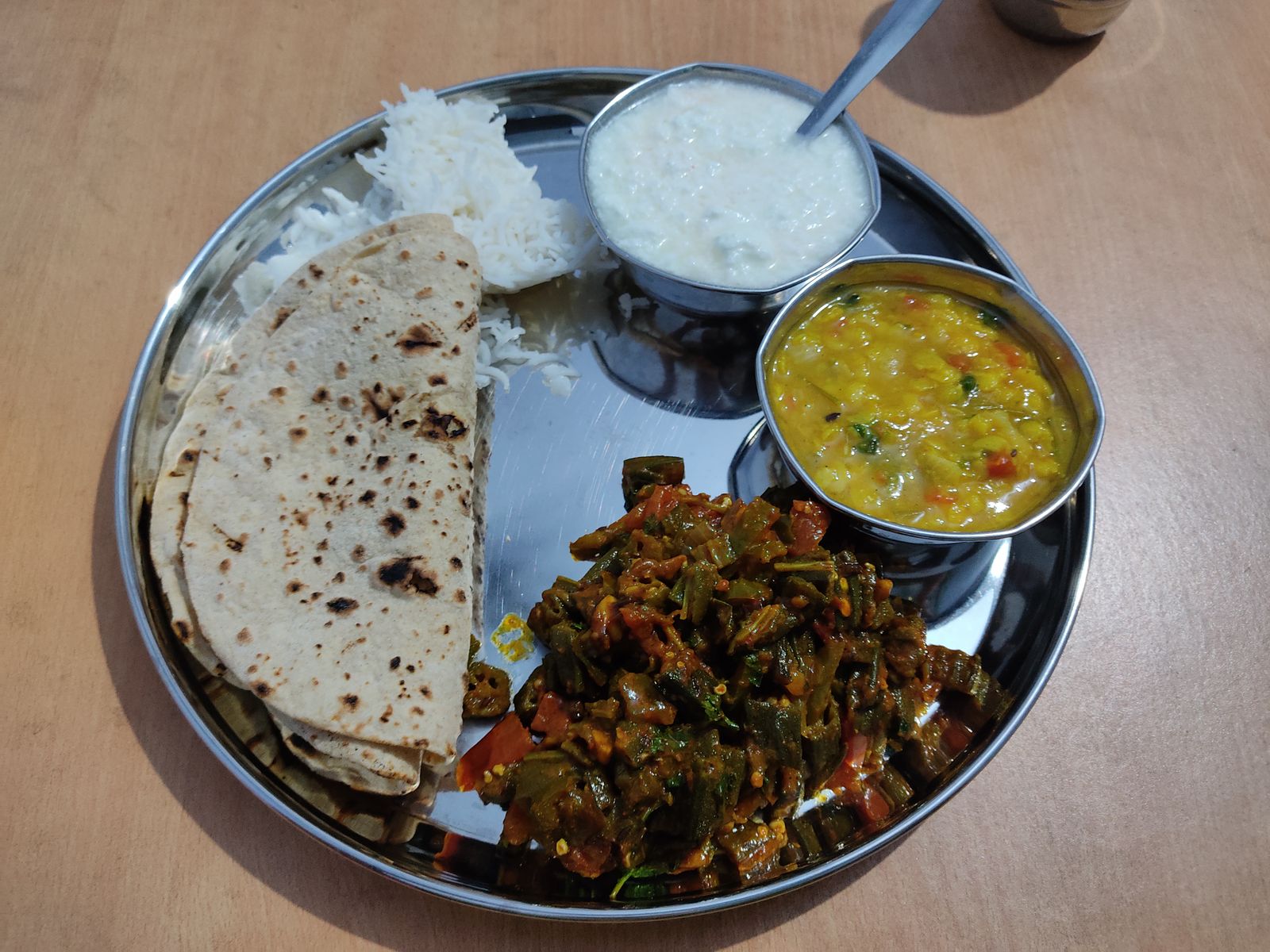
| Sattvic | Fresh, simple, pleasant, light | Moong dal, khichdi, roti, seasonal sabzi, fresh fruit, curd, a little ghee, soaked almonds | Make most of your meals look like this |
| Rajasic | Bitter, sour, very salty, very hot, stimulating | Heavily spiced curries, strong chai in excess, spicy street snacks | Enjoy, but notice how you feel after |
| Tamasic | Stale, reheated, overly processed, heavy | Day-old leftovers eaten repeatedly, packaged snacks, very oily fried food | Keep occasional; cook fresh when you can |
Do not read this as “good food” and “bad food”. Nobody can eat only sattvic food at every meal in a family home, at work or at a wedding. The goal is a lean towards freshness and simplicity, not purity.
What does the mitahara rule look like at the plate?
Traditional texts describe filling about half the stomach with food, a quarter with water, and leaving a quarter empty. In practice, that means eating until you are comfortably satisfied, not stuffed. For most people, that is about 80 percent full, with a few sips of water rather than a large glass during the meal.
A few practical cues make this easier:
- Serve your plate once, then wait 10 minutes before a second helping; fullness lags behind eating.
- Put the spoon down between bites for the first five minutes.
- Take smaller rotis and more sabzi if you tend to overshoot on bread.
- Sip water between courses, not gulp it with every mouthful.
- Stop when the food stops tasting as good as it did at the first bite.
This is a gentle self-observation, not a restriction. If you find yourself eating very little to feel “pure”, you have misread it. Traditional mitahara is moderation, not hunger.

A sample day of ahara-minded Indian meals
A yogic day of eating looks like regular Indian food, eaten at steady times, in moderate portions, with less rushing. Here is one example for a vegetarian household. Adjust portions to your hunger, body size and activity, and swap items freely.
| Meal | Example | Portion cue | Ahara note |
|---|---|---|---|
| On waking | Warm water, a few soaked almonds | 1 glass, 4 to 5 almonds | Practise yoga on a light or empty stomach |
| Breakfast, after practice | Vegetable poha or moong chilla with curd, one fruit | 1 medium bowl or 2 chillas | Fresh, warm, not rushed |
| Lunch, the biggest meal | 2 rotis, dal, seasonal sabzi, salad, small bowl of rice or curd | Half plate vegetables and dal, rest grains | Eat sitting down, away from screens |
| Evening | Fruit, roasted chana or buttermilk, light tea if you like | 1 small bowl | Snack only if hungry |
| Dinner, early and lighter | Khichdi with ghee, or 1 to 2 rotis with sabzi and dal | Smaller than lunch | Finish about 2 to 3 hours before bed |
If your goal is also weight management, see diet for weight loss with yoga. If you need portions tailored to your body and health, an online nutritionist consultation is a better route than any general rule.
Is the yogic diet always vegetarian, and other myths
“Ahara means vegetarian only.” Many yoga traditions favour a vegetarian diet, partly through the principle of ahimsa. Ahara itself is about awareness and moderation. Your food choices should respect your health, ethics, family and culture. If you are vegetarian, plan protein deliberately with dal, paneer, curd, sprouts and soy, because not every sattvic plate is automatically protein-rich.
“Yogis fast constantly.” Classical texts actually warn against extreme fasting and overeating alike. Extremes disturb practice.
“Sattvic means bland.” Spices like cumin, turmeric, coriander and ginger are normal in sattvic cooking. The difference is moderation and freshness, not tastelessness.
“Onion and garlic are forbidden.” Some traditions avoid them, others do not. It is a personal or community choice, not a rule that makes the rest of your diet useless.
“Ahara will fix any health problem.” It is a way of eating and living, not a treatment. Use it alongside, not instead of, medical advice.
Ahara beyond the plate: sensory intake
Pratyahara applies the same discipline to the senses. In practice, that means noticing how much noise, scrolling and chatter you take in, and giving yourself small gaps. A five-minute version fits before any practice or bedtime.
- Switch off notifications and sit comfortably, with your spine tall.
- Close your eyes and take five slow breaths, with the exhale slightly longer than the inhale.
- Notice sounds without naming them, then notice touch, such as the floor under you.
- When thoughts pull you away, return to the breath.
- After five minutes, open your eyes slowly.
For a longer guided version, try yoga nidra, and for stress-related restlessness, see yoga for anxiety.
Troubleshooting: when ahara feels hard to follow
- Family cooks one menu: change what you can control, which is portion size, speed and what you add. You do not need a separate kitchen.
- Office lunch is rushed: take the first five bites slowly, step away from the desk, and eat at the same time daily.
- Hungry before evening practice: have fruit or a small bowl of curd about 90 minutes earlier, and practise at least 2 hours after a full meal.
- Feeling heavy after lunch: reduce rice or roti by a quarter and add more vegetables or dal.
- Festival or wedding food: eat what you enjoy, keep portions modest, and return to regular meals the next day without guilt.
- Cravings for tea or snacks: link them to real hunger and time, not boredom; delay by 10 minutes and see if the urge passes.
Who should adapt ahara advice with professional guidance?
Traditional ahara advice is general. Please speak to a doctor or registered dietitian before changing how you eat if you are pregnant or breastfeeding, have diabetes, thyroid, kidney or digestive conditions, take regular medicines, are underweight, have a history of disordered eating, or are feeding a child or an older relative. Growing children, teenagers and athletes need more food, not less, so “leaving room in the stomach” should never be used to restrict them.
If you are new to yoga itself, start with yoga for beginners and a short, regular yoga routine, then layer ahara habits on gradually.
What is a simple one-week way to start?
Pick one change per week rather than overhauling everything. Small, repeated adjustments usually last longer, and they let you see what actually changes in your energy, digestion and focus.
- Week 1: eat meals at roughly the same times and sit down for each one.
- Week 2: stop at about 80 percent full at lunch.
- Week 3: make dinner lighter and earlier, with a gap before bed.
- Week 4: add a five-minute sensory quiet practice before bed or meditation.
Keep a one-line note after each meal about how you feel two hours later. It will tell you more than any chart. As the habit settles, the full benefits of yoga become easier to notice, because you are practising rested and unhurried.
Frequently asked questions about ahara in yoga
What is the simplest definition of ahara in yoga?
Ahara means intake in Sanskrit. In yoga it covers food, and by extension what you allow in through the senses. It asks you to eat and live with attention to quality, quantity and timing so that body and mind stay steady for practice.
What is the difference between ahara and pratyahara?
Ahara is conscious intake, mainly food. Pratyahara is the fifth limb of yoga, where you draw your senses inward away from outer distraction. They share a root word, and both ask you to manage what you take in.
What does mitahara mean?
Mitahara means measured or moderate eating. Traditional texts describe about half the stomach for food, a quarter for water and a quarter left empty. In daily life, that means stopping when about 80 percent full.
Is a yogic diet the same as a sattvic diet?
They overlap closely. A sattvic diet is the traditional food classification for calm, light, fresh food. Ahara is the wider principle of mindful intake that includes how, when and how much you eat, not only what.
Can I follow ahara if I eat non-vegetarian food?
Yes. The core ideas of moderation, freshness, regular timing and attention are not tied to one food group. Some traditions prefer vegetarian food, but you can apply the principles in a way that suits your health, family and culture.
Next step: choose one habit from the one-week plan and try it for seven days. If you want a teacher to guide the practice that goes with it, join a live session through Fitstrot’s online yoga classes.


