

A 15 minute yoga routine is a short, timed session of slow breathing, spine and hip mobility, a few rounds of sun salutation, a twist and a brief final rest, all on one mat with no equipment. It fits before a work call, after a long commute or an hour before bed. Below is a minute-by-minute sequence, alignment cues for every pose, three versions for different times of day, and plain notes on who should modify or skip certain shapes.
What does a 15 minute yoga routine include?
A balanced 15 minute yoga routine has five parts: about 1 minute of seated breathing, 2 to 3 minutes of spine and shoulder warm-up, 4 to 5 minutes of sun salutations, 4 to 5 minutes of floor stretches such as a lunge, forward fold and twist, and 2 minutes of lying rest, covering breath, mobility, light strength and relaxation.
The order matters more than the pose count. Starting with breath and gentle spinal movement lets cold joints warm up before you ask them to bear weight. Sun salutations then raise your heart rate a little, the floor stretches work the areas that tighten from sitting, and the final rest lets your breathing settle. Skip the warm-up or the rest and the session turns into a rushed stretch.
The 15 minute yoga flow, minute by minute
Set a phone timer for 15 minutes and follow the clock. One slow breath takes roughly 5 to 6 seconds, so five breaths is about 25 to 30 seconds. Treat the timings as a guide, not a test; if a pose needs another breath, take it and trim the next one.
| Clock | Pose | How long | Alignment cue |
|---|---|---|---|
| 0:00-1:00 | Easy seated breathing (Sukhasana) | 6-8 slow breaths | Sit on a folded blanket so knees fall below hips; lengthen the spine, soften the jaw |
| 1:00-2:30 | Cat-cow | 8-10 slow rounds | Wrists under shoulders, knees under hips; move from the tailbone, not the neck |
| 2:30-3:30 | Downward dog | 5 breaths | Bend the knees, press the floor away, keep the spine long before straightening the legs |
| 3:30-7:30 | Sun salutation A | 3 rounds, about 80 seconds each | One breath per movement; knees down in plank if shoulders shake |
| 7:30-9:00 | Low lunge | 45 seconds per side | Front knee over the ankle, back knee on a folded blanket, ribs lifted |
| 9:00-10:00 | Chair pose (Utkatasana) | 2 holds of 5 breaths | Weight in the heels, knees tracking over the toes, tailbone reaching down |
| 10:00-11:00 | Seated forward fold | 1 minute | Bend the knees as much as needed; fold from the hips with a long spine |
| 11:00-12:00 | Seated twist | 30 seconds per side | Sit tall first, then rotate; turn from the ribs, not by yanking the neck |
| 12:00-13:00 | Reclined figure-four | 30 seconds per side | Keep the head and shoulders down; flex the top foot to protect the knee |
| 13:00-15:00 | Savasana | 2 minutes | Legs relaxed apart, palms up, breathing returning to its natural rhythm |
Sun salutation A is the part people fumble, so here is the sequence in order. Link one breath to each step and repeat for three rounds. A slower, more continuous version of the same idea is covered in our yoga flow guide.
- Stand in mountain pose with feet hip-width apart and arms by your sides.
- Inhale and sweep the arms overhead.
- Exhale and fold forward with soft knees.
- Inhale and lift halfway, hands on shins, back flat.
- Exhale and step back to plank, or lower the knees first, then lower the chest with elbows close to the ribs.
- Inhale into baby cobra, hips on the floor, shoulders away from the ears.
- Exhale and lift the hips into downward dog for one breath (five on the final round).
- Step forward, inhale halfway up, exhale into the fold, inhale to stand.
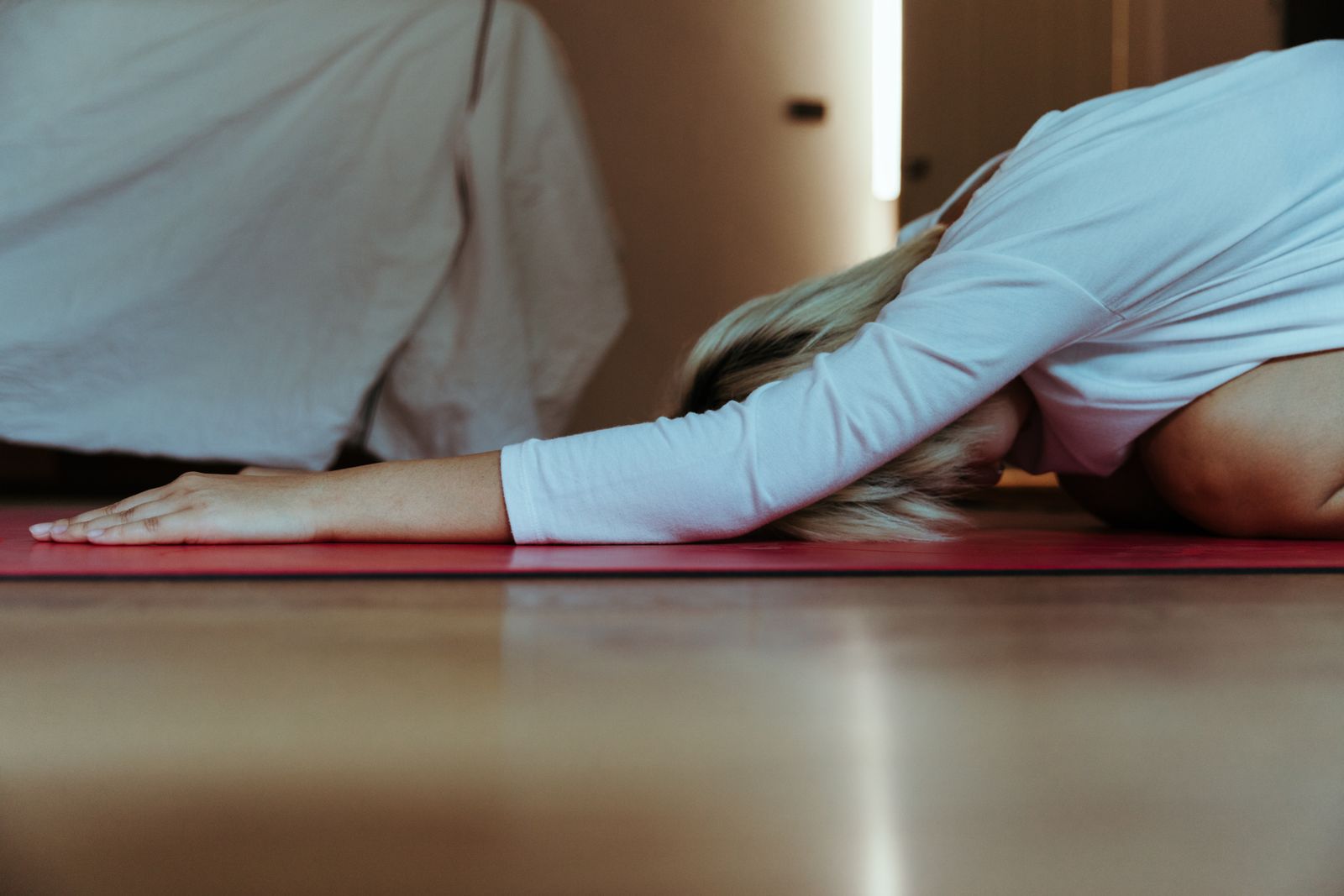
Alignment fixes: where short sessions go wrong
When time is tight, the first thing to slip is form. Speed turns plank into a sagging hammock and a forward fold into a rounded-back hang. These are the five most common errors in a quick routine, with a correction and an easier option for each.
| Pose | Common mistake | Fix | Easier option |
|---|---|---|---|
| Downward dog | Rounded back, heels forced down | Bend the knees and send the hips up and back; heels need not touch the floor | Hands on a wall or the seat of a sturdy chair |
| Plank and chaturanga | Hips sagging, shoulders hunched | Draw the navel in, push the floor away, keep elbows close to the ribs | Knees down, or lower straight to the belly |
| Low lunge | Front knee drifting past the toes, back sinking | Step the front foot further forward and lift the chest | Folded blanket under the back knee; hands on blocks or books |
| Seated forward fold | Pulling the head down with a rounded spine | Hinge from the hips and rest hands on the shins | Sit on a cushion and bend the knees |
| Seated twist | Cranking the neck and lower back | Lengthen up with each inhale, rotate a little further with each exhale | Twist only from the upper back, hand resting on the knee |
A good rule: if you feel a pinch, sharp pain, tingling or numbness, ease out of the pose. A stretch should feel like firm tension in the muscle, never a sharp or pinching sensation in a joint.
Myth check: “15 minutes is too short to count”
Many people assume a practice only counts if it fills an hour, so they skip the days when they have a quarter of that. A short session done most days usually does more for mobility, posture habits and mood than one long class done occasionally, because your body gets repeated, regular practice.
There are limits worth stating plainly. Fifteen minutes of yoga burns a modest number of calories, so it will not replace a dedicated cardio or strength programme if those are your goals. It also cannot remove fat from one body area; fat loss across the body comes mainly from overall food intake, activity and sleep, not from any single pose. What a short practice does well is build a daily habit, ease stiffness from sitting and give your mind a reset. For a longer-view approach to a regular practice, see our guide to daily yoga.
Which 15 minute yoga version suits morning, evening or a power session?
Keep the same 15-minute frame and change the emphasis: choose a 15 minute morning yoga flow with spinal waves and three sun salutations to wake up, a 15 minute power yoga version with longer holds and extra rounds for energy, or an evening wind-down with 4 to 5 minutes of floor stretches and 3 minutes of rest.
| Version | Best time | What to change | Pace |
|---|---|---|---|
| Gentle morning | Within an hour of waking | Add 1 minute of neck and shoulder rolls; keep 3 rounds of sun salutation; trim the chair pose | Slow and smooth |
| Power | Late morning or midday | Cut the floor stretches to 2 minutes; do 5 rounds of sun salutation; hold chair pose for 3 rounds of 5 breaths and plank for 30 seconds | Brisk, one breath per movement |
| Evening wind-down | 30-60 minutes before bed | Use 1 round of sun salutation; hold the lunge, fold and figure-four for 1 minute each; finish with 3 minutes of rest and long exhales | Slow and quiet |
If you practise early, our morning yoga guide goes deeper on what to do first thing. If you enjoy a sweatier session, the power yoga page covers the longer format you can condense into this time slot. For late-day practice, the same logic sits behind yoga for sleep: slower movement, longer exhales, and no phone screen in the last few minutes.
Is 15 minutes of yoga a day enough for flexibility and strength?
For general mobility, posture and light strength, 15 minutes of yoga a day, five or six days a week, is a reasonable base. Many people notice less stiffness within two to four weeks and steadier balance or stronger shoulders and legs over six to eight weeks, though results vary with age, starting fitness and how closely you follow the cues.
Flexibility tends to improve when you repeat gentle stretching and hold each position long enough for the muscle to relax, roughly 30 to 60 seconds per side for hips and hamstrings. Strength comes from the holds: plank, chair pose and the slow lowering in sun salutation all load your muscles. If you want to build strength quickly or train for a sport, add resistance work on other days. A 15 minute yoga practice is a solid foundation, not a complete training plan.
Starting from zero experience? Our yoga for beginners guide covers the basic shapes in detail, and types of yoga helps you choose a style once the habit is in place.
Who should modify or skip poses in a short session?
People with wrist, knee or lower-back problems, high or low blood pressure, recent surgery, an injury, or pregnancy should adjust the routine or check with a doctor or physiotherapist first. Short sessions move fast, so decide your modifications before starting, not halfway through, and skip any pose that causes pain.
- Sensitive wrists: come down to forearms in downward dog and plank, or use a wall instead of the floor.
- Knee discomfort: pad the back knee in low lunge, skip deep knee bends in chair pose, and avoid forcing the legs into a cross-legged seat. See yoga for knee pain for gentler options.
- Lower-back pain: keep your knees bent in forward folds, take a smaller cobra, and avoid long, deep twists. Our guide to yoga for back pain explains more.
- Pregnancy: avoid deep closed twists and lying flat on your back for long stretches as the pregnancy advances, and follow your doctor’s advice. Read prenatal yoga before adapting any sequence.
- Blood pressure or dizziness: move slowly between standing and the floor, avoid staying in forward folds for long, and rise gradually.
See your doctor before you start if you have a heart condition, uncontrolled blood pressure, a recent injury or surgery, a disc problem, or any pain that does not settle. Stop and get advice if a pose brings on chest pain, breathlessness, dizziness or numbness. Yoga is not a substitute for medical care.
A simple way to make it stick
Habit is the real challenge with a short routine. Pick one fixed slot, such as right after brushing your teeth or straight after getting home, and leave the mat unrolled where you can see it. Set a 15-minute timer so you never have to think about when to stop, and commit to a simple minimum: on a day when you have no energy, do just the first four rows of the table and call it a win.
Repeat the same sequence for two weeks before changing it; familiarity lets you focus on breath and alignment instead of remembering what comes next. If you prefer someone to guide the timing, a guided online class can keep you on track while you build confidence, and an instructor can correct the small details you cannot see yourself.
Questions about 15 minute yoga
Is 15 minutes of yoga a day actually effective?
Yes, for general mobility, posture and stress relief. A focused 15 minute session with breathing, sun salutations, a lunge, a twist and a short rest, done most days, builds a habit and eases stiffness over weeks. It will not replace cardio or strength training if you have specific performance or fat-loss goals.
What is a good 15 minute yoga routine for beginners?
Use the timed table above: seated breathing, cat-cow, downward dog, three rounds of sun salutation with knees down in plank, a low lunge, a forward fold, a twist and two minutes of rest. Beginners can bend their knees, use blocks, and drop the chair pose entirely until balance improves.
What is the best time for a 15 minute yoga session?
The best time is the one you can repeat every day. Morning sessions suit stiff joints and a slow start, while an evening session of slower folds and long exhales helps you unwind. Practising within an hour of a large meal is not comfortable for most people, so leave a gap.
Can 15 minute power yoga count as a workout?
It can count as a light-to-moderate workout if you move briskly through five rounds of sun salutation and add holds in plank and chair pose. It will usually burn fewer calories than a run or Zumba class of the same length, so treat it as a short, effective option for busy days.
How long before I notice a difference from daily 15 minute yoga?
Many people feel calmer and less stiff within one to two weeks of regular practice. Changes in flexibility, balance and strength usually take four to eight weeks of near-daily sessions, and they vary by age, starting fitness and how consistently you practise.
Want someone to check your downward dog and lunge alignment live? Join an instructor-led class through FitStrot’s online yoga classes and ask for feedback on your 15 minute sequence.


