

A nutrition diet plan for muscle building is simpler than most gym advice makes it sound: a small calorie surplus, about 1.6-2.2 g of protein per kg of body weight, and a protein-rich plate at every meal. This guide skips the theory and shows what to eat to build muscle, with two full days of eating, one vegetarian and one non-veg, built from everyday Indian food in grams, so you can copy a day and then adjust it to your own body.
If you want the wider food-choice logic first, read our guide to the best diet for muscle gain. This page is the practical, hour-by-hour version for people who just want to know what goes on the plate.
How many calories and how much protein does a muscle-building plan need?
Most people build muscle best on about 200-400 kcal above maintenance and about 1.6-2.2 g of protein per kg of body weight a day. For a 70 kg person that is roughly 110-155 g of protein, spread over four to five eating occasions, with the remaining calories coming from roti, rice, dal, curd, fruit and a little fat.
A rough shortcut for a moderately active adult is about 30-35 kcal per kg of body weight, so a 70 kg person sits near 2,100-2,450 kcal at maintenance. Treat that as an estimate. Your scale weight over two to three weeks is the real test. Fat can take roughly 20-30% of your calories, and carbohydrates fill the rest, because carbs fuel the training that actually tells your muscles to grow.
Keep the gain slow. Roughly 0.25 kg a week is plenty for most lifters, and anything much faster is usually extra fat rather than extra muscle. For the science behind the protein number, see the nutritional value of protein and our explainer on protein and nutrition.
The sample days below assume a 70 kg man training four days a week, with maintenance near 2,300-2,400 kcal. Both days land at about 2,650-2,700 kcal and about 150 g of protein. Lighter lifters and women can scale the portions down, as covered in the audience section further on.

What does a veg diet plan for muscle gain look like for one day?
A vegetarian day that delivers about 2,650 kcal and about 150 g of protein uses paneer, besan, curd, rajma, dal, soya chunks and milk across six eating slots. Each slot carries roughly 10-35 g of protein, so no single meal has to do all the work, and a supplement stays optional.
| Time | Meal | Foods and portions | kcal | Protein |
|---|---|---|---|---|
| 8:00 am | Breakfast | 2 chillas from about 60 g besan, stuffed with about 50 g crumbled paneer, 1 tsp oil; 250 ml toned milk | about 530 | about 30 g |
| 11:00 am | Mid-morning | 200 g curd (dahi), 1 banana, about 20 g roasted peanuts | about 340 | about 13 g |
| 1:30 pm | Lunch | 3 rotis with a little ghee, about 150 g cooked rajma, 1 bowl sabzi, salad | about 650 | about 26 g |
| 5:00 pm | Pre-workout | 2 slices brown bread with 1 tbsp peanut butter, 1 cup chai | about 300 | about 11 g |
| 7:30 pm | Post-workout | 250 ml toned milk with 1 scoop whey (or about 100 g paneer bhurji with 1 roti) | about 270 | about 32 g |
| 9:30 pm | Dinner | 2 rotis, soya chunk curry from about 40 g dry chunks, about 150 g cooked dal, salad | about 560 | about 35 g |
| Total | about 2,650 | about 147 g |
Soya chunks are among the cheapest protein sources in India, but a sudden big portion can cause gas. Start with about 20-30 g dry and build up. Curd is a useful side, not a protein anchor, because it gives only about 3 g per 100 g. The swap table later in this post shows the maths. For help balancing the rest of the plate, see our guide to nutrition and a balanced diet.
What does a non veg diet plan for muscle gain look like for one day?
A non-veg day reaches about 2,700 kcal and about 155 g of protein with eggs, chicken, fish, milk and curd on the same roti-and-rice base. Lean chicken and fish give roughly 17-23 g of protein per 100 g raw, so two modest portions plus eggs cover most of the day without enormous plates.
| Time | Meal | Foods and portions | kcal | Protein |
|---|---|---|---|---|
| 7:30 am | Breakfast | 3-egg bhurji or omelette in 1 tsp oil, 2 slices multigrain toast, 250 ml toned milk | about 545 | about 33 g |
| 11:00 am | Mid-morning | 200 g curd, 1 banana, about 20 g roasted peanuts | about 340 | about 13 g |
| 1:30 pm | Lunch | Chicken curry from about 120 g raw breast (2 tsp oil), about 200 g cooked rice, 100 g sabzi, salad | about 620 | about 36 g |
| 5:00 pm | Pre-workout | 2 slices brown bread with 1 tbsp peanut butter, 1 cup chai | about 300 | about 11 g |
| 7:30 pm | Post-workout | 2 boiled eggs, 250 ml toned milk | about 290 | about 20 g |
| 9:30 pm | Dinner | Fish curry from about 150 g raw fish (2 tsp oil), 2 rotis, about 150 g cooked dal, salad | about 600 | about 42 g |
| Total | about 2,700 | about 155 g |
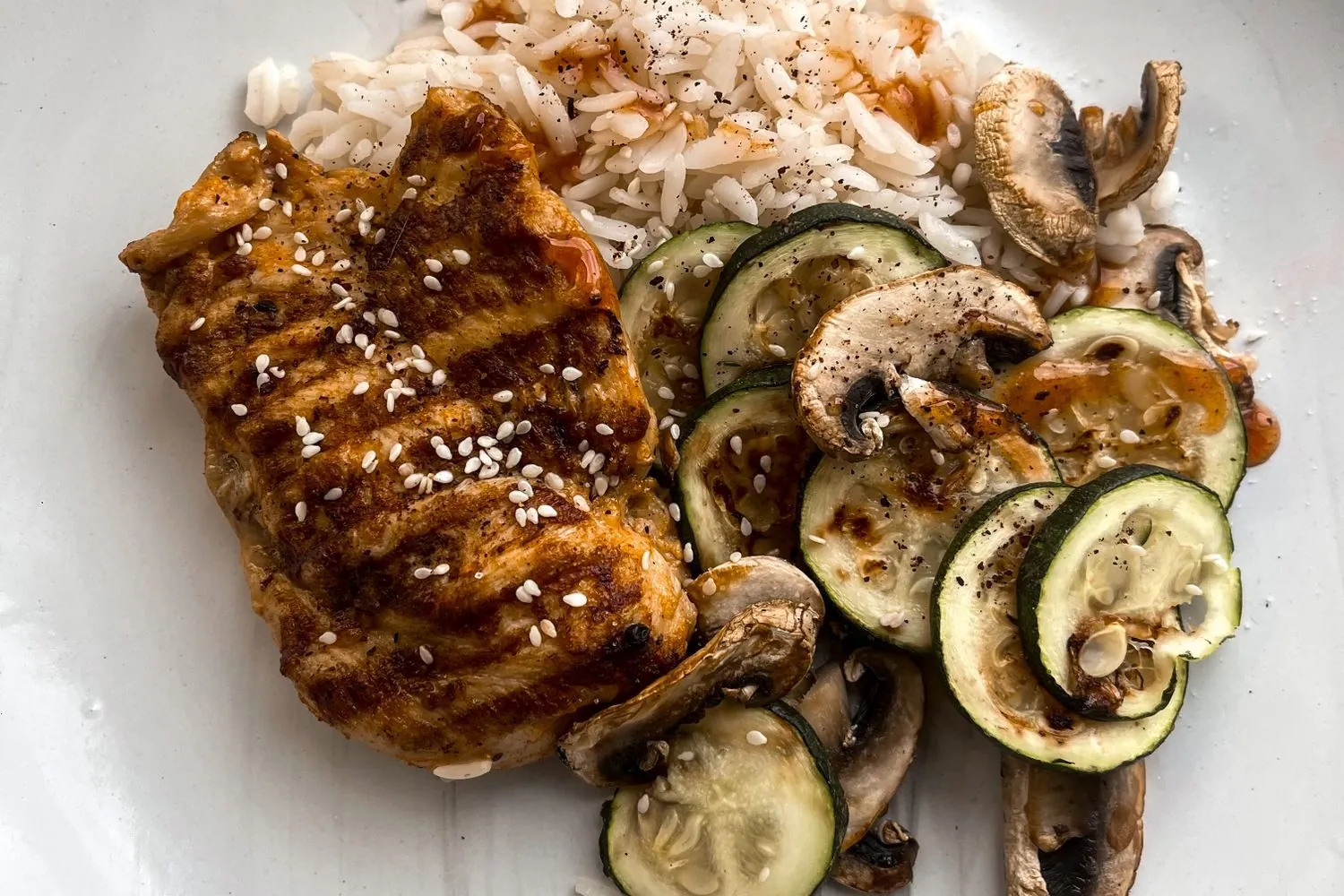
Five eggs in a day is fine for most healthy adults, but if you have high cholesterol or heart disease, check the egg count with your doctor first. To match the plan with your training days, pair it with a workout and diet plan and the muscle workout plan.
How do you build your own day in five steps?
Fix your protein target first, at about 1.6-2.2 g per kg. Split it into four or five portions of roughly 25-40 g, pick one anchor food per portion from the swap table, then add roti, rice, fruit and a little oil until calories reach maintenance plus about 300. Recheck after two to three weeks.
- Weigh yourself for a week, same time each morning, and note the average.
- Set protein: body weight in kg multiplied by 1.6 for the low end and 2.2 for the high end.
- Divide it across breakfast, lunch, dinner and one or two snacks.
- Choose an anchor for each slot from the table below, then add carbs and fats around it.
- Adjust by about 100-150 kcal based on two to three weeks of scale and mirror trends.
| Food | Amount for about 20 g protein | About kcal | Note |
|---|---|---|---|
| Soya chunks (dry) | about 40 g | about 140 | Best protein per rupee; soak and squeeze well |
| Chicken breast (raw) | about 90 g | about 100 | Lean; weigh raw, not cooked |
| Fish such as rohu (raw) | about 120 g | about 120 | Choose boneless pieces if you can |
| Whole eggs | about 3 large | about 210 | Yolk adds fat and nutrients |
| Paneer | about 110 g | about 290 | Calorie dense; good for hard gainers |
| Roasted chana | about 100 g | about 370 | Portable office snack |
| Cooked rajma | about 230 g | about 290 | Pairs well with rice or roti |
| Cooked dal | about 330 g | about 370 | A helper, rarely the sole anchor |
| Toned milk | about 650 ml | about 380 | Useful for easy extra calories |
| Curd (dahi) | about 600 g | about 360 | Treat as a side, not an anchor |
| Whey powder | about 1 scoop (30 g) | about 120 | Convenience only; read your label |
These are approximate values for standard foods, and home cooking changes them. If your main problem is eating enough in the first place, our guide to nutrition for weight gain covers calorie-dense options in more detail.
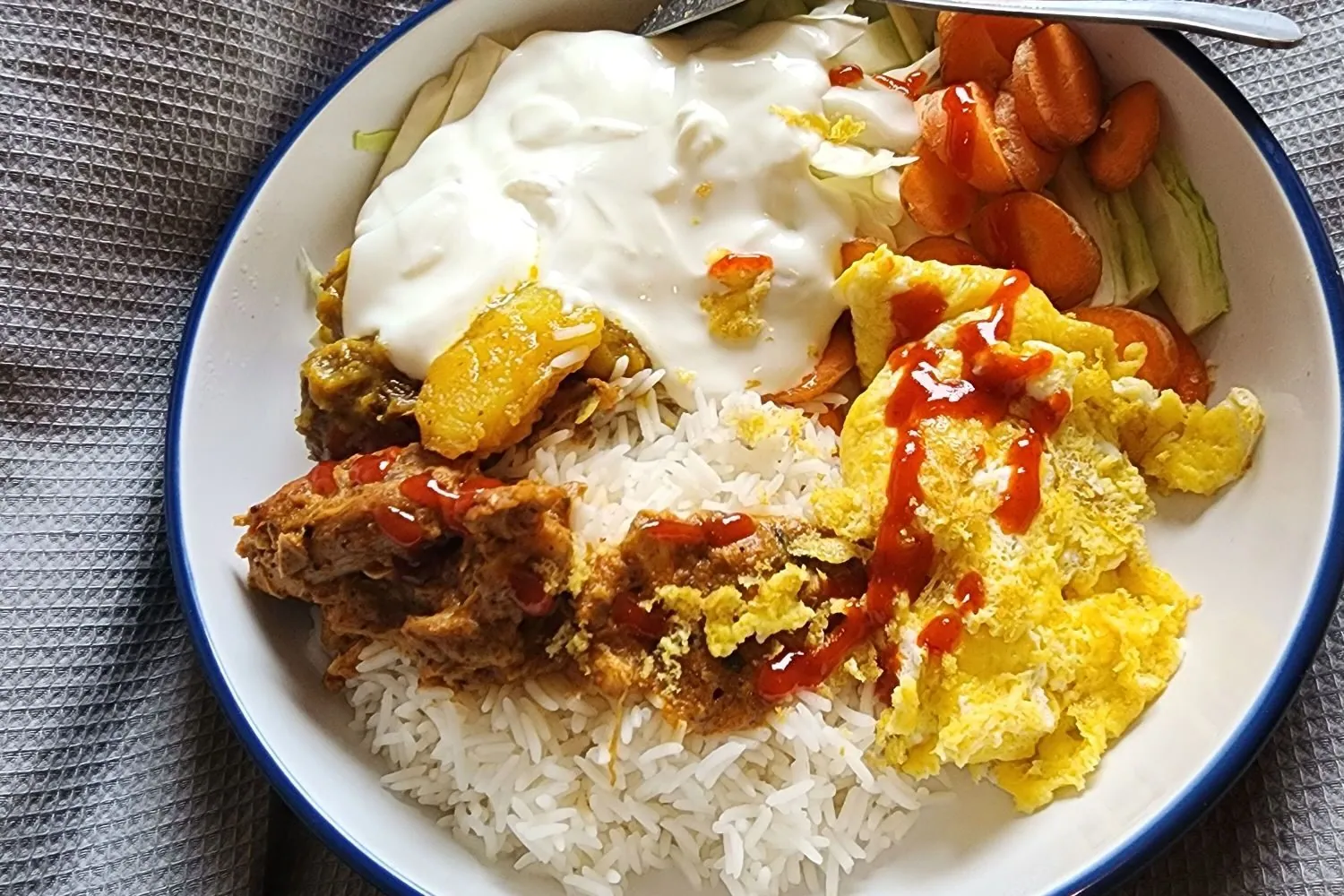
Four muscle-building diet myths, corrected
- “Roti, rice and dal have no protein.” They do. Six rotis, two bowls of dal and a bowl of curd add up to about 40 g without trying. They simply cannot do the whole job alone, which is why a paneer, soya, egg, chicken or fish anchor sits on top.
- “A muscle building diet plan must include shakes.” It need not. Whey is a convenient way to reach your number on a busy day, not a magic ingredient. Real food first.
- “Carbs and ghee make you fat, so cut them.” Weight gain comes from the overall surplus. Carbs fuel hard training, and a teaspoon or two of ghee or oil per meal is a sensible way to add calories.
- “You must drink a shake within 30 minutes.” The post-workout window is wide, often several hours, especially if you ate before training. Hitting your daily total matters far more than the clock. Our sports nutrition guide goes deeper on timing.
Not gaining weight, or gaining only belly fat? How to troubleshoot
If the scale has not moved in two to three weeks, add about 100-150 kcal a day, such as an extra roti, a banana or a spoon of peanut butter. If your waist is growing faster than your lifts, trim about 100-150 kcal and check that your training is actually progressing.
- Low appetite: use liquid calories like milk, banana shakes or lassi, and eat smaller portions more often.
- Bloating or gas: raise fibre, soya and rajma portions gradually, and drink enough water through the day.
- Office days: carry roasted chana, peanuts, boiled eggs or a paneer sandwich so a skipped lunch does not wipe out your protein.
- Stalled lifts: food cannot replace progressive training. If your sets and form need a second pair of eyes, 1-on-1 personal training can fix that.
Our bodybuilding nutrition guide has further meal ideas once your basics are steady.
Adjusting the plan for women, eggetarians, vegans and tight budgets
- Women and lighter lifters: the protein range per kg stays the same, but total calories are lower. A 55 kg woman may need about 90-120 g of protein and maintenance near 1,650-1,950 kcal, with a surplus of about 200-300 kcal. Scale each portion down by roughly 15-25%.
- Eggetarians: add eggs at breakfast and after training. Each large egg gives about 6 g of protein.
- Vegans: lean on soya chunks, tofu, dal, chana, rajma and peanuts. Vegans should talk to a registered dietitian about vitamin B12 and other nutrients that are harder to get from plants alone.
- Tight budgets: eggs, soya chunks, dal, chana, curd, milk and peanuts usually give the most protein per rupee. Imported powders and bars are optional extras, not requirements.
When should you see a doctor or dietitian first?
Check with your doctor or a registered dietitian before raising protein or calories if you have kidney, liver or heart disease, diabetes or high cholesterol, are pregnant or breastfeeding, are under 18, take regular medication, or have a history of disordered eating. This plan is general education, not personal medical advice.
Never change or stop a prescribed medicine because of a diet plan. If you feel unwell, get persistent stomach problems, or notice unusual swelling or tiredness after raising your protein, speak to a doctor. Bring this plan to the appointment so they can adjust it to you. Muscle builds slowly, and nobody can promise you a timeline.
Frequently asked questions
How much protein do I need per day to build muscle?
Most people do well on about 1.6-2.2 g of protein per kg of body weight daily. For a 70 kg person that is roughly 110-155 g. Spread it over four to five meals of about 25-40 g each, and judge your average over the week, not each day.
Can I follow a nutrition diet plan for muscle building without supplements?
Yes. Both sample days above work with food alone: swap the whey scoop for about 100 g paneer bhurji or two extra eggs. Supplements only add convenience. If your budget or digestion makes powders awkward, a food-first plan with eggs, soya, dal, curd and milk can still reach your target.
How many meals a day should I eat to build muscle?
Four to five eating occasions, spaced about three to four hours apart, work well for most people because each can carry about 25-40 g of protein. Three larger meals also work if you can reach your daily total, so choose the pattern you can keep up.
Is a vegetarian diet enough to build muscle?
Yes, with planning. Paneer, curd, milk, soya chunks, rajma, dal, besan and peanuts can reach about 150 g of protein a day, as the vegetarian table shows. It takes more careful portioning than a non-veg diet, and vegans should discuss B12 with a dietitian.
How long before I see muscle gain on this plan?
Strength usually improves within the first few weeks, while visible size change often takes about 8-12 weeks of steady training and eating. Beginners tend to progress faster. Results vary with sleep, training quality and genetics, so track weight averages and lifts, not daily mirror checks.
Want these numbers built around your own weight, schedule and food preferences? Book an online nutritionist consultation with Fitstrot and take away a written plan with your calorie and protein targets.


