
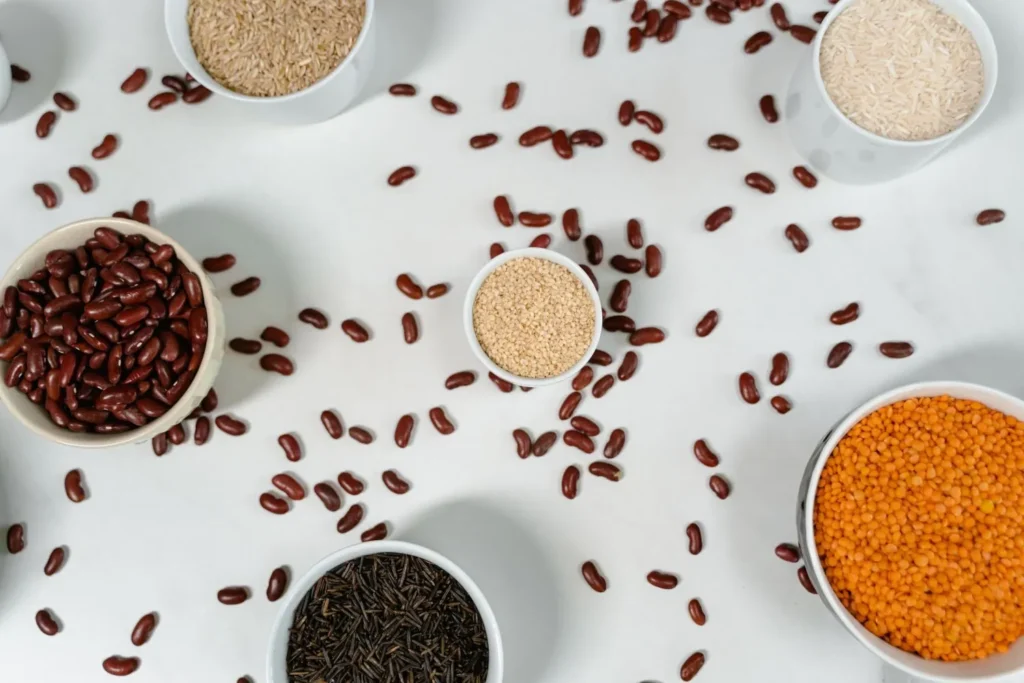
The nutritional value of protein is more than the number printed on a pack. It covers how many grams a food gives you, which amino acids come with those grams, and how much your gut actually absorbs. This guide puts rough numbers on the Indian foods you eat every day (dal, roti, curd, paneer, eggs, soya chunks), explains digestibility in plain terms, and shows a daily protein target by body weight. All figures are “about” values, because brands, recipes and portion sizes vary.
If you want the basics of why the body needs protein at all, start with our guide to protein and nutrition, then come back here for the food-by-food numbers.
What is the nutritional value of protein, and what should you look at on a plate?
Protein gives about 4 kcal per gram, but its real value is structural: it supplies the amino acids your body uses to repair muscle, make enzymes and hormones, and maintain skin, hair and immunity. A food’s protein is worth three things: grams per serving, amino acid mix, and digestibility.
Protein is built from 20 amino acids, and nine of them are “essential”, meaning the body cannot make them and they must come from food. Our piece on nutritionally essential amino acids covers each one, and the guide to the nutritional classification of protein explains complete versus incomplete sources in more depth.
A protein that carries all nine essential amino acids in useful amounts is called a complete protein. Eggs, milk, curd, paneer, fish, chicken and soy fit this description. Most cereals run low in lysine, and most pulses run low in methionine, which is why the classic Indian pairing of dal with rice or roti works so well.
Protein content of Indian foods, per serving
The table below uses everyday Indian servings. Pulses and grains are listed by dry weight, because that is what you actually measure out before cooking. Cooked dal looks lower per 100 g only because water has been added. Treat every number as an approximation, not a lab value.
| Food | Serving | Protein per serving (about) | Protein per 100 g (about) |
|---|---|---|---|
| Egg, whole, boiled | 1 large (about 50 g) | 6 g | 12-13 g |
| Chicken breast, cooked | 100 g | 30 g | 30 g |
| Fish (rohu, surmai), cooked | 100 g | 20 g | 20 g |
| Paneer (full-fat) | 50 g (2 small cubes) | 9 g | 18 g |
| Milk, cow | 1 glass (250 ml) | 8 g | 3-3.5 g |
| Curd (dahi), plain | 1 katori (150 g) | 5 g | 3-4 g |
| Moong dal, dry | 30 g (one katori of cooked dal) | 7 g | 24 g |
| Toor dal, dry | 30 g | 6-7 g | 22 g |
| Rajma or chole, dry | 30 g | 6-7 g | 20-23 g |
| Soya chunks, dry | 30 g | 15 g | about 50 g |
| Sattu (roasted chana flour) | 30 g (one glass of drink) | 6 g | 20-22 g |
| Roasted chana | 30 g (a small handful) | 6 g | 20 g |
| Peanuts | 30 g | 7 g | about 25 g |
| Tofu, firm | 100 g | 8 g | 8 g |
| Roti (whole wheat) | 1 medium | 3 g | 10-12 g (atta, dry) |
| Cooked rice | 1 katori (150 g) | 3-4 g | 2-3 g |
| Oats, dry | 30 g | 4 g | about 13 g |
Three patterns stand out. First, eggs, paneer, soya chunks and dal give the most protein for the money: protein in paneer is dense, and protein in dal is cheap. Second, the small contributors add up: two rotis, a katori of rice and a katori of curd bring roughly 15 g before any dal or paneer arrives. Third, a plate of only rice and sabzi is very low in protein, the commonest gap in Indian vegetarian meals.
How well does your body digest protein from dal, paneer and eggs?
Protein from eggs, milk, curd, paneer, fish and chicken is digested very well, roughly 90% or more. Soya is also high, about 85-95%. Dals, rajma and whole grains are lower, roughly 75-90%, because fibre and natural compounds slow digestion. Soaking, sprouting, fermenting and cooking improve this.
Protein digestibility is only half the picture. Scientists rate protein with scoring systems that combine two things: the amino acid pattern and how much is digested. You do not need to calculate these at home. Animal foods and soy score high on their own. Cereals and pulses score lower on their own but high together.

| Food group | Digestibility (about) | Usually low in | Easy Indian fix |
|---|---|---|---|
| Egg, milk, curd, paneer | 90% or more | Nothing significant | Use as the protein anchor of a meal |
| Chicken and fish | 90% or more | Nothing significant | Grill, bake or make a light curry |
| Soya chunks, tofu | 85-95% | Slightly low in methionine | Add to pulao or a dry sabzi |
| Dal, rajma, chole | 75-85% | Methionine | Eat with rice or roti, soak well, cook until soft |
| Wheat, rice, millets | 80-90% | Lysine | Pair with dal, curd or milk |
| Nuts and seeds | 80-90% | Lysine (some) | Use as an add-on, not the main source |
Cooking matters too. Gentle cooking makes pulses easier to digest, and fermented batters such as idli and dosa are easier on the gut. Prolonged, very high dry heat can slightly reduce usable lysine, so avoid charring.
Myth check: is plant protein “incomplete” and not worth counting?
This myth is half true, which makes it sticky. A single pulse or cereal is low in one essential amino acid, but your body pools amino acids across the day. Dal with rice or roti, rajma-chawal, khichdi, and curd with chana together cover the gap. You do not need to match them in the same bite.
The bigger problem for most Indian vegetarians is not quality but quantity. A thin dal, a small portion of sabzi and plenty of rice can leave the day well short of the grams you need. Counting plant protein is perfectly valid. Eating enough of it, spread across meals, is the real work. To see how protein sits alongside carbohydrates, fats and micronutrients on the same plate, read our guide to nutritional needs.
How much protein do you need in a day?
Most healthy adults need about 0.8-1.0 g of protein per kg of body weight daily. People who train regularly usually aim for about 1.2-1.6 g per kg, and hard strength training can reach about 1.6-2.0 g per kg. A 60 kg adult therefore needs roughly 50-60 g on a quiet day and about 70-95 g when active.
| Body weight | Everyday adult (0.8-1.0 g/kg) | Regular exercise (1.2-1.6 g/kg) |
|---|---|---|
| 50 kg | about 40-50 g | about 60-80 g |
| 60 kg | about 48-60 g | about 70-95 g |
| 70 kg | about 56-70 g | about 85-110 g |
| 80 kg | about 64-80 g | about 95-130 g |
These are planning ranges, not prescriptions. Pregnancy, breastfeeding, growing children, older adults and anyone with a medical condition have different needs, covered below.
If you train, our guides to nutrition diet plan for muscle building, sports nutrition and bodybuilding nutrition show how to structure the same numbers around workouts. If you prefer someone to check your form and your food in one place, 1-on-1 personal training pairs well with a protein plan.
A sample Indian vegetarian day that adds up to about 65 g
This walkthrough is for a 60 kg adult who eats egg-free vegetarian food. Every number is approximate, and you can swap items freely.
- Breakfast: two moong dal chillas (about 45 g dry dal, roughly 11 g) with a small katori of curd (about 3-4 g). Total about 14-15 g.
- Lunch: two rotis (about 6 g), one katori of dal (about 7 g), one katori of curd (about 5 g) and a vegetable sabzi (about 2 g). Total about 20 g.
- Evening: 30 g roasted chana (about 6 g) with tea or a glass of milk (about 8 g if you have it). Total about 6-14 g.
- Dinner: paneer bhurji from 75 g paneer (about 13 g), two rotis (about 6 g) and salad. Total about 19 g.
That lands near 60-65 g without the milk and close to 70 g with it. Aiming for roughly 20-30 g at each main meal is easier than trying to catch up at dinner, because three or four moderate servings are simpler to eat and digest than one huge one.
Eating “protein foods” but still falling short? Common reasons
If your numbers do not match your plate, one of these is usually the cause:
- Measuring cooked weight as if it were dry weight. A katori of cooked dal holds much less protein than 100 g of dry dal. Use the dry-weight column when you compare.
- Counting “paneer” in a rich gravy. A big bowl of gravy with a few cubes of paneer gives far less protein than the cubes alone suggest. Check the cube weight, not the bowl.
- Trusting “protein-rich” snack labels. Many packaged snacks carry a small gram count beside plenty of oil, sugar or refined flour. Check grams per serving and the serving size.
- Skipping breakfast protein. Tea with biscuits or plain poha can leave the first meal near 3-5 g. Adding curd, an egg, sprouts or a dal chilla fixes this easily.
- Cutting food while trying to lose weight. Eating less often drags protein down with the calories. Keep protein steady while you reduce portions of oil and refined carbohydrate. Our online weight loss trainer programme builds this in from the start.
- Long gaps with poor appetite or frequent illness. If you feel weak, lose hair or muscle, or get ill often, read about nutritional deficiency and speak to a professional rather than guessing.
Protein for vegetarians, vegans, children and older adults
Each group needs a slightly different approach, and none needs expensive supplements.
Vegetarians and eggetarians
Curd, milk, paneer, dal and sprouts can carry most of the day. Eggs add an easy, cheap, complete protein if you eat them.
Vegans
Without dairy and eggs, lean on soya chunks, tofu, dals, rajma, chole, sattu, peanuts and whole grains, and eat them in generous portions across at least three meals. Vegans also need to plan vitamin B12 and iron with a doctor or dietitian, since plant foods do not reliably supply B12.
Children, teens and older adults
Growing children need protein relative to their size, and older adults often benefit from a little more per kg than younger adults because muscle becomes harder to maintain. Both groups do best with protein spread through the day, from curd, milk, eggs, dal and soft paneer dishes. Avoid putting a child or an older adult on a high-protein plan without professional advice.
When to see a doctor or registered dietitian
Speak to a doctor or registered dietitian before raising your protein intake if you have kidney disease, advanced liver disease, or a medical condition that comes with a prescribed diet, or if you are pregnant, breastfeeding, or planning a major change for a child. Do not change any medication on the basis of an article. If you are unsure where you stand, an online nutritionist consultation can turn the ranges above into numbers that fit your body and health history.
Frequently asked questions
Which has more protein, paneer or egg?
Gram for gram, paneer has more, at about 18 g per 100 g versus about 12-13 g for egg. Per serving the gap is smaller: 50 g of paneer gives about 9 g, and one large egg gives about 6 g. Both are complete proteins and digest very well.
Does dal plus rice make a complete protein?
Yes, in practice. Rice is low in lysine and dal is low in methionine, so each fills the other’s gap. A plate of dal and rice, or dal and roti, gives a well-rounded amino acid profile. You do not need to eat them in the same meal, as long as both appear across the day.
Does cooking reduce the protein in food?
Not in any meaningful way. Normal cooking does not remove grams of protein; it mostly changes digestibility. Gentle cooking, soaking and sprouting make pulses easier to digest. Only very high, prolonged dry heat or charring slightly lowers usable lysine, so avoid burning or heavily charring food.
How much protein per meal is enough?
For most adults, about 20-30 g at each main meal works well, with smaller amounts at snacks. That is roughly a katori of dal plus curd and two rotis, or about 75 g of paneer with dal. Spreading intake is more practical than eating most of your protein at dinner.
Can too much protein harm you?
For healthy adults, intakes within the ranges in this guide are generally considered safe, but very high intakes are not necessary for most people. People with kidney disease, advanced liver disease or other medical conditions should not raise protein without advice from their doctor or a registered dietitian.
The nutritional value of protein comes down to enough grams, a good mix of sources and a plate you can repeat. If you want your daily numbers turned into an Indian meal plan around your weight and food preferences, book an online nutritionist consultation with Fitstrot.


