
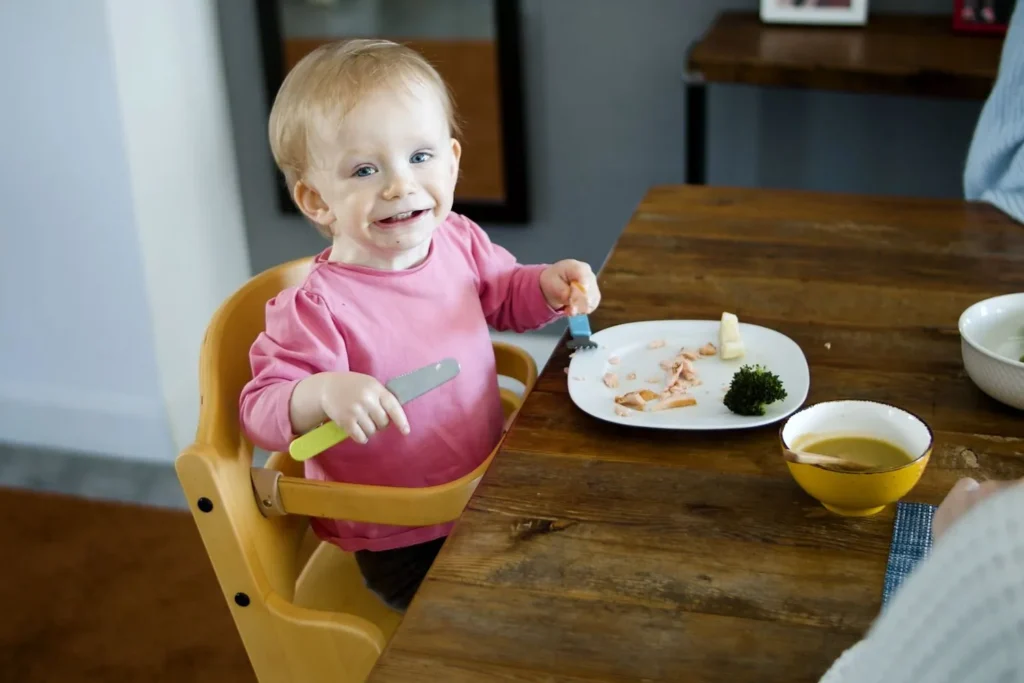
Toddler nutrition between ages 1 and 3 comes down to three things most parents get wrong at first: portions are much smaller than expected, daily refusals are usually normal development rather than a problem to fix, and mealtimes get calmer when parents stop controlling how much a child eats. A toddler’s stomach is roughly the size of their fist, so a full meal for a 2-year-old can be two tablespoons of rice, a little dal and a few pieces of soft vegetable.
This guide covers toddler feeding in an Indian home: realistic portions, a one-day menu, how to handle a picky eater, and the choking and allergy rules every parent should know. It is general information, not medical advice. Your child’s paediatrician is the right person for anything specific to your child.
How much should a toddler eat in a day?
Toddler portions are small: a common starting point is about one tablespoon of each food per year of age at a meal, with more offered if the child asks. Most toddlers do well on three small meals and two to three snacks, roughly 2.5 to 3 hours apart. Exact energy needs differ, so ask your paediatrician about your child.
Growth slows sharply after the first birthday, so appetite looks smaller and less predictable. A toddler who eats well at breakfast, barely touches lunch and then clears dinner is usually averaging out across the day. We deliberately give no calorie targets here, because the right amount depends on your child’s size, activity and growth chart.
After the first birthday, most toddlers move to boiled, cooled, unflavoured full-cream milk alongside solid meals. Low-fat milk is generally avoided before age 2 because young children need the fat, but confirm this with your paediatrician.
Toddler portion sizes in Indian household measures
Parents often plate adult-sized servings out of habit. Use this table as a rough starting point for a 2-year-old; a hungry toddler can have seconds, a 1-year-old needs a little less and a 3-year-old a little more.
| Food group | Starting serving (about) | Indian examples |
|---|---|---|
| Grains and cereals | 2 tbsp cooked, or a quarter of a small roti | Rice, khichdi, vegetable upma, soft roti pieces, idli |
| Dal, pulses and eggs | 2 tbsp dal or mashed pulses, or half a well-cooked egg | Moong dal, masoor dal, mashed rajma, besan chilla, egg bhurji |
| Vegetables | 2 tbsp cooked | Lauki, carrot, pumpkin, spinach, beans, tomato |
| Fruit | A few small soft pieces, or a quarter to half a small banana | Banana, ripe papaya, chikoo, mango, cooked apple |
| Milk and milk foods | 2 to 4 tbsp curd, a few paneer crumbles, or a small cup of milk | Plain curd, crumbled paneer, buttermilk, milk |
| Fats | A small amount cooked into food | A little ghee on dal-rice, a little oil in cooking |
A sample day of toddler meal ideas
Structure matters more than variety at this age. A predictable rhythm lets a toddler arrive at each meal properly hungry instead of grazing all day. The menu uses ordinary home food, with no special products needed.
| Time | Meal | Example |
|---|---|---|
| 7:30 am | Breakfast | Soft moong dal chilla or vegetable upma, plus a few banana pieces |
| 10:00 am | Snack | Plain curd with mashed fruit, or a soft idli piece |
| 12:30 pm | Lunch | Dal-rice with a little ghee, soft cooked lauki or carrot, paneer crumbles |
| 3:30 pm | Snack | Steamed and cooled sweet potato, or ripe papaya pieces |
| 6:30 pm | Dinner | Soft roti pieces with mashed sabzi and a spoon of curd, or vegetable khichdi |
| Before bed (optional) | Milk | A small cup of warm milk, if your paediatrician agrees |
Eggs, if your family eats them, can replace dal at breakfast or lunch. Keep packaged namkeen, biscuits, chips, juice and sweetened drinks occasional; they fill small stomachs without much else.
What is the division of responsibility, and why does it end mealtime battles?
The division of responsibility is a simple feeding rule: the parent decides what food is offered, when and where, and the child decides whether to eat it and how much. Most mealtime power struggles start when a parent quietly takes over the child’s half of that job.
Coaxing one more bite, bargaining dessert for vegetables, or following a toddler around the room with a spoon takes the decision away from the child, and children usually push back. In practice, four habits help:
- Serve at least one accepted food next to one you are introducing.
- Sit together, screens off, and end the meal after a set time even if little was eaten.
- Do not offer a backup meal or biscuits if the meal was refused.
- Judge the pattern across several days, not a single meal.
Three toddler feeding myths worth dropping
- Myth: a toddler must finish the plate. A child who stops when full is using a healthy appetite. Forcing the last spoonful teaches them to ignore fullness.
- Myth: feeding in front of a phone or television is harmless. Distraction feeding gets more food in, but it hides hunger cues and makes calm mealtimes harder later.
- Myth: toddlers need a health drink or malt powder to grow. Varied home food does the job for most children. Many flavoured powders contain added sugar, so read labels and ask your paediatrician before making them daily.
No routine works for every child, and no article can promise your toddler will start eating everything. Consistency and patience help most.
Why won’t my toddler eat anything new?
Refusing new food is common from about 18 months to 3 years and is usually a normal stage called food neophobia, not defiance. Many children need to see or taste a new food around 8 to 15 times, over several weeks and without pressure, before accepting it. One refusal tells you very little.
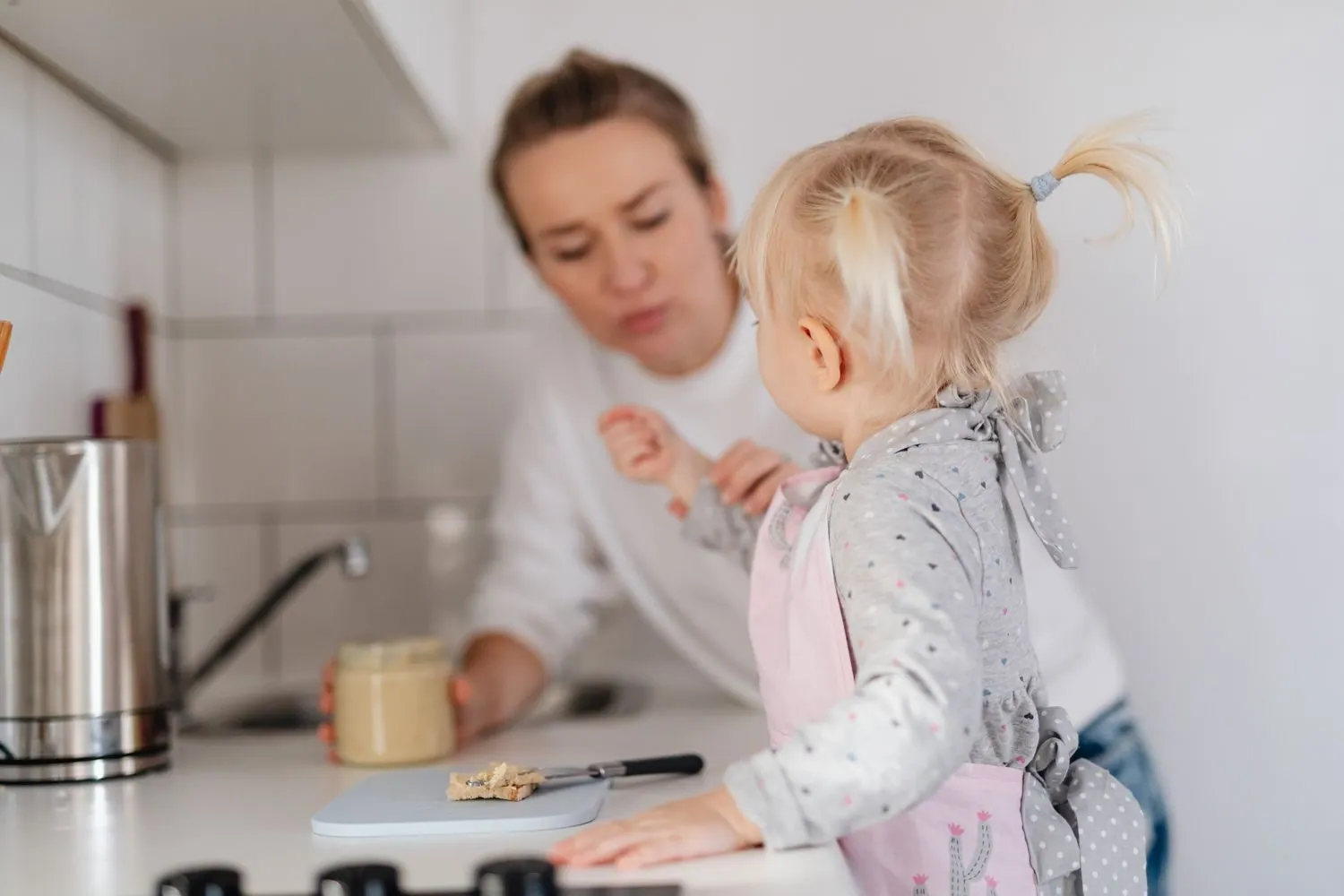
Troubleshooting a picky eater: what usually helps
- Keep serving the food, quietly. A small spoonful beside familiar foods, meal after meal, works better than one dramatic “just try it” moment.
- Let them touch, smell and play with it. Sensory familiarity often comes before tasting.
- Involve them in simple prep. Washing spinach or stirring batter builds curiosity.
- Eat it yourself, calmly. Toddlers copy what parents and siblings eat.
- Avoid short-order cooking. A separate meal after every refusal removes the repeated exposure that builds acceptance.
- Change the form, not the pressure. Refused carrot may be accepted grated into roti dough or as soft sticks.
Which foods are choking hazards for toddlers?
Toddlers can choke on small, hard, round or sticky foods, because they chew immaturely and often move while eating. Whole nuts, whole grapes, popcorn, raw hard vegetables, and thick spoonfuls of nut butter are the usual culprits. Always keep the child seated and supervised while eating, and never let them eat while walking, running or lying down.
| Food | Why it is risky | Safer way to serve |
|---|---|---|
| Whole peanuts, almonds, cashews | Hard and small; can block the airway | Use finely ground nut powder mixed into porridge, or a thin smooth paste |
| Whole grapes, cherry tomatoes, whole berries | Round and the right size to plug the windpipe | Cut lengthwise into quarters |
| Raw carrot, apple or cucumber chunks | Hard pieces break off and are swallowed whole | Grate, steam until soft, or cook |
| Thick spoonfuls of peanut butter | Sticky; can stick in the throat | Thin a small amount into food, never by the spoon |
| Fish with bones, large chunks of meat or paneer | Bones and big lumps are hard to chew | Remove bones fully; shred or crumble finely |
Popcorn, hard sweets and chikki are also best avoided at this age. Learn toddler choking first aid through a recognised course, and call emergency services at once if a child cannot cough, cry or breathe.
Food allergy cautions for toddlers
Common food allergens include milk, egg, peanut, tree nuts, wheat, soy, fish and sesame. If your toddler has not yet tried one, offer a small amount of one new food at a time, early in the day, so you can watch for a reaction.
Mild signs include a rash, hives or vomiting soon after eating. Seek emergency care immediately for swelling of the lips, tongue or face, trouble breathing, repeated vomiting, or a child who turns pale, floppy or unusually sleepy. If your toddler has severe eczema, a previous reaction or a family history of allergy, speak to your paediatrician before introducing high-risk foods at home. Never test a suspected allergy on your own, and avoid honey before the first birthday.
Toddler nutrition for vegetarian, vegan and picky-eating families
A well-planned vegetarian diet can suit toddlers, and Indian home cooking gives a good base: dal, curd, paneer, milk, ragi, leafy greens and fruit. The nutrients to watch are iron, vitamin B12, vitamin D and zinc, especially when whole food groups are avoided.
- Iron: offer dal, ragi and leafy greens with a vitamin C food such as lemon or tomato, which helps absorption.
- Vegan toddlers: need careful planning with your paediatrician or a registered dietitian, especially for vitamin B12, which plant foods do not reliably provide. Our vegan nutrition guide gives the general picture.
- Dairy-free toddlers: a plant milk is not automatically an equal swap. Ask which fortified option, if any, suits your child.
For a wider look at how nutrient needs shift across childhood, see our guides on nutritional needs for children and vitamin nutrition.

Do toddlers need vitamins or supplements?
Most toddlers eating a reasonably varied diet, including milk or a fortified alternative, do not automatically need a daily multivitamin. Picky eaters, children who drink little milk, and those on restricted diets are more likely to fall short on iron, vitamin D, zinc or B12. Never start a supplement without your paediatrician’s advice.
We give no supplement doses for children here: the right product and amount depend on age, weight, diet and any test results, and too much of some vitamins and minerals can harm small bodies.
When should I worry about picky eating?
Picky eating is usually normal and often eases by preschool age, but see your paediatrician if your child is losing weight, falling off their growth curve, eating very few foods, or gagging and distressed with most textures. Persistent low energy or frequent illness also deserves a check. Do not wait for a routine visit if you are worried.
See your paediatrician if you notice any of these:
- Weight loss, or a child who drops off their usual growth curve.
- Very few accepted foods, or whole food groups or textures refused for weeks.
- Gagging, choking or distress with most solid foods.
- Persistent tiredness, pale skin or frequent infections.
- Any reaction after eating that looks like an allergy. Treat breathing difficulty or facial swelling as an emergency.
Do not diagnose a feeding problem or nutrient gap from a blog post. Your paediatrician can track growth, rule out medical and sensory causes, and refer you to a registered dietitian. Never put a toddler on a restrictive or weight-loss diet unless a doctor advises it.
Frequently asked questions
Is it normal for my toddler to eat almost nothing some days?
Yes. Growth slows after the first year, so appetite swings daily. If your child is active, has normal energy and tracks their growth curve at checkups, an inconsistent day is usually not a concern. If it continues for weeks, speak to your paediatrician.
Should I hide vegetables in my toddler’s food?
Occasionally blending vegetables into dal, paratha or sauce is fine. Relying on it skips the repeated exposure a toddler needs to accept those foods. Keep serving the visible vegetable alongside, without pressure.
How long should I keep offering a food my toddler refuses?
Keep offering small amounts, without comment, over several weeks. Many children need 8 to 15 exposures before accepting a new food, so a few refusals are expected. Vary how it is cooked or cut, but do not force it.
My toddler wants only milk and refuses solid food. Is that a problem?
It can be. Too much milk blunts appetite for solid meals, and milk is low in iron. Offer milk after meals, in a small cup, and discuss the amount with your paediatrician, especially if the pattern lasts more than a few weeks.
How is toddler feeding different from feeding a baby?
Infant feeding focuses on introducing textures and first foods, and the parent leads. Toddler feeding shifts part of the decision to the child, who chooses whether and how much to eat, while you provide structure. For the earlier stage, see our baby nutrition, infant nutrition and infant nutritional requirements guides.
The aim is not a child who eats everything, but one building a calm, long-term relationship with food. For older children, our child nutrition and nutrition for kids guides pick up where this one ends. If you want a feeding plan built around your family’s actual meal times, book an online nutritionist consultation with Fitstrot and bring your child’s growth chart and your paediatrician’s advice along.


