
The infant nutritional requirements for a baby’s first year look tiny in absolute terms but are very high for a baby’s size: in the first six months a healthy full-term baby needs about 90 to 100 kcal for every kilogram of body weight each day, and nearly all of it can come from breast milk or infant formula alone. At about six months the picture shifts, because iron, zinc and protein needs rise faster than milk can supply them. This guide sets out what babies need, what milk covers, where the gaps open up, and which Indian first foods help fill them.
It is a reference, not a feeding prescription. For the month-by-month feeding timeline, see our infant nutrition guide, and for tracking weight and length against these needs, see baby nutrition and growth monitoring.
What are the infant nutritional requirements from birth to 12 months?
A healthy full-term baby needs about 90 to 100 kcal per kg per day until six months, then about 80 to 95 kcal per kg per day, plus roughly 9 to 11 g of protein daily. Iron need climbs from almost nothing to about 11 mg a day after six months. Milk covers nearly everything until then.
The table below shows typical reference values. Different guideline bodies round differently, and Indian tables are often a little lower than international ones, so treat every figure as an approximate average for healthy babies, not a target to hit at each feed.
| Nutrient | Birth to 6 months | 6 to 12 months | Why it matters |
|---|---|---|---|
| Energy | About 90 to 100 kcal per kg per day | About 80 to 95 kcal per kg per day | Fuels very fast growth and brain development |
| Protein | About 9 g per day | About 11 g per day | Builds muscle, organs and immune cells |
| Fat | About half of calories, from milk | About 40 percent of calories | Brain growth; never restrict fat in infancy |
| Iron | Very small; uses stores made before birth | About 11 mg per day (international tables); Indian tables list less | Oxygen transport and brain development |
| Zinc | About 2 mg per day | About 3 mg per day | Growth and immunity |
| Calcium | About 200 to 300 mg per day | About 260 to 300 mg per day | Bones and teeth |
| Vitamin D | Small daily amount, often as drops for breastfed babies | Same; dose set by your paediatrician | Calcium absorption and bone strength |
A quick example of how the energy row works: a 4 kg newborn needs about 400 kcal a day, while an 8 kg nine-month-old needs roughly 650 to 750 kcal. You are not meant to count calories. A baby who feeds on demand, passes about six or more wet nappies a day after the first week, and follows their growth curve is usually getting enough. Weight roughly doubles by about five months and roughly triples by one year, which is why needs per kilogram are so high.
How much of a baby’s needs does milk actually cover?
Breast milk provides about 65 to 70 kcal and about 1 g of protein per 100 mL, and for a healthy full-term baby it covers nearly every nutrient until about six months. The usual exceptions are vitamin D, which is low in breast milk, and iron, which becomes the main gap after about six months. Infant formula is fortified to cover these.
| Nutrient | Breast milk | Infant formula | Gap to watch |
|---|---|---|---|
| Energy and fat | Fully covers needs to about 6 months | Designed to match breast milk | After 6 months, milk alone falls short |
| Protein | Covers needs to about 6 months | Covers needs; slightly higher than breast milk | Rises after 6 months |
| Iron | Low but well absorbed | Iron-fortified | Stores run down at about 4 to 6 months |
| Vitamin D | Low | Fortified | Breastfed babies often need drops on medical advice |
| Zinc and calcium | Cover needs to about 6 months | Fortified | Zinc need rises after 6 months |
| Vitamin B12 | Depends on the mother’s own intake | Fortified | Vegetarian or vegan mothers should ask about B12 |
Exclusive breastfeeding for about the first six months is the usual advice in India, with no water, ghutti or top feeds unless a doctor says otherwise. Our nutritional needs reference explains how adequate intake figures, used for young infants, differ from recommended allowances for older children.
Why do iron and protein needs jump after six months?
A full-term baby is born with iron stored during the last months of pregnancy, enough for roughly four to six months, while breast milk itself contains little iron. Once those stores run down at about six months, the daily iron need rises to about 11 mg by international tables, which milk alone cannot meet. Protein and zinc needs rise at the same time.
This is the single biggest change in the whole first year. Indian tables list a lower iron figure than international ones, but every table shows the same direction: a steep rise, and a need for iron-containing foods. Iron deficiency anaemia is a common problem in Indian infants, and it can affect energy, appetite and development, so it is worth taking seriously. Our guides on nutritional anaemia and nutritional deficiency explain the wider picture. A diet of only fruit purees and thin dal water can look full but leave exactly this gap.
A walkthrough of Indian first foods from 6 to 12 months
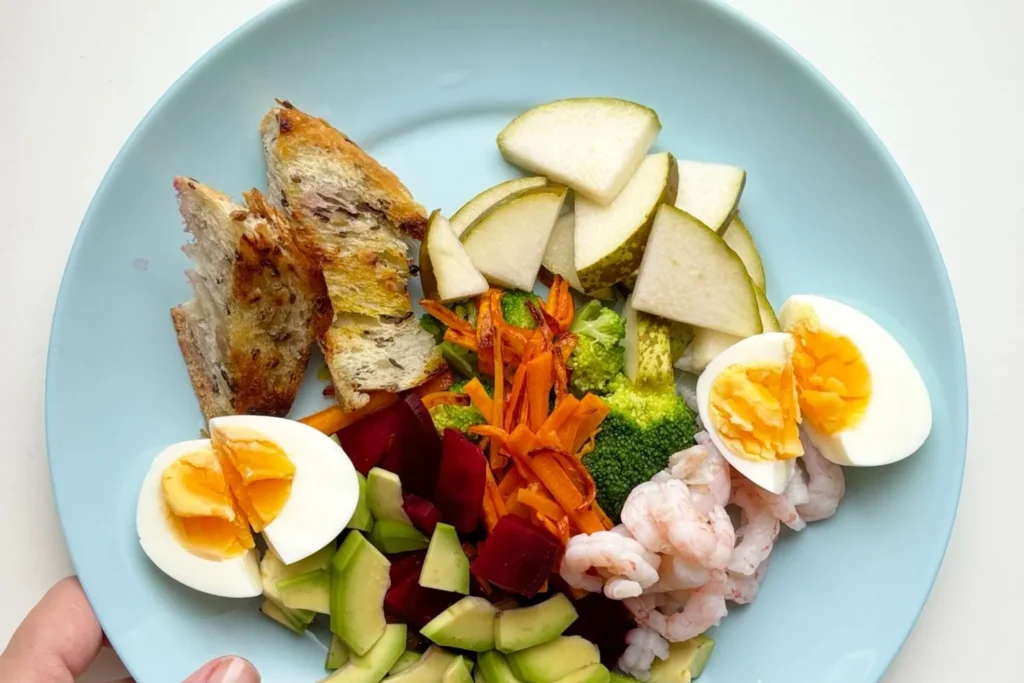
Milk stays the main food through the first year, and solids add what milk can no longer supply. The table maps common Indian first foods to the nutrients they help with. Ages are typical starting points, not deadlines; follow your baby’s readiness and your paediatrician.
| Food | Helps with | Serve it as | From about |
|---|---|---|---|
| Ragi porridge | Calcium, some iron, energy | Thin, smooth porridge, no sugar | 6 months |
| Moong dal | Protein, iron, zinc | Strained water first, then mashed dal | 6 months |
| Rice-dal khichdi with a little ghee | Energy, protein, fat | Soft and mashed, no salt | 6 to 7 months |
| Palak, beetroot, pumpkin, carrot | Iron, vitamin A, fibre | Cooked and pureed or mashed | 6 months |
| Mashed banana, cooked apple, guava | Vitamin C, energy | Mashed or stewed | 6 months |
| Well-cooked egg | Protein, iron, fat | Mashed, if your family eats eggs | 7 to 8 months |
| Chicken or fish, bone-free | Iron, zinc, protein | Well cooked, pureed or finely minced | 7 to 8 months |
| Paneer or plain homemade curd | Protein, calcium | Small soft portions | 8 months |
| Nut or seed powder | Fat, zinc, protein | Smooth paste or powder only, never whole nuts | 8 to 9 months |
Step 1, about 6 months: start with one new smooth food at a time, offered after a milk feed, and wait a few days before the next so any reaction is easy to spot. Step 2, about 7 to 8 months: move to mashed textures and add an iron-rich food such as dal, egg, chicken, fish or palak every day. Step 3, about 9 to 11 months: offer soft finger foods and family meals made without added salt, sugar or whole spices. Step 4, about 12 months: baby joins the family table, and milk becomes a drink beside meals.
Pair plant iron with vitamin C, such as guava or orange alongside ragi or dal, because it helps absorption. Chai and coffee are not for babies. Our baby food nutrition guide has recipe ideas built around these needs.
Myth check: water, honey, ghutti and thicker food
- Myth: babies need water in summer. A baby under six months who is exclusively breastfed gets enough fluid from milk. After six months, small sips of boiled and cooled water with meals are fine. If your baby seems dehydrated, call your paediatrician.
- Myth: a little honey or jaggery water is harmless. Honey must never be given before 12 months because of a rare but serious infection risk. Sugar and jaggery are simply unnecessary.
- Myth: ghutti or gripe water helps digestion. There is no nutritional need for them, and some home or herbal mixtures can be unsafe. Ask your paediatrician before giving anything other than milk.
- Myth: thick cereal in the bottle helps a baby sleep. It does not, and it raises choking and overfeeding risks.
- Myth: a chubbier baby is a healthier baby. Steady growth along the baby’s own curve matters more than size.
- Myth: cow or buffalo milk can replace formula early. It is a poor main drink before 12 months because it is low in iron. Small amounts in cooking or curd are different.
Breastfed, formula-fed, vegetarian or preterm: what changes?
Breastfed babies usually need vitamin D drops and sometimes an iron plan from a few months of age, with the dose set by the paediatrician, never guessed. Formula-fed babies get iron and vitamin D from fortified formula, but still need iron-rich solids after six months. Always prepare formula exactly as the label says, since over-diluting or over-concentrating it is unsafe.
Vegetarian and vegan families can meet needs with dal, ragi, leafy greens, curd, paneer and ground nuts, but vitamin B12 and iron deserve a conversation with the paediatrician, especially if the breastfeeding mother is strictly vegetarian or vegan. Preterm and low-birth-weight babies have higher needs per kilogram and often start solids on a plan set individually, so the tables here do not apply to them directly.
What to do when intake looks low or a baby refuses solids
- Refusing new foods: this is common. Keep offering small tastes on different days without pressure or force-feeding, and keep milk feeds going.
- Taking only fruit or only milk: add a small iron-rich food such as dal, egg or mashed chicken at one meal and build slowly.
- Constipation after solids: offer cooked papaya, pear or prune puree and ask your paediatrician before using any remedy.
- Gagging versus choking: gagging is a normal reflex; choking is silent and urgent. Always sit baby upright, stay with them, and avoid whole nuts, whole grapes and hard raw pieces.
- New food reactions: introduce one food at a time so any rash or swelling is easy to trace.
When to see your paediatrician
See your paediatrician or a registered dietitian if your baby is not gaining weight along their curve, has noticeably fewer wet nappies, vomits repeatedly, has blood in the stool, looks pale or unusually tired, or was born preterm or small. Get urgent medical help for facial swelling, hives with breathing trouble or repeated vomiting after a new food. Never start, stop or change vitamin, iron or formula plans on your own.
Once your baby turns one, needs shift again; see toddler nutrition and nutritional requirements for children.
Frequently asked questions
How many calories does a 6-month-old baby need?
A healthy 6-month-old needs about 80 to 95 kcal per kg per day, which for a baby of about 7 kg is roughly 560 to 665 kcal. Milk still supplies most of it. Appetite and the growth chart are better guides than counting.
Does a breastfed baby need vitamin D or iron supplements?
Often yes, because breast milk is low in vitamin D and iron stores run down after about four to six months. Whether, when and how much is a medical decision, so follow your paediatrician’s advice and do not start drops on your own.
When can a baby start eating solid food in India?
Usually at about six months, when the baby can sit with support, holds their head steady, shows interest in food and has lost the reflex that pushes food out of the mouth. Your paediatrician can confirm the right moment.
Can I give cow or buffalo milk to my baby?
Not as a main drink before 12 months, because it is low in iron and harder for infants to digest than breast milk or formula. Small amounts in cooking or plain curd are generally fine once solids have begun. Never dilute formula to stretch it.
How do infant needs differ from a toddler’s?
Energy per kilogram keeps falling after the first birthday as growth slows, and iron need drops from about 11 mg to a lower figure, while diet moves from milk-led to family foods. See our toddler guide for the next stage.
If you want help turning these ranges into a practical Indian meal plan for first foods, or you are a vegetarian parent worried about iron and B12, book an online nutritionist consultation with Fitstrot, alongside your paediatrician’s advice.


