
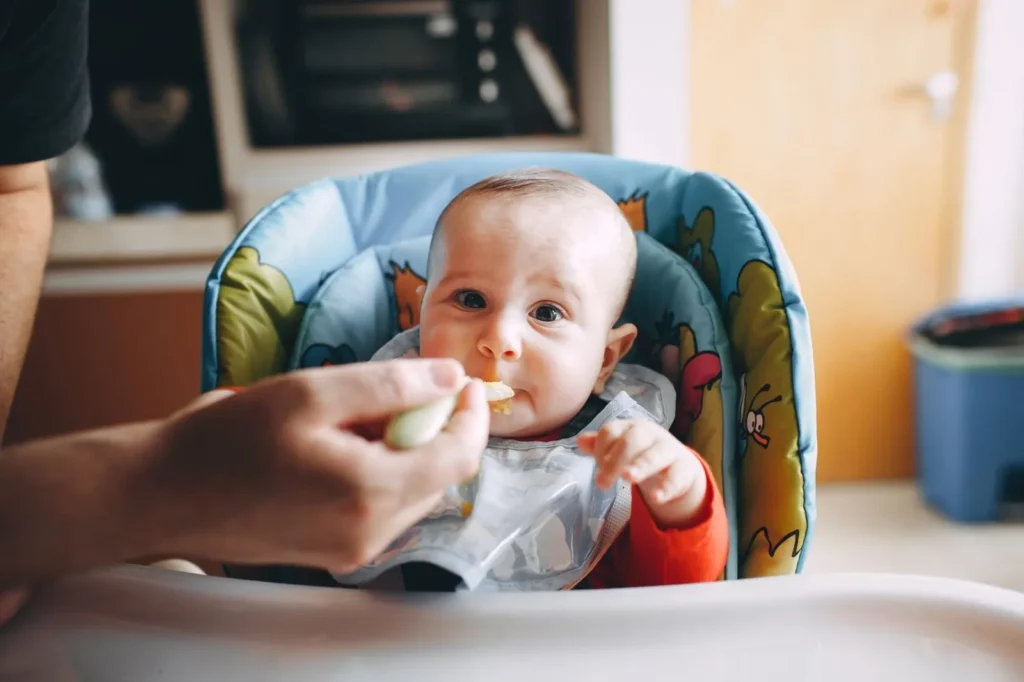
Good baby food nutrition in India starts with a simple plan: keep breast milk or formula as the main food, and from about 6 months add small, soft, home-cooked foods that supply iron, zinc and energy. Khichdi, mashed dal, ragi porridge and fruit mashes do this job well, with no added salt or sugar. This guide gives you a chart of homemade Indian first foods by age, five step-by-step recipes, safety rules and troubleshooting. It is general education only, so check with your paediatrician before starting solids.
What should baby food nutrition cover in the first year?
In the first year, milk supplies most of a baby’s nutrition and solids slowly fill the gaps. From about 6 months, home-cooked foods should add iron, zinc, energy and new textures. They supply about 200 kcal a day at 6 to 8 months, about 300 kcal at 9 to 11 months and about 550 kcal at 12 to 23 months.
Iron matters most. The iron a baby is born with starts running low around 6 months. See infant nutritional requirements for each nutrient, and our infant nutrition article for the month-by-month timeline. For the milk-feed side of the first year, see our baby nutrition guide.
How do you know it is time to start solids?
Most babies are developmentally set for solids at about 6 months. Look for steady head control, sitting with little support, interest in your food, and no longer pushing food out with the tongue. Starting before 4 months is not advised, and age alone is not enough, so ask your paediatrician if your baby was born early.
For the first few days, offer 1 to 2 teaspoons once a day, after or between milk feeds, never replacing them. Introduce one new single-ingredient food every 2 to 3 days so you can spot a reaction. Texture should drip slowly off the spoon, not sit like paste.
Homemade baby food chart: Indian first foods by age
Use this chart as a flexible guide, not a deadline; amounts are about averages.
| Age | Texture | Good Indian first foods | How often and how much (about) |
|---|---|---|---|
| 6 months | Thin, smooth purée | Mashed ripe banana, steamed sweet potato or pumpkin mash, thin ragi porridge, moong dal water, stewed apple | From 1 to 2 teaspoons once a day to about 2 to 3 tablespoons, 1 to 2 times a day |
| 7 to 8 months | Thicker mash with soft lumps | Soft khichdi, mashed dal with rice, mashed carrot or lauki, well-cooked mashed egg, plain home-set curd in small amounts | About 2 to 3 meals a day, about 3 to 4 tablespoons each |
| 9 to 11 months | Minced food and soft finger foods | Vegetable khichdi, soft idli pieces, torn soft roti with dal, steamed carrot sticks, ripe papaya pieces, crumbled paneer | 3 meals plus 1 to 2 snacks, about half a cup (125 ml) per meal |
| 12 months and above | Chopped family food | Dal, rice, roti with soft sabzi, curd rice, upma, dosa, cooked fish or chicken in small pieces, with little salt and mild spice | 3 meals plus 1 to 2 snacks, with milk feeds continuing |
After the first birthday, needs and habits change again. Our toddler nutrition guide picks up from here, and the child nutrition article covers the years that follow.
How to cook five simple Indian first foods, step by step
These recipes suit the 6 to 8 month stage. None needs salt, sugar, jaggery or honey.
- Mashed banana. Mash half a ripe banana with a fork until completely smooth. Thin with a little boiled and cooled water or your usual milk. Serve fresh.
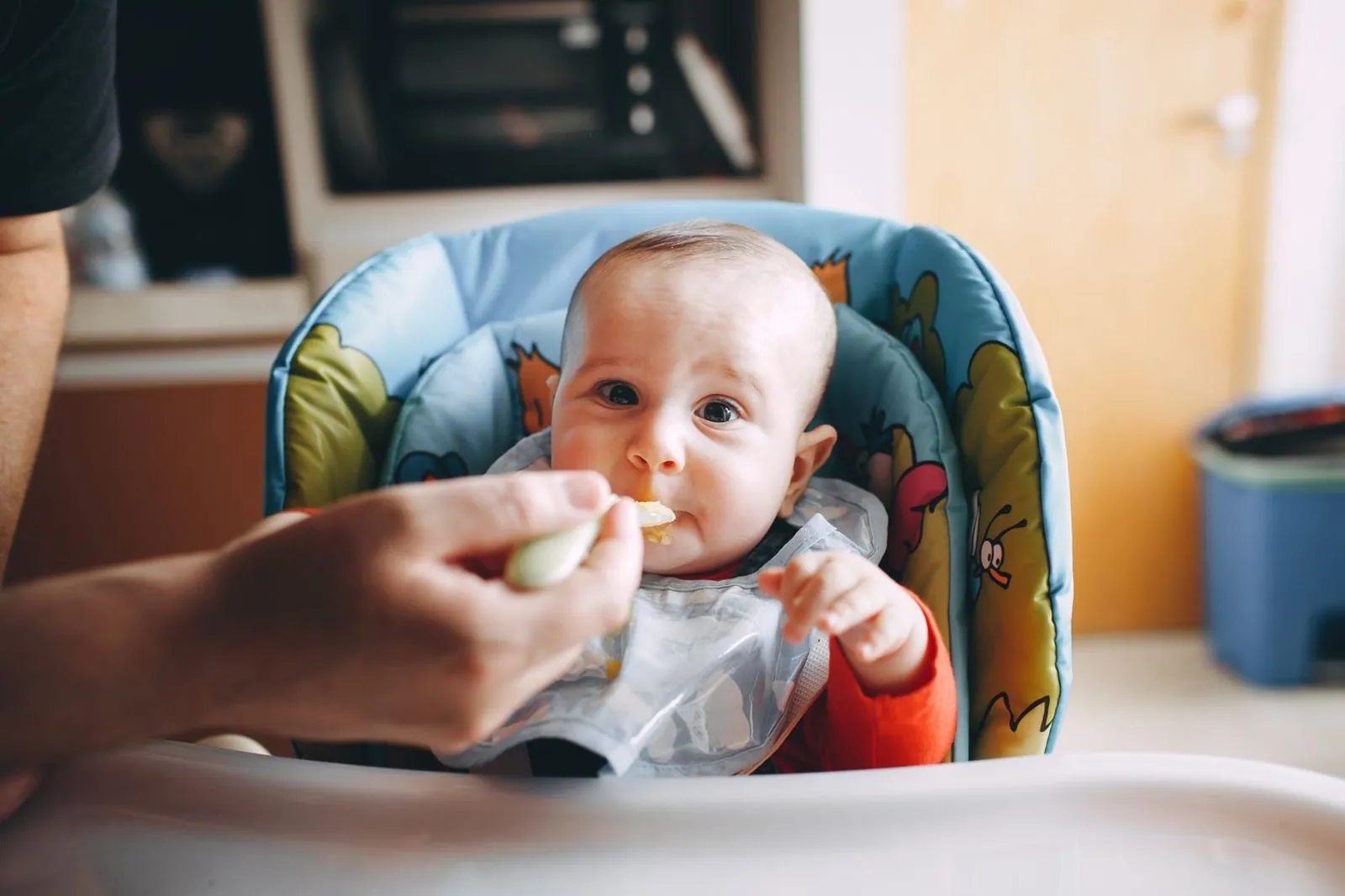
- Moong dal water, then mashed dal. Wash 2 tablespoons of yellow moong dal and simmer in 1 cup of water until completely soft, about 15 to 20 minutes. Offer the thin liquid on the first days, then mash the dal itself, because the liquid alone has little protein or iron.
- Ragi porridge. Stir 1 tablespoon of ragi flour into about half a cup of water. Cook on low heat for about 5 to 7 minutes, stirring constantly, until smooth and lump-free. Cool and thin with milk or boiled water.
- Soft khichdi. Cook 2 tablespoons of rice and 1 tablespoon of yellow moong dal in about 1.5 cups of water until very mushy. Add a few pieces of carrot if you like, then mash. About half a teaspoon of ghee stirred in after cooking adds energy.
- Sweet potato mash. Peel and cube one small sweet potato, then steam for about 12 to 15 minutes until fork-tender. Mash with a little water or milk.
Five baby food myths Indian families still hear
- Myth: a pinch of salt or jaggery makes food tastier for baby. Fact: babies need no added salt, sugar, jaggery or honey in the first year. Their kidneys cannot handle extra salt, and early sweetness builds a taste for sweet food. Set the baby’s portion aside before seasoning the family dish.
- Myth: dal water is enough nutrition. Fact: thin dal water is mostly water. It is a gentle first taste, but move to mashed dal within days to get protein and iron.
- Myth: starting solids early helps a baby sleep through the night. Fact: early starts, before 4 months, raise choking and feeding risks and do not reliably improve sleep.
- Myth: egg, curd and nuts must wait until a year. Fact: guidance has moved towards introducing common allergens in suitable forms after about 6 months. Always discuss timing with your paediatrician first, especially if your baby has eczema or a family history of allergy. Our article on nutrition and food allergies adds background.
Which nutrients matter most, and where do they come from?
Iron, zinc, calcium, healthy fat and protein matter most after 6 months. Iron comes from ragi, dal, egg, meat, fish and well-cooked leafy greens; zinc from dal, curd, egg and meat; calcium from milk, curd and ragi; fat from ghee. Pair plant-based iron with something sour, such as a little tomato or lemon juice, to help absorption.
| Nutrient | Why a baby needs it | Homemade Indian sources | Practical tip |
|---|---|---|---|
| Iron | Supports blood and brain development | Ragi, moong and masoor dal, egg, chicken, fish, cooked palak | Serve dal meals with a few drops of lemon or mashed tomato |
| Zinc | Supports growth and immunity | Dal, curd, egg, paneer, meat | Vary sources; see our note on zinc nutrition |
| Calcium | Builds bones and teeth | Milk-based dishes, curd, paneer, ragi | Ragi porridge twice a week is an easy habit |
| Healthy fat | Fuels fast brain growth and adds energy | Ghee, mashed avocado, finely ground nut powder in smooth mixes | About half a teaspoon of ghee per meal is plenty |
Some babies are advised vitamin D or iron drops. Only your paediatrician should decide whether your baby needs them and in what amount, so never start a supplement on your own.
Is homemade or store-bought baby food better?
Neither is automatically better. Homemade food gives you control over salt, sugar, texture and cost, while packaged food helps with travel and busy days. Judge by ingredients and texture, not by the front of the pack. Most families cook at home daily and keep a plain, no-added-sugar packaged option for emergencies, offered with a spoon.
| Factor | Homemade | Store-bought |
|---|---|---|
| Salt and sugar | You decide; zero is easy | Must be checked on every label |
| Texture progress | Easy to thicken week by week | Often stays smoother than the age on the pack suggests |
| Cost per serving | Usually lower | Usually higher |
| Convenience | Needs cooking and storing | Quick for travel |
| Iron content | Depends on your recipe | Fortified infant cereals may carry added iron; read the label |
Reading a packaged baby food label:
- Check ingredient order. Items are listed by weight, so if fruit is first on a vegetable product, it is mostly fruit sugar.
- Look for no added sugar or salt. Skip anything listing syrup, juice concentrate or flavouring for sweetness.
- Match the stage. A product for 9 months and above should be thicker and lumpier than a first-stage purée.
- Offer it by spoon. Squeezing from a pouch skips the spoon and chewing practice solids are meant to build.
What should you avoid feeding a baby before age 1?
Before age 1, avoid honey, added salt, sugar and jaggery, cow’s milk as a main drink, and any hard, round or sticky food that can block the airway. Safety comes before nutrition. Always stay with your baby during meals, seat them upright, and never feed a baby who is lying down or crawling around.
- Honey: can carry spores that cause infant botulism, a serious illness under 12 months.
- Cow’s milk as a drink: small amounts in cooked food are usually fine, but it should not replace breast milk or formula before 12 months.
- Choking hazards: whole nuts, whole grapes, popcorn, raw apple or carrot chunks, whole chana or peas, hard sweets, and sticky laddoo balls. Grate or cook these until soft, or powder the nuts finely.
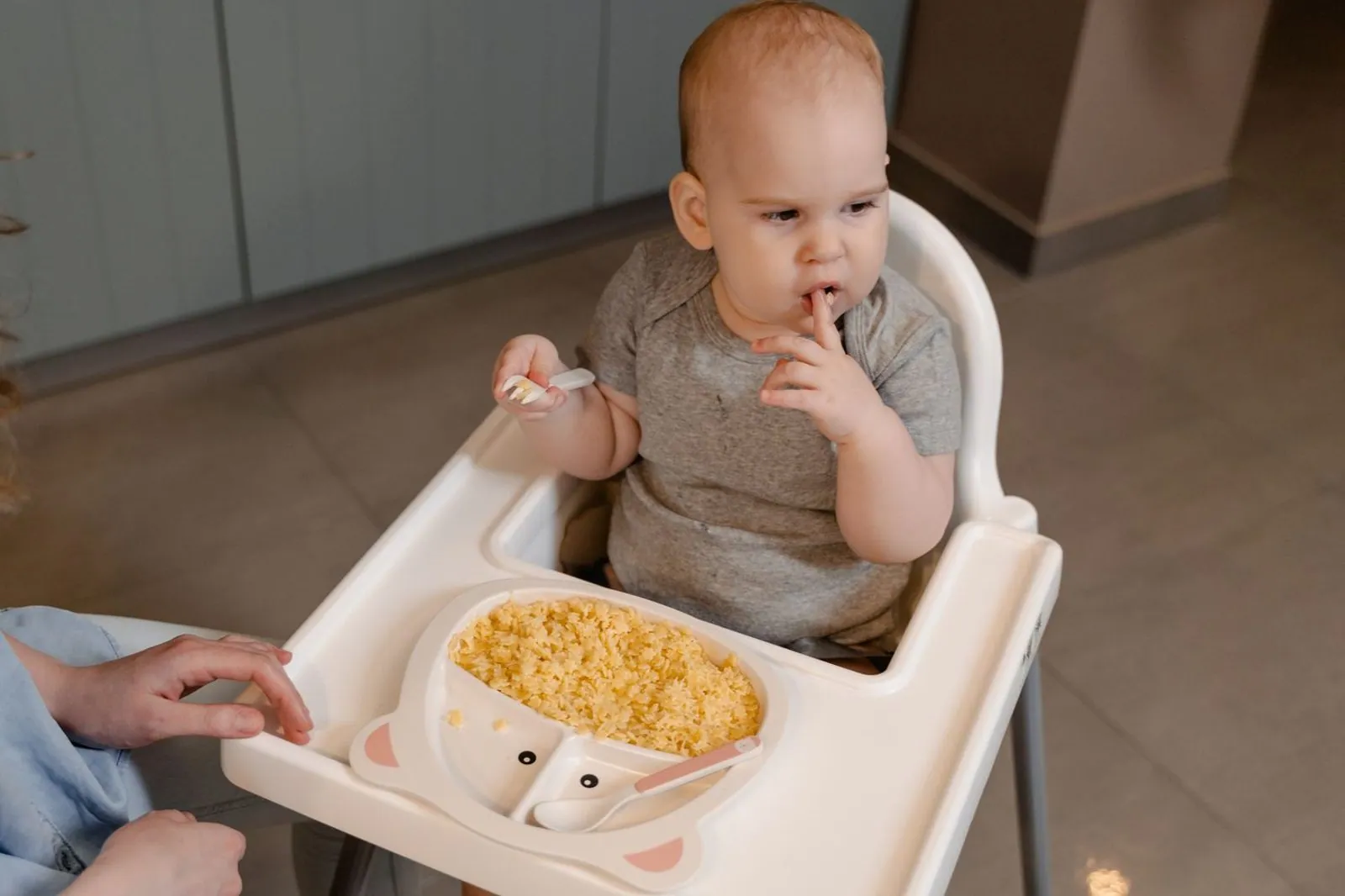
Gagging is a normal reflex while learning to eat and sounds noisy, but the baby stays pink and breathes. Choking is silent or struggling and needs immediate first aid. A short infant first-aid course is worth taking before starting solids.
Baby food troubleshooting: refusal, gagging, constipation and loose stools
- Baby refuses food: this is very common. A new food can take about 10 or more tries before it is accepted. Offer it again without pressure, never force-feed, and keep milk feeds going.
- Baby gags on lumps: go back one texture for a few days, then thicken gradually. Delaying lumps too long can make later texture changes harder.
- Constipation: a rice-heavy diet is a common cause. Add ripe papaya, stewed pear or cooked vegetables, and offer a few sips of water with meals.
- Rash, hives or swelling after a food: stop the food and call your doctor. Swollen lips, repeated vomiting or breathing trouble is an emergency.
Feeding a vegetarian, egg-free or Jain baby
A vegetarian baby can eat well on dal, ragi, curd, paneer, leafy greens and ghee. Combine rice with dal at the same meal, and add a little lemon or tomato to help iron absorption. Vegetarian and vegan families should ask the paediatrician about vitamin B12, since plant foods do not supply it.
Jain families avoid root vegetables, so iron and zinc need extra planning. A personal plan helps; our online nutritionist consultation builds one around your food habits.
When should you see your paediatrician or a dietitian?
See your paediatrician or a registered dietitian before starting solids if your baby was born early, has reflux, eczema, a known allergy, or a family history of food allergy. Contact them promptly if your baby is not gaining weight, refuses food for several weeks, has blood in the stool, vomits repeatedly, or has hives or swelling after eating.
Never change a baby’s milk feeds, begin any vitamin or iron drops, or restrict whole food groups without medical advice. Nothing in this article is a substitute for your own doctor’s guidance.
Frequently asked questions about baby food nutrition
Can I add ghee or breast milk to homemade baby food?
Yes. About half a teaspoon of ghee adds energy to khichdi or dal, and breast milk or formula can thin purées and add a familiar taste. Prepare only one sitting’s worth when you mix in milk, because it should not be stored and reused later.
How often can my baby have store-bought baby food?
Occasionally is fine, such as on trips or busy days, as long as the label shows no added sugar or salt and the texture suits your baby’s age. Make home-cooked, varied meals the everyday default so your baby practises thicker textures and family flavours.
How long can I store homemade baby food?
Refrigerate covered food for about 24 hours and freeze for up to about 1 month. Thaw in the fridge, reheat until steaming hot, then cool before serving. Do not refreeze food that has been thawed, and throw away anything left in the feeding bowl.
How much water can a baby drink after starting solids?
From about 6 months, offer a few sips of boiled and cooled water in an open cup with meals. Milk remains the main drink, and too much water can fill a small stomach. If your baby has loose stools or fever, ask your doctor how to keep fluids up.
When can babies try egg, peanut and other allergens?
Many babies can try well-cooked egg and smooth, thinned nut powder or paste after about 6 months, but timing is personal. Check with your paediatrician first, especially if your baby has eczema or a family history of allergy. Introduce one allergen at a time, early in the day.
Every baby feeds a little differently, and your family’s food habits matter as much as any chart. For a week-by-week feeding plan built around your baby’s age, allergies and home cooking, book an online nutritionist consultation with Fitstrot.


