
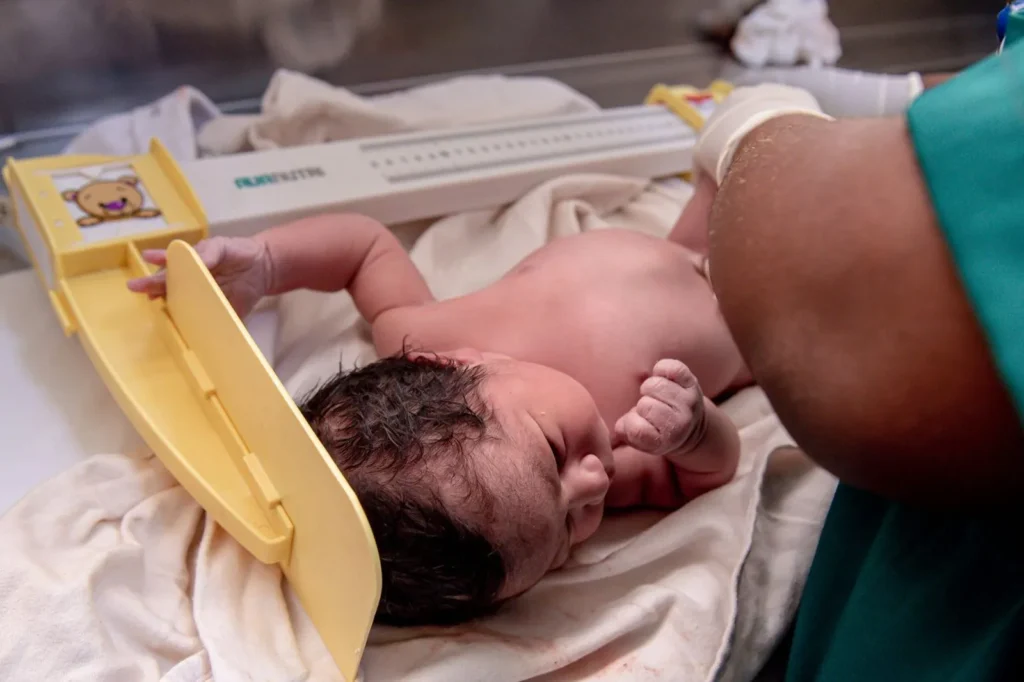
In the first year, baby nutrition changes faster than at any other point in life. A newborn who lives on breast milk or formula becomes, by 12 months, a baby who sits at the family table eating mashed dal, soft khichdi and fruit. This guide walks through each stage from birth to 12 months, the milestones that show a baby is moving on, and the signs that feeding is going well.
This is general information, not medical advice; use the numbers as rough guides and let your paediatrician set the plan. For detail on starting solids, see our infant nutrition guide; for nutrient amounts, see infant nutritional requirements.
What does baby nutrition look like from birth to 12 months?
For about the first six months, breast milk (or infant formula, if your paediatrician advises it) is the only food a baby needs. From about 6 months, soft home foods join milk feeds in small amounts. By 12 months, a baby usually eats three family-style meals a day, with milk still on offer.
Think of the year in three phases: milk only (0-6 months), milk plus first tastes (6-9 months), and milk plus real meals (9-12 months). Milk stays the main source of nourishment until about 9 months. Rushing a phase rarely helps; waiting for readiness signs works better.
Baby feeding chart: the stages at a glance
This baby feeding chart shows what most healthy babies do at each age. Treat every figure as “about”; a few weeks early or late on a milestone is usually still normal.
| Age | What they eat | Milk feeds a day (about) | Milestones to watch |
|---|---|---|---|
| 0-1 month | Breast milk or formula, on demand | 8-12 | Regains birth weight by about 2 weeks; first social smile around 6 weeks |
| 1-3 months | Milk only | 6-8 | Lifts head briefly during tummy time; coos; follows faces |
| 3-6 months | Milk only | 5-7 | Steadier head control; rolls over around 4-6 months; brings hands to mouth |
| 6-8 months | Milk plus soft, mashed foods, 2-3 small meals | 4-6 | Sits with support, then alone; opens mouth for the spoon; first teeth may appear |
| 9-11 months | Milk plus 3 meals and 1-2 snacks, with soft finger foods | 3-5 | Crawls; pincer grasp (thumb and finger); babbles and waves |
| 12 months | Family foods, 3 meals and 1-2 snacks; milk continues | 2-3 or as advised | Pulls to stand; first steps between about 9 and 15 months |
Stage by stage: what changes and what to do
0 to 6 months: milk only
Feed on cues such as rooting, sucking on hands or lip smacking, instead of waiting for crying. Exclusive breastfeeding for the first 6 months is the usual recommendation, and a well-fed newborn feeds about 8 to 12 times in 24 hours.
An exclusively breastfed baby does not need water, ghutti, honey, gripe water or herbal drops. Whether your baby needs vitamin D or iron drops is a decision for your paediatrician, and any dose must come from them. If you are breastfeeding, your own meals matter too; our women nutrition guide covers them.
6 to 9 months: starting solids
Most babies show readiness at around 6 months: they sit with support, hold their head steady, push food out less with the tongue, and watch your plate. Begin with 1-2 teaspoons of a smooth or mashed food once a day, then build over a few weeks to 2-3 small meals. Offer milk first and food afterwards, since milk still provides most of the energy.
Iron-rich foods matter from here because a baby’s iron stores fall in the second half of the first year. Mashed dal, ragi and well-cooked egg (if your family eats it and your paediatrician has no allergy concern) are practical Indian choices. Our zinc nutrition guide covers another mineral worth watching at this age.
Egg, peanut and dairy can usually be introduced in small amounts from about 6 months, one new food at a time, while your baby is well. If your baby has eczema or a close relative has a food allergy, ask your paediatrician first. Give peanut only as a thin paste, never whole.
9 to 12 months: textures and self-feeding
Move from smooth purees to lumpy mashes, then soft finger foods your baby can pick up. Aim for 3 meals and 1-2 snacks, with milk offered between them. Let your baby make a mess; self-feeding builds chewing skills. For recipes, textures and portion ideas, see our baby food nutrition guide.
Always seat your baby upright and stay within arm’s reach. Avoid whole nuts, whole grapes, popcorn, hard raw carrot and apple chunks, and leave out added salt and sugar.
Indian first foods by age: what to offer and how to serve it
Ordinary kitchen foods, cooked soft and served without salt or sugar, cover a baby’s needs. Introduce one new food at a time and wait about 2-3 days before the next, so you can spot any reaction.
| Food | From about | How to serve | Why it helps |
|---|---|---|---|
| Ripe banana, steamed apple or pear | 6 months | Mashed very smooth | Gentle first taste; energy and a little fibre |
| Moong dal, well cooked | 6 months | Thin dal water first, then a thick mash | Plant protein and iron |
| Rice and dal khichdi | 6-7 months | Soft and mashed, no salt, with about half a teaspoon of ghee | Balanced meal; ghee adds calories in a small tummy |
| Ragi porridge | 6-7 months | Home-cooked in water or milk feed, no sugar | Iron and calcium; keep it thin at first |
| Carrot, pumpkin, sweet potato, bottle gourd | 6 months | Steamed and mashed | Vitamins and fibre |
| Egg, cooked through | 6-8 months | Mashed, in small amounts | Protein; check allergy history first |
| Plain homemade curd | 8-9 months | A few spoonfuls, as food and not as a drink | Protein and calcium |
| Idli, soft chapati strips, paneer crumbles | 9-10 months | Soft pieces, dipped in dal or sabzi | Practise picking up and chewing |
Myths about baby feeding in Indian homes, corrected
“A little water in summer is harmless.” Breast milk is mostly water, so an exclusively breastfed baby under 6 months usually needs nothing extra, even in hot weather. Extra water can fill a small stomach and reduce milk intake. If you are worried about heat, talk to your paediatrician instead.
“A lick of honey or ghutti is traditional and safe.” Honey should not be given before the first birthday because of a rare but serious infection risk. Ghutti and herbal mixtures are not tested for infants, so skip them unless your paediatrician says otherwise.
“A thin baby needs sugar, salt or early solids.” Starting solids before about 4 months is not advised, and added sugar or salt does not build healthy weight. Add calories with a little ghee in dal or khichdi and frequent milk feeds, and check your baby’s growth curve with your paediatrician.
“Cow or buffalo milk can replace breast milk at 6 months.” Animal milk is low in iron and is not suitable as the main drink before 12 months. Small amounts in cooked food or as curd are different from replacing milk feeds.
How do you know your baby is eating enough?
A baby is usually eating enough if they pass about 6 or more wet diapers a day after the first week, feed 8 to 12 times a day as a newborn, stay alert between feeds, and follow their own steady growth curve. Birth weight is typically regained by about 2 weeks.
The table below is a quick home check. Growth is judged by the trend across visits, not one reading or a neighbour’s baby; a baby steady on a lower line can be as healthy as one on a higher line.
| Signal | Usually reassuring | Call your paediatrician if |
|---|---|---|
| Wet diapers | 6 or more a day after the first week; pale urine | Fewer than about 6 a day, or dark, strong-smelling urine |
| Feeding pattern | 8-12 feeds a day in the early weeks; settles after feeds | Refuses feeds for most of a day, or is hard to wake for feeds |
| Weight | Back to birth weight by about 2 weeks; birth weight roughly doubles by 5-6 months | Weight loss, no regain by 2 weeks, or a flat curve over visits |
| Alertness | Awake, curious and calm in between feeds | Unusually drowsy or floppy, or a sunken soft spot |
| Stools | Soft and regular for your baby’s own pattern | Hard and painful, bloody, or very watery and frequent |

Troubleshooting: growth spurts, refusal and picky phases
Sudden hunger. Growth spurts commonly arrive at about 2-3 weeks, 6 weeks, 3 months and 6 months. Your baby may feed far more often for a few days; it settles on its own.
Refusing feeds or spoon. Teething, a blocked nose, a minor cold or distraction can cut intake for a day or two. If diapers and energy stay normal, try again later. It can take about 8-10 tries before a baby accepts a new taste, so a rejected first spoon of lauki is not a verdict.
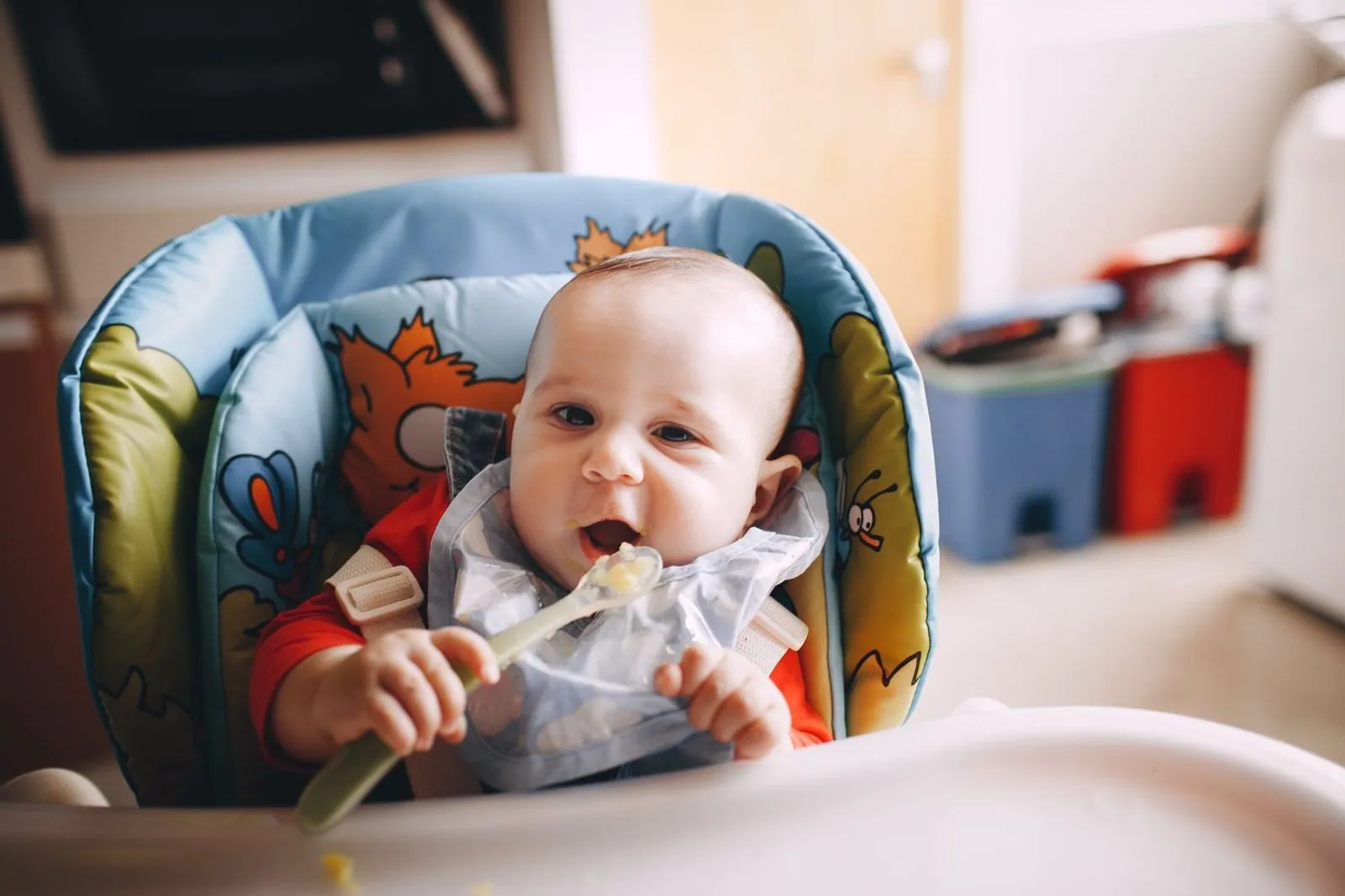
Constipation after solids. Firmer stools are common when food begins. Offer small sips of water from a cup with meals, plus mashed ripe papaya or pear. If your baby strains badly or passes hard pellets or blood, see your paediatrician.
Gagging versus choking. Gagging is noisy and a normal reflex while babies learn textures. Choking is silent or weak, with no cough or cry, and needs emergency help.
Special situations: formula-fed, premature and vegetarian families
Formula-fed babies. Prepare formula exactly as the label says, with boiled and cooled water. Never dilute it to stretch a tin or thicken it, because both can harm a baby. Your paediatrician can advise on amounts.
Premature babies. Milestones and starting solids are usually counted from the corrected age, meaning the age from the due date and not the birth date. Follow your paediatrician’s timeline.
Vegetarian and vegan families. A vegetarian baby can do well on dal, grains, curd, ghee and vegetables. Vegan feeding needs careful planning, especially for vitamin B12, which should be directed by your paediatrician or a registered dietitian. Our vegan nutrition guide covers adults; never copy an adult plan for a baby.
After the first birthday, our toddler nutrition guide picks up from here, and the nutritional needs guide shows how requirements shift through childhood.
When to see your paediatrician or registered dietitian
Call your paediatrician if any of the “call” signs in the table above appear, and do not wait for the next scheduled check-up. Seek urgent medical care for a fever of about 38 degrees C or higher in a baby under 3 months, repeated vomiting, difficulty breathing, hives or lip and face swelling after a new food, or a baby who is hard to wake.
Please also see a doctor before giving any vitamin, iron or herbal supplement, or before changing formula. A registered dietitian can help with fussy eating, vegetarian planning or slow weight gain, alongside your paediatrician. This article cannot diagnose your baby or replace that advice.
Frequently asked questions
When should I start solid foods for my baby?
Most babies are ready at about 6 months, when they sit with support, hold their head steady and show interest in food. Starting before about 4 months is not advised. Begin with 1-2 teaspoons of a soft, unsalted food and keep milk feeds going. Ask your paediatrician if your baby was premature.
How many wet diapers should a healthy baby have in a day?
After the first week, most healthy babies have about 6 or more wet diapers a day, with pale yellow urine. Fewer than about 6, dark urine, or a baby who is unusually drowsy is a reason to call your paediatrician the same day.
Is it normal for a breastfed baby to gain weight more slowly than a formula-fed baby?
Yes, a small difference is common after about 3 months, and breastfed babies often gain a little more gradually. What matters is that your baby follows a steady curve of their own and has normal diapers and energy. Your paediatrician reads the chart.
How much should a 6-month-old eat?
At 6 months, solids start small: about 1-2 teaspoons once or twice a day, building slowly to 2-3 small meals over the next weeks. Milk feeds still provide most of the nutrition, so keep offering them on demand. Your baby’s appetite on the day is a better guide than a fixed quantity.
Which foods should a baby avoid in the first year?
Avoid honey, added salt and sugar, and animal milk as the main drink before 12 months. Also avoid whole nuts, whole grapes, popcorn and other choking hazards, plus unpasteurised or undercooked foods. Packaged snacks and juices add little nutrition and are best left out.
Want a feeding plan built around your baby’s stage and your family’s Indian meals? Book an online nutritionist consultation with Fitstrot, and keep your paediatrician in the loop.


