

The nutritional needs for children between 4 and 12 are not one fixed number. Energy needs climb from about 1,350 kcal a day at age 5 to roughly 2,000-2,200 kcal by age 12, and the demand for protein, iron and calcium rises with them. This guide turns those ranges into an Indian plate, a lunchbox, a picky-eater plan and a clear list of signs that need a doctor rather than a diet tweak.
It is general information for healthy school-age children, not medical advice for your child. For exact age-by-age reference values, keep our nutritional requirements for children table open alongside this page.
What are the nutritional needs for children aged 4 to 12?
School-age children need about 1,350 kcal a day at ages 4-6, about 1,700 kcal at 7-9, and roughly 2,000-2,200 kcal at 10-12, with protein rising from about 20 g to about 40 g a day. Calcium, iron and fibre needs also climb as growth speeds up before puberty.
The numbers below are rounded averages. A very active child may need more, a smaller or less active child a little less, so treat them as a compass, not a target to hit exactly every day.
| Age band | Energy per day (about) | Protein per day (about) | Milk or curd servings | What changes |
|---|---|---|---|---|
| 4-6 years | 1,350 kcal | 20 g | 2-3 small katoris | Slow, steady growth; appetite swings from day to day |
| 7-9 years | 1,700 kcal | 30 g | 2-3 katoris | Muscle and bone build-up; more time seated at school |
| 10-12 years | 2,000-2,200 kcal | 40 g | 3 katoris | Pre-puberty growth spurt; iron needs rise, especially for girls |
A katori here means roughly 150 ml of milk or about 100 g of curd. Across all three bands the pattern matters more than any single meal: three meals, one or two planned snacks, and something from every food group most days. If you are also feeding a younger sibling, our guides to toddler nutrition and child nutrition cover the earlier stages.
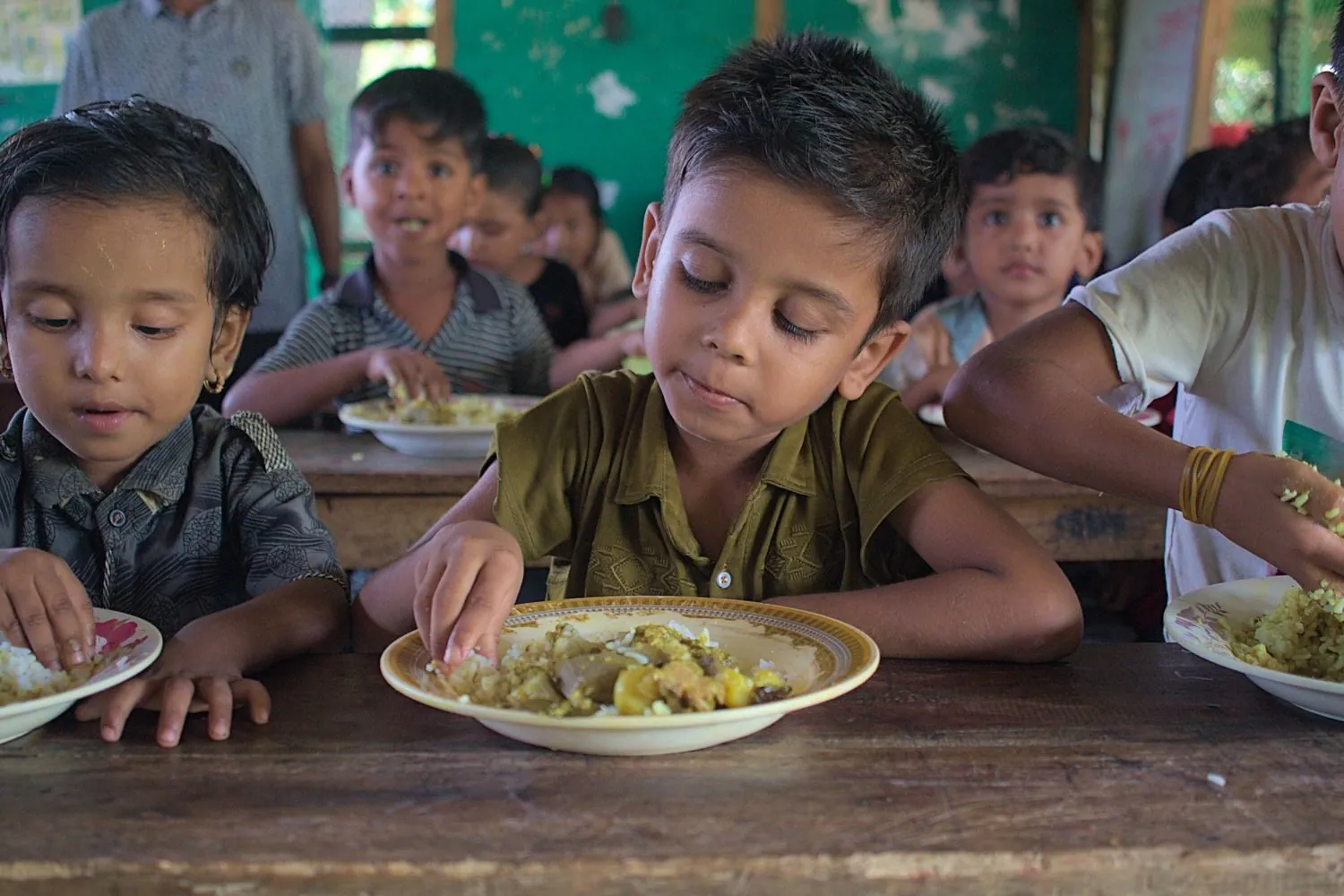
How to build a balanced plate for a school-age child
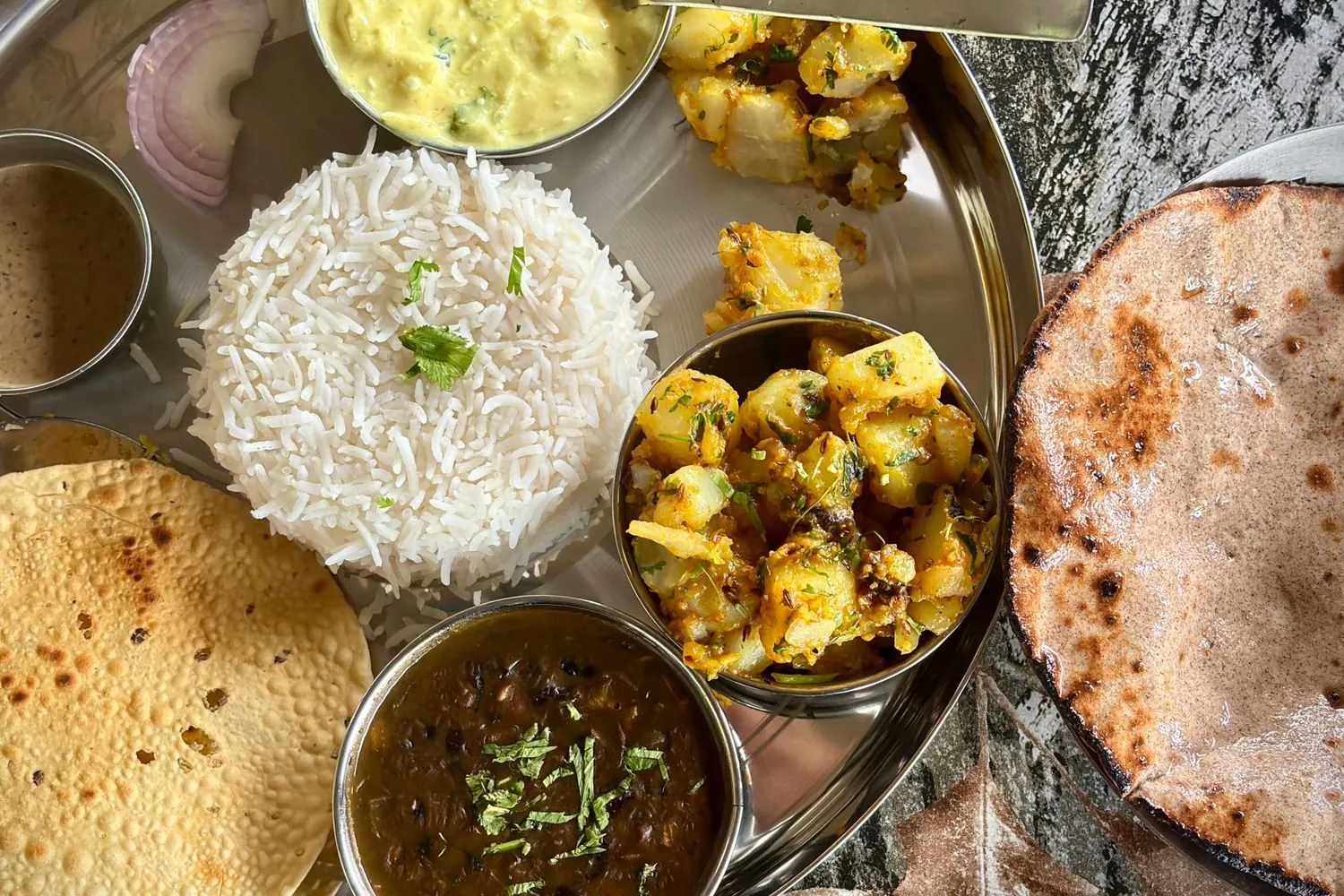
Think of the thali as a simple map. Fill about half the plate with vegetables and fruit, a quarter with a whole grain such as roti, rice or millet, and a quarter with protein such as dal, egg, paneer or curd. Add a little healthy fat. Adjust the size of the portions to the child, not the adults.
Walk through a typical dinner for an 8-year-old to see how this works in practice:
- Start with the grain. One or two small rotis (about 30 g of atta each) or half a katori of cooked rice. Rotating wheat with jowar, ragi or bajra a few times a week adds fibre and variety.
- Add the protein. One katori of dal, rajma or chana, or one egg, or about 40-50 g of paneer. Pair a cereal with a pulse at the same meal and the protein quality improves.
- Add colour. One katori of sabzi, plus a few slices of cucumber, carrot or tomato. A squeeze of lemon helps the body absorb iron from dal and greens.
- Finish with dairy or fruit. A small katori of curd or one seasonal fruit rather than a packet dessert.
- Keep fat modest but present. Roughly 4-6 teaspoons a day in total, counting oil, ghee and butter, is plenty. Children need some fat for growth and for absorbing vitamins A and D.
The plate is a pattern, not a rule. A lighter dinner and heavier lunch is fine; a week of the same refined, low-protein meal is what to avoid.
Which Indian foods cover the common nutrient gaps?
Indian school diets most often run short on iron, calcium, vitamin D and fibre. Everyday foods that help include dal, rajma, chana, ragi, palak, sesame, curd, paneer, eggs and whole fruit. A varied thali with a pulse, a vegetable, a dairy item and a whole grain covers most gaps without special products.
| Nutrient | Everyday Indian sources | Child-sized portion | Practical tip |
|---|---|---|---|
| Iron | Dal, rajma, chana, palak, methi, ragi, jaggery, eggs | 1 katori of pulses or 1 katori of greens | Add lemon, amla or tomato at the same meal |
| Calcium | Milk, curd, paneer, ragi, til (sesame), almonds | 1 katori of curd or 1 glass of milk | Ragi dosa or ragi porridge works well for children who refuse milk |
| Vitamin D | Egg yolk, fortified milk, mushrooms, plus daylight | 1 egg, or daily outdoor play | Outdoor play in daylight counts; ask your doctor before any drops |
| Fibre | Whole fruit with skin, vegetables, whole wheat, millets, pulses | 2 fruit portions and 2 vegetable portions daily | Grated vegetables inside parathas, cheelas and dosa batter |
| Protein | Dal, eggs, paneer, curd, sprouts, peanuts, soya chunks | 1 egg is about 6 g; 1 katori dal about 7 g; 30 g peanuts about 7 g | Spread protein across three meals instead of one big serving |
Vegetarian diets can meet iron needs, but plant iron is absorbed less easily than iron from meat or fish. That is why the vitamin C pairing in the table matters. Cooking in an iron kadhai also adds a little. If tiredness, paleness or poor concentration keep showing up, read our notes on nutritional anemia and nutritional deficiency, and ask the paediatrician about a blood test.
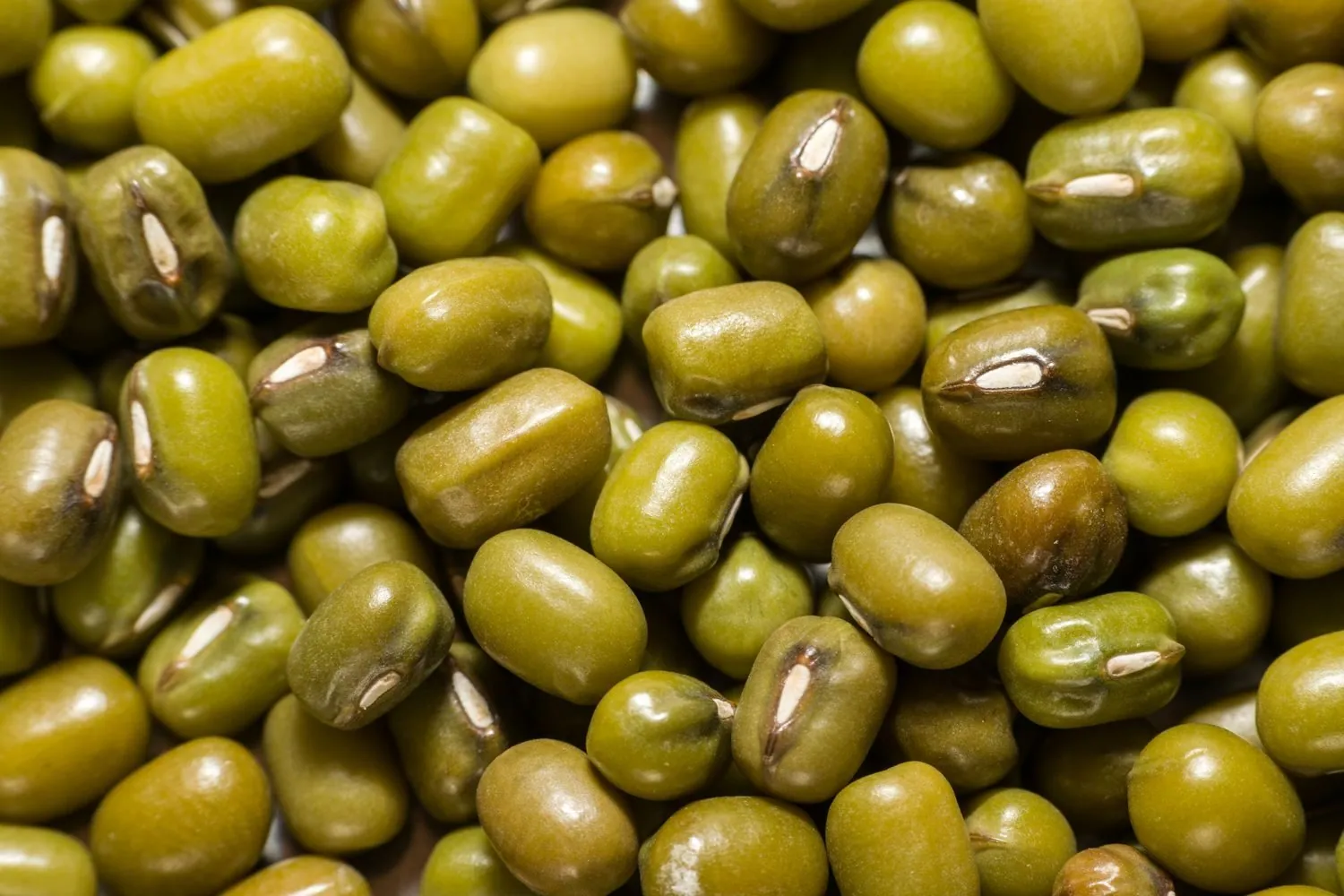
Five myths about feeding school-age children
Myth: a child must finish everything on the plate. Appetite varies by day, and forcing clean plates teaches children to ignore fullness. Serve small portions, allow a second helping, and judge the week, not one meal.
Myth: health drink powders are essential. A child who eats a varied diet does not need them. Many are mostly sugar with added vitamins. Our guide to kids nutrition drinks explains how to read the label and when a drink is genuinely useful.
Myth: fruit juice counts as fruit. Juice loses the fibre and concentrates the sugar. Whole fruit fills a child up for longer, and a small glass of juice now and then is fine, not daily.
Myth: skipping breakfast saves calories. For growing children it usually leads to a mid-morning crash and heavy snacking later. A simple breakfast of besan cheela with curd, or a vegetable paratha with milk, takes ten minutes.
Myth: a thin child is automatically undernourished, and a heavier child just needs to eat less. Growth is judged on a chart, over time, by a doctor. Putting a child on a diet without medical guidance can harm growth, so please do not restrict food for weight reasons on your own.
Beyond food, children also need movement. Even short daily sessions of play help appetite and sleep, and gentle routines such as those in our yoga for children guide suit many age groups.
What does a full school day of eating look like?
A workable school day has about five eating moments: breakfast, lunchbox, an after-school snack, dinner and, if needed, a glass of milk before bed. Each should include at least one protein source and one plant food. The plan below is an example for a 7-9 year old, not a prescription.
| Meal | Example for a 7-9 year old | Why it works |
|---|---|---|
| Breakfast (7:00) | 2 besan cheelas with grated carrot, 1 glass milk | Protein plus complex carbohydrate for the first school hours |
| Lunchbox (11:00) | 2 rotis, 1 katori dal or paneer bhurji, 1 small katori sabzi, 5-6 grapes | Grain, protein, vegetable and fruit in one box |
| After school (4:30) | Sprouts chaat or roasted chana (about 30 g) with a banana | Fibre and protein instead of packaged chips |
| Dinner (8:00) | 1-2 rotis or half katori rice, 1 katori dal, 1 katori sabzi, curd | Lighter than lunch, easy to digest before sleep |
| Bedtime (optional) | 1 small glass of warm milk | A calcium top-up if the day was low on dairy |
Pack the lunchbox so it still tastes good three hours later: rotis wrapped in a cloth, dry sabzi instead of gravy, and fruit that does not brown quickly. Limit packaged snacks to one small item rather than banning them, since a snack-free box often gets traded away at school.
My child refuses vegetables and eats only a few foods. What helps?
Most picky eating at ages 4-9 is a normal phase. Offer a new food 8-10 times in small amounts without pressure, serve it next to a familiar food, and let the child help cook. Avoid bribes and bargaining, which make the refused food feel like a punishment.
When a meal goes wrong, work through these steps in order:
- The child eats only roti and curd. Keep serving the safe food, but always place one other item on the plate. Do not cook a separate meal each time.
- Vegetables get pushed aside. Hide them in plain sight: grated lauki in parathas, spinach in dal, beetroot in cutlets.
- Milk is refused. Swap in curd, lassi without added sugar, paneer, ragi or a milk-based dessert made with little sugar.
- Constant grazing kills appetite. Keep a gap of about two to three hours between meals and snacks, and keep water, not juice or biscuits, between them.
- Screens at the table. Children eat without noticing fullness, so keep at least one meal a day screen-free.
- Mealtime is a battle. Set a 20-30 minute limit, remove the plate calmly, and offer the next planned meal. Do not offer a replacement sugary snack.
If a child accepts fewer than ten foods, gags on most textures, or is losing weight, that goes beyond ordinary fussiness and deserves a medical review. Our wider overview of nutrition for kids has more everyday feeding ideas.
Vegetarian, Jain and egg-free families
A vegetarian or Jain child can meet protein and iron needs, but the planning must be deliberate. Combine a cereal with a pulse at the same meal, include dairy daily, and add nuts or seeds in age-appropriate form. Jain families who avoid root vegetables can lean more on pulses, greens, ragi and fruit for iron and fibre.
- Protein anchors: dal, chana, rajma, moong sprouts, paneer, curd and soya chunks in small amounts.
- Iron helpers: palak, methi, ragi, jaggery in small quantities, and a vitamin C food at the same meal.
- Calcium anchors: milk, curd, paneer, ragi and sesame. For lactose-intolerant or vegan families, discuss alternatives with a dietitian rather than guessing.
- Vitamin B12: this nutrient is found mainly in animal foods, so strict vegetarian and vegan children may need testing and a doctor-guided plan.
Whole nuts are a choking risk for younger children, so powder them or serve them as a thin spread.
When to see a paediatrician or dietitian
Food alone cannot fix every problem. Please see your paediatrician or a registered dietitian if your child shows any of these signs: weight or height falling off their growth chart, frequent tiredness or paleness, hair loss, repeated infections, long-lasting stomach pain, constipation that does not settle, a very restricted list of accepted foods, or sudden changes in appetite.
Also check with a doctor before giving any supplement, multivitamin, iron or vitamin D drops, or herbal tonic. Iron and some vitamins can cause harm in excess, so the right product and amount depend on a proper assessment. Children with allergies, diabetes, coeliac disease, thyroid issues or any ongoing condition need an individual plan from their doctor and dietitian. Never change a prescribed treatment based on a blog post, including this one.
Frequently asked questions
How many calories does a 7-year-old need per day?
About 1,700 kcal a day on average for ages 7-9. A very active child may need more and a smaller child a little less, so watch growth and energy rather than counting every meal.
Is my child getting enough iron if they are vegetarian?
It is possible, but it takes planning. Serve dal, rajma, chana, greens or ragi daily, and pair them with lemon, amla or tomato. If your child looks pale or tired, ask your paediatrician about a haemoglobin test rather than guessing.
Do school-age children need health drinks or multivitamins?
Usually not, if the diet is varied. Supplements are for a confirmed gap, and your doctor should decide which one and how much.
How much milk should a school-age child have?
Roughly 2-3 servings of milk, curd or paneer a day is a common guide, which means about 300-450 ml of milk or its equivalent. Too much milk can crowd out iron-rich meals, so do not go far beyond this.
What should I do if my child skips breakfast?
Offer something small and appealing, such as a banana with a glass of milk, or a mini paratha with curd. Move dinner earlier and keep mornings calm. If appetite stays poor all day, speak to your paediatrician.
Want a plan built around your own child’s age, food preferences and any medical history? Book an online nutritionist consultation with Fitstrot and take the lunchbox and dinner plan to your paediatrician for review. You can also read our overview of child health and nutrition first.


