

A nutrition calorie calculator is really just two pieces of arithmetic you can do on paper in about five minutes: estimate the energy your body burns at rest, then scale it by how much you move. This guide shows the hand method with three worked Indian examples, a roti-and-dal portion table, and fixes for when the answer feels wrong. Treat every figure as an estimate, because no formula knows your metabolism exactly.
What does a nutrition calorie calculator actually work out?
A calorie calculator works out two numbers. BMR (basal metabolic rate) is the energy your body burns at rest, usually about 60 to 70 percent of your daily burn. TDEE (total daily energy expenditure) is BMR multiplied by an activity factor between 1.2 and 1.9. TDEE is your maintenance level: the calories that hold your weight steady.
Every app and online BMR calculator runs this same two-step logic behind a friendly screen. Knowing the steps lets you sanity-check any app.
For the wider picture of calories and macros, start with our guide to nutrition and calories, then return here for the maths.
How do you calculate BMR by hand with the Mifflin-St Jeor equation?
Use weight in kg, height in cm and age in years. For men, BMR = (10 × weight) + (6.25 × height) − (5 × age) + 5. For women, use the same formula but subtract 161 instead of adding 5. A 32-year-old woman at 62 kg and 158 cm comes to about 1,290 kcal a day.
The Mifflin-St Jeor equation is the one most dietitians reach for because it works for most healthy adults without special equipment.
Convert units first. Divide pounds by 2.2 to get kg, and multiply total inches by 2.54 to get cm. For example, 5 ft 2 in is 62 inches, about 157.5 cm. Skipping this step is a common cause of wildly wrong numbers.
Worked example A: a 32-year-old woman, 62 kg, 158 cm.
- 10 × 62 = 620
- 6.25 × 158 = 987.5
- 5 × 32 = 160
- 620 + 987.5 − 160 − 161 = 1,286.5, so her BMR is about 1,290 kcal a day
That is a baseline, not a food target.

Which activity multiplier should you pick?
Pick 1.2 if you sit most of the day with no planned exercise, 1.375 for light exercise one to three days a week, 1.55 for moderate exercise three to five days, 1.725 for hard training six or seven days, and 1.9 only for very heavy physical work. When two levels seem to fit, choose the lower one.
| Activity level | Multiplier | What it looks like in Indian daily life |
|---|---|---|
| Sedentary | 1.2 | Desk or work-from-home job, travel by car or bike, no planned exercise |
| Lightly active | 1.375 | Desk job plus a daily walk, or yoga, Zumba or a gym session one to three days a week |
| Moderately active | 1.55 | Structured workouts three to five days a week, plus a fairly active routine |
| Very active | 1.725 | Hard training six or seven days a week, or a job on your feet most of the day |
| Extra active | 1.9 | Heavy manual labour or twice-daily intense training, which is rare |
This is the step where most manual calculations go wrong. A gym membership is not an activity level; the hours you actually move are. Someone who trains an hour three times a week but sits the rest of the day is usually closer to 1.375 than 1.55. An inflated multiplier stalls progress.
Three worked examples, side by side
The table runs the full hand method for three adults. All figures are about numbers, rounded to the nearest 10 kcal.
| Person | Weight, height, age | BMR (about) | Multiplier | TDEE (about) | Sample target (about) |
|---|---|---|---|---|---|
| A: woman, desk job, trains three days a week | 62 kg, 158 cm, 32 | 1,290 kcal | 1.375 | 1,770 kcal | 1,370 kcal for fat loss (TDEE − 400) |
| B: man, lifts four days a week | 72 kg, 172 cm, 28 | 1,660 kcal | 1.55 | 2,570 kcal | 2,870 kcal for lean gain (TDEE + 300) |
| C: man, desk job, no exercise | 88 kg, 170 cm, 45 | 1,720 kcal | 1.2 | 2,070 kcal | 1,670 kcal for fat loss (TDEE − 400) |
TDEE step for example A: BMR × multiplier = 1,286.5 × 1.375, which is about 1,770 kcal. That is her estimated maintenance; every other target is a deliberate shift from it.
Example B: 720 + 1,075 − 140 + 5 = 1,660, then × 1.55 gives about 2,570 kcal. Example C shows why the multiplier matters: despite a higher BMR than A, his sedentary 1.2 keeps his TDEE only about 300 kcal above hers.
How do you turn TDEE into a target for fat loss or weight gain?
Subtract about 300 to 500 kcal from TDEE for fat loss, which usually means losing about 0.25 to 0.5 kg a week. Add about 250 to 300 kcal for gradual muscle gain. Do not plan below about 1,200 kcal a day for women or 1,500 kcal for men without a dietitian supervising you.
The old rule says roughly 7,700 kcal equals 1 kg of body fat, so a 400 kcal daily deficit should remove about 0.35 kg a week. Treat that as an estimate, not a promise: your body burns a little less as you lose weight, water weight swings by a kilo or more, and real loss often runs slower. No calculator guarantees a result.
- Fat loss: TDEE minus about 300 to 500 kcal. A gap of about 300 kcal is easier to sustain. See our guide to nutrition for weight loss.
- Lean gain: TDEE plus about 250 to 300 kcal, paired with strength training. Bigger surpluses mostly add fat. Our guide to nutrition for weight gain shows how to build it from real food.
- Maintenance: eat at TDEE and let your weekly average weight confirm it.
If you want someone to watch your weekly numbers with you, an online weight loss trainer does exactly that.
Myth check: three beliefs that wreck manual calorie maths
Myth 1: the lower the calories, the faster the fat loss. Cutting too hard backfires: you lose muscle along with fat, energy drops, and most people rebound. A gap you can hold for months beats a crash plan.
Myth 2: your BMR is your calorie target. BMR is only the energy burned at rest, so eating at BMR is a steep deficit for most people.
Myth 3: the same number works forever. BMR depends on current weight, so every few kilos lost or gained changes the answer.
How many calories are in common Indian portions?
A phulka made from about 30 g of atta with no ghee is about 100 kcal, a katori of cooked rice (about 150 g) is about 200 kcal, and a katori of dal is about 130 to 150 kcal. One teaspoon of ghee or oil adds about 40 to 45 kcal.
| Food and portion | Approximate kcal | Note for tracking |
|---|---|---|
| 1 phulka or roti (about 30 g atta, no ghee) | about 100 | Ghee on top adds about 40 to 45 per teaspoon |
| 1 katori cooked rice (about 150 g) | about 200 | Heaped servings can be 50 percent more |
| 1 katori dal (about 150 g) | about 130 to 150 | Tadka with extra oil pushes it higher |
| 1 katori paneer sabzi | about 250 to 300 | Gravy oil and cream matter more than the paneer |
| 1 katori mixed vegetable sabzi, light oil | about 80 to 120 | The easiest volume food on the plate |
| 1 katori curd (about 150 g, whole milk) | about 90 to 100 | Adds protein and calcium |
| 1 plain dosa | about 120 to 150 | Masala filling adds about 100 or more |
| 1 samosa | about 250 to 300 | Deep-fried, so count it as a full snack |
| 1 cup chai with milk and 1 tsp sugar | about 60 to 80 | Three cups a day is easy to forget |
A lunch of two phulkas, a katori each of dal, vegetable sabzi and curd comes to roughly 500 to 570 kcal. Two such meals plus a breakfast of about 300 kcal and a small snack land near 1,400 to 1,600 kcal, so example A’s target of about 1,370 only works if portions are measured.
Calories are only half the picture. Include protein at each meal, roughly 1.2 to 1.6 g per kg a day if you train regularly. See our guides to protein and nutrition and diet and nutrition for how the macros fit.
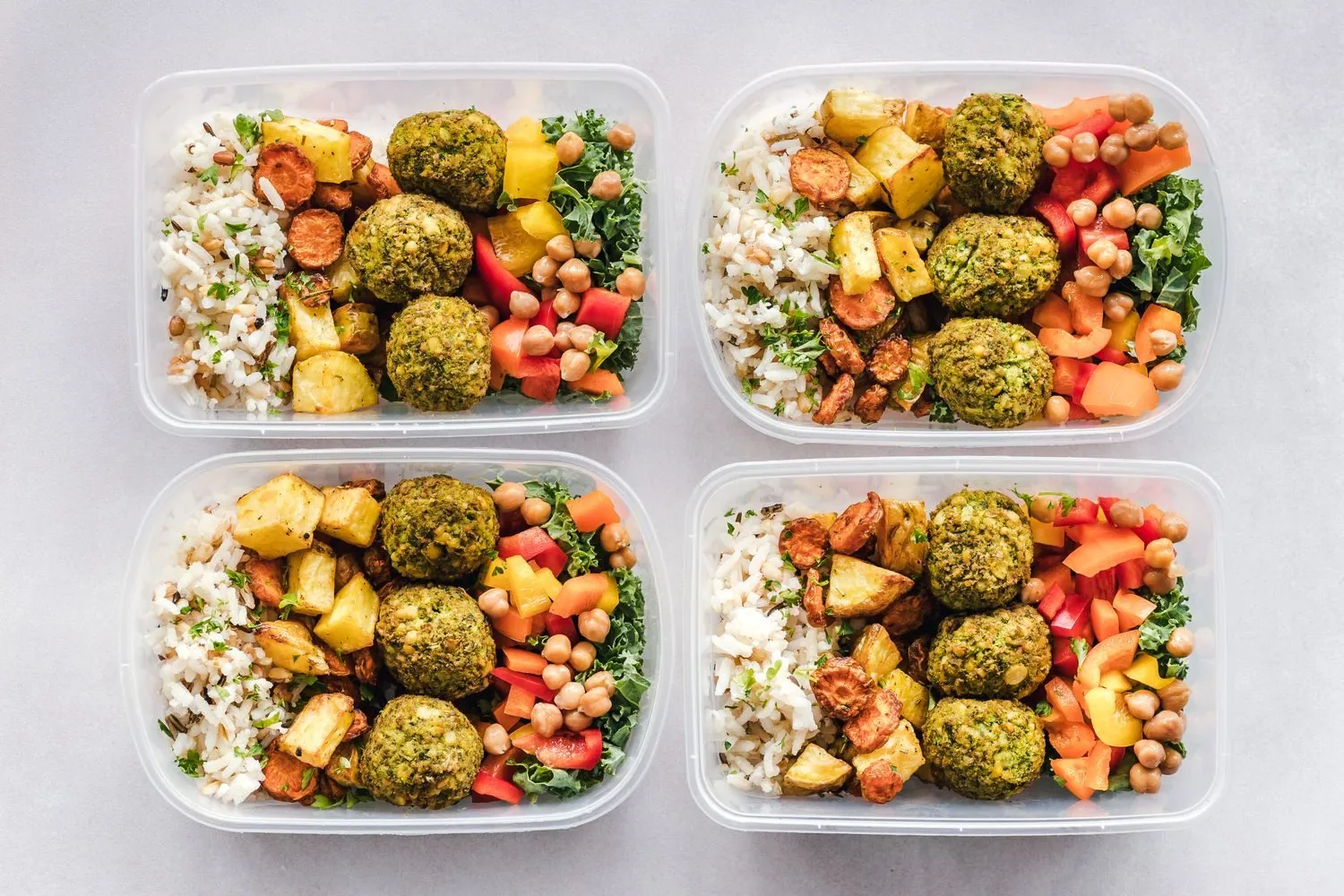
Calorie needs for different people
Women. The −161 term reflects typical body-composition differences, so women’s targets run lower than men’s at the same weight. Cycle-related water retention can hide progress for days, so judge change over weeks. Our women’s nutrition guide covers iron, calcium and other needs a calorie number does not show.
Men who lift. Muscle raises resting burn, so you may sit above the formula. Our sports nutrition guide covers timing food around sessions.
Adults over 40. Metabolic rate tends to drift down with age, mostly through lost muscle, so strength work matters as much as the number. 1-on-1 personal training is one way to keep that muscle.
Why does my calculated calorie target feel wrong?
Most mismatches come from an inflated activity multiplier, underestimated oil, ghee and rice, or relaxed weekends. Eat at your target for two to three weeks while weighing yourself at the same time each morning, then change intake by about 100 to 150 kcal if your weekly average weight is moving the wrong way.
- Weight is not dropping: weigh your rice, atta and oil for three days. One extra tablespoon of oil is about 120 kcal. Check weekends, chai and snacking too.
- Weight is dropping too fast: more than about 0.75 kg a week for several weeks means adding 100 to 200 kcal back, especially if you feel dizzy or exhausted.
- Weight is stuck for three weeks: check portions, sleep and steps, then trim about 100 to 150 kcal rather than making a big cut.
- Hunger is constant: raise protein and vegetables before cutting calories further.
Compare weekly averages, not single mornings. Our guide on BMI and nutrition explains what BMI does and does not tell you.
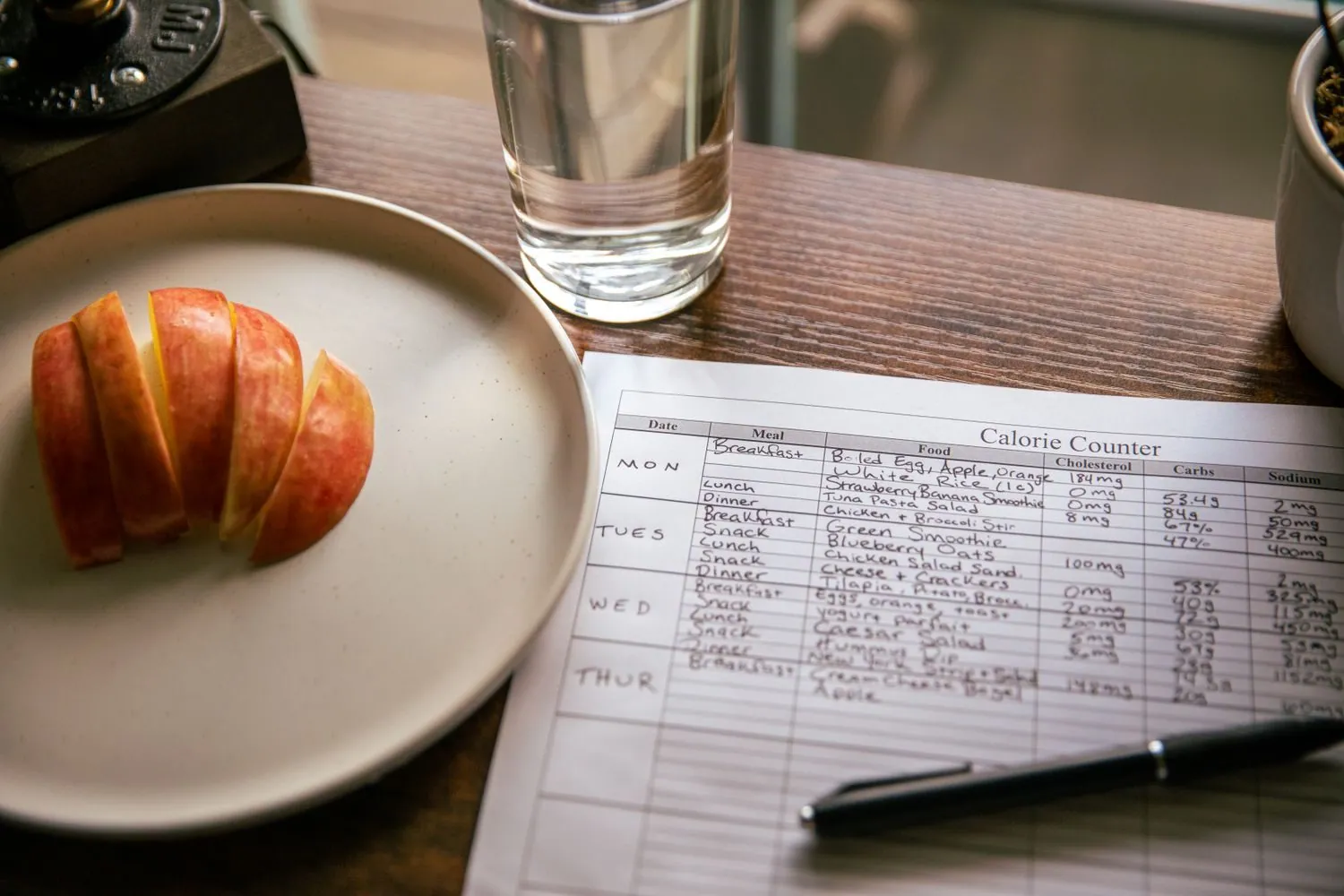
How often should you recalculate your calorie needs?
Recalculate after every change of about 4 to 5 kg in body weight, whenever your routine changes in a lasting way, or about every 3 to 6 months. BMR depends on current weight, so a target set at 80 kg drifts off once you reach 72 kg. Recalculating at the start of each new phase, such as a cut or a gain, keeps it honest.
When to skip the formula and see a doctor or dietitian
This method is meant for healthy adults. Do not rely on it if you are pregnant, breastfeeding, under 18, recovering from an eating disorder, or living with thyroid problems, diabetes, or kidney or liver disease. Never change food or medication plans on a formula alone.
See your doctor or a registered dietitian if you lose weight without trying, feel faint on your target, or have a condition that affects what you can eat. Our online nutritionist consultation can set targets the general equation cannot.
FAQ
Is the Mifflin-St Jeor equation accurate enough to trust?
It is accurate enough as a starting point. For most healthy adults it lands within about 10 percent of true resting burn, so a calculated 1,290 kcal could really be anywhere from about 1,160 to 1,420. Use it to begin, then let your weight trend refine it.
Do I need my body fat percentage to calculate calories?
No. The equation needs only weight, height, age and sex, so a scale and tape measure are enough. If you know your lean body mass, a lean-mass formula can be more precise for very muscular people, but it is not required.
How many calories do I need a day to lose weight?
Eat about 300 to 500 kcal below your TDEE. For a woman whose TDEE is about 1,770 kcal, that is roughly 1,270 to 1,470 kcal a day. Keep it above about 1,200 kcal for women or 1,500 for men unless a dietitian is supervising.
Should I eat back the calories I burn in a workout?
Usually not. Your activity multiplier already includes your planned exercise, so adding workout calories on top counts it twice. Watch and machine estimates also tend to run high.
Can I use this method if I am pregnant, breastfeeding or have a medical condition?
No. The equation was designed for generally healthy adults and does not account for pregnancy, breastfeeding, thyroid disorders, diabetes or other conditions that change energy needs. In those cases, work with your doctor or a registered dietitian rather than relying on a formula alone.
Want the maths done for you? Book an online nutritionist consultation and get a calorie target built around your training, your usual Indian meals and your weekly weight trend.


