

The seated pose called akarna dhanurasana, or archer’s pose, asks you to hold both big toes, keep one leg long like an arrow and draw the other foot back toward your ear like a bowstring. It is a demanding mix of hamstring stretch, hip opening and grip strength, so it sits at the intermediate level. This guide gives you clear steps, a hip and hamstring warm-up, a five-stage modification ladder, a mistake-and-fix table and honest cautions, so you can work toward the shape safely instead of forcing it.
What is akarna dhanurasana, and what does the name mean?
Akarna dhanurasana is a seated yoga posture, often called archer’s pose or shooting bow pose. “Akarna” means toward the ear, “dhanu” means bow and “asana” means posture. One leg stays straight on the floor while the other foot is drawn up and back beside the ear, with both hands gripping the toes.
It belongs to the family of seated stretches you will find in any list of yoga poses, and it is usually introduced after students are comfortable with simpler forward folds. Do not confuse it with dhanurasana, the bow pose, which is practised lying on the belly. Here you sit, and the “bow” is made by the arms and the lifted leg.
How do you do akarna dhanurasana step by step?
Sit with one leg straight and hold both big toes. Bend the other knee, lift that foot and draw it up and back toward the same-side ear, keeping your spine tall and the straight leg active. Hold for 3-5 steady breaths, release slowly and repeat on the other side.
- Sit tall in Dandasana. Legs straight in front, spine long. If your pelvis tips backwards or your lower back rounds, sit on a folded blanket.
- Take the toe grip. Hook your index and middle fingers and thumb around each big toe. If you cannot reach with a straight back, use a strap around each foot instead.
- Set the arrow leg. Press the left thigh into the floor, flex the left foot and push through the heel.
- Lift the bow foot. Bend the right knee, bring the right foot off the floor and keep holding the toe with the right hand.
- Draw the string. On an exhale, pull the right foot up and back toward the right ear. Let the elbow bend out and back like an archer, and let the knee open to the side. The movement should come from the hip joint, not from twisting the knee.
- Breathe and hold. Stay for 3-5 breaths (about 20-30 seconds), chest lifted, both sitting bones grounded, gaze toward the extended foot.
- Release and switch. Exhale the foot back down, shake the legs out for a few breaths and repeat on the left.
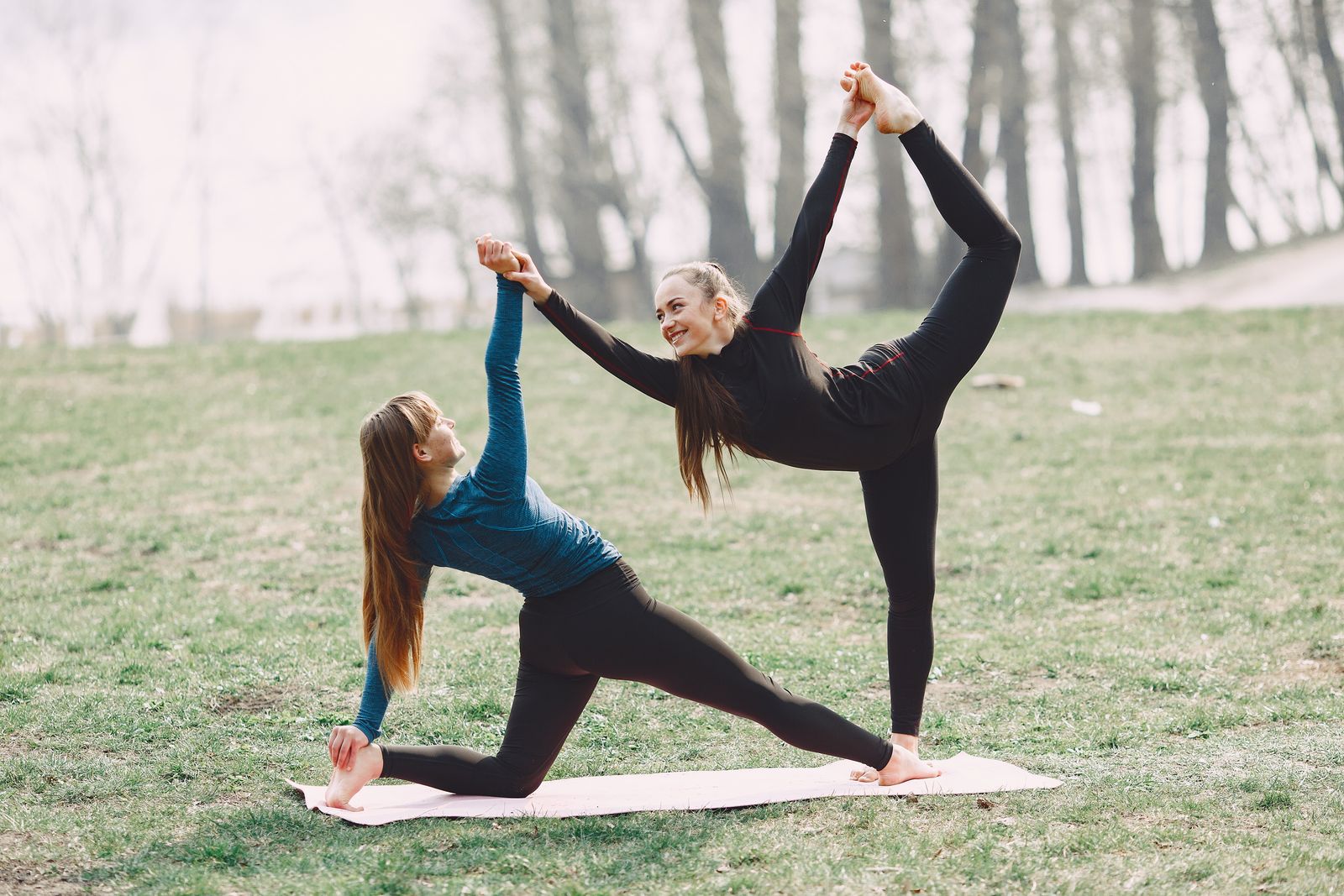
Reaching the full shape, with the foot beside the ear, is not the goal for most people and is not needed to get the benefit. A tall spine and a smooth breath at a shallower depth beat a deep, rounded version every time.
Hip and hamstring prep: a 10-minute warm-up
This pose is never a first pose. Spend about 10 minutes warming up the hamstrings, inner thighs, outer hips and shoulders, ideally after a few rounds of surya namaskar so the muscles are warm.
| Prep move | Targets | How long | Why it helps |
|---|---|---|---|
| Pelvic tilts and cat-cow | Spine, lower back | 8 slow rounds | Teaches you to move the pelvis without rounding the back |
| Reclined hamstring stretch with a strap | Hamstrings, calves | 5 breaths per leg | Builds leg length while the back stays flat on the floor |
| Reclined figure-four stretch | Outer hip rotators | 5 breaths per side | Prepares the hip to rotate outward |
| Baddha konasana (butterfly) | Inner thighs, groin | 1 minute | Opens the adductors that limit the bent leg |
| Gentle seated forward fold, one leg at a time | Hamstrings | 5 breaths per leg | Rehearses the long, straight arrow leg |
| Shoulder rolls and arm circles | Shoulders, upper back | 10 each way | Warms the joints that hold the toe grip |
If standing balance is part of your session, a few breaths in vrksasana (tree pose) also wakes up the hips, and tadasana (mountain pose) before you start helps you find a tall, neutral spine.
Which muscles does archer’s pose work, and what are the benefits?
Archer’s pose stretches the hamstrings and calf of the straight leg and the hip rotators and inner thigh of the bent leg. The shoulders, arms and core work to hold the grip and keep the spine tall, so it is both a stretch and a quiet strength drill.
Realistic benefits, with regular practice over several weeks, include:
- Better hamstring length, useful if you sit for long hours.
- More hip rotation, which helps in other seated poses and in everyday movements.
- Isometric strength in the shoulders and forearms from holding the grip.
- Better focus, because the asymmetry demands attention to breath and alignment.
Some traditional texts also credit the pose with benefits for digestion and the abdominal organs. These claims are traditional and not well tested, so treat them as interesting rather than proven. For the bigger picture of what a regular practice offers, see the benefits of yoga.
The modification ladder: five stages to the full pose
Move up a stage only when you can hold the current one for 5 breaths with a tall spine and no pain. Many people stay at stage 2 or 3 for months, and that is a perfectly good practice.
| Stage | What you do | Prop | Move on when |
|---|---|---|---|
| 1. Knee hug | Hug the bent knee toward the chest with both hands, other leg straight | Folded blanket under hips | Spine stays tall for 5 breaths |
| 2. Strap pull | Loop a strap around the ball of the bent foot and draw it toward the chest and shoulder | Yoga strap, belt or dupatta | No rounding, hips even |
| 3. Toe hold, foot low | Hold the toe directly, foot at about chest height, knee open | Optional blanket | No knee pain, shoulders relaxed |
| 4. Toe hold, foot to shoulder | Draw the foot up beside the shoulder, elbow bent out | None | Breath stays smooth, both sitting bones grounded |
| 5. Foot beside the ear | Full expression of the pose | None | Not required for benefit |
Common mistakes and how to fix them
Most problems come from chasing depth. Use this table to troubleshoot what you feel.
| Mistake | What you will notice | Fix |
|---|---|---|
| Rounding the spine to bring the foot closer | Lower back ache, chin dropping | Sit on a blanket, use a strap, lift the chest and shrink the range |
| Twisting the knee to force the foot up | Sharp pain or pinching at the knee | Stop. Open the hip first, keep the foot lower and never crank the knee |
| Bending the straight leg or letting the foot drop | Weak stretch, wobbly pose | Press the thigh down, flex the foot, rest a hand on the shin if needed |
| Hunched shoulders | Tight neck, tired arms | Draw shoulder blades down the back and keep the elbow wide |
| Lifting one hip off the floor | Torso leans sideways | Anchor both sitting bones, raise the foot less |
| Holding the breath | Shaking, rising tension | Count slow breaths and soften the jaw |
Who should avoid or modify archer’s pose?
Skip or modify the pose if you have a recent hamstring strain, sciatica, an active disc problem, knee pain, a shoulder injury, a hip replacement or surgery, or you are pregnant. Check with your doctor or physiotherapist first, and never push through sharp or radiating pain.
- Hamstring strain: wait until daily walking is pain-free, then start at stage 1.
- Sciatica or a disc issue: forward-leaning shapes can aggravate nerve symptoms, so get medical advice. Our guide to yoga for back pain covers gentler options.
- Knee problems: do not lift the foot higher than the knee can comfortably follow. Stay with the strap version.
- Shoulder limits: keep the elbows slightly bent and use a strap.
- Pregnancy: skip deep seated folds and ask a prenatal yoga teacher for alternatives.
Myths about archer’s pose
“The foot must touch the ear.” No. Very few people reach this, and the pose still works at stage 2 or 3.
“Pain means it is working.” A pulling stretch behind the thigh is normal. Pain in the knee, lower back or a sharp pinch is a signal to back off.
“You need to be flexible first.” Flexibility comes from practice. Props and the ladder above are meant for tight bodies.
“Hold longer for better results.” Short, repeated holds with good breathing usually serve beginners better than one long, strained hold.
Where does it fit in a yoga sequence?
Place it in the middle of a session, once the hamstrings and hips are warm. A simple order is to warm up, practise standing poses, move to the floor for seated stretches and finish with a gentle twist and rest.
- 3-5 rounds of surya namaskar to build heat.
- Tadasana and vrksasana for posture and hip stability.
- Seated prep from the warm-up table above.
- Akarna dhanurasana, 2 rounds per side.
- A gentle seated twist and a reclined hip stretch.
- Relaxation for 3-5 minutes.
This kind of progressive build works in most classes, from hatha yoga with longer holds to vinyasa yoga with flowing transitions. For an overview of how those styles differ, see the types of yoga.
How often should you practise it to see results?
Practise 3-4 times a week, holding each side for 3-5 breaths and repeating 2 rounds per side. Many people notice easier hamstring and hip movement within about 4-8 weeks, though timelines vary with age, starting flexibility and how long you sit each day.
Always work both sides evenly. One hip or hamstring is usually tighter, and skipping the harder side widens the gap. Keep the stretch at a moderate “7 out of 10” effort rather than maximum, and rest a day if the back of the thigh feels sore.
Frequently asked questions
Is akarna dhanurasana good for beginners?
It is generally an intermediate pose because it needs decent hamstring and hip flexibility. Beginners can build toward it with the knee hug and strap stages, working on warm-up poses first. Do not force the full shape, and learn it with a qualified teacher if possible.
What does akarna dhanurasana mean in English?
It means archer’s pose or shooting bow pose. “Akarna” translates to toward the ear, describing where the drawn foot travels, and “dhanu” means bow, which refers to the taut bow-like shape the body makes when the pose is fully expressed.
What muscles does archer’s pose stretch?
It mainly stretches the hamstrings and calf of the straight leg, and the inner thigh and outer hip rotators of the bent leg. The shoulders, arms and core work to hold the toe grip and keep the spine upright throughout.
Can I do akarna dhanurasana with tight hamstrings?
Yes, with props. Loop a strap around the ball of the foot, sit on a folded blanket and keep the foot lower. Hold a shallower version with a tall spine rather than rounding your back to go deeper, and expect gradual change over several weeks.
Is akarna dhanurasana safe during pregnancy?
Deep seated forward folds are generally not advised in pregnancy because of abdominal compression and strong hamstring stretching. Ask your doctor and a trained prenatal yoga teacher, who can suggest safer hip and hamstring stretches.
Want someone to check your alignment and set the right stage for your hips? Join a live online yoga class with Fitstrot and learn this pose at your own pace.


