
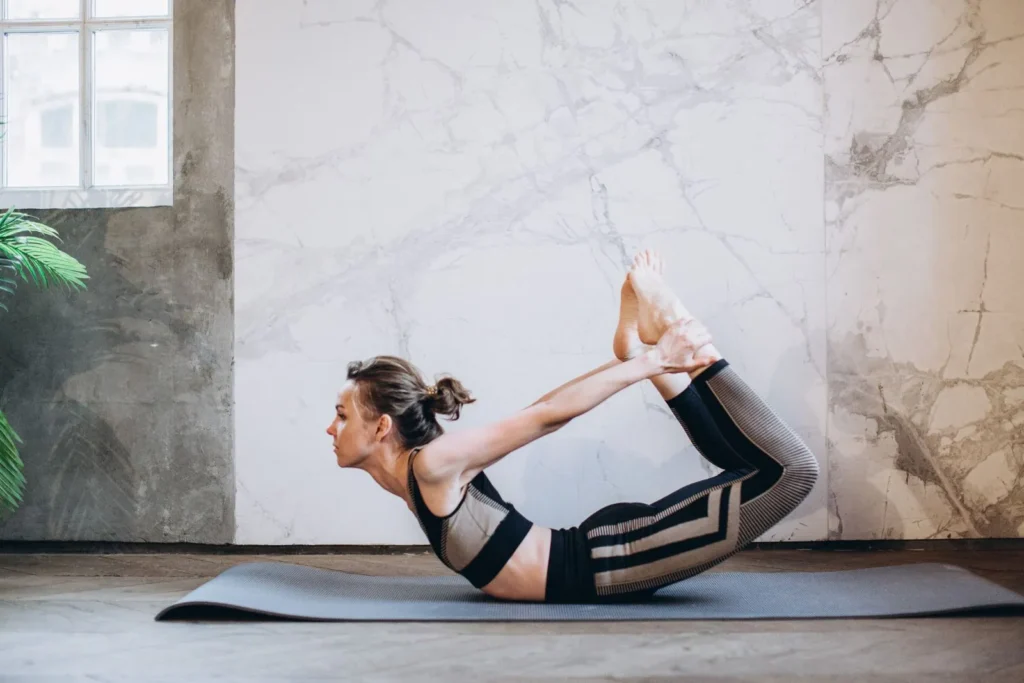
In dhanurasana, the bow pose, you lie on your belly, bend your knees, reach back to hold your ankles and kick your feet into your hands so that your chest and thighs lift off the mat. The body forms an arc, like a drawn bow. It is a deep backbend that needs back strength and shoulder and thigh flexibility at the same time, so it rewards careful setup, short holds and sensible modifications far more than effort.
This guide covers the steps, alignment, half bow and strap versions, mistakes, and who should skip it. If you are new to yoga, read our yoga for beginners guide first.
What is dhanurasana, and what does the name mean?
Dhanurasana, or bow pose, is a prone backbend in which you hold your ankles and lift your chest and thighs together so the body curves like a bow. The name comes from Sanskrit: “dhanu” means bow and “asana” means pose. Most teachers treat it as an intermediate posture, taught after gentler backbends.
In the final shape the torso and thighs form the wood of the bow, and the arms, pulling back on the ankles, act as the string. Many traditional hatha-style classes (see our overview of types of yoga) use it as a mid-class backbend, and it is one of the better known entries in any list of yoga poses.
How do you do dhanurasana step by step?
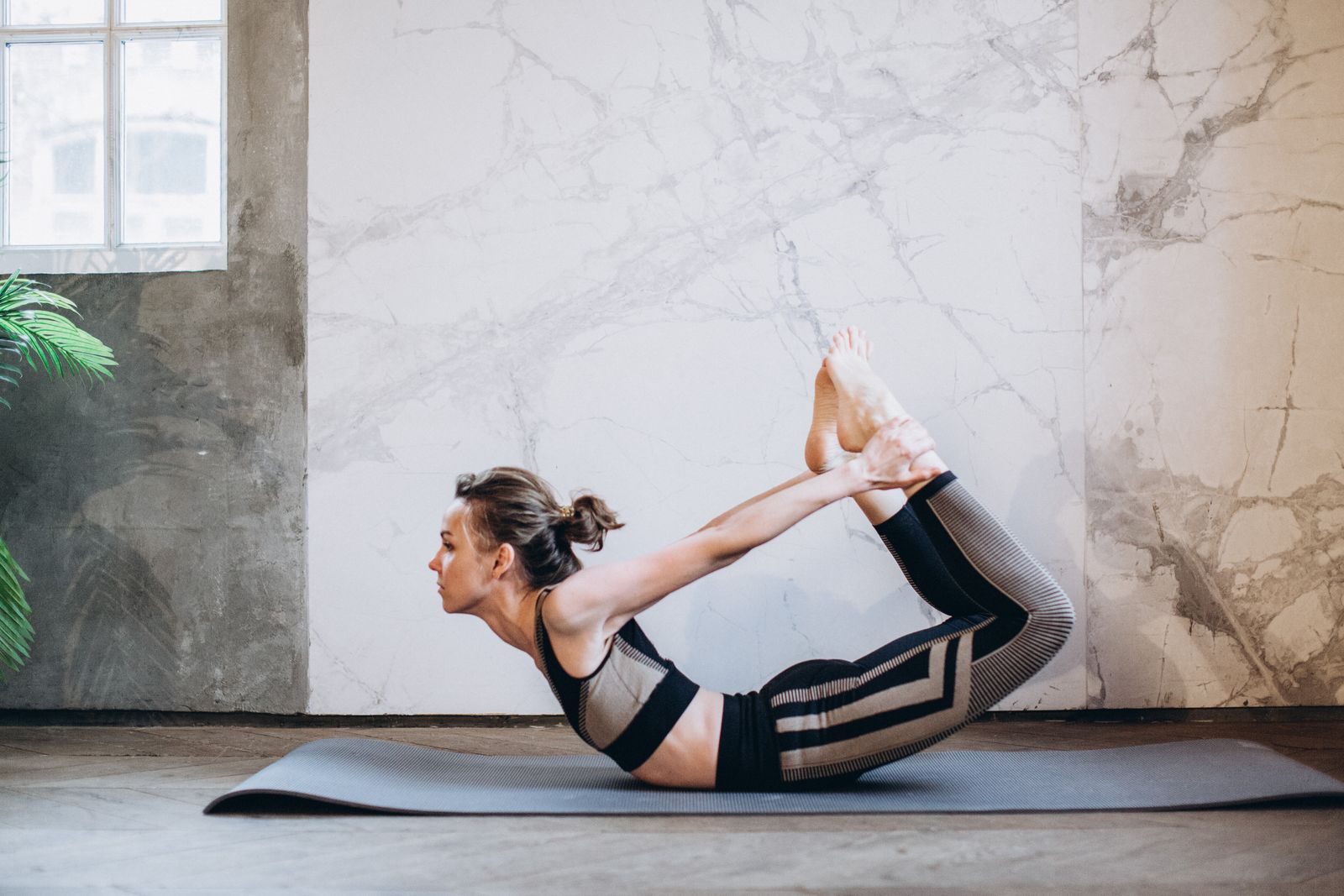
To do dhanurasana, lie on your belly, bend both knees and hold your ankles. On an inhale, kick your feet back into your hands as you lift your chest and thighs together. Keep your knees about hip-width apart, hold for 10 to 20 seconds, then exhale down and rest. Repeat two or three rounds.
- Warm up first with a few rounds of sun salutation or cat-cow, then lie on your belly with your forehead on the mat and your arms by your sides.
- Bend both knees and bring your heels toward your hips, keeping the knees about hip-width apart.
- Reach back with both hands and hold the ankles (the ankle bone area, not the toes).
- Inhale. Press the feet back and up into your hands, and let that push lift your thighs and chest off the mat together.
- Draw the shoulder blades toward each other, keep the back of the neck long and look slightly forward or down, not up.
- Stay for three to five slow breaths. Your belly is the point of contact, so the breath will be shorter and will move into the upper chest and sides of the ribs.
- Exhale, release the ankles, lower the legs and chest slowly, turn your head to one side and rest.
The lift should come from the legs kicking into the hands, not from yanking the arms backward. This is the same “push against resistance” idea that makes a steady Surya Namaskar warm-up useful before deeper backbends.
Dhanurasana alignment cues in one table
| Body part | What to aim for | Common error |
|---|---|---|
| Grip | Fingers wrap around the ankles, thumbs on the inner side | Gripping the toes or the top of the foot |
| Knees | About hip-width apart, pointing back | Knees splaying wide, which pinches the lower back |
| Kick | Feet press back and up into the hands | Pulling with the arms and letting the legs go slack |
| Shoulders | Blades slide together, chest opens forward | Shoulders hunched toward the ears |
| Neck | Long, gaze slightly forward or down | Cranking the head up and back |
| Lower back | Tailbone reaches toward the knees, glutes gently firm | Collapsing into the lower spine, feeling a pinch |
| Breath | Slow, into upper chest and ribs | Holding the breath |
A good check is symmetry. Lift both thighs to the same height and keep both knees the same distance apart. If one side lifts far more than the other, reduce the lift rather than forcing the lower side up.
What is half bow pose (ardha dhanurasana)?
Half bow pose, or ardha dhanurasana, is a one-leg version of bow pose. You lie on your belly, hold one ankle with the same-side hand and lift that leg and your chest slightly while the other limbs stay on the mat. It halves the load on the lower back, so it is the usual starting point for beginners.
| Stage | What to do | Hold and rounds |
|---|---|---|
| Set up | Lie on your belly, forehead down, left arm and left leg relaxed on the mat | 2 slow breaths |
| Reach | Bend the right knee and hold the right ankle with the right hand | 1 breath |
| Lift | Inhale, kick the right foot into your hand and lift the right thigh and upper chest a little | 3 breaths (about 5 to 10 seconds) |
| Release | Exhale and lower slowly, rest your cheek on the mat | 2 breaths |
| Switch | Repeat on the left side, then compare how each side felt | 2 rounds per side |
Move on to the full bow only when half bow feels smooth on both sides and your lower back feels fine for a day or two afterwards.
How do you use a strap in bow pose?
Loop a yoga strap, or a long dupatta or soft belt, around both ankles and hold one end in each hand with a small gap of slack. Lie on your belly, kick the feet toward the ceiling against the strap and lift your chest. The strap brings your ankles closer, so shoulders and thighs can open gradually.
| If this is your situation | How to use the strap | What to aim for |
|---|---|---|
| Hands cannot reach the ankles | Loop around both ankles, hold the ends near your hips | Lift the chest while the feet press into the strap |
| You reach only one ankle | Use the strap on the tighter side, hold the other ankle directly | Even lift on both sides |
| Shoulders feel tight or strained | Hold the strap wider apart, shorten it slowly over weeks | No pinching at the front of the shoulder |
| Thighs feel very tight | Leave the strap long and keep the lift small | Feel a stretch, never a sharp pull in the knee |
Shorten the strap a little at a time over weeks, never in the same session. If you want someone to watch your shoulders and lower back as you progress, an instructor in 1-on-1 personal training can adapt the pose around your body.
What muscles does dhanurasana work?
Dhanurasana strengthens the muscles along the back of the body, mainly the spinal extensors, glutes and hamstrings, while stretching the front: the quadriceps, hip flexors, abdominals, chest and front of the shoulders. It is a strength-and-stretch pose, so it feels demanding even though the hold is short.
That mix is why bow pose is a useful counterweight to long hours of sitting. It opens the chest and front of the hips, and trains the back muscles that hold you upright. It is not a treatment for any condition. Think of it as one backbend in a balanced routine, alongside standing poses such as Tadasana that teach you how to stand tall first.
Common mistakes in bow pose and how to fix them
- Skipping the warm-up. Cold backs do not like deep backbends. Do a few sun salutations or cat-cow rounds first.
- Holding the breath. This builds tension and shortens your hold. Count slow breaths instead of seconds.
- Letting the knees fall wide. Keep them about hip-width apart. If you cannot, use the strap and shrink the lift.
- Cranking the neck up. Keep the back of the neck long and the gaze slightly forward or down.
- Pulling with the arms. Kick the feet into the hands. Arms stay as straight, firm “strings”.
- Holding too long. A long, shaky hold hurts the lower back. Short, clean holds teach more.
- Practising straight after a meal. Wait roughly two to three hours after a full meal, because the belly presses into the floor.
- Skipping the counter-pose. Always rest afterwards (see below).
If you feel a sharp or pinching pain in the lower back, ease out of the pose, rest, and try half bow with a smaller lift next time. Pain is not a sign that the pose is “working”.
Who should skip dhanurasana, and when should you see a doctor?
Skip dhanurasana, or ask your doctor first, if you have a back or neck injury, a hernia, high blood pressure, recent abdominal surgery or are pregnant. Some traditions also advise avoiding it during menstruation. The pose presses the belly into the floor and arches the spine hard, so caution matters more here than in gentle poses.
- Back or neck injury: the pose loads the lower back and neck.
- Hernia: belly pressure against the floor is not suitable.
- High blood pressure: deep backbends with held effort need your doctor’s go-ahead.
- Pregnancy: lying on the belly is not appropriate.
- Recent abdominal surgery: wait for your surgeon’s clearance.
- Menstruation: many traditional teachers advise skipping deep abdominal-compressing poses on these days. This is a tradition-based guideline, not a medical rule, so follow your teacher’s advice and how you feel.
This guide is general information, not medical advice. If you have any health condition, are recovering from an injury or surgery, or feel dizzy, numb or sharp pain during the pose, see your doctor before practising. If you live with ongoing back discomfort, read our guide to yoga for back pain and talk to a doctor before attempting deep backbends.
How long should you hold bow pose, and what is the counter-pose?
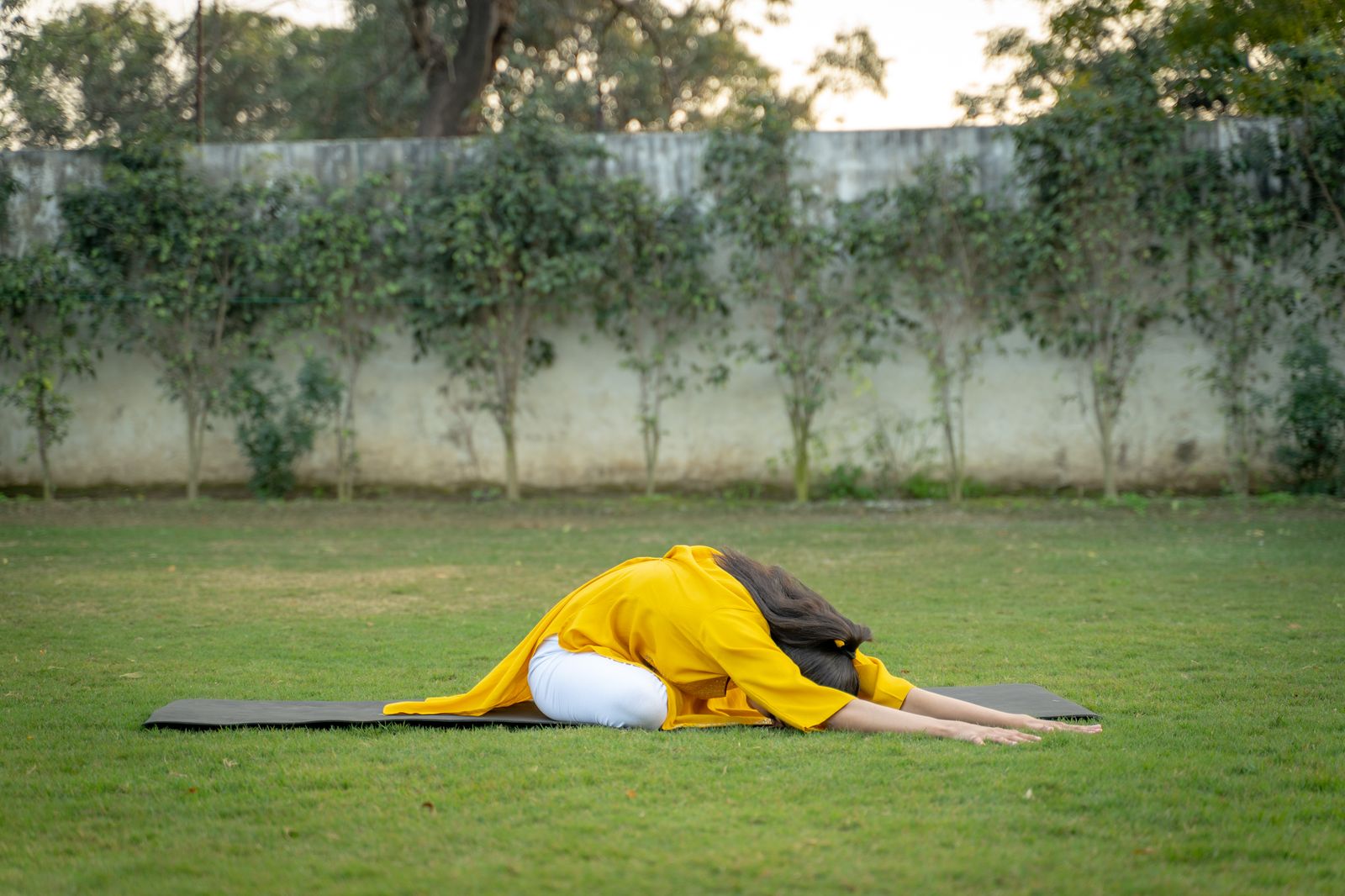
Hold bow pose for about 10 to 20 seconds, or three to five slow breaths, and repeat two or three rounds with a short rest between. Beginners can start with 5 to 10 seconds. After the last round, rest on your belly for a few breaths, then move into child’s pose as a counter-pose.
After bow pose, lie on your belly with your head turned to one side for three to five breaths, then press back into child’s pose for another five breaths to lengthen the lower back. A gentle forward fold or a supine knee-hug works too.
Myth check: three things people get wrong about bow pose
- “A deeper bow is a better bow.” Depth depends on your shoulders, thighs and spine. An even, comfortable lift is the goal.
- “You must hold your ankles.” A strap or half bow is a legitimate way to practise the pose, not a lesser one.
- “Hold it as long as you can.” Long holds mostly add strain. Several short, well-aligned rounds work better.
Where does dhanurasana fit in a yoga sequence?
Place bow pose after a warm-up and gentler backbends such as cobra and locust, and before a counter-pose and forward fold. A typical order is sun salutations, a standing pose such as Vrksasana for balance, two or three prone backbends, then bow pose, then child’s pose.
In a flowing class, bow pose often appears in the floor section near the end of the backbends. If you enjoy that style, our guide to vinyasa yoga explains how such classes are built. A different pose with a similar name is akarna dhanurasana, the archer’s pose, which is done seated rather than lying on the belly.
Dhanurasana FAQs
Is dhanurasana good for beginners?
Full dhanurasana is usually an intermediate pose, but beginners can build toward it. Start with half bow, one leg at a time, or use a strap around the ankles. Practise cobra and locust first, hold for 5 to 10 seconds, and move on only when your lower back feels fine afterwards.
How long should you hold dhanurasana?
Hold dhanurasana for roughly 10 to 20 seconds, about three to five slow breaths, and repeat two or three rounds. Beginners can start with 5 to 10 seconds. Clean alignment and steady breathing matter more than a long hold, and you should always rest in a counter-pose such as child’s pose afterwards.
Why can’t I reach my ankles in bow pose?
Usually it is tight shoulders, a tight chest or tight thigh muscles, not a lack of effort. Use a strap around the ankles or practise half bow, and shorten the strap gradually over weeks. Do not force the grip, because straining the shoulders or lower back can hurt you.
What is the difference between dhanurasana and ustrasana?
Dhanurasana is done lying on the belly, with the hands holding the ankles from behind. Ustrasana, or camel pose, is done kneeling upright, with the hands reaching back to the heels. Both open the chest. Ustrasana puts more stretch on the hip flexors and thighs, while bow pose works the back muscles harder.
Can I practise dhanurasana every day?
If you have no restrictions and your back feels fine afterwards, two or three short rounds a day is common. If your lower back feels sore the next day, practise on alternate days or switch to half bow. Anyone with a health condition should check with a doctor first.
Want a teacher to check your bow pose live and adjust it for your shoulders and back? Join one of FitStrot’s online yoga classes and practise from home at your own pace.


