
Learning yoga poses names feels hard until you notice that Sanskrit names are built from a small set of repeating words. Once you know that “adho mukha” means face-down and “eka pada” means one-footed, a long name stops being a mystery and becomes a description. This guide lists poses with their Sanskrit and English names, groups them by type, and gives a one-line cue for each so you can recognise the shape in class.
How do Sanskrit yoga pose names work?
Most Sanskrit pose names join a few short words to “asana”, which means seat or posture. One compound word describes the body position, the limbs involved or an object the pose resembles. For example, Adho Mukha Svanasana is “downward-facing dog pose”, and Vrksasana is “tree pose”.
Here are the building blocks that appear again and again:
- Adho / Urdhva: downward / upward
- Eka / Dwi: one / two; Pada: foot or leg; Hasta: hand
- Ardha: half; Utthita: extended; Parivrtta: revolved
- Salamba: supported; Supta: reclining; Baddha: bound
- Parsva: side; Kona: angle; Janu: knee; Sirsa: head
- Uttana: intense stretch; Paschima: back of the body, literally west
Hindi uses the same names. Hindi and Sanskrit share the Devanagari script, so a pose called Bhujangasana in Sanskrit is called Bhujangasana in Hindi too. Only the English names are translations, and they vary a little between teachers.
A few pronunciation habits help. The final “a” is short, so “asana” sounds like “AH-sa-na”. The “sh” is as in “ship”, and “v” sounds between “v” and “w”, so Vrksasana is said roughly “vruk-SHAH-sa-na”. Do not worry about perfection; teachers will repeat names often, and hearing them in class is the fastest way to learn.
What are the names of standing yoga poses?
Standing yoga poses are the foundation of most classes. Core names to know are Tadasana (Mountain), Utkatasana (Chair), Vrksasana (Tree), Virabhadrasana I and II (Warrior), Utthita Trikonasana (Extended Triangle), Ardha Chandrasana (Half Moon), Garudasana (Eagle) and Uttanasana (Standing Forward Fold).
| Sanskrit name | English name | Quick cue |
|---|---|---|
| Tadasana | Mountain Pose | Feet hip-width, weight even, crown of the head lifting |
| Utkatasana | Chair Pose | Hips back, knees over ankles, chest lifted |
| Vrksasana | Tree Pose | Foot to calf or inner thigh, never on the knee |
| Virabhadrasana I | Warrior I | Back heel down, hips square to the front, arms overhead |
| Virabhadrasana II | Warrior II | Front knee over ankle, arms level, gaze over front hand |
| Utthita Trikonasana | Extended Triangle | Long side bend, both legs straight, chest open |
| Utthita Parsvakonasana | Extended Side Angle | Front knee bent at 90 degrees, long line from heel to fingertips |
| Ardha Chandrasana | Half Moon | Stand on one leg, lift the other level, hand on a block if needed |
| Garudasana | Eagle Pose | Wrap arms and legs, sit low, keep the spine tall |
| Uttanasana | Standing Forward Fold | Hinge from the hips, soft knees, let the head hang |
Virabhadrasana is named for Virabhadra, a fierce warrior in Hindu mythology, and Garudasana for Garuda, the eagle-like mount of Vishnu. For a deeper tour of this family, see our guide to standing yoga poses.
Seated, floor and forward-fold poses: names and cues
Seated and floor poses cover hip opening, spinal length and rest. Popular names include Sukhasana (Easy Pose), Padmasana (Lotus), Vajrasana (Thunderbolt), Baddha Konasana (Bound Angle), Paschimottanasana (Seated Forward Fold), Balasana (Child’s Pose) and Shavasana (Corpse Pose), the final relaxation pose in most classes.
| Sanskrit name | English name | Quick cue |
|---|---|---|
| Sukhasana | Easy Pose | Cross-legged, sit on a folded blanket if knees rise above hips |
| Padmasana | Lotus Pose | Advanced hip opening; do not force the knees |
| Vajrasana | Thunderbolt Pose | Sit on the heels, spine upright, hands on thighs |
| Dandasana | Staff Pose | Legs straight ahead, spine tall, feet flexed |
| Baddha Konasana | Bound Angle (Butterfly) | Soles together, knees falling open, sit tall |
| Paschimottanasana | Seated Forward Fold | Hinge from the hips, bend the knees if hamstrings are tight |
| Janu Sirsasana | Head-to-Knee Pose | One leg extended, fold over it with a long spine |
| Upavistha Konasana | Seated Wide-Angle | Legs wide, toes up, fold forward from the hips |
| Ardha Matsyendrasana | Half Lord of the Fishes (seated twist) | Lengthen first, then rotate from the middle back |
| Gomukhasana | Cow Face Pose | Knees stacked, arms bound behind the back, or hold a strap |
| Marjaryasana-Bitilasana | Cat-Cow | Hands and knees, round then arch the spine slowly |
| Balasana | Child’s Pose | Knees wide, hips toward heels, forehead down |
| Shavasana | Corpse Pose | Lie flat, arms away from the body, release all effort |
Seated shapes also dominate slower styles, where each pose is held for several minutes. Our page on yin yoga shows how those long holds are taught, and Hatha yoga is a good home for the basics.
Backbends, inversions and strength poses: names and cues
Backbends, inversions and strength shapes include Bhujangasana (Cobra), Dhanurasana (Bow), Ustrasana (Camel), Setu Bandha Sarvangasana (Bridge), Adho Mukha Svanasana (Downward-Facing Dog), Phalakasana (Plank), Navasana (Boat) and Halasana (Plough). Many are intense, so learn them with progressions and a teacher’s eye.
| Sanskrit name | English name | Quick cue |
|---|---|---|
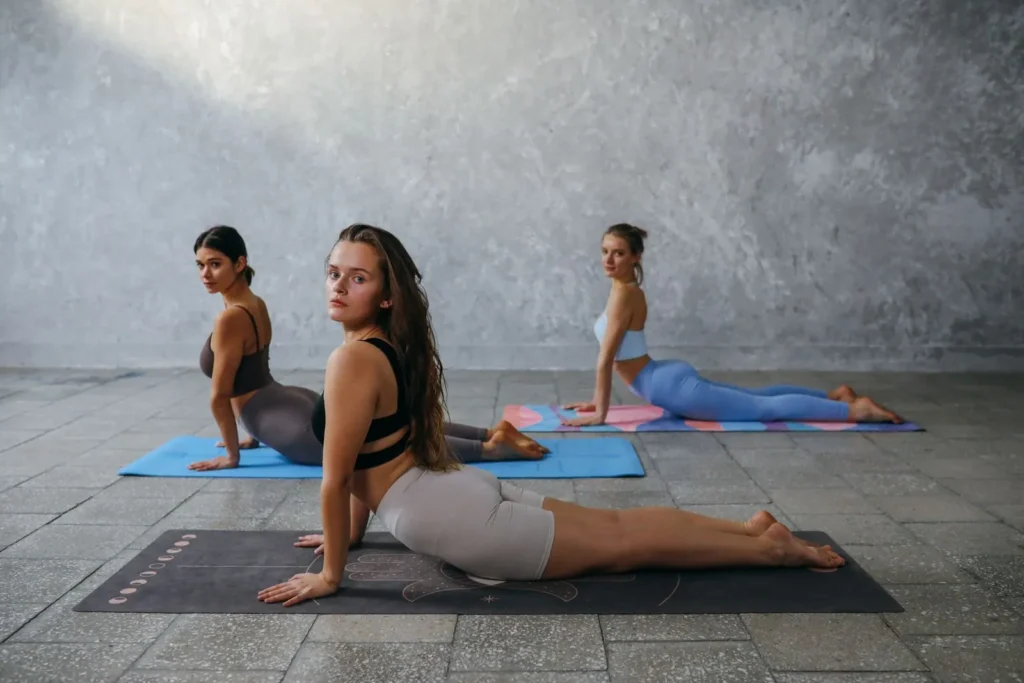
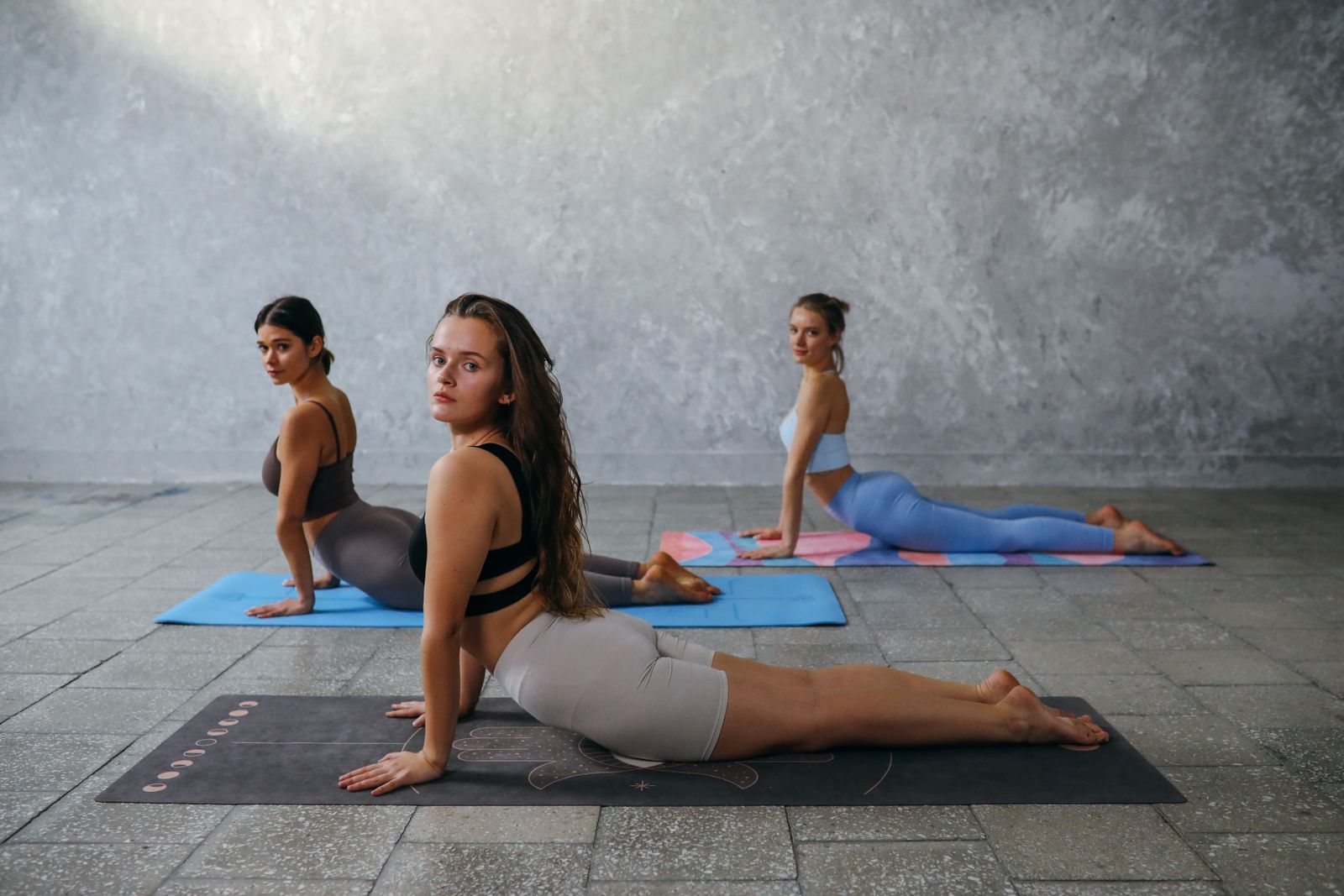
| Bhujangasana | Cobra Pose | Low backbend, elbows slightly bent, shoulders away from ears |
| Shalabhasana | Locust Pose | Lie face down, lift chest and legs together |
| Dhanurasana | Bow Pose | Hold the ankles, kick back into the hands, lift the chest |
| Ustrasana | Camel Pose | Kneel, hands on the lower back, lift the chest before reaching back |
| Setu Bandha Sarvangasana | Bridge Pose | Feet hip-width, press down, lift hips, keep the knees tracking forward |
| Urdhva Dhanurasana | Wheel Pose | Advanced backbend; learn from a teacher first |
| Adho Mukha Svanasana | Downward-Facing Dog | Hips up and back, long spine, bend the knees freely |
| Phalakasana | Plank Pose | Straight line from head to heels, core braced |
| Chaturanga Dandasana | Four-Limbed Staff | Lower halfway with elbows hugging the ribs; knees down is fine |
| Navasana | Boat Pose | Lean back, lift the shins, keep the chest open |
| Halasana | Plough Pose | Legs overhead, weight on the shoulders, never turn the neck |
| Salamba Sarvangasana | Supported Shoulderstand | Support the back with the hands, keep the gaze up |
| Bakasana | Crow Pose | Squat, knees on upper arms, shift weight forward gently |
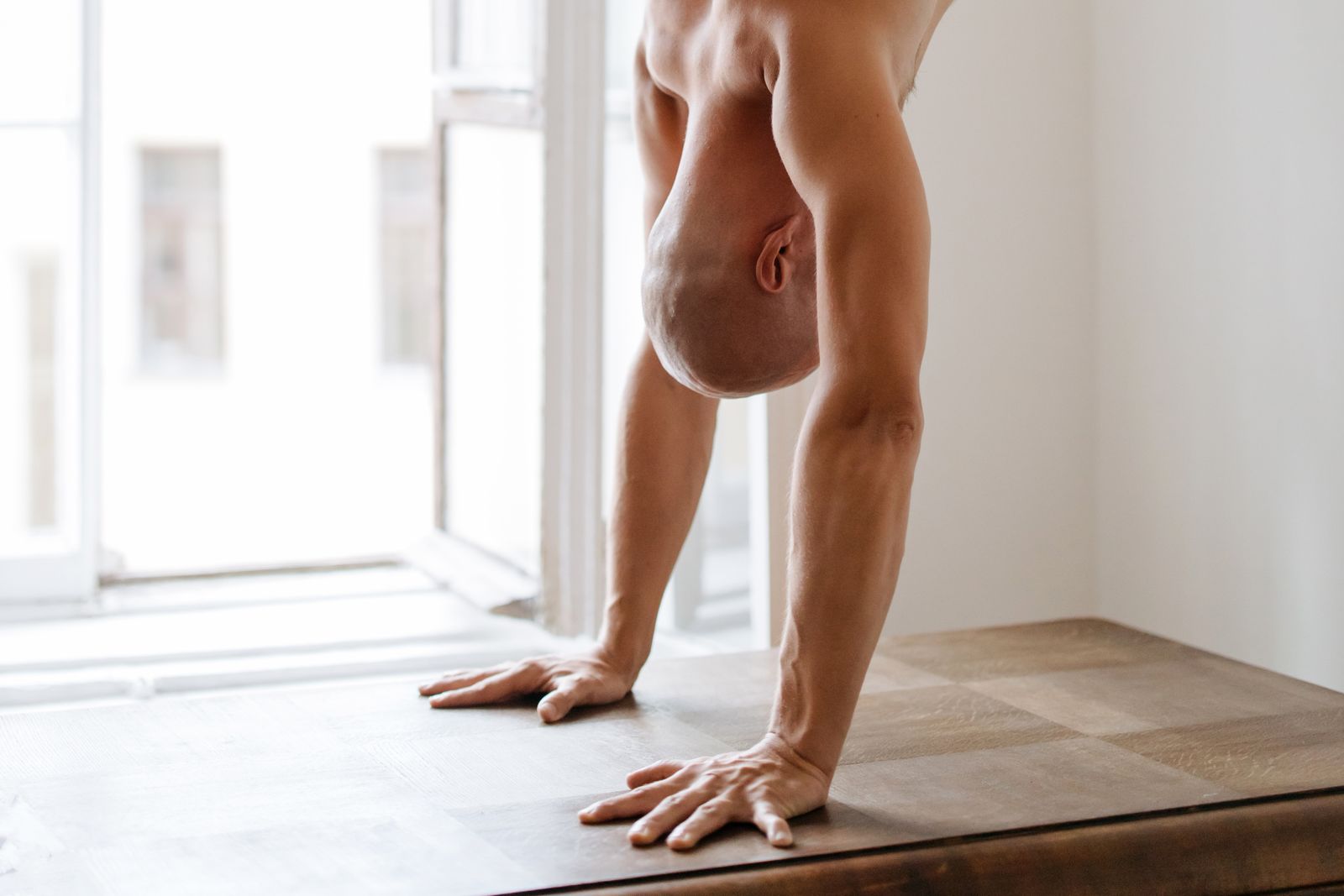
Inversions such as Salamba Sarvangasana and Halasana load the neck. People with neck problems, high blood pressure, glaucoma or pregnancy should get their doctor’s approval and a teacher’s guidance first. For strength-focused flows, see yoga for strength, and for tight backs, yoga for back pain.
Decoding the stories behind pose names
Many pose names borrow from animals, objects and mythology, which makes them easier to remember once you know the source word. A quick decoder helps: if the name contains a creature or an object, picture it before you picture the shape.
- Animals: Bhujanga is a serpent (Cobra), Ustra a camel, Matsya a fish, Kapota a pigeon, Baka a crane, Simha a lion, Mayura a peacock and Go a cow.
- Objects: Hala is a plough, Dhanu a bow, Nauka a boat, Chakra a wheel or circle, and Danda a staff.
- Nature: Vrksa is a tree, Parvata a mountain, Chandra the moon and Surya the sun.
- Deities and sages: Natarajasana honours Shiva as the dancer, Garudasana honours Garuda and Ardha Matsyendrasana honours the sage Matsyendra.
Myth check: three beliefs about yoga pose names
Pose names are useful labels, not rules. A name does not guarantee a pose’s difficulty, a single fixed form, or a medical benefit. The same pose may carry two or three names depending on the style and teacher, and spellings vary because Sanskrit is transliterated into the Roman alphabet.
- “Every pose has one official name.” It does not. Shavasana is also written Savasana, and Bound Angle is also called Butterfly. Learn the Sanskrit root and you will recognise most variants.
- “A longer name means a harder pose.” Not at all. Supta Padangusthasana is a gentle reclining stretch, while the short-named Bakasana is demanding.
- “Sanskrit names are thousands of years old.” Some pose shapes are old, but many names in modern use were standardised in the 20th century as yoga spread internationally. Our overview of yoga asanas goes deeper into the lineage.
How do you memorise yoga poses names? A four-week walkthrough
You can learn about 25-30 pose names in four weeks by learning them in small sets, saying them aloud and linking each to a cue. Five or six names a week is enough. Repeat them during practice and test yourself without notes.
- Week 1, standing basics: Tadasana, Utkatasana, Vrksasana, Virabhadrasana I and II, Uttanasana. Say each name as you move into it.
- Week 2, floor and rest: Sukhasana, Vajrasana, Balasana, Marjaryasana-Bitilasana, Paschimottanasana, Shavasana.
- Week 3, backbends and strength: Bhujangasana, Shalabhasana, Setu Bandha, Phalakasana, Adho Mukha Svanasana, Navasana.
- Week 4, review: mix all names in random order, then write the English name beside each Sanskrit name from memory.
Troubleshooting: if names blur together, write the root word next to the meaning (“bhujanga” = serpent), and say the name before you move. If you cannot pronounce a word, ask the teacher to say it slowly, then repeat it. Perfect pronunciation matters less than consistent recognition.
Which names should beginners learn first?
Beginners should learn ten names first: Tadasana, Adho Mukha Svanasana, Balasana, Marjaryasana-Bitilasana, Bhujangasana, Virabhadrasana I and II, Utthita Trikonasana, Paschimottanasana and Shavasana. They appear in almost every beginner class and cover standing, floor, backbend and rest shapes.
Different styles use names differently. Ashtanga yoga leans on Sanskrit counting and fixed sequences, Hatha classes tend to name poses slowly and demonstrate, and flow classes may use English names more often. To see how the styles differ, read our overview of the types of yoga, a broader list of yoga poses, and the benefits of yoga.
Frequently asked questions
What are the most common yoga poses names for beginners?
The most common beginner names are Tadasana (Mountain), Adho Mukha Svanasana (Downward-Facing Dog), Balasana (Child’s Pose), Bhujangasana (Cobra), Virabhadrasana (Warrior), Trikonasana (Triangle), Paschimottanasana (Seated Forward Fold) and Shavasana (Corpse Pose). They appear in most beginner classes in India and elsewhere.
Do I need to learn Sanskrit to practise yoga?
No. You can practise well using English names, and teachers will usually give both. Learning the Sanskrit roots helps you follow cues, read class schedules and recognise poses across teachers, but it is optional. Start with a few roots and add more over time.
Are yoga pose names in Hindi different from Sanskrit?
Mostly no. Hindi borrows pose names directly from Sanskrit, so Vrksasana, Bhujangasana and Dhanurasana are the same in both, written in Devanagari. What changes is the English translation, which varies between teachers and books.
Why do some poses have two names?
Different lineages, translators and teachers use different names or spellings for the same shape. For example, Bound Angle is also called Butterfly, and Shavasana is also written Savasana. Check the described shape and cue rather than relying on the name alone.
How many yoga poses are there?
There is no fixed number. Classical texts mention a small set of core poses, while modern books and apps list hundreds of variations. A beginner can get through most classes with about 25-30 names, and a few more as practice grows.
Names make more sense when you hear them in class. Try a live session through Fitstrot’s online yoga classes, ask your teacher to say each pose name as you move, and check your alignment against the cues above. You can also browse our online yoga classes guide first.


