
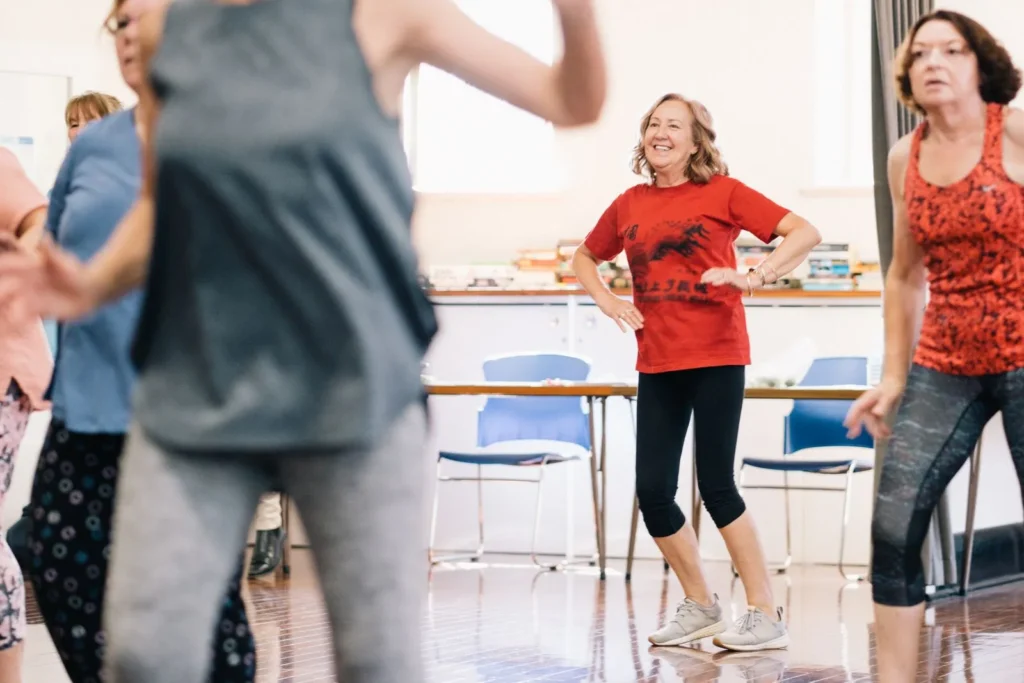
Searching for the zumba full form? Here is the short answer: there isn’t one. Zumba is a brand name, not an acronym, so the letters Z-U-M-B-A do not stand for separate words and no official expansion exists. This guide explains where the word likely comes from, what Zumba actually is, the class types you will see on a timetable, and who it suits.
Does Zumba Have a Full Form?
No. Zumba is a coined brand name, not an abbreviation, so there is no official full form and no word behind each letter. Zumba Fitness, LLC owns the trademark, and no official expansion has ever been part of the branding. Any “Z-U-M-B-A stands for…” line you see online was invented later by someone else.
The confusion is understandable. Many short names we meet daily are acronyms, so a five-letter word that sounds a little unusual gets treated the same way. Zumba is simply a name chosen because it sounds lively and is easy to remember. If you see a neat expansion on a poster or a social media caption, treat it as wordplay, not as the brand’s own meaning.
Where Does the Word “Zumba” Come From?
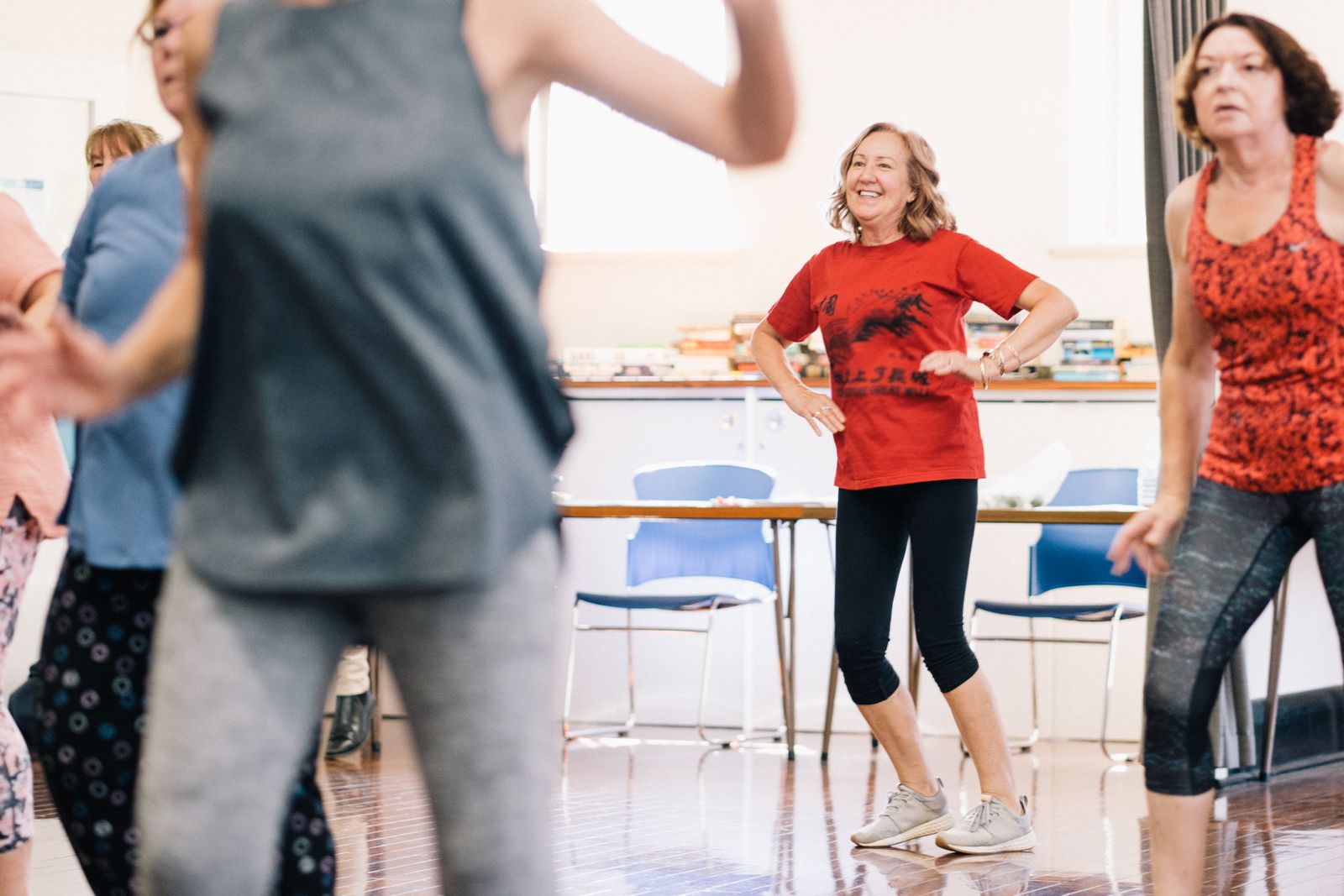
The name is commonly linked to the Spanish verb zumbar, which means to buzz or to hum. It is also often explained as Latin American slang for moving fast and having fun. The exact story behind the choice is not something outsiders can verify, so treat it as the usual explanation, not a documented fact.
What is widely told is the origin of the class itself. Beto Pérez, an aerobics instructor in Colombia in the 1990s, is said to have arrived at a class without his usual music and improvised with salsa and merengue tapes he happened to have. Students enjoyed it, and the format grew from there. Later, Pérez teamed up with Alberto Perlman and Alberto Aghion, and the business Zumba Fitness took shape in the early 2000s. Our guide to the history of Zumba tells that story in more detail.
A word of caution on the “buzz” idea: it fits the brand beautifully, which is exactly why it gets repeated so confidently. The honest position is that zumbar is a real Spanish word, the sound and feel match the program, and the rest is a plausible but unproven explanation.
Zumba Full Form Myths, Corrected
Most of the confusion around the name comes from a handful of repeated claims. The table below separates what people assume from what is actually known, including the one genuine abbreviation in the Zumba world: ZIN, which refers to instructors and not to the program’s name.
| What people say | What is actually true |
|---|---|
| Zumba is short for a longer phrase | No. It is a brand name with no official expansion. |
| Each letter stands for a word | No. Any letter-by-letter version is a backronym made up after the fact. |
| ZIN is the full form of Zumba | No. ZIN stands for Zumba Instructor Network, the licence route for instructors. |
| Zumba is just salsa | No. Salsa is one of many rhythms; merengue, cumbia, reggaeton, pop and more also appear. |
| You need to know how to dance | No. Moves are simple, repeated and cued by the instructor. |
| Zumba is a free-to-use word like “aerobics” | No. Zumba is a registered trademark owned by Zumba Fitness, LLC. |
What Is Zumba, Exactly?
Zumba is a dance-fitness program built on easy-to-follow choreography set to Latin and international music. A class usually runs 45 to 60 minutes and alternates faster and slower songs, like interval training. Many adults burn roughly 300 to 500 kcal per class, depending on body weight and effort.
In practice, you follow an instructor who repeats a few basic steps, adds arm movements, and changes direction every few bars. There is no partner and no need to memorise routines. The aim is to keep moving, enjoy the music and raise your heart rate without feeling like you are on a treadmill. Instructors in India often add Bollywood or bhangra numbers to the usual Latin mix, which makes classes feel familiar for beginners.
Music is the backbone of the format. Classes commonly draw on salsa, merengue, cumbia and reggaeton, alongside pop and hip-hop, and each rhythm has its own feel. Merengue tends to be quick and march-like, salsa is a little more flowing, and reggaeton has a heavier, bouncier beat. Because the pace shifts song to song, your heart rate rises and falls naturally, which is why many people find an hour passes faster than a treadmill session of the same length.
For a fuller picture of the program, our explainer on what is Zumba covers the format, benefits and what to expect from your first session. If you want to try it from home, our guide to online Zumba classes explains how live and recorded sessions work.
Zumba Class Types at a Glance
Zumba is not one single class. The brand offers several formats, and the names can look confusing on a timetable. The table below summarises what makes each one different and who it generally suits, so you can pick a format that matches your fitness level and comfort.
| Class type | What is different | Usually suits |
|---|---|---|
| Zumba (basic) | Dance-fitness with Latin and world rhythms, full body | Most adults, including beginners |
| Zumba Gold | Same style, slower pace and lower intensity | Older adults, first-timers, anyone returning after a break |
| Zumba Toning | Light handheld toning sticks add resistance | People who want a bit more muscle work |
| Zumba Step | Uses a step platform, with extra focus on legs and glutes | People with some cardio base who like lower-body work |
| Zumba Sentao | A chair is used for support and resistance, with a core focus | People wanting a strength-leaning, low-impact option |
| Zumba in the Circuit | Dance intervals mixed with strength stations | Regular exercisers who like variety |
| Aqua Zumba | Done in a pool, so joints take less impact | Those who prefer water-based, gentler movement |
| Strong Nation (later renamed Strong by Zumba) | High-intensity intervals timed to the music, not dance-led | People who want a tougher, gym-style session |
Formats and names change over time and not every studio offers every one, so check the current class list wherever you plan to join.
How a 60-Minute Zumba Class Usually Flows
Most classes follow a predictable shape: a gentle warm-up of around 5 to 10 minutes, a main block of about 35 to 40 minutes alternating fast and slow songs, an optional toning segment, and a 5 to 8 minute cool-down. Exact timings vary by instructor and format.
| Segment | Roughly how long | What you will be doing |
|---|---|---|
| Warm-up | 5 to 10 minutes | Easy steps, shoulder and hip mobility, building rhythm |
| Main dance block | 35 to 40 minutes | Songs of about 3 to 5 minutes, alternating higher and lower intensity |
| Toning or core | 5 to 8 minutes (not in every class) | Squats, lunges, light core work set to music |
| Cool-down | 5 to 8 minutes | Slow song, stretches, breathing to bring the heart rate down |
Who Is Zumba Good For?
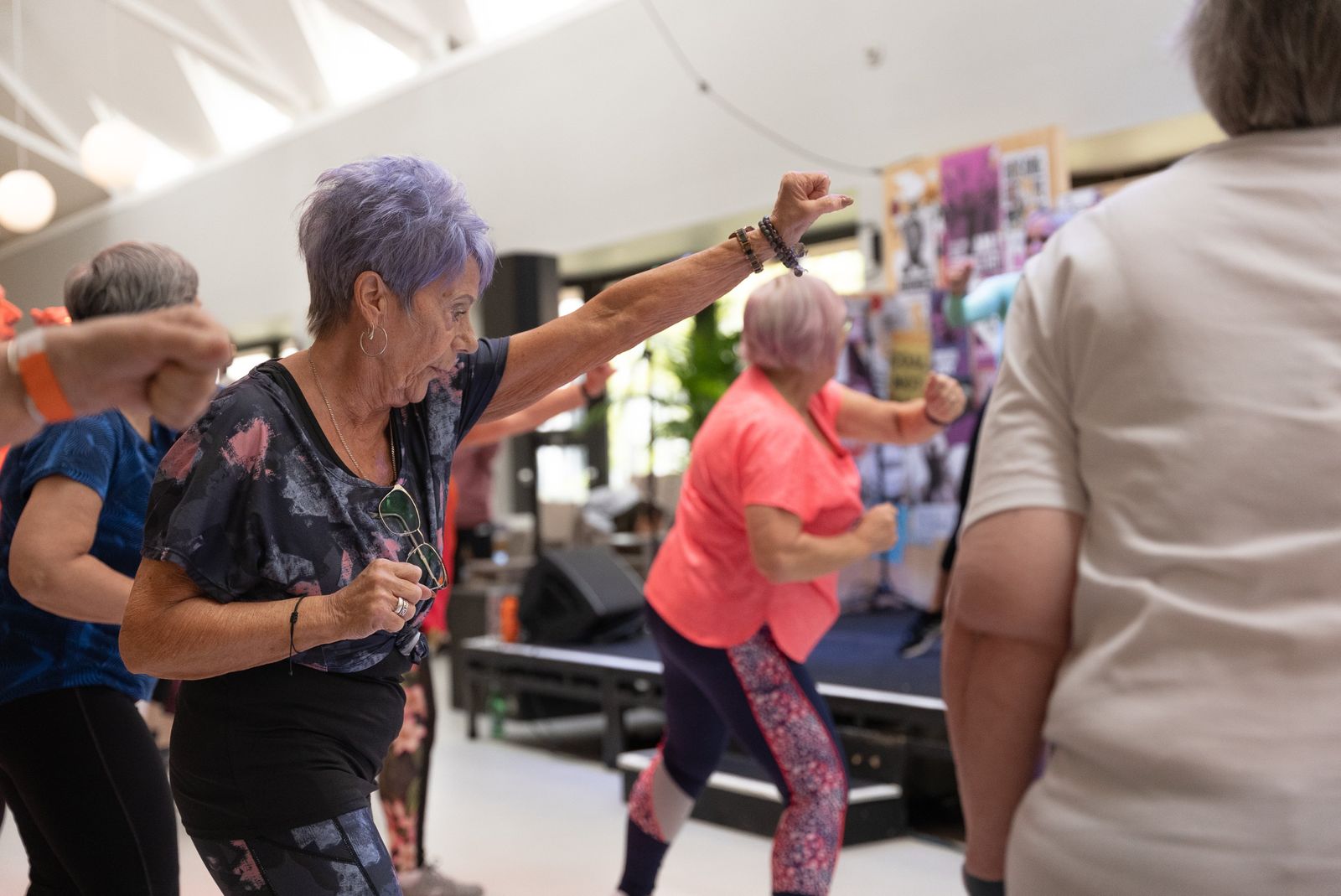
Zumba suits most healthy adults who enjoy music and want a cardio workout that does not feel like a chore. It scales well: beginners can use smaller steps and skip the jumps, while fitter participants can add intensity. People with joint, heart or pregnancy-related concerns should check with a doctor first.
Some specific groups tend to find it useful:
- Complete beginners: there is no routine to learn in advance, and the instructor cues each move just before it happens, so you can follow along from the first song.
- Busy professionals: a single 45-minute session fits easily before work or after dinner, with no equipment needed.
- Women of different ages: our piece on Zumba for women covers common goals and how to adjust intensity.
- Older adults: Zumba Gold or a seated variation keeps the fun while lowering the impact.
Think about your goal before choosing a format. If you mainly want fun and a regular habit, a basic class is enough. If your priority is lower-body strength, Zumba Step may suit you better. If joints are a worry, Gold or a low-impact version is the safer starting point. You can always move up later.
Be realistic about outcomes. Zumba is a good way to build the habit of moving and to raise fitness over weeks and months, but no class guarantees a set amount of weight loss. Food intake, sleep and consistency matter just as much as the workout itself. If you have a medical condition, are recovering from an injury, or are pregnant, speak to your doctor before starting.
Struggling to Keep Up? Common Problems and Fixes
Almost every first-timer feels lost for the first few songs. The usual fixes are simple: scale down the movement, watch the instructor’s feet before the arms, and accept that missing steps is normal. Most people feel noticeably more comfortable by their third or fourth class.
- “I can’t follow the steps.” Stick to the basic step and add only the arms at first. Add the footwork once the beat feels natural.
- “I get out of breath quickly.” Take the low-impact version of each move, sip water between songs and rest for a few seconds when needed.
- “My knees or ankles hurt.” Wear cushioned, flat-soled training shoes, avoid slippery floors and skip jumps. If pain persists, stop and get it checked.
- “I feel self-conscious on camera.” In online classes you can switch your video off, stand towards the back of your frame and focus on the music.
- “My room is too small.” You need roughly a 2 metre by 2 metre clear space. Move the furniture, and keep steps compact.
Learning Zumba With Fitstrot
Fitstrot teaches Zumba online, so you can join from your living room without worrying about commute or crowded studios. Fitstrot’s lead Zumba trainer is Yash Pathak, who is ZIN Licensed, ACE Certified and Strong Nation Certified. That ZIN licence is the abbreviation people sometimes mix up with the brand name itself.
If you are curious about how the formats above are taught, our online Zumba classes page explains what is offered. Remember the basics: a bit of clear floor space, comfortable shoes, a water bottle, and a willingness to laugh when a step goes wrong.
Frequently Asked Questions About the Zumba Full Form
What is the full form of Zumba?
Zumba has no full form. It is a brand name, not an acronym, and the brand does not define the letters as words. The word is commonly linked to the Spanish verb zumbar, meaning to buzz or hum.
Does each letter in Zumba stand for something?
No. The letters Z-U-M-B-A do not stand for separate words. Any version you see online that assigns a word to each letter was made up after the fact and is not an official meaning.
What does ZIN mean in Zumba?
ZIN stands for Zumba Instructor Network. It is the licensing and membership route for instructors, so a “ZIN licensed” trainer is one who has completed Zumba’s instructor training. It is not a full form of the word Zumba.
Is Zumba a Spanish word?
It is closely tied to Spanish. Zumbar is a Spanish verb meaning to buzz or hum, and the brand name is commonly explained as coming from it, along with Latin American slang for moving fast. The exact reasoning behind the choice has not been independently verified.
Is Zumba suitable for beginners?
Yes. Zumba is designed so that beginners can follow simple, repeated steps without any dance background. Start with a basic or Zumba Gold class, use the low-impact version of each move, and check with your doctor first if you have joint, heart or pregnancy concerns.
Want to feel the beat instead of reading about it? Explore Fitstrot’s online Zumba classes and join your first session this week.


