
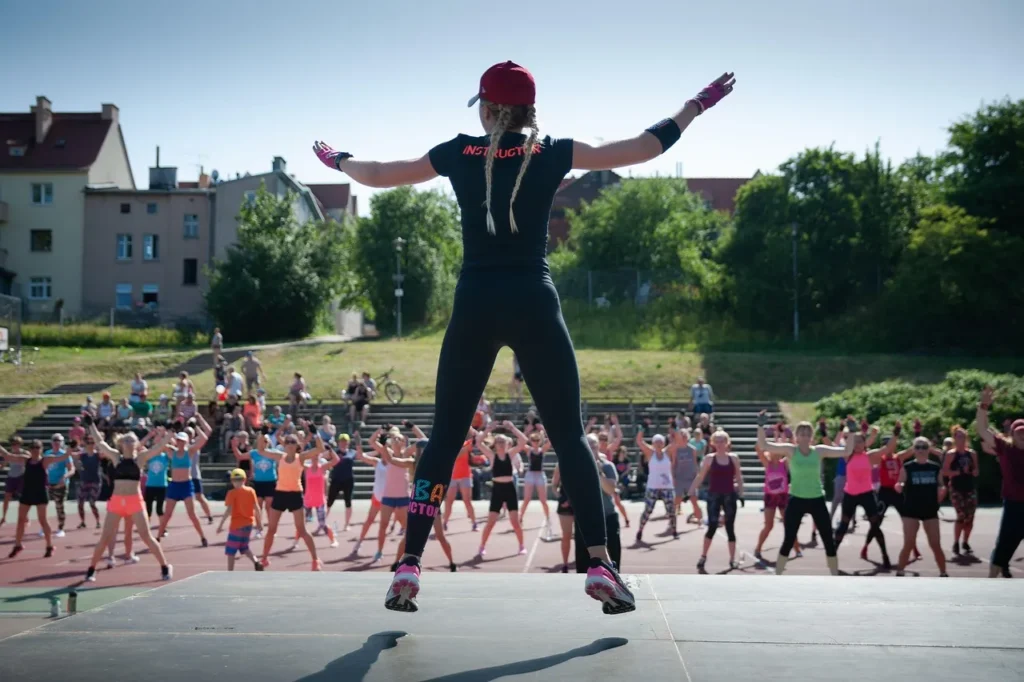
The history of Zumba dance starts with a mistake. In the 1990s, an aerobics instructor in Cali, Colombia, named Beto Pérez walked into class without his usual workout music, grabbed the salsa and merengue tapes in his backpack and improvised. That one class became a company in 2001, a global brand by 2007 and, by 2024, a programme its founders say reaches about 15 million people a week in 185 countries.
This page traces that timeline year by year using the company’s own press fact sheets, independent research and verified news reports. You will find a dated timeline table, the rhythms that shaped the format, every major programme spin-off, what the science actually measured, and how Zumba reached Indian living rooms and even Kerala school grounds. If you want the basics of the workout itself rather than its backstory, start with our explainer on what Zumba is.
Who invented Zumba, and when?
Zumba was invented by Alberto “Beto” Pérez, a dancer and aerobics instructor from Cali, Colombia, in the 1990s. He moved to Miami in 1999 and, in 2001, co-founded Zumba Fitness with entrepreneurs Alberto Perlman and Alberto Aghion. Pérez created the dance-fitness format; the two Albertos built the business around it.
According to the company’s own Zumba Fitness fact sheet (2012), the founding story runs in three clear steps: the accidental class in Cali in the 1990s, Pérez bringing the concept to Miami in 1999, and the three partners forming Zumba Fitness in 2001 with a goal of taking the brand worldwide. Because “Beto” is a common short form of Alberto, the trio is often nicknamed “the three Albertos”.
Pérez was born on 15 March 1970 in Cali. He grew up with a single mother, worked several jobs as a teenager and could not afford formal dance lessons at first. Winning a national lambada competition opened the door to a well-known dance academy in Cali, and he later taught aerobics in local gyms. That mix of Latin social dance and gym-floor aerobics is exactly the DNA you still see in a Zumba class. Early versions of his class are widely reported to have been called “Rumbacize” before the Zumba name was settled.
Zumba meaning in English: is it a real word?
Not in the dictionary sense. Zumba Fitness states in its press materials that “ZUMBA was coined by our company” as a brand name. The closest everyday Spanish word is the verb zumbar, which means “to buzz” or “to hum”, and many writers link the name to that fast, buzzing energy. The company is strict about the trademark: its fact sheet asks writers to capitalise the Z and not to use Zumba as a verb, which is why you will hear instructors say “a Zumba class” rather than “let’s Zumba”.
Origin of Zumba: the forgotten-music class in Cali
The origin of Zumba is a 1990s aerobics class in Cali, Colombia. Beto Pérez forgot his standard aerobics music, improvised a full session using his own salsa and merengue tapes, and the class loved it. Instead of counting reps to a beat, participants followed the music, and that shift became Zumba’s core idea.
The company’s fact sheet describes the moment plainly: he “darted off to teach an aerobics class and forgot his traditional aerobics music”, used “an array of popular salsa and merengue” from his backpack, and “took the focus off counting reps over music and instead focused on letting the music move you”. The earlier 2011 version of the same sheet adds that the class “soon became the most popular one at the fitness facility”.
Traditional aerobics of that era was built on counted blocks and a steady tempo. Pérez flipped the order: the song came first and the steps were chosen to fit it. This is also why Zumba classes still switch between fast and slow tracks rather than holding one steady tempo. It is the simplest way to understand the difference between aerobic and Zumba dance: aerobics fits the music to the moves; Zumba fits the moves to the music.
Origin of Zumba dance moves: why they are so simple
Pérez was teaching regular gym members, not trained dancers. The steps that survived were the ones a room of beginners could copy within one or two repetitions: a merengue march, a salsa side step, a cumbia shuffle. That design choice made the format teachable at scale later on, and it is the reason a first-timer today can finish a class without knowing a single named step. For a breakdown of the basic steps, see our guide to Zumba dance moves.
Zumba history timeline: 1990s to 2025
Every date below comes from a primary or verified source: Zumba Fitness press fact sheets, company press releases, the American Council on Exercise (ACE) and news reports. Where sources disagree on a date, such as the year the instructor membership network began, we have left that milestone out rather than guess.
| Year | Milestone | Source |
|---|---|---|
| 1970 | Beto Pérez born in Cali, Colombia (15 March) | Biographical records |
| 1990s | Pérez forgets his aerobics music and improvises a salsa-and-merengue class in Cali | Zumba fact sheet |
| 1999 | Pérez moves to the United States and starts teaching in Miami | Zumba fact sheet |
| 2001 | Pérez, Alberto Perlman and Alberto Aghion form Zumba Fitness | Zumba fact sheet |
| 2003 | Business model shifts from selling DVDs to certifying instructors | CNBC, 2018 |
| 2007 | The Zumba programme launches internationally | Zumba fact sheet |
| 2009 | Zumbatomic kids’ programme launches (September); 1,000 instructors trained | Zumba fact sheet |
| 2010 | First Zumba Fitness video game released; 3,500+ instructors attend the annual convention | Zumba fact sheet |
| 2011 | 12 million weekly participants, 110,000 locations, 125+ countries | Zumba fact sheet |
| 2012 | ACE-commissioned study measures a class at ~369 kcal; Zumba Sentao chair workout launches; 100,000+ instructors | ACE; Zumba fact sheet; CNBC |
| 2016 | STRONG by Zumba (now STRONG Nation) launches with an ACE partnership (June) | ACE press release |
| 2017 | Zumbini, for children aged 0–4 and caregivers, rolls out with BabyFirst TV (January) | Zumba/BabyFirst press release |
| 2024 | First consumer Zumba app launches (February); 15 million weekly participants in 185 countries | Zumba press release |
| 2025 | Kerala schools begin Zumba sessions as part of an anti-drug campaign (July) | ANI news report |
Zumba is an American business built on a Colombian idea, and its growth was slow for six years and then explosive. The international launch in 2007 was followed within four years by 12 million weekly participants, and the company says it had sold more than 10 million DVDs and over 6 million video-game units by 2012.
From infomercial to instructor network: how Zumba scaled
The early business sold home-workout DVDs through TV infomercials. According to a 2018 CNBC profile of the founders, the turning point came in 2003, when customers kept asking how they could teach the workout they saw on the DVDs. The trio pivoted to certifying instructors, and that decision, more than any single video, explains the brand’s reach.
The Zumba dance instructor model
The model CNBC describes is simple: a roughly US$300, one-day instructor training, followed by a monthly fee of about US$30 that supplies new music, choreography and marketing support. Licensed instructors then run their own classes in gyms, community halls, studios or online, and keep the class fees. By 2012, more than 100,000 instructors were teaching in over 125 countries. That membership is the Zumba Instructor Network, or ZIN, and we cover what it includes and how licensing works in our separate guide to ZIN Zumba.
The instructor network also turned Zumba into a music platform. The 2012 fact sheet notes that artists including Pitbull and Wyclef Jean launched singles through Zumba instructors, reaching “more than 12 million music enthusiasts worldwide in live classes every week”. The same network ran Zumbathon charity classes that had raised more than US$3 million by 2012.
Zumba dance styles: the rhythms behind the format
Zumba began with salsa and merengue, but the official list of rhythms widened quickly. The 2011 company fact sheet names 13 dance styles, and bhangra, from Punjab, has been on that list for well over a decade. The table below lists each one with where it comes from and how it typically shows up in class.
| Rhythm | Roots | How it usually feels in class |
|---|---|---|
| Salsa | Cuba / Caribbean, popularised in New York | Quick three-step footwork with hip action; high energy |
| Merengue | Dominican Republic | Steady marching beat; the easiest warm-up rhythm |
| Cumbia | Colombia | Shuffling side steps; Beto’s home-country rhythm |
| Reggaeton | Puerto Rico | Heavy bounce, squats and attitude; strong leg work |
| Mambo | Cuba | Forward-back rocking steps with arm styling |
| Cha-cha-chá | Cuba | Quick triple step; builds coordination |
| Samba | Brazil | Fast bounce; one of the most intense tracks |
| Axé | Bahia, Brazil | Jumping, carnival-style group moves |
| Tango | Argentina / Uruguay | Sharp slow-quick walks; often a contrast track |
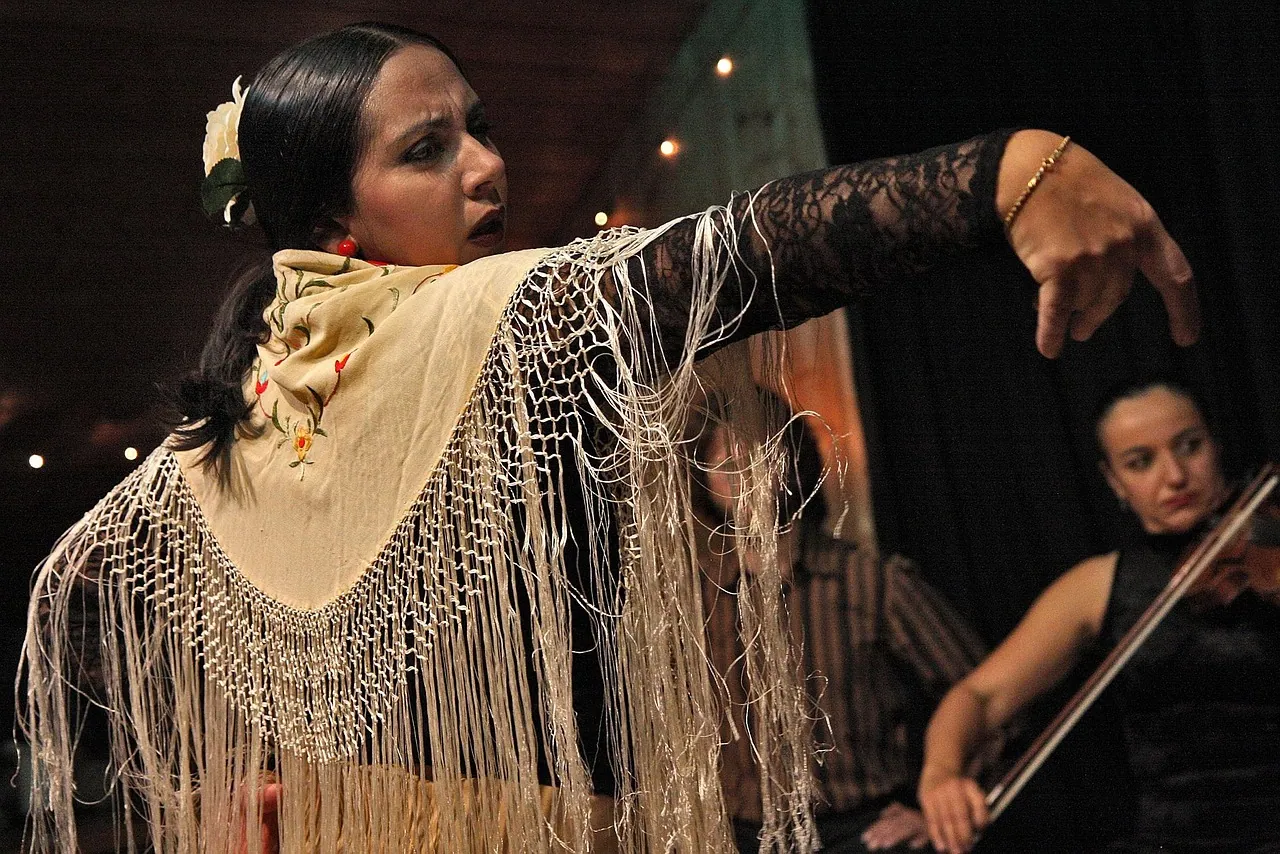
| Flamenco | Andalusia, Spain | Stamps and strong arm lines |
| Belly dance | Middle East / North Africa | Hip isolations and shimmies; core-focused |
| Bhangra | Punjab (India and Pakistan) | Shoulder lifts and hops; the most familiar rhythm for Indian classes |
| Hip-hop | New York, USA | Grooves and bounces; common in youth-oriented tracks |
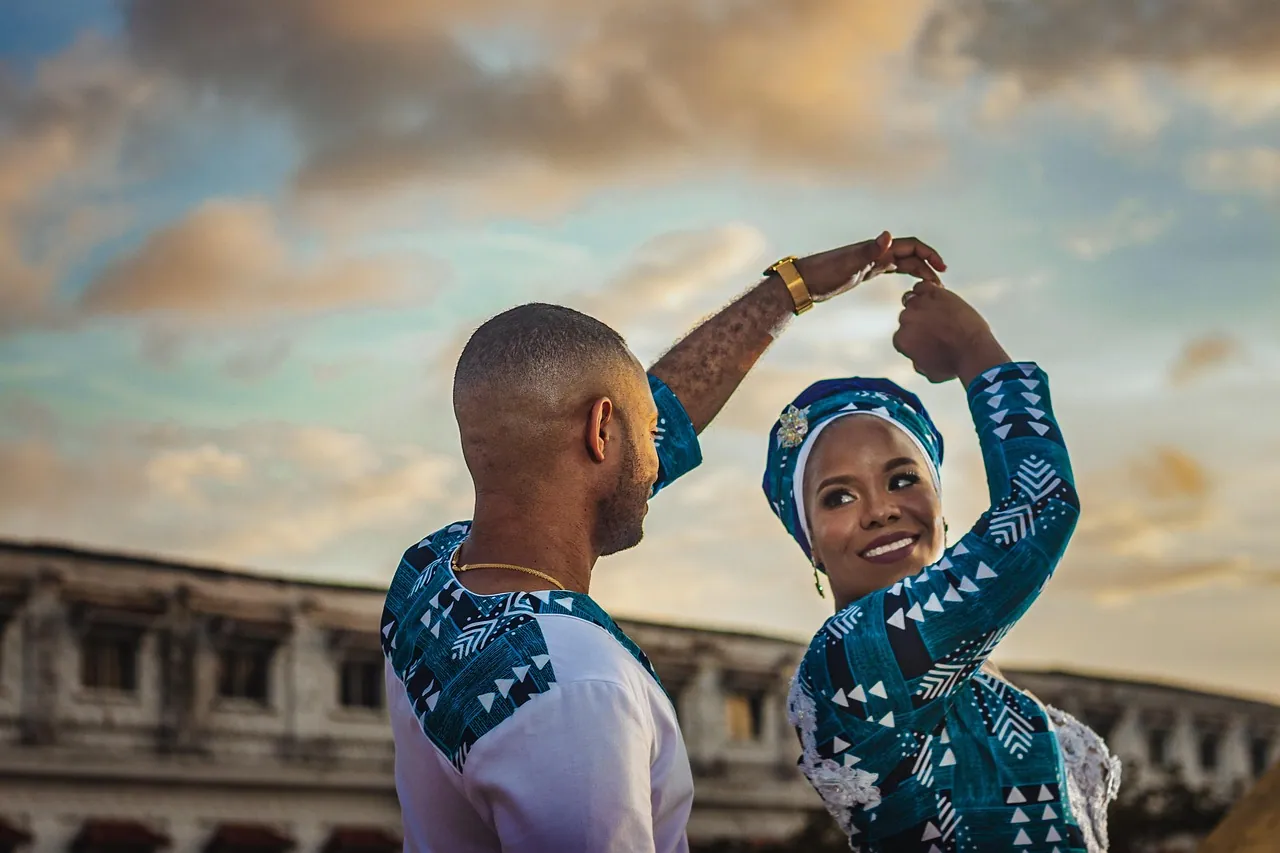
Indian classes also often use Bollywood tracks, which fits how the format was designed. The original rule was never “Latin music only”. It was “let the music move you”, and the music that moves most Indian participants is often a Hindi or Punjabi song.
Myth check: does Zumba really burn 1,000 calories an hour?
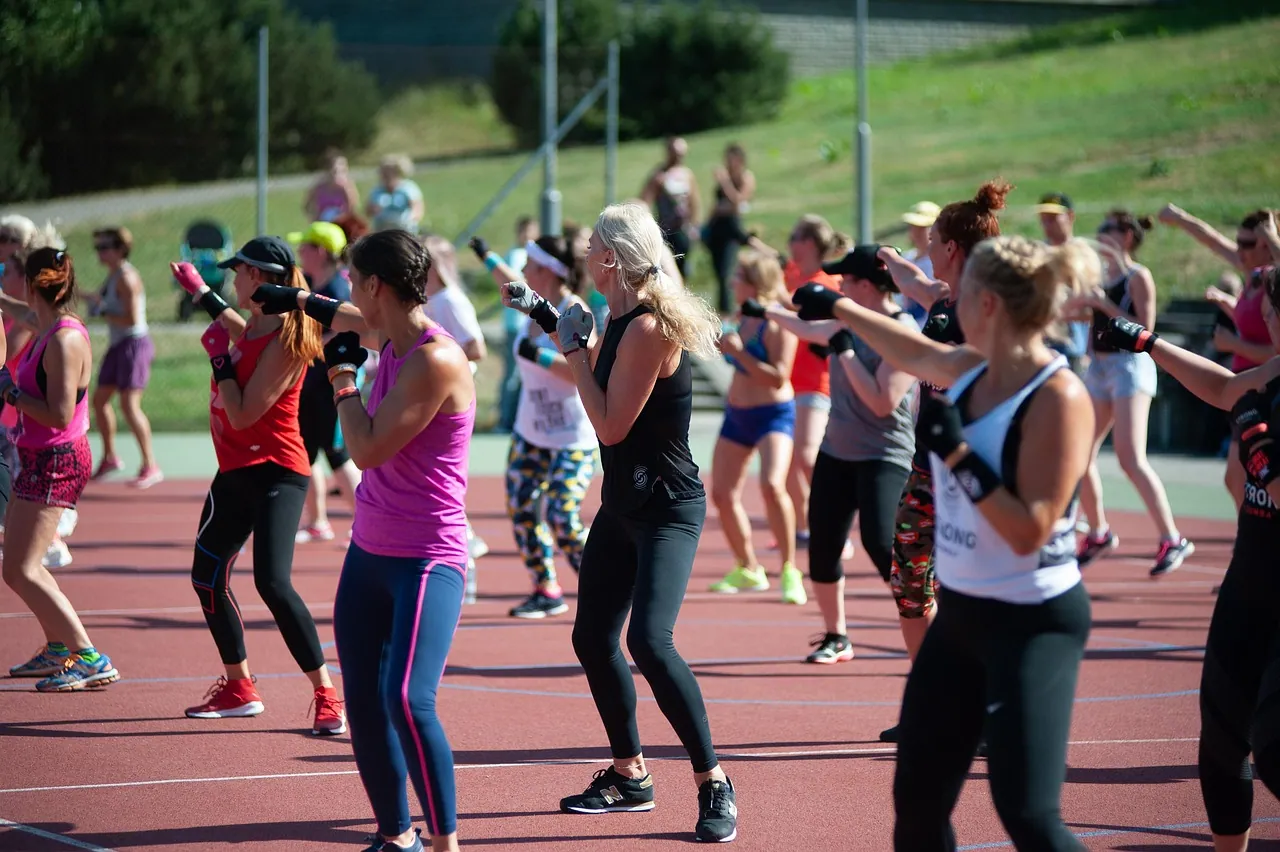
Probably not for most people. The most widely cited independent class measurement, a 2012 ACE-commissioned study at the University of Wisconsin–La Crosse, found 19 young women burned an average of 369 kcal in a roughly 39-minute class, about 9.5 kcal per minute. That works out to around 570 kcal per hour, not 1,000.
The 1,000-calorie figure came from the company itself. Its 2012 fact sheet said “a person can burn up to 1,000 calories in a one-hour class depending on the intensity of the workout”. The same year, the American Council on Exercise published results from researchers who fitted participants with heart-rate monitors and measured oxygen uptake. The work also appeared in the Journal of Sports Science and Medicine (Luettgen et al., 2012).
| Measure | Result | Industry guideline for improving cardio fitness |
|---|---|---|
| Class length | ~39 minutes | — |
| Total energy burned | 369 kcal on average | — |
| Burn rate | ~9.5 kcal per minute | — |
| Average heart rate | 154 bpm | — |
| % of maximum heart rate | 80% | 64–94% |
| % of VO2max | 64% | 40–85% |
Keep the limits in mind. The group was small, young, female and already experienced with Zumba, so a 45-year-old beginner in Pune may burn less, especially in the first few weeks while learning steps. Longer-term evidence is also more modest than the marketing. A 2020 systematic review and meta-analysis of randomised trials found Zumba improved aerobic fitness (VO2peak effect size 0.53) but could not conclude that it reliably reduced fat mass, and said more research was needed. The honest takeaway: Zumba is proper cardio and can support weight management alongside diet, but no class guarantees a set number of kilos.
On the plus side, three 50-minute classes a week already meet the WHO recommendation of at least 150 minutes of moderate-intensity activity per week for adults. WHO also estimates that 31% of adults worldwide, about 1.8 billion people, were not active enough in 2022. A workout people enjoy enough to repeat matters for exactly that reason.
From one class to a family of programmes
Once the instructor network was in place, the company began building versions of the class for different bodies and ages. This is where Zumba’s history becomes practical for you, because the variant you choose should depend on your age, joints and goal.
| Programme | First documented | Format | Best suited to |
|---|---|---|---|
| Zumba (original) | 2001 | Dance-fitness party, fast and slow songs | Most healthy adults |
| Zumba Gold | By 2011 | Same music, lower intensity, modified moves | Active older adults, beginners, the deconditioned |
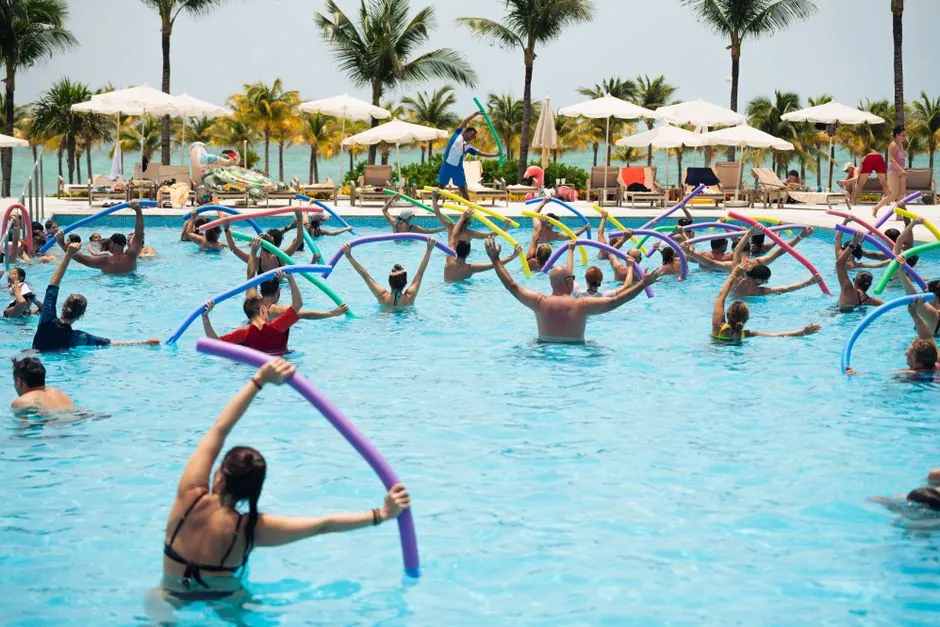
| Aqua Zumba | By 2011 | Dance moves in a pool using water resistance | People with sore joints, heavier beginners, swimmers |
| Zumba Toning | By 2011 | Light “toning sticks” that double as maracas | Those wanting muscular endurance plus cardio |
| Zumbatomic | September 2009 | Kid-friendly choreography and music | Children |
| Zumba Gold-Toning | By 2012 | Low-intensity dance plus light resistance | Older adults focused on strength and mobility |
| Zumba Sentao | 2012 | Chair-based choreography for core and balance | Intermediate participants wanting core work |
| STRONG by Zumba / STRONG Nation | June 2016 | Music-led interval training, no dance moves | People who want HIIT-style work, not choreography |
| Zumbini | January 2017 (with BabyFirst) | 45-minute music-and-movement sessions | Children aged 0–4 with a caregiver |
STRONG deserves a note because it was the first big step away from dance. The June 2016 ACE partnership announcement describes it as a music-led, HIIT-inspired programme with non-dance movements, and gives Zumba’s size at the time as more than 15 million weekly participants in 200,000 locations across 186 countries. The programme has since been renamed STRONG Nation.
Zumba dance in India: how the format arrived and adapted
Zumba Fitness has not published a launch date for India, but the programme went international in 2007 and is taught here by instructors holding the same licence used worldwide. Bhangra was already an official Zumba rhythm, and Indian classes often add Bollywood music. In July 2025, Kerala began Zumba sessions in schools as part of an anti-drug campaign.
Zumba Fitness does not publish an India-only count of instructors or participants, so be wary of any article that quotes one. What can be said with confidence is that the format suits Indian homes well: it needs no equipment, works on a small patch of floor and can be taught live over video, so you are no longer limited to classes in your own city.
The most visible recent chapter came from Kerala. According to ANI’s July 2025 report, state schools started Zumba sessions on 2 July 2025 to help students manage stress through physical activity. Some religious groups objected, and Education Minister V. Sivankutty defended the move, noting that students took part in school uniforms and that participation was voluntary.
Where Fitstrot fits in
Fitstrot’s live online Zumba classes are led by Yash Pathak, our lead Zumba trainer, who is ZIN licensed, ACE certified and STRONG Nation certified. That means the classes follow the same licensed Zumba format whose history you have just read, delivered to your screen at home.
What a Zumba class looks like today, step by step
The structure has stayed close to what the fact sheets described more than a decade ago: a playlist of fast and slow songs, each with its own short routine. A typical 45–60 minute class runs like this:
- Warm-up (1–2 songs, about 5–8 minutes): merengue marches and easy step-touches to raise your heart rate gradually.
- Main block (8–10 songs, about 30–40 minutes): alternating high-energy tracks such as salsa, reggaeton or bhangra with slightly slower songs that give you a breather without stopping.
- Toning or “power” song (optional): one track with squats, lunges or core work, a nod to Zumba Toning.
- Cool-down (1–2 songs, about 5 minutes): slow steps and stretches to bring your heart rate back down.
You are not expected to get every step right in the first week.
Troubleshooting your first few Zumba classes
Knowing the history helps you set realistic expectations. Zumba was designed for gym members, not performers, so most early problems are about pacing rather than talent.
- “I can’t keep up with the steps.” Follow the feet only for the first two weeks and ignore the arms. Most routines repeat each combination several times within one song.
- “My knees hurt after jumps.” Keep one foot on the floor and swap jumps for step-touches. If pain persists, look at Zumba Gold or Aqua Zumba formats, and see a doctor or physiotherapist before continuing if you have a known joint condition.
- “I’m breathless within 10 minutes.” Take the slower songs at half speed and march in place during fast tracks. The 80% of maximum heart rate average in the ACE study came from experienced participants.
- “I’m not losing weight.” Classes help, but research has not shown reliable fat loss from Zumba alone. Pair two or three classes a week with a food plan; a Fitstrot online nutritionist consultation can build that around Indian meals.
If you have heart disease, diabetes, high blood pressure, are pregnant or are returning after an injury, get clearance from your doctor before starting any high-intensity dance class.
Frequently asked questions about the history of Zumba
Who is the founder of Zumba?
Zumba was created by Colombian dancer and aerobics instructor Alberto “Beto” Pérez in the 1990s. In 2001 he co-founded Zumba Fitness with Alberto Perlman and Alberto Aghion, who built the business side of the brand in Florida.
In which country did Zumba originate?
Zumba originated in Colombia, in the city of Cali, where Beto Pérez improvised his first class with salsa and merengue music. The company itself was founded in the United States in 2001, after Pérez moved to Miami in 1999.
When did Zumba start?
The dance-fitness idea started in Cali in the 1990s. Zumba Fitness was formed as a company in 2001 and the programme launched internationally in 2007, according to the company’s press fact sheets.
What was Zumba originally called?
Early versions of Beto Pérez’s class are widely reported to have been called “Rumbacize”. The Zumba name was adopted when the company was formed, and Zumba Fitness says the word was coined as its brand name.
How many people do Zumba worldwide?
The company reported 15 million weekly participants in 200,000 locations across 185 countries when it launched its consumer app in February 2024. In 2011 the figure was 12 million weekly participants in more than 125 countries.
Is Zumba the same as aerobics?
No. Both are cardio classes, but aerobics fits steps to a steady tempo and count, while Zumba chooses steps to fit each song and alternates fast and slow tracks. A 2012 ACE study found Zumba classes reached about 80% of maximum heart rate.
When did Zumba come to India?
Zumba Fitness has not published an official India launch date or India-specific figures. The programme went international in 2007, and classes here are taught by instructors holding the standard Zumba licence. In July 2025, Kerala introduced Zumba sessions in schools as part of an anti-drug campaign.
Is STRONG Nation part of Zumba?
Yes. STRONG by Zumba launched in 2016 as a music-led interval training programme without dance moves, created with an ACE partnership. It has since been renamed STRONG Nation and remains part of the Zumba family.
Try the format Beto Pérez started, from your living room: join one of Fitstrot’s live online Zumba classes with Yash and see how 45 minutes of music-first cardio feels this week.


