

A zumba step class takes the dance-fitness routine you already know and puts a raised platform under your feet. Moves that used to happen on the floor now include a step up, a step down or a pass over the platform, so your legs, glutes and heart work harder to the same music. This guide explains how it works, which muscles it targets, how to set up a platform at home, and a four-week plan that eases you in without punishing your knees.
What is Zumba Step, and how is it different from regular Zumba?
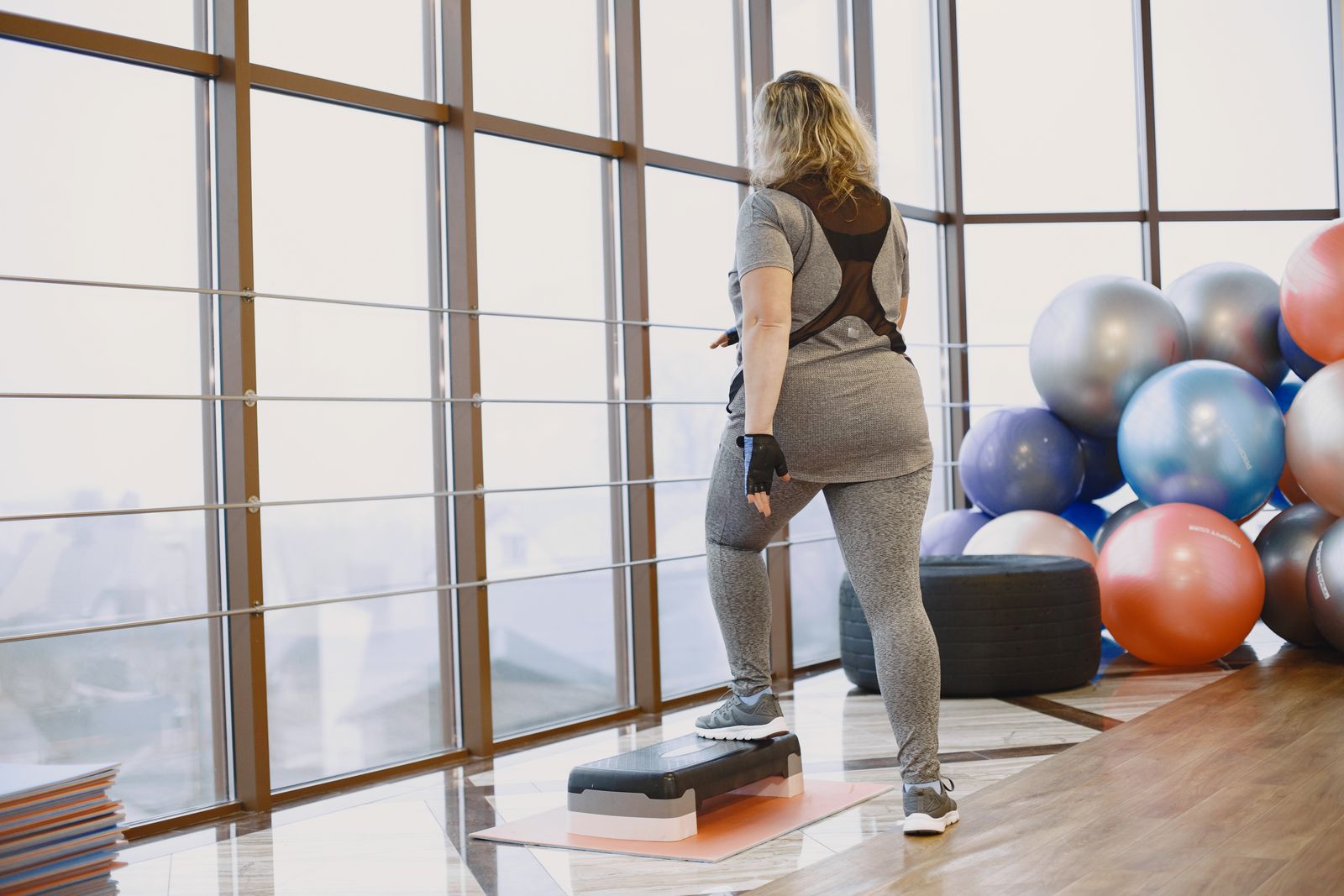
Zumba Step is a dance-fitness format that blends Latin-inspired Zumba choreography with step-aerobics moves on an adjustable platform. You step up, down and across the platform in time with the music. The platform adds lower-body resistance and lifts your heart rate compared with the same choreography on flat ground.
In a regular class your body weight moves horizontally across the floor. On a platform, every step also lifts your body weight vertically, and that is the extra work. Your coordination is tested too, because you have to track where the platform is while following the rhythm and the instructor’s cues.
Zumba Step vs other Zumba formats: a quick comparison
Zumba is a family of formats, and each one adds a different kind of challenge. Use this table to see where the step format sits, then read on for what that means in practice.
| Format | Where the extra challenge comes from | Main focus | A good fit if you… |
|---|---|---|---|
| Standard Zumba | Body weight and rhythm only | Cardio, coordination, full-body movement | are new to dance fitness |
| Zumba Step | Raised platform | Quads, glutes, hamstrings, calves, heart rate | are comfortable in standard classes and want more challenge |
| Zumba Toning | Light weighted sticks | Arms, shoulders, core | want upper-body resistance |
| Zumba Sentao | A chair used as a prop | Core, balance, strength | like a strength-leaning, floor-and-chair style |
| Zumba Gold | Slower pacing, lower impact | Easier on joints and stamina | are an older adult or returning after a long break |
If your main question is whether dance fitness changes how your body looks, our guide on does Zumba tone your body covers the standard format. Step simply adds a lower-body load on top of that foundation.
Which muscles does Zumba Step work?
Zumba Step mainly works the quadriceps, glutes, hamstrings and calves, because every step up lifts your body weight against gravity and every step down asks those muscles to control it. Your core and hip stabilisers also work to keep you balanced on a narrow platform, and your heart rate rises more than in flat-floor choreography.
The table below lists common step-aerobics moves you may meet in a class. Names vary between instructors, so treat these as descriptions, not an official move list.
| Move | What you do | Muscles working hardest | Form cue |
|---|---|---|---|
| Basic step | Step up with one foot, bring the other up, then step down in the same order | Quads, glutes | Whole foot on the platform; push through the heel |
| Knee repeater | Step up and lift the opposite knee, then repeat on the same side | Glutes, hip flexors, core | Stand tall; do not lean forward over the platform |
| Over-the-top | Travel across the platform and down the other side | Glutes, quads, calves | Keep steps small and look ahead, not at your feet |
| V-step | Step wide onto the platform, then back down to the floor in a V shape | Glutes, inner and outer thighs | Knees follow the direction of your toes |
| Turn step | Step up, pivot a quarter turn, and step down facing a new direction | Calves, hips, balance muscles | Pivot with a soft knee; never twist on a locked, planted foot |
Myth check: will a step platform slim only your thighs?
No. Your body does not let you choose where fat comes off. Step work strengthens leg and glute muscle, while a calorie deficit over weeks reduces fat across your whole body, in an order largely set by genetics. Legs may look firmer as muscle improves, but the platform cannot burn fat from one spot.
A second common belief is that harder is always better. A high platform, fast tempo and fancy turns do not automatically give better results. Cleaner reps at a lower height build strength with less risk, and consistency across weeks matters far more than one brutal class. Quality first, height later.
Does Zumba Step burn more calories than normal Zumba?
Usually yes, because lifting your body weight onto a platform asks more of your legs and heart than staying on the floor. The exact gain depends on platform height, tempo and your body weight, so treat any calorie number from a fitness band as a rough estimate. Food habits and consistency still decide fat loss more than the class format.
If fat loss is your main goal, the platform is one tool, not the plan. Pairing classes with sensible portions, enough protein and decent sleep does more than adding height to your step. An online nutritionist consultation can build an Indian-food plan around your class schedule, and an online weight loss trainer can keep your weekly routine realistic.
How do you set up a step platform at home?
Use a sturdy platform with a non-slip top, set to about 10 cm (4 inches) if you are new, and place it on a flat, non-slippery floor with at least one arm-span of clear space on every side. Wear supportive shoes. Never use a wobbly stool, a folding chair or a stack of books.
Follow these steps before your first session:
- Pick the platform. A proper adjustable aerobic step is ideal. A solid bottom stair also works for basic moves, though it is fixed in height and has little room to travel over.
- Check the surface. Rubber feet or a yoga mat under the platform stop it from sliding. Avoid polished tiles, loose rugs and wet floors.
- Start low. About 10 cm (4 inches) is enough for beginners. Intermediate exercisers usually use roughly 15 cm (6 inches), and only experienced, pain-free exercisers go beyond about 20 cm (8 inches).
- Clear the room. Keep furniture, fans and cables away, and make sure the camera shows your whole body so your trainer can correct your form.
- Dress the feet properly. Our what to wear for Zumba guide covers shoes and clothing. Lateral support matters even more here because your ankles and knees take the step-up and step-down load.
When stepping down, land softly and keep the step about a foot-length from the platform, so you are not tripping over its edge. Always put the whole foot on the platform, never just the toes.
A four-week plan to ease into Zumba Step
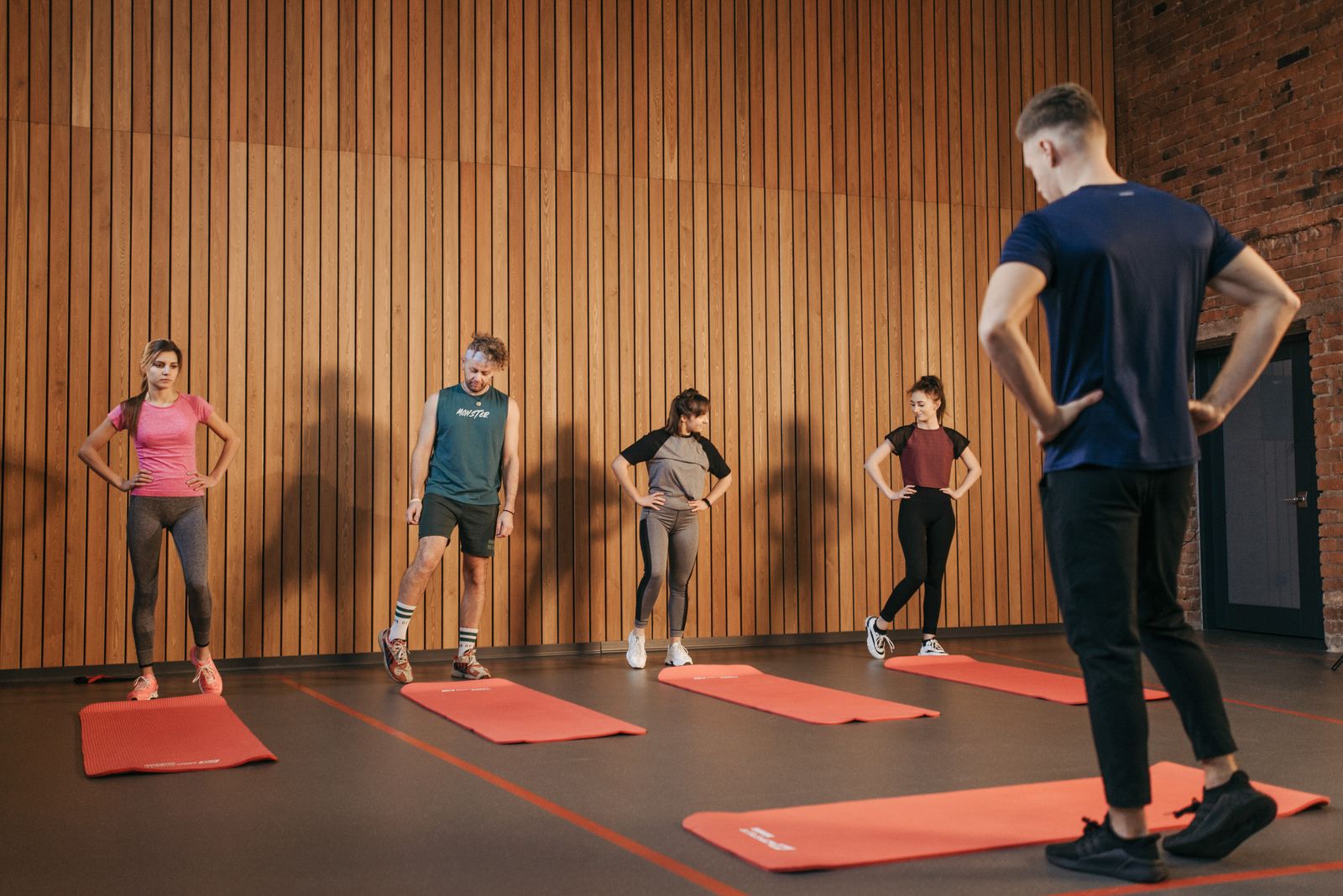
This plan is a sensible starting guide, not a prescription. Take at least one rest day between step sessions, and drop back a week if your knees, shins or Achilles feel sore. Heights are approximate.
| Week | Platform height | Step work per session | Sessions | What to practise |
|---|---|---|---|---|
| 1 | About 10 cm (4 in) | Roughly 10 minutes inside a normal class or warm-up | 2 | Basic step and knee repeater, slow tempo |
| 2 | About 10 cm (4 in) | Roughly 15 minutes | 2 to 3 | Add over-the-top and V-step |
| 3 | About 10 to 15 cm (4 to 6 in) | Roughly 20 minutes | 2 to 3 | Add turn step; match the music tempo |
| 4 | About 15 cm (6 in) if movement stays smooth | Roughly 25 minutes | 3 | Link moves into short eight-count combinations |
On non-step days, keep moving with easier dance fitness or a walk. If you want a lower-impact option while building leg strength, Zumba Gold is a gentler format, and Zumba Toning adds upper-body resistance, which makes it a natural partner to the lower-body focus of the step format.
Troubleshooting: common Zumba Step problems and fixes
Most step problems come from a platform that is too high, a tempo that is too fast, or tired legs after too many sessions. Fix those three first, then look at your technique.
- Knee pain on the way up. Lower the platform, put your whole foot on it and keep your knee tracking over the second toe. Do not let the knee fall inward.
- Shin or front-of-leg soreness. Cut the number of step minutes, check your shoes for cushioning and increase your volume gradually. Persistent soreness needs rest.
- Tripping over the platform. Look ahead, not down. Keep a small gap between your foot and the platform edge when you travel across.
- Burning calves or tight Achilles. Press your heel gently down when you step up, and stretch your calves after each session.
- Losing the beat. Slow down and practise the move without music for a minute. Footwork first, rhythm second, then the arms.
- Lower back tiredness. Stand tall, keep your ribs over your hips and brace your core lightly during knee lifts.
If you want a trainer to check your knee alignment and platform height, 1-on-1 personal training gives you live feedback you cannot get from a recorded video.
Who should be careful with Zumba Step?
People with knee, hip, ankle or balance problems, those who are pregnant, those recovering from injury or surgery, and anyone with heart or blood-pressure concerns should speak to a doctor before starting. Step work puts repeated load on your lower joints and raises your heart rate more than flat-floor classes. When in doubt, start with a lower-impact format.
Some other groups need a gentler path. Older adults and people returning after a long gap often do well starting with Zumba Gold. Teenagers can enjoy step work, but should use a low platform and good supervision, and our guide to Zumba for teens explains what suits younger exercisers. If you are not sure where you fit, pick the lower height and ask your trainer.
Stop immediately and seek medical advice if you feel chest pain, dizziness, sharp joint pain or unusual breathlessness. Muscle fatigue is normal, but sharp or joint pain is not.
Mixing Zumba Step with other formats
One format rarely does everything. A balanced week might include a step session for leg and glute work, a toning session for arms and core, and an easier dance class for recovery. Our Zumba Toning article explains how weighted sticks add upper-body resistance, which pairs well with the lower-body emphasis of the platform.
If you like variety, Zumba Sentao brings in a chair for core and balance work, and Zumba in the Circuit mixes dance with strength-style stations. None of these replaces the others. They are different tools, so choose by your goal and how your joints feel that week.
Learning Zumba online with Fitstrot
Fitstrot’s online Zumba programme is led by Yash Pathak, Fitstrot’s lead Zumba trainer, who is ZIN Licensed, ACE Certified and Strong Nation Certified. If you want to add platform work, tell your trainer which equipment you own, how much space you have and whether you have any joint history. They can then suggest a sensible starting level for you.
Not sure which style to begin with? Our overview of online Zumba classes explains how live online sessions work and what you need at home.
Zumba Step FAQs
Is Zumba Step harder than regular Zumba?
Generally yes. The platform adds lower-body resistance and raises your heart rate compared with standard Zumba on flat ground. Higher platforms and faster tempos make it harder still, so most people begin at a low height and build up over several weeks.
Can beginners do Zumba Step?
Yes, with care. A low platform, slow tempo and basic moves suit beginners. Some comfort with standard Zumba choreography first makes the transition smoother, because you will not have to learn the rhythm and the platform at the same time.
Can I do Zumba Step at home without a platform?
You can use a solid bottom stair for basic step-ups and step-downs, but a stable, non-slip platform is much safer. Never use a chair, stool or anything that can tip. If you have no safe step, do standard Zumba on the floor until you have one.
How high should my step platform be?
Beginners usually start around 10 cm (4 inches), and many people stay at roughly 10 to 15 cm (4 to 6 inches) for a long time. Go higher only when your form stays clean and your knees feel fine, and never raise it just to feel more challenged.
Do I need special shoes for Zumba Step?
You do not need a special brand, but you do need supportive athletic shoes with good cushioning and lateral stability. Running shoes with a very soft, high sole can feel wobbly on a platform, and bare feet or slippers are not safe.
Want to add a platform to your dance routine? Explore Fitstrot’s online Zumba classes and tell your trainer your platform height, space and any knee history before your first step session.


