
Zumba sentao is a Zumba format that puts a chair inside the choreography, so you move between dancing, sitting and standing instead of staying on your feet for the whole class. The chair adds strength and core work to the usual dance cardio, and it lets you make almost every move easier or harder. This guide covers what it means, the moves with form cues, how it differs from standard Zumba, who should check with a doctor first, and how to set up safely at home.
What does Zumba Sentao mean?
Sentao comes from the Spanish word for “seated”, and Zumba sentao is a chair-based Zumba class where the chair works as a dance partner and a strength tool. You dance, then use the chair for dips, squats, lunges, incline push-ups and crunches, finishing with a core-focused, higher-intensity workout built around seated-to-standing transitions.
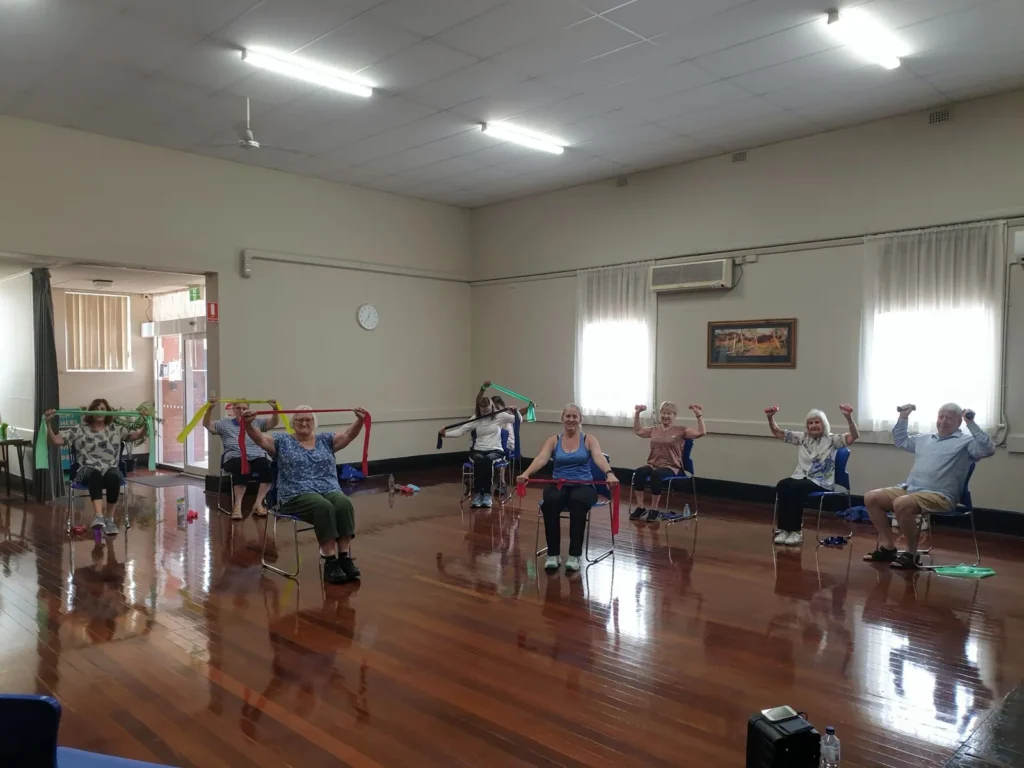
People often hear “chair” and picture gentle seated exercise. Sentao is different: you sit for short stretches only, and much of the class is spent standing and dancing. The chair is the prop; the music and choreography are still the point.
What happens in a Zumba Sentao class, step by step?
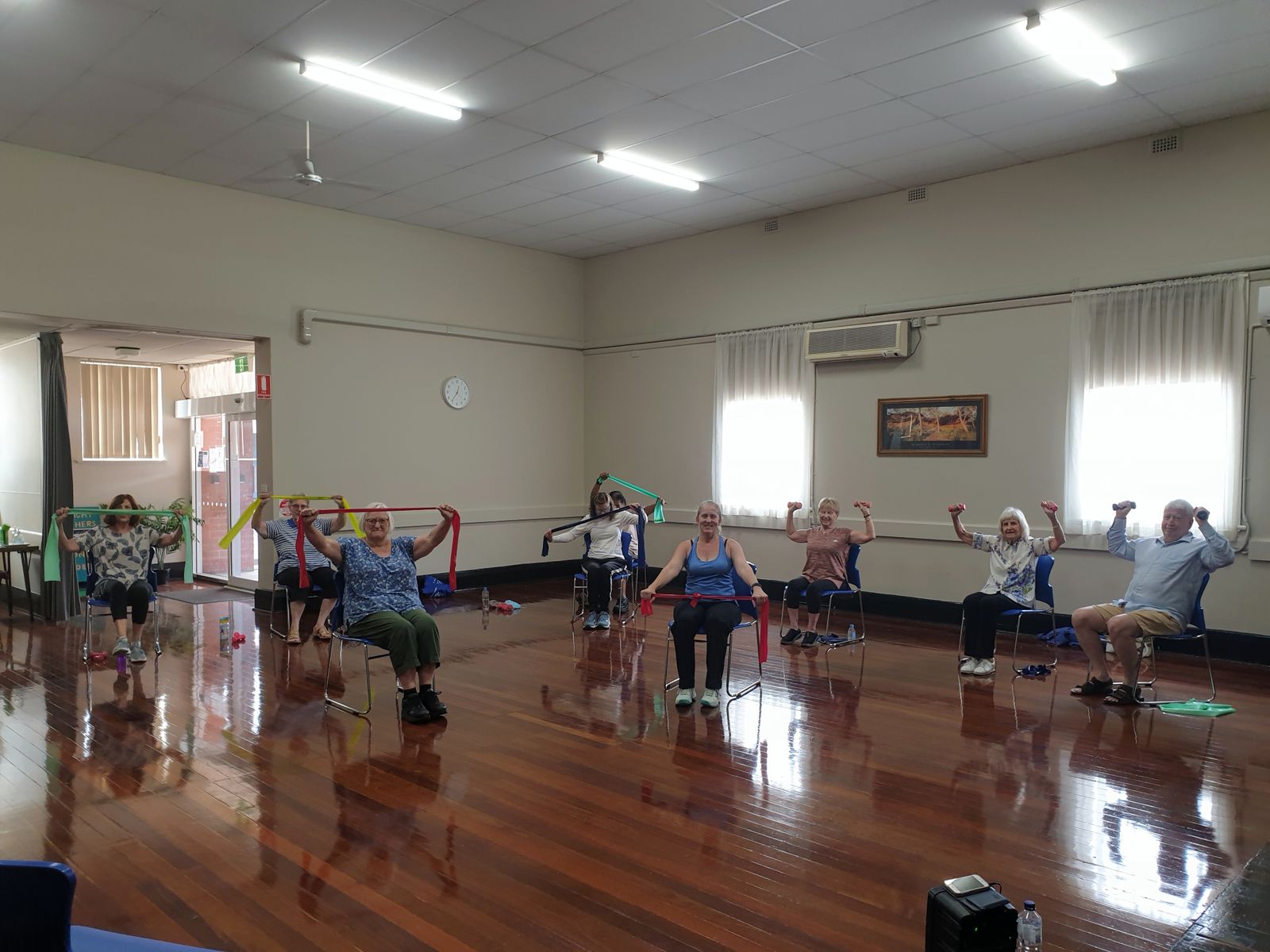
A Zumba sentao class usually moves through four phases: a standing warm-up, dance sections with the chair as a prop, short strength blocks that use the chair for resistance or support, and a cool-down with stretching. The order and the exact moves vary by instructor, so treat the table below as a typical shape, not a fixed script.
| Phase | What you do | What the chair does |
|---|---|---|
| Warm-up | Easy marching, side steps and arm swings to raise heart rate and loosen hips and shoulders | Stays beside you; hold it for balance if you need it |
| Dance blocks | Latin-style rhythms with simple steps, turns around the chair, and sit-and-stand choreography | A dance partner: you circle it, sit on it, rise from it |
| Strength blocks | Triceps dips, squats, lunges, incline push-ups and crunches in short sets | Resistance, a lever or a support, depending on the move |
| Cool-down | Slow steps, hamstring, hip and chest stretches, steady breathing | Seat for seated stretches and a balance aid for standing ones |
Because you switch between dance and strength work, your heart rate rises and dips through the class, a bit like interval training. If you have never done a Zumba class at all, read our guide to Zumba for beginners first, because the basic rule carries over: learn the beat before you worry about perfect transitions.
Which chair moves does Zumba Sentao use, and how do you do them well?
The core Zumba sentao moves are seated triceps dips, chair squats, lunges with a hand on the chair, incline push-ups with hands on the seat, and seated or leaning crunches. Good form comes from slow lowering, a braced core and a stable chair, so aim for control rather than speed, even when the music is fast.
| Move | How the chair is used | Form cue | Easier or harder |
|---|---|---|---|
| Triceps dip | Hands on the seat edge, hips just off the seat | Elbows point straight back, shoulders away from ears, lower only until elbows are near 90 degrees | Easier: bend knees more. Harder: straighten legs |
| Chair squat | Sit back toward the seat, touch lightly, stand | Knees track over toes, chest tall, push through the whole foot | Easier: sit fully, then rise. Harder: hover just above the seat |
| Lunge | Hand rests on the chair back for balance | Front knee stays over the ankle, torso upright, back knee lowers straight down | Easier: shorter step. Harder: let go of the chair |
| Incline push-up | Hands on the seat, body in one line | Ribs tucked, hips level, chest toward the seat edge | Easier: stand closer. Harder: step feet back |
| Crunch or knee tuck | Lean back from the seat, knees draw in | Lower back stays long, exhale as knees come in | Easier: smaller range. Harder: slower tempo |
One safety rule sits above all the cues: never stand on the chair, and never use a chair that moves when you load it. All the work happens beside, in front of or over the chair, not on top of it.
Is Zumba Sentao a good core workout?
Yes, Zumba sentao is a good core workout because you repeatedly lower into the chair and stand back up under control, and your abdominal and lower-back muscles have to stabilise every transition. It will not give you a flat stomach on its own, since fat loss depends on your overall diet and activity.
Be honest with yourself about the limits. You cannot “spot reduce” belly fat through any single class, and no format guarantees a visible result in a set number of weeks. What Sentao can reasonably give you is better trunk control, stronger legs and arms for everyday tasks, and a workout that is enjoyable enough to repeat. For the wider picture of how dance fitness changes body shape, see does Zumba tone your body and Zumba toning.
Myth: a chair workout is an easy workout
A chair does not make a workout easy. Zumba sentao can be as demanding as standing Zumba because the chair adds resistance and instability, and you control the difficulty yourself by changing the leverage, the range and the speed of each move.
A slow-tempo dip, a hovering squat or a push-up with feet stepped back is hard work. The opposite is also true: you do not need to be fit to start, because the chair doubles as support and you can begin with the easiest version of every move.
How does Zumba Sentao compare with standard Zumba and Zumba Gold?
Zumba sentao adds chair-based strength and core work to dance cardio, standard Zumba is continuous standing dance cardio, and Zumba Gold is a lower-intensity standing format for older or less active adults. Pick sentao for strength and stability, standard Zumba for maximum cardio, and Gold for a gentler pace.
| Feature | Zumba Sentao | Standard Zumba | Zumba Gold |
|---|---|---|---|
| Main goal | Core, strength and dance fitness | Dance cardio | Gentle, accessible dance fitness |
| Equipment | One sturdy chair | None | None |
| Body position | Seated, standing and transitions | Standing | Standing, slower pace |
| Strength element | High, through dips, squats and push-ups | Low | Low |
| Balance support | Built in, you can hold the chair | None | Lower impact, easier choreography |
| Best for | Core focus, adjustable intensity | Fitter people wanting cardio | Older adults and returning exercisers |
If you want to know how these formats are built, our posts on Zumba Gold and Zumba Step show two other Zumba formats, and the Zumba circuit post shows how strength and dance combine.
Who is Zumba Sentao best for, and who should check first?
Zumba sentao suits people who want a core-focused dance workout, adjustable intensity or a stability point during movements. People with significant balance problems, joint pain, heart conditions, high blood pressure, recent surgery or pregnancy should speak to a doctor before starting, because chair work still loads the knees, wrists, shoulders and spine.
Good candidates include:
- Desk workers who sit all day and want a class that trains getting up and down with control.
- Beginners who feel nervous about fast standing choreography and like having something to hold.
- Women who want strength and dance together, and the pace can be adjusted at each stage of life. See Zumba for women for more on that.
Check with a doctor first if you have dizziness or fainting, a history of falls, chest pain on effort, uncontrolled blood pressure, a wrist or shoulder injury (dips and push-ups load both), or advanced knee or hip arthritis. If something hurts sharply during class, stop.
The chair does help with balance concerns, because it gives you a stable point that standing choreography does not. That is a real benefit, not a guarantee of safety, so build up slowly and keep the hardest moves for later weeks.
How do you set up for Zumba Sentao at home?
For zumba sentao at home you need one sturdy chair without wheels, a clear floor about two arm-lengths around it, non-slip footwear, and a wall or heavy furniture behind the chair so it cannot slide. A standard dining chair with a seat roughly 45 cm high works for most adults.
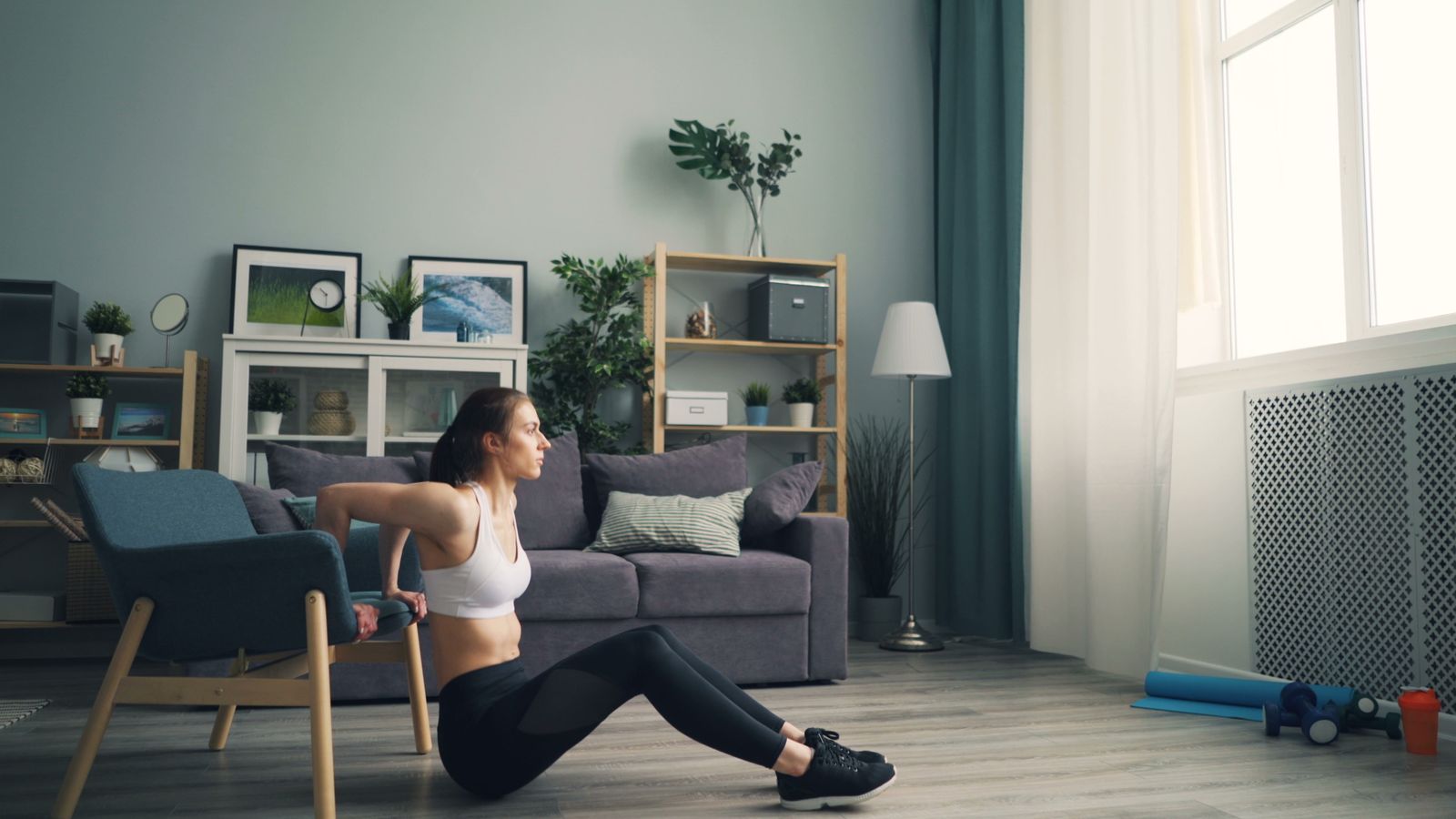
Before you start, run a quick check. Press down hard on the seat edge: if the chair rocks, creaks or slides, choose another. Avoid plastic garden chairs with thin legs, folding chairs that can collapse, office chairs on castors and anything with armrests that block your elbows during dips. Place the chair on a mat or rug only if it stays completely still, since a shifting mat under a chair is a hazard.
Keep your screen at eye level, keep water within reach, and wear shoes with grip, not socks.
What goes wrong in Zumba Sentao, and how do you fix it?
The usual problems in zumba sentao are a sliding chair, sore wrists, shoulders creeping up during dips, knees collapsing inward during squats, and losing the beat during transitions. Each has a simple fix: stabilise the chair, reduce range, lower the shoulders, point the knees over the toes, and simplify the step.
- Chair slides or wobbles: push it against a wall, or swap it for a heavier one. Stop the class if it moves while loaded.
- Wrist pain in dips or push-ups: keep your wrists neutral, spread your fingers, and reduce the depth. If it stays sore, skip the move and march or step instead.
- Shoulders hiking toward ears: you have gone too deep. Lift your chest, draw the shoulder blades down and lower only to about 90 degrees at the elbow.
- Knees dropping inward in squats or lunges: shorten the range, widen your stance slightly and press the knees out in line with the toes.
- Lower back arching during crunches: make the movement smaller and exhale as you draw the knees in.
How often should you do Zumba Sentao, and how do you build up?
Most beginners do well with two or three sessions a week, with a rest day between, building from about 20 to 30 minutes toward a full-length class over four to six weeks. Progress by adding range, slowing the tempo or removing the chair support, not by adding more days too quickly.
A simple build: in weeks 1 and 2, do two sessions with a hand on the chair and short ranges. In weeks 3 and 4, add a third session if you recover well and deepen the squats. In weeks 5 and 6, try hover squats, feet-back push-ups and lunges without support, adding one change at a time.
These are common-sense guidelines, not a prescription. Soreness the next day is normal in the thighs and arms. Sharp joint pain is not. If you are combining Sentao with strength training or yoga, give your body a lighter day in between, and see Zumba and yoga for how the two can fit together.
Zumba Sentao FAQs
What does Sentao mean in Zumba?
Sentao comes from the Spanish word for “seated”. In Zumba, it names a class format where a chair is used as a dance partner and a strength tool, not just as a seat. You alternate between dancing, sitting and standing, with moves like dips, squats and incline push-ups added in.
Is Zumba Sentao a good workout for beginners?
Yes, it can be, because the chair lets you adjust difficulty within the same class. Beginners can hold the chair for support and keep every move small, while fitter people can remove support or slow the tempo. People with health conditions or balance problems should check with a doctor first.
Does Zumba Sentao burn belly fat?
Zumba sentao burns energy and builds core strength, but it cannot target fat from one area. Belly fat reduces as overall body fat falls, which depends on regular exercise, enough sleep and your total food intake. Expect better trunk control sooner than visible changes.
What kind of chair do I need for Zumba Sentao?
Use a sturdy chair without wheels, with a seat about 45 cm high and no armrests that block your elbows. Press down on the edge before you start. If it rocks or slides, pick a different one or place it against a wall.
Is Zumba Sentao safe for people with balance concerns?
It can help, because the chair gives a stable point that standing choreography does not. However, anyone with a history of falls, dizziness or significant balance problems should talk to a doctor first, start with support on every move and avoid fast turns until steady.
Take the next step
Fitstrot’s lead Zumba trainer, Yash Pathak, is ZIN Licensed, ACE Certified and Strong Nation Certified. Browse our online Zumba classes and ask whether a chair-based session suits your level, or read our overview of online Zumba classes to see how a live class works. If you have joint or balance concerns, our 1-on-1 personal training lets a coach adapt every move to you.


