
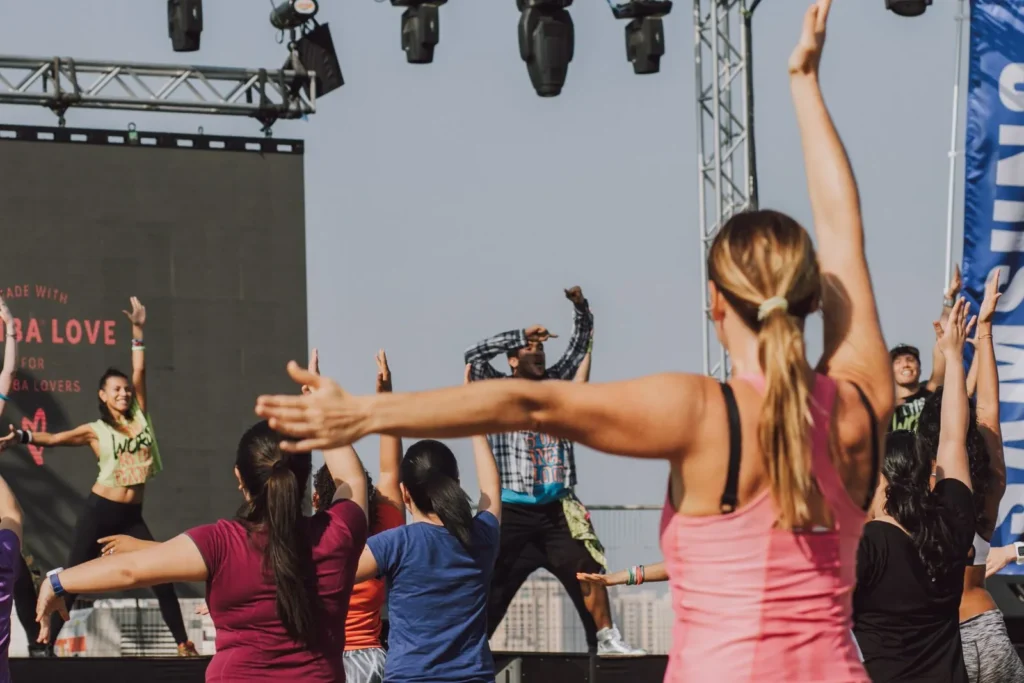
So, what is zumba dance? It is a solo, group-class dance style that takes Latin American rhythms such as salsa, merengue, cumbia and reggaeton and turns them into simple, repeatable steps set to music with a strong beat. You follow an instructor, you do not need a partner or any dance training, and the pace is built so that an hour passes before you notice it.
This guide stays on the dance itself: the rhythms, the steps, the music and how it differs from the Latin styles it borrows from. For the wider program, our overview of what is Zumba covers the brand and class format, and what is Zumba Fitness explains the fitness-program side.
What Is Zumba Dance, in Plain Terms?
Zumba dance is a fitness-focused dance style built on Latin rhythms. Each song uses one rhythm, such as salsa or cumbia, and the instructor teaches a short loop of steps that you repeat to the beat. It is danced solo, needs no prior experience, and a class usually runs about 45 to 60 minutes.
Think of it as dance vocabulary that has been borrowed and simplified. A salsa dancer spends months on timing, partner connection and styling. A Zumba instructor keeps the rhythm, trims the technique and adds fitness touches such as deeper knee bends, bigger arm reaches and quick changes of direction, so your heart rate climbs while you are busy enjoying the music.
It also helps to separate two ideas. The dance is the movement and music. The Zumba program is the licensed class format, training and branding wrapped around that movement. This page is about the first one.
The Rhythms Behind the Dance
Most classes are built around salsa, merengue, cumbia and reggaeton, and bachata is a very common fifth. Each rhythm has its own feel, and that feel decides how your feet, knees and hips behave. The table below is the quickest way to tell them apart.
| Rhythm | Roots | How it feels | Signature movement |
|---|---|---|---|
| Salsa | Caribbean | Lively, with a quick-quick-slow pulse | Three steps over four beats, with a pause on the fourth |
| Merengue | Dominican Republic | Fast, even, two-beat march | Marching in place with soft knees and a natural hip swing |
| Cumbia | Colombia | Smooth and rolling | Small shuffling steps with a gentle sway and circling arms |
| Reggaeton | Latin urban pop | Heavy repeating beat, roughly 90 to 100 beats per minute | Grounded knee bounce with hip rolls and chest isolations |
| Bachata | Dominican Republic | Relaxed four-count with a lilt | Three side steps and a hip-lift tap on the fourth count |
Instructors in India often fold in Bollywood, Punjabi pop, hip hop or Afro-style tracks too. The beat is what matters: if a song has a steady pulse you can clap to, it can be turned into a Zumba routine.
How Do the Basic Steps Work?
Zumba dance steps are short loops of four or eight counts that repeat until your body learns them. You start with just the feet, add arms once the footwork feels automatic, and then increase the size of the movement. Most beginners feel less lost after three or four classes.
Here are six steps you will meet again and again, with the cue that makes each one click.
| Step | What your feet do | Cue to remember | Common slip |
|---|---|---|---|
| Merengue march | Step left, step right, in place, one step per beat | Bend the knees and let the hips follow | Forcing the hips instead of bending the knees |
| Salsa basic | Left forward, weight back to right, left together, pause; then mirror it going backward | Say “step, back, together, hold” | Skipping the pause and rushing |
| Cumbia shuffle | Small, low steps forward and back with a slight sway | Keep the feet close to the floor | Taking big, bouncy steps |
| Grapevine | Step side, cross behind, step side, tap together | Four counts, then switch sides | Crossing in front and tangling up |
| Reggaeton bounce | Feet slightly wider than shoulders, bounce down on each beat | Sink into the thighs, chest tall | Locking the knees and leaning back |
| Bachata side-tap | Side, together, side, tap with a small hip lift | Count “1, 2, 3, tap” | Stepping on the fourth count |
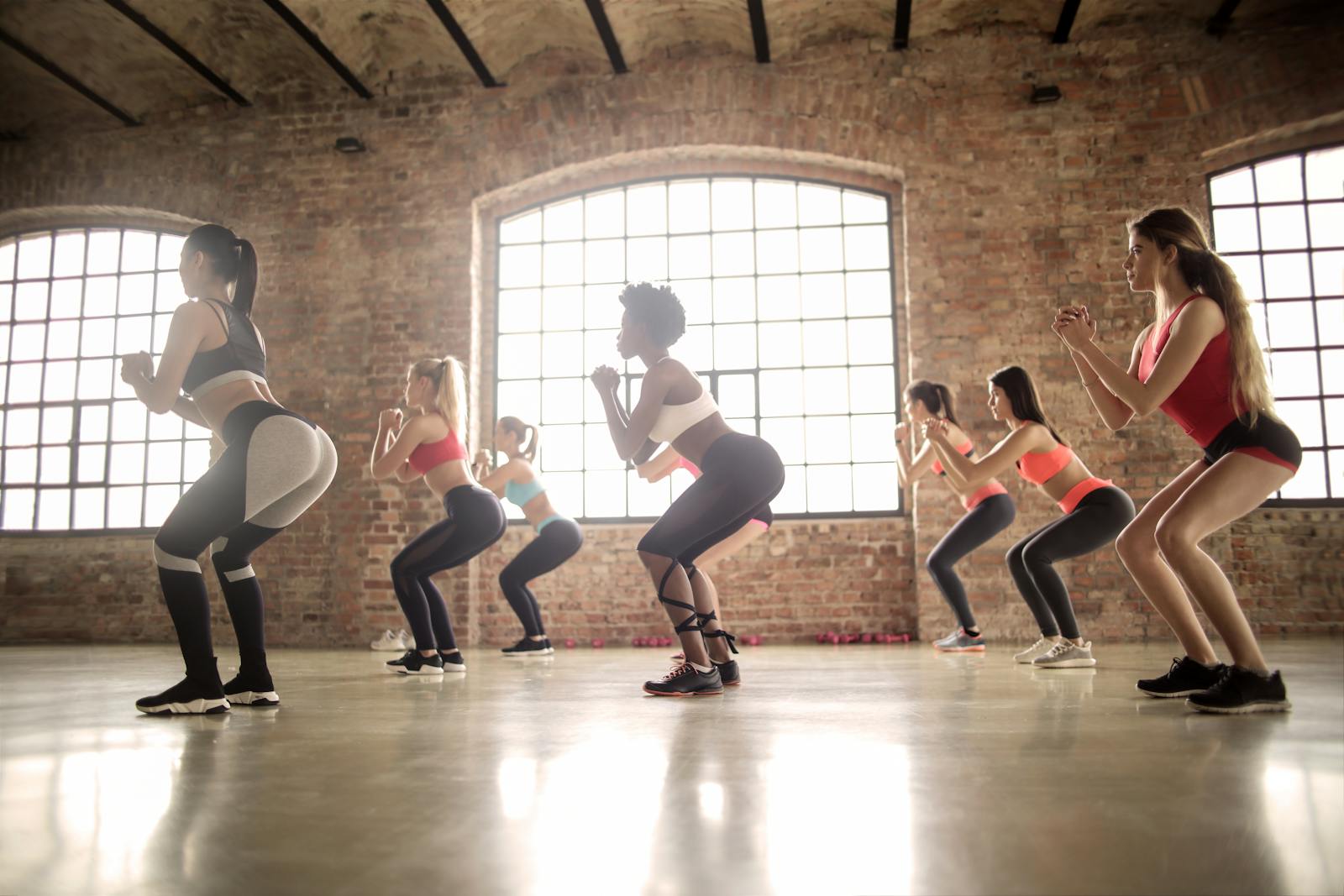
A simple order for learning any step is feet first, then weight, then arms, then style. Feet first means getting the pattern right at half the size. Weight means feeling which foot carries you on each count. Arms and style come last because they are what fall apart first when your brain is busy. When you want each move broken down with more detail, our Zumba dance moves guide goes step by step.
Myth: “I Have Two Left Feet, So Zumba Dance Is Not for Me”
This is the most common reason people never try a class, and it is the one that holds up least. Zumba choreography is designed around repetition, so the first time through a loop you are allowed to be wrong. Nobody grades your technique, and instructors expect new faces to be a beat behind for the first few songs.
There is a practical reason it works. The instructor repeats each pattern several times, cues the next change with a word or hand signal, and keeps the base step simple enough to scale up or down. If a sequence is too fast, you do it at half the size and half the speed. That is normal in the room and not seen as a mistake.
One honest caveat: the dance will not make you a performer or a social partner dancer on its own. That is a separate skill and we cover it below.
How Is Zumba Dance Different From a Salsa or Merengue Class?
Zumba dance removes the partner, simplifies the technique and adds fitness moves. A salsa or merengue class builds lead-follow connection and style over months, while a Zumba class has you copy short step loops solo for about an hour. The rhythm is shared; the goal shifts from dancing well to moving well.
| Feature | Traditional Latin dance class | Zumba dance class |
|---|---|---|
| Partner | Usually danced as a pair, with a lead and a follow | Solo, everyone faces the instructor |
| Main goal | Technique, style and social dancing | Sustained movement and enjoyment |
| Step difficulty | Builds toward turns, patterns and complex footwork | Short loops that repeat and can be scaled down |
| Music in one session | Often one style at a time | A mix of rhythms, changing song to song |
| Intensity | Varies, often moderate | Alternates fast and slow songs, like intervals |
| Fitness additions | Rarely added | Squats, lunges, arm reaches and direction changes |
So is Zumba a dance or a sport? Neither label fits cleanly. It is best described as dance fitness: a fitness program that uses dance movement as its engine. If you want that comparison in more depth, read our take on Zumba vs dance and the broader idea of what is dance fitness.
Why Does the Music Drive Everything?
In Zumba dance the song decides the step. A fast merengue track calls for quick marching, a slow cumbia calls for rolling shuffles, and reggaeton asks for a heavy bounce. Because songs alternate between fast and slow, a class works like interval training without you tracking a single timer.
A typical session moves through a gentler warm-up, a run of high-energy songs broken up by slower ones, and a stretching or cool-down track at the end. Songs are usually three to four minutes long, which is just enough time to learn a loop, repeat it, and then add a twist before the track changes. If you can clap on the beat, you can follow the structure.
For a minute-by-minute picture of how a full session runs, our guide to what a Zumba class is like walks through it.
Troubleshooting: What to Do When You Lose the Beat
Everyone loses the beat, including regulars. The fix is almost always to simplify, not to push harder. Use the quick list below.
- Feet are tangled: drop the arms completely and march the beat until the steps settle, then add arms back one at a time.
- The song is too fast: halve the step size, or do every other count. Staying with the rhythm matters more than copying every move.
- Left and right feel flipped: follow the movement itself, not the side. In many videos the instructor faces you, so your left may match their right.
- You cannot hear the pulse: clap or tap your thigh on the beat, count “1, 2, 3, 4” under your breath, and rejoin on the next change.
- Knees complain: keep one foot on the floor, reduce the depth of squats and bounces, and wear cushioned sports shoes rather than going barefoot on tiles.
- Out of breath: march in place, sip water, and rejoin on the next slow song.
Stop and rest if you feel sharp pain, dizziness or chest discomfort. If you have a heart condition, joint problems, high blood pressure or are pregnant, check with your doctor before starting dance fitness.
Who Is Zumba Dance Good For?
It suits people who find a gym routine boring but will happily move to music: total beginners, desk workers who want something lively after a long day, adults returning to exercise, and people who simply like a group atmosphere. Men are welcome too, and the steps do not require flexibility.
It is less suited to anyone who wants strict technical training, competition-level choreography or partner work. For that, a dedicated Latin dance school is the better route.
On results, be realistic. A moderately energetic session often burns about 300 to 500 kcal in an hour for many adults, though body weight, effort and how big you dance all change that figure. Zumba dance supports a fitness routine, but it does not guarantee fat loss on its own. Food and consistency carry just as much weight. To see how the dance turns into a full routine, read our Zumba dance workout guide.
Learning Zumba Dance Online With Fitstrot
You do not need a studio, only a clear patch of floor about two metres by two, a phone, tablet or laptop where you can see the screen, and cushioned sports shoes. Fitstrot’s Zumba classes are held online, so you can start from your living room.
The classes are led by Yash Pathak, Fitstrot’s lead Zumba trainer, who is ZIN Licensed, ACE Certified and Strong Nation Certified. If the ZIN label is new to you, our explainer on what is ZIN Zumba covers what it means. You can also read how online Zumba classes work before you decide.
Zumba Dance FAQs
What rhythms make up Zumba dance?
Most classes are built on salsa, merengue, cumbia and reggaeton, and many instructors add bachata, hip hop, samba or Bollywood tracks. Each song uses one rhythm at a time, so a session mixes fast and slow styles. The exact playlist changes from instructor to instructor.
Do you need a partner for Zumba dance?
No. Zumba dance is a solo activity done in a group, with everyone facing the instructor. That is the biggest difference from salsa, bachata and merengue, which are normally danced as pairs with a lead and a follow.
Is Zumba a real dance style or just exercise?
It is best described as dance fitness. The movement and music come from real Latin dance traditions, but the steps are simplified and combined with fitness moves so the purpose is exercise rather than performance. Many people enjoy it as both.
Can Zumba dance help me learn to dance socially?
Partly. It builds rhythm, coordination and comfort moving to Latin music, which are all useful. It does not teach partner connection, lead and follow, or turn technique, so you would need a dedicated social dance class for those skills.
How long does it take to learn Zumba dance steps?
Most beginners feel noticeably less lost after three or four classes, and comfortable with the common steps within a month or so of regular practice. Pace varies with how often you attend and how much rhythm training you have had before.
Try it for yourself: pick one beginner session on Fitstrot’s online Zumba classes page and spend the first twenty minutes just marching the beat.


