
People keep asking what is dance fitness, and whether it counts as real exercise or just a lively evening. Short answer: it is a workout where choreographed or freestyle dance movement, set to music, is used to raise your heart rate, work your legs and core, and build stamina. You do not need rhythm or any dance background. This guide explains the formats, what a class feels like minute by minute, realistic calorie ranges, and who should start slowly.
What is dance fitness, in plain terms?
Dance fitness is group exercise built on dance-style movement and music, designed around fitness goals instead of performance. A typical class runs 45 to 60 minutes, keeps you moving at moderate to hard effort for most of it, and repeats simple steps so beginners can follow within a song or two.
The key word is fitness. In a traditional dance class, the teacher is building technique: clean turns, precise footwork, a routine you can perform. In a dance fitness class, the instructor is managing your heart rate, your joints and your energy across the hour. If you miss a step, nobody stops. You keep moving, and the movement is the point.
That is also why it suits people who find gyms boring. The music sets the pace, the instructor does the counting, and the hour passes faster than 45 minutes on a treadmill usually does. Our guide on dance as functional fitness goes deeper into what this kind of movement builds beyond calories.
How is dance fitness different from a regular dance class?
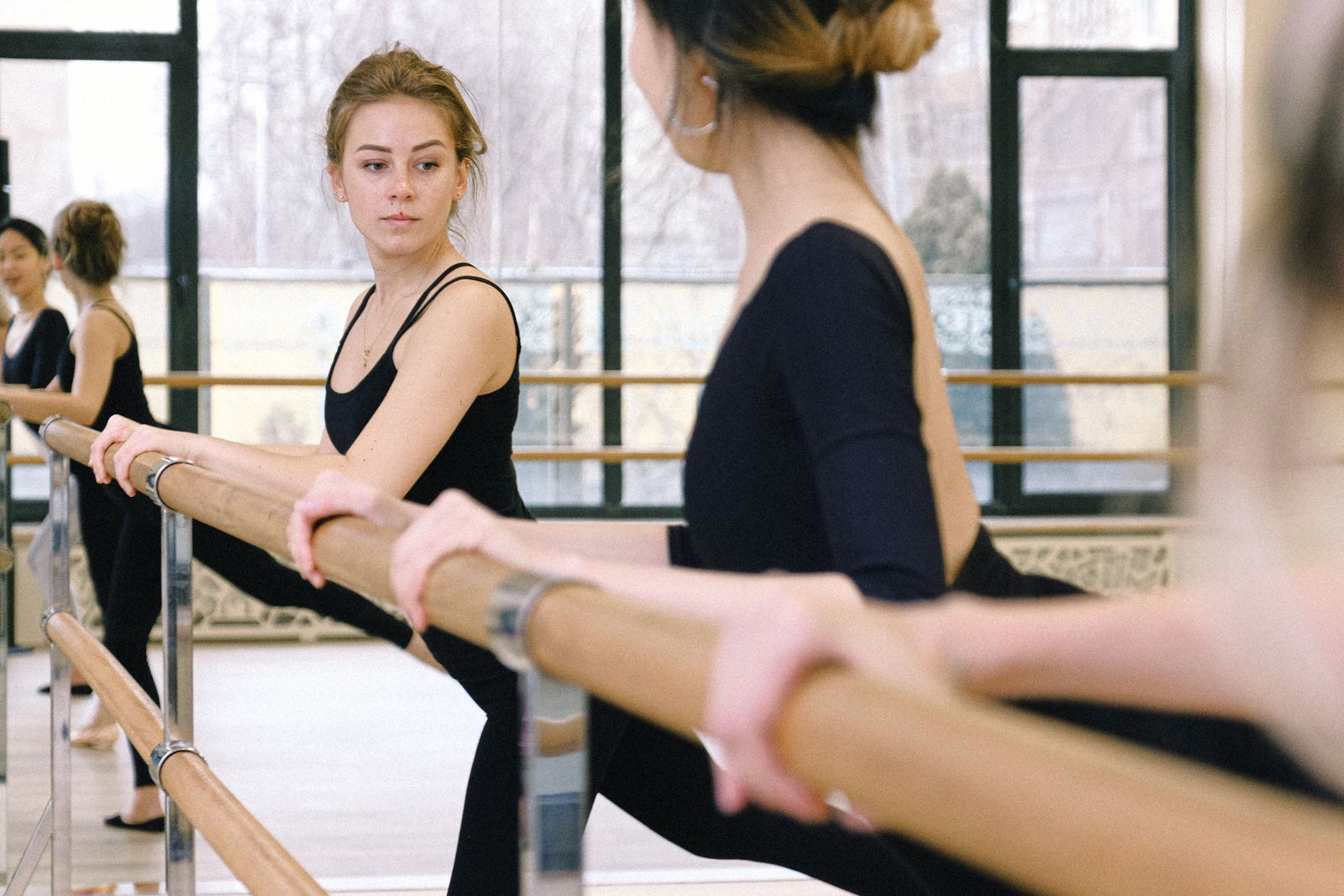
A regular dance class teaches a style, such as kathak, hip-hop or salsa, with the goal of getting the technique right. Dance fitness borrows moves from those styles but simplifies them, repeats them and sets the effort level for exercise. Expect less correction on form of the hands and more cueing on breathing, intensity and safe landings.
Three practical differences show up quickly:
- Goal: a dance class ends with a routine you can perform; a fitness class ends with you sweaty and a little breathless.
- Pace: fitness classes seldom pause to drill a single move for ten minutes.
- Entry level: instructors build moves from easy to harder within the same class, so first-timers and regulars share the room.
Neither is better. If you want to perform, take a dance class. If you want to get fitter while enjoying yourself, dance fitness is the more direct route.
Which dance fitness formats exist? A comparison
There are about half a dozen common formats, and they differ mainly in music, intensity and what they train most. Zumba, Bollywood dance fitness and hip-hop cardio are the most widely taught in India, while barre-style and low-impact classes are gentler options.
| Format | Music and style | Typical intensity | Trains most | Best for |
|---|---|---|---|---|
| Zumba | Latin and world rhythms, reggaeton, bhangra, pop | Moderate to high | Cardio, legs, coordination | Beginners who want a party feel |
| Bollywood dance fitness | Hindi film songs, hand and hip expression | Moderate | Cardio, rhythm, shoulders and arms | Anyone who loves film music |
| Hip-hop cardio | Hip-hop beats, bounces, grooves | Moderate to high | Cardio, agility, core | Teens and young adults |
| Bhangra or garba fitness | Folk rhythms, fast arm patterns | Moderate to high | Stamina, shoulders, calves | High-energy social exercisers |
| Barre-style dance | Ballet-inspired, slower music | Low to moderate | Posture, thighs, core endurance | Toning and low-impact lovers |
| Beat-synced interval classes (such as Strong Nation) | Music-timed strength and cardio intervals, little choreography | High | Strength endurance, conditioning | People who already exercise |
If you are choosing between a Latin-style class and a general one, Zumba vs dance fitness compares them directly, and what is Zumba covers that one format in detail.
What does a dance fitness class actually feel like?
A 60-minute class usually has five parts: a 10-minute warm-up, 25 to 30 minutes of cardio songs, a 10-minute toning block, a slow cool-down and a short stretch. Effort rises gradually, peaks in the middle, then drops. Most beginners feel pleasantly tired, not wrecked, by the final song.
| Minutes | Segment | What you do | Effort (1 to 10) |
|---|---|---|---|
| 0 to 10 | Warm-up | Marching, side steps, shoulder rolls, easy hip movement | 3 to 4 |
| 10 to 25 | Cardio block 1 | Three or four songs, simple step patterns repeated in 8-count sets | 5 to 7 |
| 25 to 40 | Cardio block 2 | Faster songs, larger arm movement, short high-energy bursts | 6 to 8 |
| 40 to 50 | Toning | Squats, lunges, glute and core moves set to the beat | 5 to 7 |
| 50 to 55 | Cool-down | Slow song, swaying, breathing down gradually | 2 to 3 |
| 55 to 60 | Stretch | Calves, quads, hips, chest and shoulders | 1 to 2 |
Notice the rhythm of effort. Songs alternate between faster and slower tempos, so your heart rate rises and dips through the class rather than staying flat. That wave pattern is why many people find it easier to keep going than steady-state cardio at the same average effort.
In practice, you will watch the instructor, copy a move, get it half right, and then get it fully right when it repeats. Repetition is deliberate. If you are lost, march in place and pick the move back up at the next count of eight.
How many calories does dance fitness burn?
For a typical adult weighing 60 to 70 kg, a 60-minute dance fitness class burns roughly 300 to 600 kcal, depending on intensity. Gentle low-impact classes sit near the bottom of that range, and high-energy cardio classes near the top. Heavier people burn more, lighter people less, and fitness trackers often overestimate.
| Class intensity | Feels like | Approx. kcal per hour (60 to 70 kg adult) |
|---|---|---|
| Light, low-impact | You can chat between songs, mild sweat | About 250 to 350 |
| Moderate | Breathing deeper, steady sweat, short sentences only | About 350 to 500 |
| Vigorous | Breathless on fast songs, drenched by the end | About 500 to 650 |
Treat these as ballpark figures, not promises. Two people in the same class can differ by 100 kcal or more. A class also does not cancel a day of eating freely: an hour at 400 kcal is about one large plate of poha with a sweet chai. For fat loss, pair classes with food changes, ideally with guidance from an online nutritionist who can set portions in rotis, dal and rice that fit your routine.
Dance fitness myths worth dropping
“I have two left feet.” Classes are designed for exactly this. Moves are broken into small pieces and repeated until they stick. Nobody expects accuracy in week one.
“It is not a real workout.” Heart rate in a good class sits in a moderate to vigorous zone for most of the hour. If you can not talk during the fast songs, you are working hard.
“It will tone my stomach.” Dance fitness burns energy overall and strengthens your core, but no class removes fat from one body part. Fat loss is whole-body.
“I am too old or too big.” Low-impact versions exist for almost every move, and the instructor can show a smaller option. You do not need to jump to get the benefit.
The full list is in dance workout myths debunked.
Who is dance fitness good for?
It suits beginners, desk workers, busy parents and anyone who gets bored easily with gym machines. Classes scale from gentle to hard, so a 22-year-old and a 55-year-old can share a room. It is also social, and that helps with consistency, which matters more than any single workout.
- Beginners and returners: start with low-impact or beginner-labelled classes, twice a week.
- Desk workers: two or three sessions a week undo a lot of sitting stiffness in hips, calves and upper back.
- People trying to lose weight: classes help raise weekly activity, but food does most of the fat loss work. A weight loss trainer can combine both.
- People who dislike lifting: dance fitness is cardio-first, so add two short strength sessions a week if you can, such as bodyweight squats and push-ups.
Go slower and check with a doctor first if you are pregnant, have knee, hip or back problems, have heart or blood pressure issues, feel dizzy or get chest pain with effort, or are recovering from surgery or injury. Stop immediately if you feel chest pain, severe breathlessness or sharp joint pain.
Troubleshooting: common problems in your first month
Most first-month problems are about pace and footwear, not ability. Sore shins, tired calves, lost choreography and boredom are normal and fixable within two to three weeks. The fixes below cover the most common ones.
- Shin or knee soreness: wear cushioned shoes with grip, not barefoot or flat canvas. Dance on a firm, non-slip floor and cut the jumps.
- Cannot follow the steps: stand where you can see the instructor’s feet, not their hands. March in place when lost.
- Too breathless: halve the arm movement and keep your feet small. Effort comes from range, so reducing the range lowers effort.
- Feeling self-conscious: join online first. In an online class you can keep your camera off and learn privately.
- Plateau after a month: add a class, raise the intensity, or add two strength sessions weekly.
Is online dance fitness as good as a studio class?
Yes, for most people. Live online classes give you the same music, structure and instructor cues as a studio, with no travel time. You need about two metres of clear floor, supportive shoes and a screen you can see from every angle. The main trade-off is less hands-on correction.
Online also removes the common Indian barriers: long commutes, fixed studio batches and the discomfort of dancing in front of strangers. Fitstrot’s online Zumba classes are taught by Yash Pathak, our lead Zumba trainer, who is ZIN Licensed, ACE Certified and Strong Nation Certified. If you want to see how the Zumba licence system works, read what is ZIN Zumba.
How to start: a simple four-week plan
Begin with two classes a week and add a third in week three. Keep one rest day between sessions in the first fortnight, walk on the off days, and focus on finishing the class comfortably rather than copying every step. Progress comes from showing up, not from perfection.
- Week 1: two beginner classes, 40 to 45 minutes. Marching is fine.
- Week 2: two classes, full 60 minutes if comfortable. Add a 10-minute walk on another day.
- Week 3: three classes. Try one faster or different format.
- Week 4: three classes plus one short strength session of squats, lunges and planks.
Drink water before and after, eat a light snack such as a banana or a handful of roasted chana about an hour before class, and avoid a heavy meal in the 90 minutes before you dance. If your weekly schedule is packed, 1-on-1 personal training can help you fit classes around your other workouts. For a wider look at the options, see our online Zumba classes guide.
Frequently asked questions about dance fitness
What is dance fitness in simple words?
It is exercise done as dance. You follow an instructor through simple, repeated dance-style moves set to music for 45 to 60 minutes. The aim is a cardio workout, with some strength and flexibility, not learning to perform a routine.
Do I need dance experience to try dance fitness?
No. Classes are built for people with zero dance background. Steps are taught in short pieces and repeated, so you can pick them up within a few songs. If you get lost, march in place and rejoin on the next count.
How often should I do dance fitness?
Two to three classes a week is a sensible target for most beginners. Once a week keeps you moving but rarely changes fitness much on its own. Add walking, strength work and sensible eating to see results over 8 to 12 weeks.
Can dance fitness help with weight loss?
It can help, because a class burns roughly 300 to 600 kcal an hour and makes exercise enjoyable enough to repeat. Weight loss still depends mostly on your overall food intake, and no class can promise a fixed number of kilograms.
Is dance fitness safe for everyone?
Most healthy adults can start with low-impact options. If you are pregnant, have joint, heart or blood pressure problems, or are recovering from injury, speak to your doctor first and tell your instructor before class begins.
Next step: try one live session this week and see how it feels. Book a trial through Fitstrot’s online Zumba classes and tell the trainer your fitness level before you begin.


