
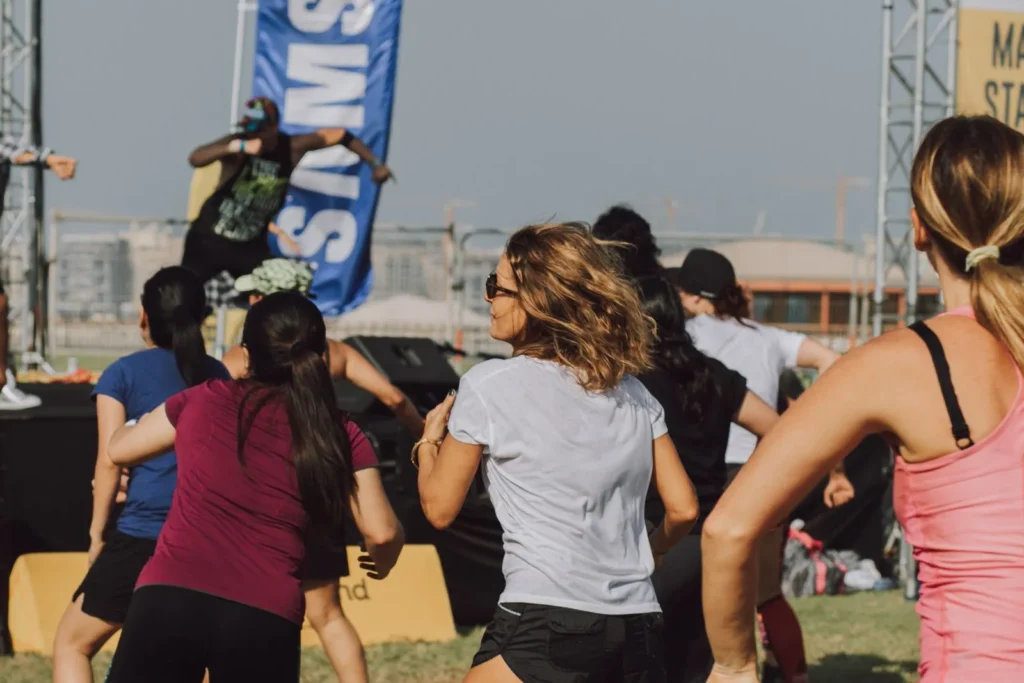
If you are asking what is zumba fitness, here is the plain answer: it is the official name of the licensed dance-fitness programme built by Colombian dancer and choreographer Beto Pérez, which pairs Latin and international rhythms with interval-style cardio. It is also a family of class formats, an instructor-licensing system and a library of online sessions. This guide separates the brand from the single class you may have seen, so you can pick the right version and start with confidence.
What Is Zumba Fitness, Exactly?
Zumba Fitness is a licensed dance-fitness programme that turns salsa, merengue, cumbia, reggaeton and other international rhythms into a 45 to 60 minute cardio workout. Beyond the standard class, it includes formats such as Gold, Toning and Step, plus instructors who complete official training before they teach under the Zumba name.
So “Zumba” in everyday speech usually means the standard class, while “Zumba Fitness” is the fuller name for everything under the brand. In practice you will hear both used for the same thing, and that is fine. The distinction only matters when you are choosing a class, because a Gold session and a Step session feel very different even though both carry the same logo.
If you want the origin story and the basic idea of a class first, our guide to what is Zumba covers that ground, and the short explainer on what is a Zumba class walks through the room, the music and the instructor.
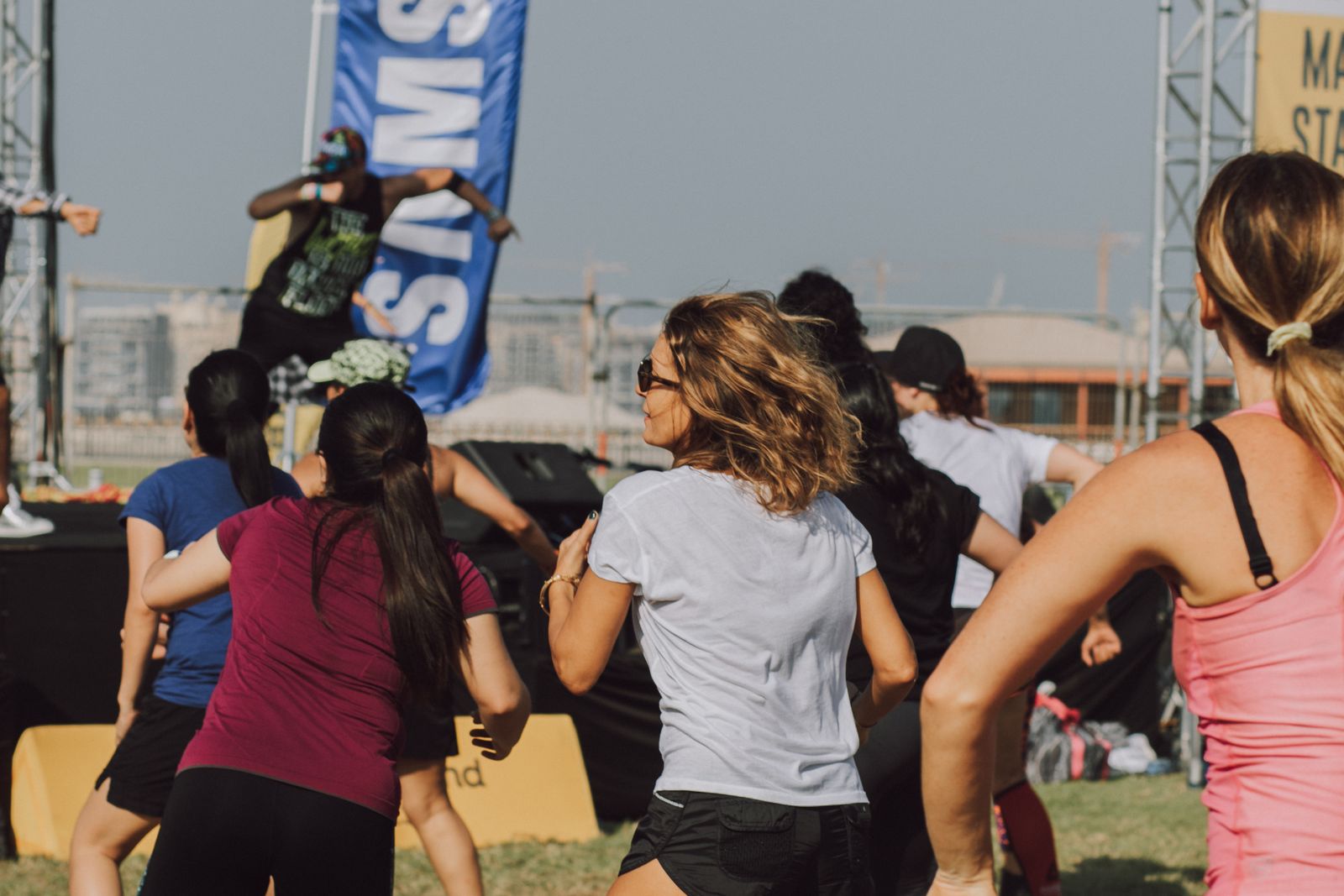
Zumba Fitness Formats Compared
The quickest way to understand the brand is to see the formats side by side. Availability differs between studios and online platforms, so confirm the format before you book.
| Format | Best suited to | Impact level | Equipment |
|---|---|---|---|
| Standard Zumba | Beginners and regular exercisers who want full-body cardio | Moderate to high | None |
| Zumba Gold | Older adults, absolute beginners, people returning after a long break | Low to moderate | None (a chair for support is fine) |
| Zumba Toning | People who want extra arm, shoulder and core work | Moderate | Light toning sticks or very light dumbbells |
| Zumba Step | People who want stronger legs and glutes | Moderate to high | Step platform |
| Aqua Zumba | Those who prefer joint-friendly, low-impact work | Low | Swimming pool |
| Strong by Zumba (earlier called Strong Nation) | People who like hard interval conditioning timed to music | High | None (bodyweight) |
There are also versions built for children and toddlers, which follow the same idea at a gentler pace. If you are new, standard or Gold is the sensible starting point. Move up only after you can finish a full session without gasping or skipping steps.
Three Myths About Zumba Fitness
Myth 1: You must already know how to dance. You do not. Classes are built on a handful of repeating basics, a march-style merengue step, a side-to-side salsa step, a bouncing cumbia pattern, so you learn by following the instructor for a few songs. Looking slightly lost in week one is normal. Repetition across sessions is what makes the steps stick.
Myth 2: It is only for young women. Gold exists specifically for older adults and first-timers, and men are as welcome in standard classes as women. What matters is picking the format that matches your fitness level, not your age or gender.
Myth 3: It is a complete workout for every goal. Zumba is excellent for cardiovascular fitness, coordination and enjoyment. It builds some leg and core endurance, but it is not a substitute for progressive strength training if your goal is visible muscle or heavy lifting. And it cannot spot-reduce belly fat: fat loss comes from a sustained calorie deficit across your whole week, with exercise as one part of that. An hour of Zumba burns roughly 300 to 500 kcal for many adults, less for lighter people or easier versions, so results depend heavily on what you eat and how consistently you turn up.
How a Zumba Fitness Class Is Built, Step by Step
Almost every licensed class follows the same three-part shape, whether you attend in a studio or join online.
- Warm-up (about 5 to 10 minutes). Easy marching, side steps and arm swings at a slow tempo. The goal is to raise your heart rate gradually and loosen hips, knees and shoulders.
- Main block (about 30 to 40 minutes). A run of songs that alternate between faster and slower rhythms. The fast tracks push your heart rate up, and the slower ones let it drop a little before the next surge. This on-off pattern is why people describe Zumba as interval training disguised as a party.
- Cool-down and stretch (about 5 to 10 minutes). Slower steps, then holds for calves, hamstrings, hips, chest and shoulders. Skipping this part is the most common reason people feel stiff the next morning.
The core rhythms you will meet include salsa, merengue, cumbia and reggaeton, and some Indian instructors also blend in Bollywood or bhangra-flavoured tracks for variety. You do not need to memorise names. If you want a closer look at how this style differs from other studio workouts, see what is dance fitness.
How Is Zumba Fitness Different From Other Dance Fitness?
Zumba Fitness differs from generic dance fitness mainly through licensing and structure: instructors are trained and licensed through the brand, classes follow a warm-up, interval-style main block and cool-down, and formats are labelled by intensity. Generic dance workouts can be enjoyable, but they have no shared standard.
| Feature | Official Zumba Fitness class | Generic dance fitness video |
|---|---|---|
| Instructor background | Completes brand training and holds a licence | Anyone can post one, with no common standard |
| Class structure | Warm-up, interval-style songs, cool-down | Varies widely, sometimes no warm-up |
| Format labels | Gold, Toning, Step and others signal intensity | Usually a single unlabelled style |
| Routine refresh | Instructor network supplies new routines and music | Depends on the creator |
| Live correction | Possible in live online or studio classes | Not possible with pre-recorded clips |
None of this makes generic videos useless. They are a fine free way to test whether you enjoy moving to music. But if you want a progression you can trust, a licensed instructor is the safer bet. Our explainer on what is ZIN Zumba covers what that licence means in more detail.
What the Credentials Actually Mean
Fitstrot’s lead Zumba trainer is Yash Pathak, who is ZIN Licensed, ACE Certified and Strong Nation Certified. In plain terms: ZIN means he is licensed through the Zumba Instructor Network, ACE is a general fitness-instructor certification that covers safe exercise instruction, and Strong Nation is the earlier name of the Strong by Zumba format. When you pick any online instructor, ask what they hold. A licence and a general fitness certification together are a good sign, because the first covers the choreography and format while the second covers safety and programming.
Who Zumba Fitness Suits, and Who Should Check First
Busy professionals. A 30 to 40 minute home session fits around a commute, which matters in cities where travel eats two hours of the day. Homemakers and work-from-home people. Classes give a fixed appointment with yourself and a bit of social energy. Beginners who dislike gyms. Following music tends to feel less like “exercise” and more like play, which helps with consistency. Older adults. Start with Gold or the gentlest version of a standard class.
Speak to your doctor first if you have a heart condition, high blood pressure that is not controlled, joint or back problems, are pregnant, or are recovering from surgery. Stop immediately and seek help for chest pain, unusual breathlessness, dizziness or sharp joint pain. For a deeper look at what the workout can do for your body and mood, read the benefits of Zumba.
When Zumba Fitness Feels Too Hard, or Too Easy
Too hard. You cannot speak a short sentence, your knees ache, or you lose the beat every song. Drop the jumps, keep one foot on the floor, shrink your steps and sip water between tracks. Switch to Gold if it still feels like too much after two weeks.
Too easy. You finish with a steady heartbeat and no sweat. Make arm movements bigger, add small squats into side steps, or try Step or Toning. If you want something harder than any dance class, a structured plan with a trainer, such as 1-on-1 personal training, adds progressive strength work that Zumba alone does not cover.
Sore afterwards. Mild calf and thigh soreness for a day or two is normal early on. Sharp pain, swelling or soreness that gets worse over several days is not, so rest and get it checked.
Hot and humid. In most Indian cities, carry a towel, drink about 250 to 500 ml of water during a session, and consider nimbu pani with a pinch of salt afterwards.
How Do I Start Zumba Fitness at Home?
Start with two or three sessions in week one, each 30 to 40 minutes, using a beginner or standard class. Wear cushioned trainers, clear about two metres by two metres of floor, eat a small snack such as a banana 30 to 45 minutes before, and fill the other days with walking or gentle stretching.
Here is a simple first-week template. It is a personal plan, not a Fitstrot batch timetable.
| Day | Activity | Duration | Effort (1 to 10) |
|---|---|---|---|
| Monday | Beginner or Gold-style Zumba class | 30 min | 5 |
| Tuesday | Easy walk | 20 min | 3 |
| Wednesday | Standard Zumba class | 30 to 40 min | 6 |
| Thursday | Gentle yoga or stretching | 20 min | 2 |
| Friday | Standard Zumba class | 40 min | 6 |
| Saturday | Optional repeat of your favourite class | 30 min | 5 |
| Sunday | Full rest | – | 1 |
Footwear and clothing matter more than people expect. Our guide on what to wear for Zumba covers shoes, fabrics and what to skip. If you prefer pairing dance with calmer movement, online yoga classes are a natural companion on rest days.
After class, a balanced Indian meal works well: dal or curd with rice or roti, plus vegetables, or a bowl of sprouts with fruit. If weight loss is your main goal, remember that exercise alone rarely does it. A trainer-led plan such as an online weight loss trainer can tie your food and movement together, with no guaranteed outcome but a realistic, sustainable pace.
Choosing a Genuine Online Zumba Fitness Class
Four checks save a lot of disappointment. First, ask whether the instructor is licensed and what other qualifications they hold. Second, confirm the format: Gold, standard, Toning and so on. Third, check whether the class is live, so you get corrections, or recorded. Fourth, look for a clear warm-up and cool-down, because a class without both is a red flag.
Our guide to online Zumba classes is a good companion read, and the online Zumba classes service page shows how Fitstrot runs them.
Frequently Asked Questions About Zumba Fitness
Is Zumba Fitness the same as Zumba?
Mostly yes. “Zumba” is the everyday shorthand, while “Zumba Fitness” is the fuller brand name that also covers formats like Gold, Toning and Step, instructor licensing and online content. If someone invites you to a Zumba class, they almost always mean the standard format.
Which Zumba Fitness format is best for a complete beginner?
Standard Zumba at a beginner level or Zumba Gold is the best starting point. Gold lowers the impact and slows the pace, which suits first-timers, older adults and anyone returning after a break. Try either for two to three weeks before moving to Step or Strong by Zumba.
How many calories does a Zumba Fitness class burn?
For many adults, an hour-long class burns roughly 300 to 500 kcal, but the real number depends on your body weight, how hard you move and which format you choose. Treat it as an estimate. Weight loss still depends on your overall food intake across the week.
Do I need dance experience or special shoes for Zumba Fitness online?
You need no dance experience. For shoes, pick cushioned sports or training shoes with a sole that lets your feet pivot easily. Running shoes with heavy grip can twist the knees on smooth floors, so avoid them where possible.
Can I do Zumba Fitness at home in a small flat?
Yes. About two metres by two metres of clear floor is enough for most online classes. Move furniture aside, use a non-slip mat or bare floor you trust, and choose low-impact versions of the steps if you share a floor with neighbours below.
Next Step
Pick one beginner-friendly session this week and book a live class through Fitstrot’s online Zumba classes, so a licensed instructor can correct your form from day one.


