
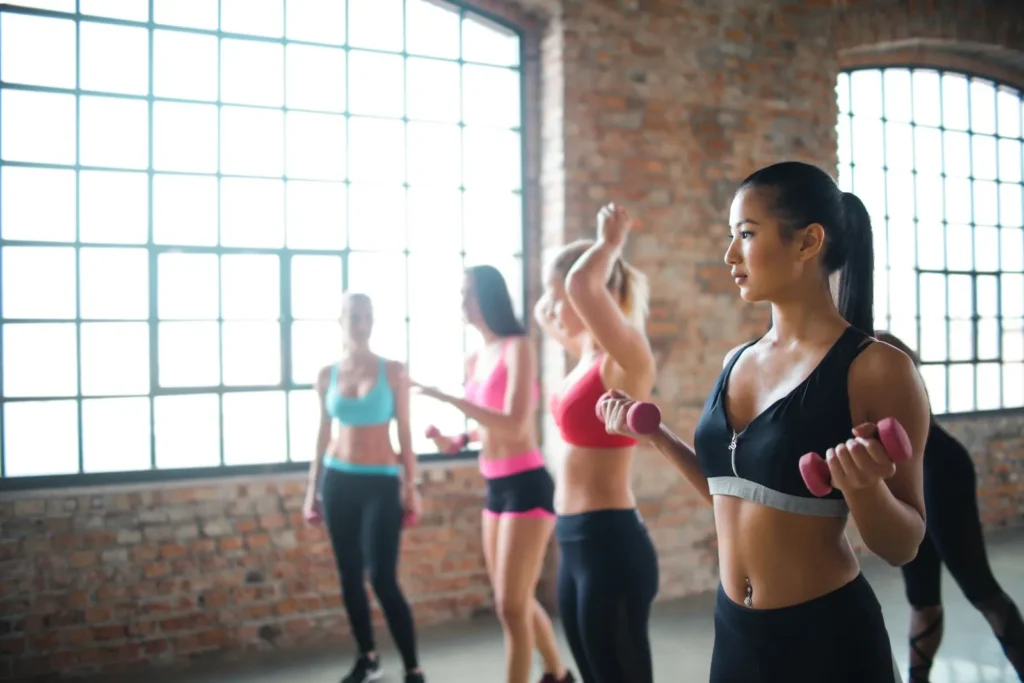
So, what is a zumba class? It is a 45 to 60 minute dance-fitness session in which an instructor leads you through 8 to 10 short, repeated songs, opening with an easy warm-up and closing with stretching. You learn by copying the instructor, you need no dance background, and you control your own effort. This guide walks through a full 60-minute class minute by minute, then covers what to bring, what to do when you get lost, and how an online class differs from a studio one.
What happens in a 60-minute zumba class, minute by minute?
A 60-minute Zumba class usually has about 8 minutes of warm-up, about 40 minutes of main workout spread over 8 to 10 songs of roughly 3 to 5 minutes each, and about 8 to 10 minutes of cool-down and stretching. Effort rises and falls from song to song, which gives you built-in recovery.
Instructors build the hour differently, so treat these timings as a typical pattern. The effort score is a rough 1 to 10 guide, where 10 is your absolute maximum.
| Minutes (about) | Segment | What you actually do | Effort (out of 10) |
|---|---|---|---|
| 0-8 | Warm-up | Marching, side steps, shoulder rolls, easy hip sways | 2-3 |
| 8-16 | First two songs | Simple salsa or merengue patterns, repeated until they settle | 4-5 |
| 16-26 | Build-up songs | Cumbia or Bollywood-style tracks, bigger arm movements, light turns | 5-6 |
| 26-34 | Peak songs | Fast reggaeton or party tracks, jumps and quick directional changes | 7-8 |
| 34-42 | Recovery plus toning | Slower song, lunges, squats, arm and core moves in rhythm | 4-6 |
| 42-50 | Final push | Familiar steps from earlier songs, strung together at higher energy | 6-8 |
| 50-60 | Cool-down | Slow song, calf, thigh, hip, chest and shoulder stretches, deep breaths | 1-2 |
Over a full hour, most people burn about 300 to 600 kcal, depending on body weight and how hard they push.
Minutes 0 to 8: the warm-up
The opening song is deliberately simple. Expect marching in place, side steps, heel taps, shoulder rolls and easy hip movement, all to a mid-tempo track. Nobody is testing your coordination. The aim is to raise your heart rate gradually and loosen your ankles, knees, hips and shoulders.
A useful check is the talk test. During the warm-up you should be able to speak full sentences without effort. If you are gasping, you are going too hard for this stage, so shrink your steps and keep your feet closer to the floor.
Minutes 8 to 50: how the main workout is built
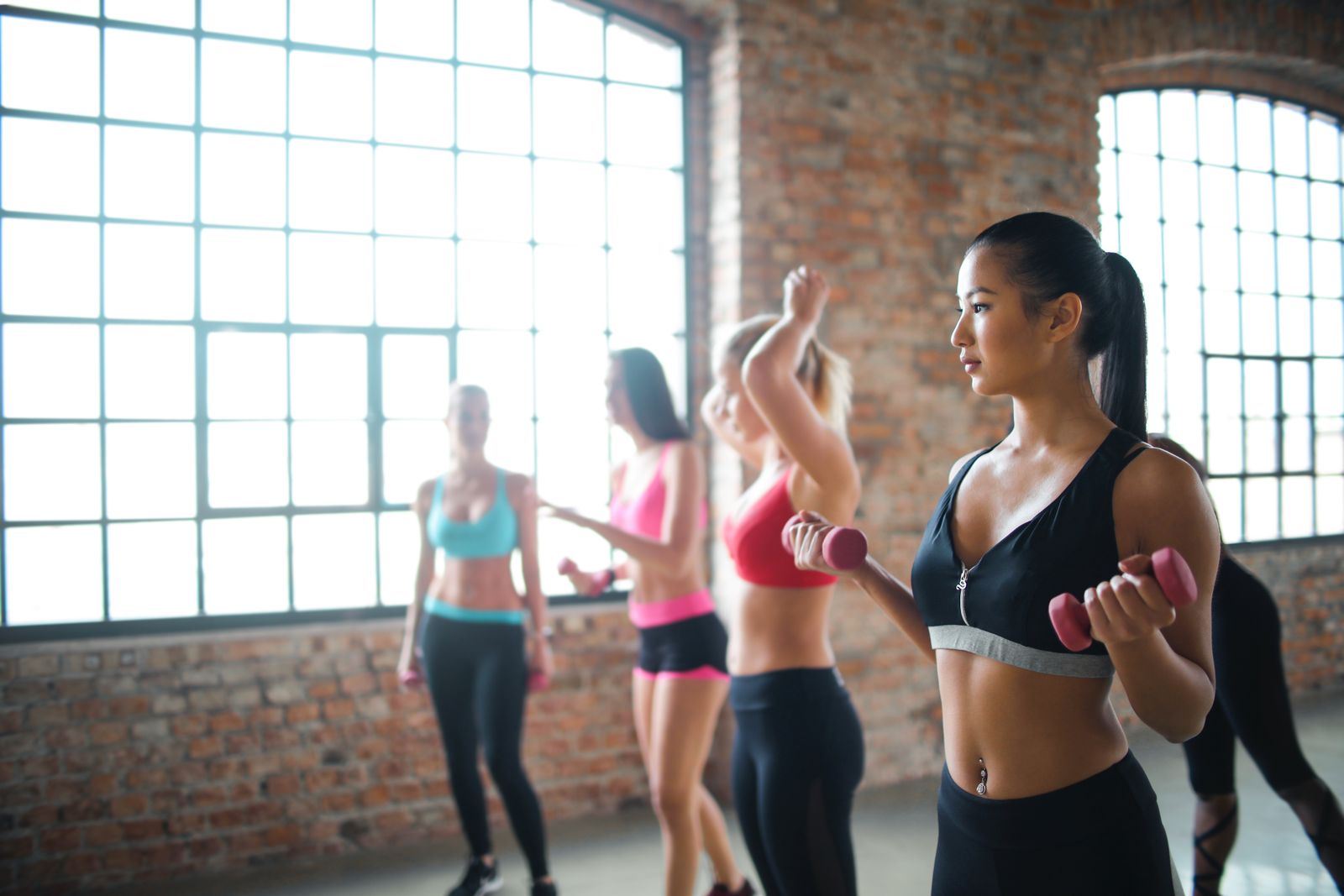
The main workout is a playlist of choreographed songs, each built around a rhythm such as salsa, merengue, cumbia or reggaeton. Many Indian instructors also add Bollywood or bhangra-flavoured tracks. The instructor teaches a short pattern, repeats it several times, then layers on arm movements or a new step. By the second or third repeat, most beginners are moving along comfortably.
Repetition is the secret of the format. You pick up the footwork in the first minute, add the arms in the second, and by the end of the track you are dancing a full routine. For a closer look at the movement style, see our guide to what is Zumba dance goes deeper into the movement style.
Instructors flag the next move a beat early with cue words (“turn”, “hold”, “switch”) and hand signals, so in an online class watch their hands as much as their feet.
Intensity changes constantly. A fast reggaeton song may be followed by a slower cumbia, and a few songs usually include a toning section with squats, lunges and core work set to the beat. This stop-and-go pattern works like interval training, which is why a class feels like play but still raises your heart rate in a meaningful way. Short water breaks of 20 to 30 seconds between songs are normal, so use them.
Minutes 50 to 60: the cool-down you should not skip
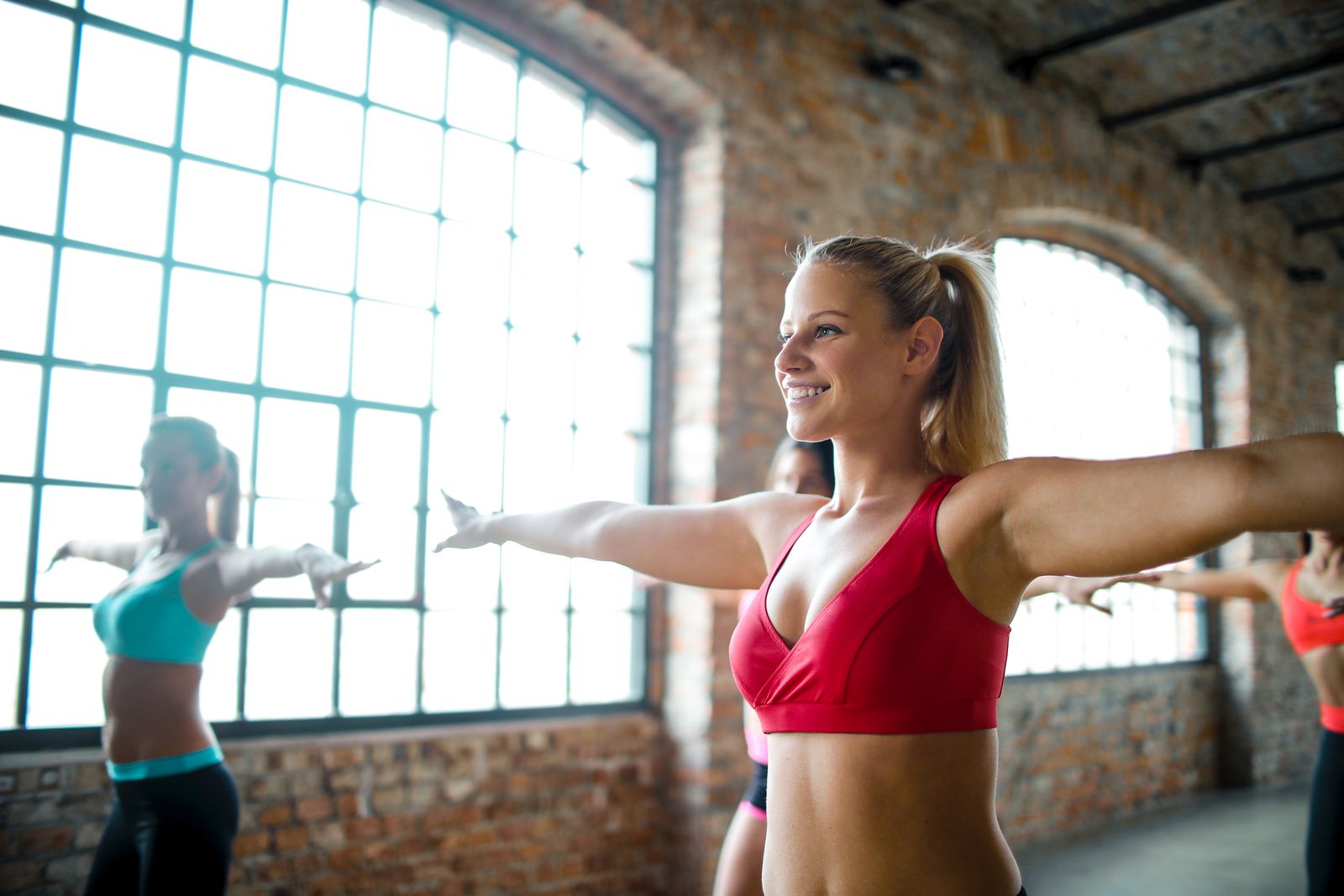
The class closes with a slower song and a stretching block that usually lasts 5 to 10 minutes. Expect calf, hamstring, quad, hip flexor, chest and shoulder stretches, held for around 15 to 30 seconds each, finished with a few slow breaths. This is where your heart rate returns toward normal and where you prevent a good part of the next day’s stiffness.
Walking straight from a peak song to a work call is a common mistake, so take two extra minutes if the class ends abruptly. If your legs feel tight later, a gentle session from our online yoga classes makes a good low-effort follow-up on a rest day.
What should you bring to an online zumba class?
For an online Zumba class you need a water bottle (500 ml to 1 litre), a small towel, supportive sports shoes, and a clear floor space of about 2 m by 2 m. Place your phone, laptop or TV where you can see the instructor from every corner of that space.
None of this costs much. Most people own everything on the list below.
| Item | Why it matters | Practical tip |
|---|---|---|
| Water bottle (500 ml to 1 litre) | You sweat steadily for the full hour | Keep it within one step, so a 20-second break is not wasted fetching it |
| Small towel | Sweat on your hands and face is distracting | Hang it on a chair at the edge of your space |
| Supportive sports shoes | Protects ankles and knees during turns and jumps | Avoid bare feet on tiles and avoid very grippy soles, which can strain knees on pivots |
| Clear 2 m by 2 m space | Lets you step, turn and travel without hitting furniture | Move the centre table aside and check for loose rugs |
| Screen at eye level | Cues arrive on the instructor’s face and hands | Prop a phone on a stack of books, or cast to the TV if you can |
| Fan or open window | You will heat up quickly, especially in an Indian summer | Set the fan before class starts, not mid-song |
| Light pre-class snack | Prevents dizziness without a heavy stomach | A banana or a small handful of roasted chana 45 to 60 minutes before |
Wear breathable, stretchy clothes that let you lift your knees and swing your arms freely. Our guide on what to wear for Zumba covers fabrics, footwear and what to avoid.
On food, a full meal such as dal-chawal or a thali needs 2 to 3 hours to settle, so eat it well before class. If you are unsure what to eat around your sessions for your goal, a plan from an online nutritionist consultation takes the guesswork out.
Do you need dance experience to join a zumba class?
No. Zumba classes are designed for people with no dance training. The instructor teaches each step slowly, repeats it, and builds it up in layers, so you learn inside the class itself. Most first-timers feel lost for the first song or two, then find their rhythm once the steps repeat.
Three myths put people off before they even try.
Myth 1: “I will look silly if I miss a step.” Everyone is watching the instructor, not each other, and at home you choose where in the room you stand.
Myth 2: “I have to match the instructor’s intensity.” You do not. A low-impact version of every move, with smaller steps and no jumps, is a normal choice.
Myth 3: “It is only for young women.” Classes include men, teenagers and people in their 50s and 60s, each at their own effort level.
If you want a gentler start, read our Zumba for beginners guide before your first session.
How an online zumba class differs from a studio class
The structure is the same: warm-up, songs, cool-down. What changes is the setting. You skip the commute and dance in your own space. The trade-off is that you must set up your own floor, screen and ventilation, and keep yourself accountable.
Instructor quality still decides how good the class feels. Fitstrot’s Zumba classes are online and led by Yash Pathak, our lead Zumba trainer, who is ZIN Licensed (our explainer on what is ZIN Zumba covers what that means), ACE Certified and Strong Nation Certified. You can read more about the formats we run on our online Zumba classes page, or go straight to the Zumba class service.
When you compare options, check session length, format and who is teaching, not just the headline price. Our breakdown of Zumba class fees explains what usually changes the cost from one provider to another.
When class goes wrong: quick fixes
Almost every first-timer hits one of these problems. None means Zumba is not for you.
| What is happening | Likely cause | What to do |
|---|---|---|
| You cannot follow the footwork | Steps are new and arrive faster than you can process | Copy only the feet for one song, then add the arms on the next repeat |
| You are out of breath by minute 15 | Starting too big, or skipping the warm-up | Halve your step size, drop the jumps, and use the 20-second water breaks fully |
| Knees or ankles feel sore | Too many twists on a hard floor, or unsuitable shoes | Keep knees soft, pivot on the ball of the foot, and wear cushioned sports shoes |
| You feel dizzy or light-headed | Empty stomach, dehydration or overheating | Slow right down, sip water, sit if you need to, and eat a light snack before the next class |
Stop and rest if you feel chest pain, sharp joint pain, unusual breathlessness or faintness. If you have a heart condition, high blood pressure, a recent injury, joint problems or you are pregnant, check with your doctor before joining any high-energy class, and tell your instructor about it. Do not push through pain to keep up.
Which kind of beginner are you? Choosing your approach
Different starting points need slightly different plans.
- Complete beginners: Use small steps and aim to finish the hour, not to nail every move.
- Desk workers with stiff hips and backs: Spend the warm-up on slow hip circles and shoulder rolls, and keep early classes low-impact.
- People returning after a long break: Start with one class a week, then add a second once the soreness settles.
- Adults over 50: Choose low-impact versions of jumps, keep a chair nearby for balance, and treat the cool-down as essential.
- People with past injuries: Get your doctor’s approval first. A few sessions of 1-on-1 personal training can also help you learn safe movement patterns before joining a group class.
Your first class: a five-step walkthrough
- Before class: Eat a light meal 2 hours ahead, or a banana 45 to 60 minutes ahead. Clear your space, set your screen at eye level and keep water and a towel close.
- During the warm-up: Move small and loose. Use the first song to understand how the instructor cues, not to prove anything.
- During the main workout: Follow the feet first, arms second. Rest at any time for a few beats and rejoin on the next count.
- After the class: Do the full stretching block, drink water, and eat a balanced meal with some protein, such as dal, paneer, curd or eggs, within an hour or two.
If you want to understand the program behind the class, our guide on what is Zumba covers its history and the formats beyond the standard class.
Frequently asked questions about a zumba class
How long is a typical Zumba class?
Most Zumba classes run 45 to 60 minutes, including a warm-up of about 5 to 10 minutes and a cool-down of a similar length. Shorter 30-minute formats also exist.
Is a Zumba class too hard for a complete beginner?
No. The steps are taught in layers and repeated, and you can always do a smaller, low-impact version of any move. Feeling out of breath in the first few classes is common.
What if I cannot follow the steps during a Zumba class?
Keep moving in time with the music, even if your steps are different from the instructor’s. Copy the feet first and add the arms on the next repeat. Every song repeats its pattern several times, so you get chances to catch up.
Do I need a partner or special equipment for a Zumba class?
No. A standard Zumba class is solo and needs no equipment. You need comfortable clothes, supportive sports shoes, a water bottle, a towel and about 2 m by 2 m of clear floor space.
Can I join an online Zumba class from a small room at home?
Yes, as long as you have a clear patch of about 2 m by 2 m and a screen you can see from every point. In a tighter room, take smaller steps, skip travelling moves and replace jumps with low-impact versions.
The quickest way to learn what a class feels like is to join one. Explore Fitstrot’s online Zumba classes, pick your first session, and keep water, a towel and a clear 2 m by 2 m patch of floor handy.


