

Yoni mudra is a seated hand gesture practised with the eyes closed. In the common class version, the hands form a closed, womb-like shape in front of the lower belly. In a face version, the fingers rest lightly around the eyes, ears and nose. It is an attention practice, not a workout or a treatment. This guide shows how to do yoni mudra in both forms, where to keep pressure off your eyes, ears and neck, how long to sit, and what the practice can honestly offer.
What is yoni mudra and what does the name mean?
Yoni mudra is a hatha yoga gesture done while sitting still with closed eyes. “Yoni” is Sanskrit for womb or source, and “mudra” means seal or gesture, so the name roughly means “seal of the source”. Sessions usually run 3 to 10 minutes, and the aim is steadier attention rather than any physical result.
You will also see it called Jyoti mudra, “gesture of light”, because some people notice dim patterns of light behind closed eyes. Some lineages treat yoni mudra and Shanmukhi mudra, the “six gates” seal, as the same practice, while others keep them apart, so two classes can teach it quite differently.
The gesture belongs to hatha yoga, where mudras are a way to turn attention inward. It is a stillness practice with no stretching or strength work, so it sits at the end of a session.
How do you do yoni mudra step by step?
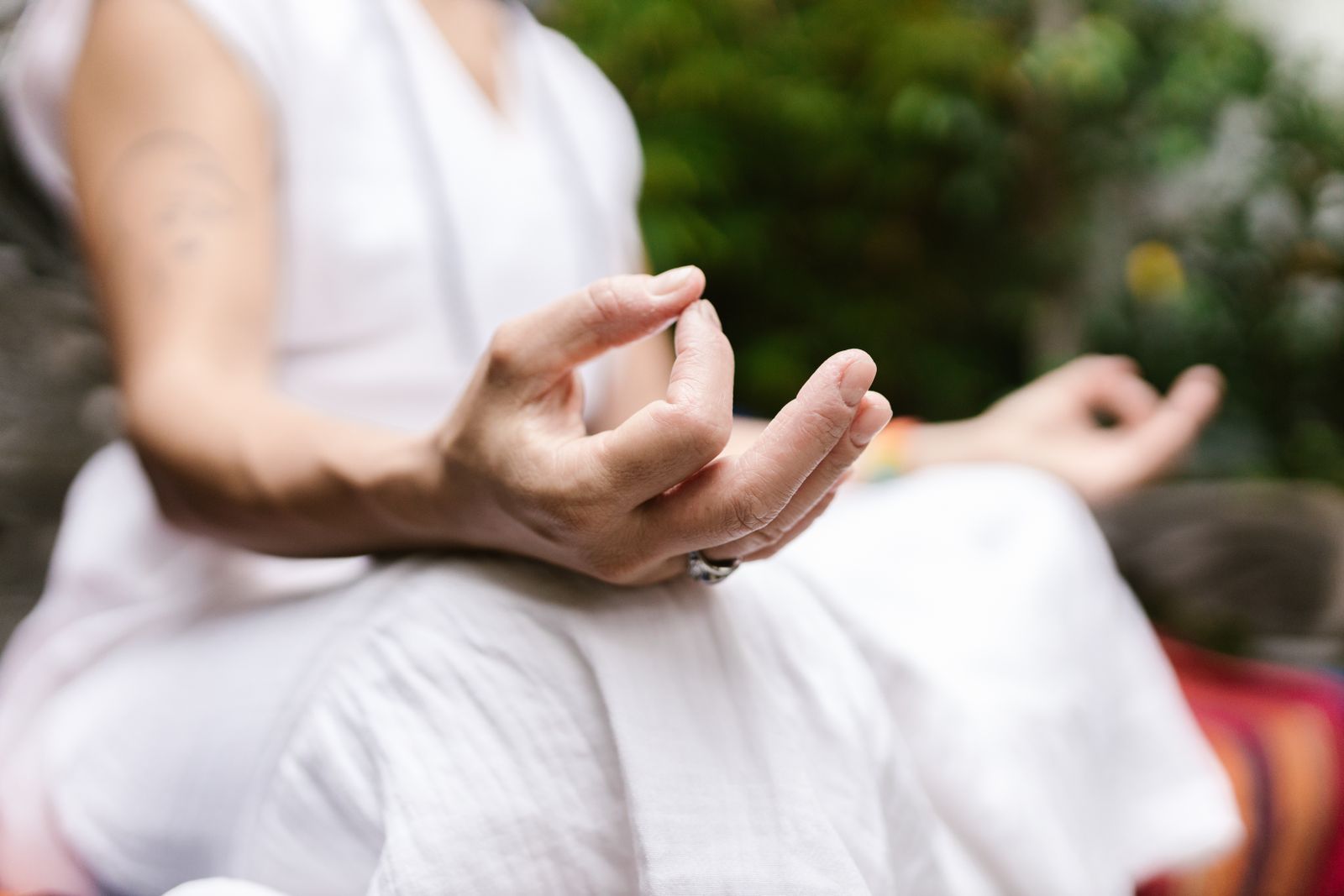
To do the basic hand-seal version, sit upright for 3 to 5 minutes with your eyes closed. Interlace your middle, ring and little fingers, press the index fingers together, point the thumbs up, and rest the hands at your navel. Breathe slowly through the nose, about 6 to 10 breaths a minute, with the shoulders relaxed.
- Choose a stable seat. Sukhasana (easy pose) on a folded blanket works for most people, and a chair with both feet flat is just as good.
- Settle first. Rest your hands on your knees and take five ordinary breaths before you form the seal.
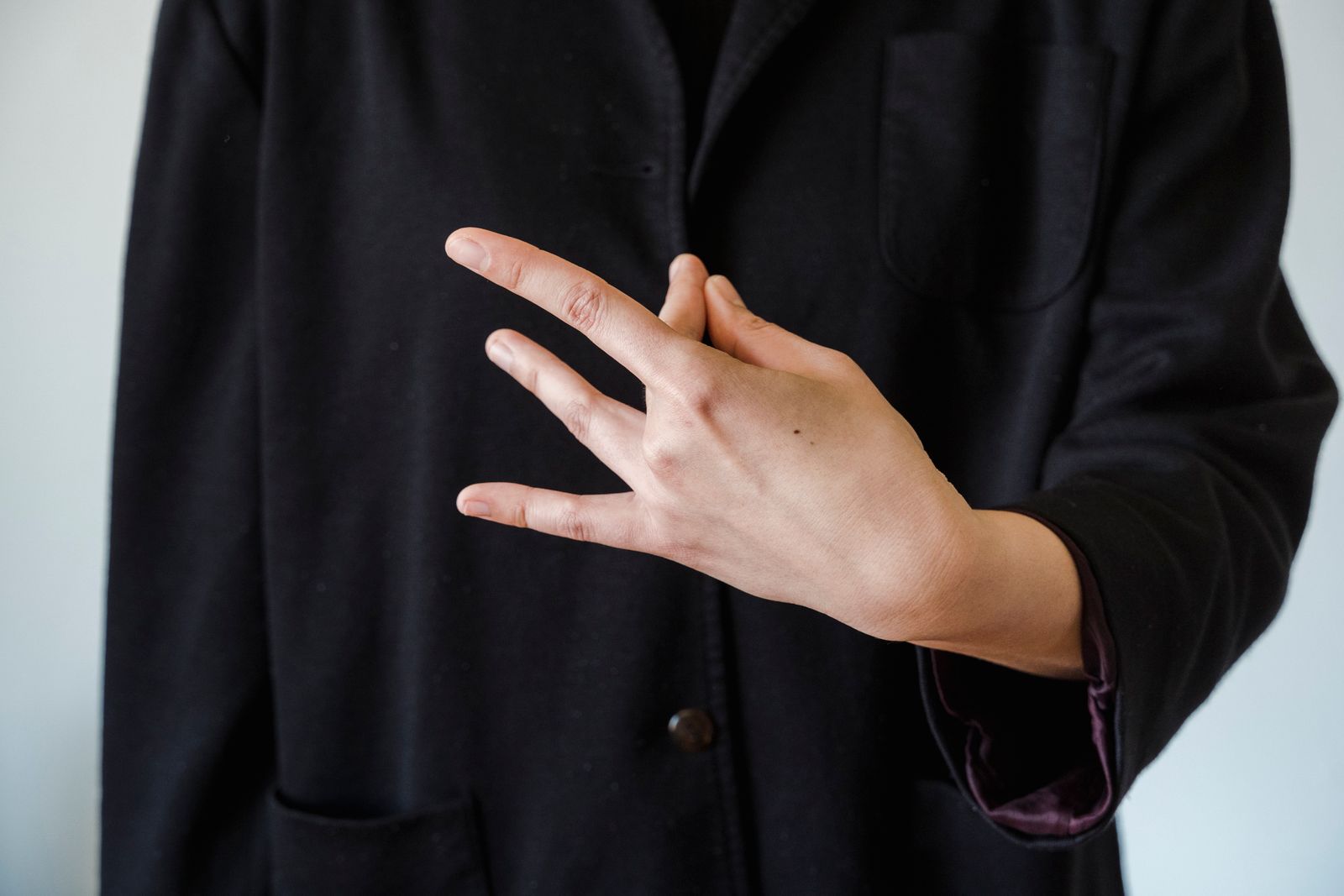
- Form the seal. Bring the hands together at the navel. Fold the middle, ring and little fingers of each hand inward and interlace them loosely. Touch the index fingertips together, pointing forward or down.
- Place the thumbs. Point both thumbs up and let the tips touch, leaving a small diamond-shaped gap between thumbs and index fingers.
- Relax the grip. Hold it as firmly as a small bird, not a handlebar.
- Breathe and watch. Breathe in and out through the nose. Rest attention on the breath or on the even darkness behind closed eyelids. When the mind wanders, bring it back gently.
- Come out slowly. Release the hands, rub the palms together, then open your eyes.
Which version of yoni mudra should you start with?
Start with the hand-seal version at the navel, which involves no pressure on the face at all. Use it for the first 2 to 3 weeks. Move to a light-touch face version only if you are comfortable sitting 8 to 10 minutes and have no eye, ear or neck problems. The firm-pressure version is best skipped.
| Version | Hand position | Pressure on face | Who it suits |
|---|---|---|---|
| Hand-seal version (often called Jyoti mudra) | Fingers interlaced, index fingers touching, thumbs up, hands resting at the navel | None | Everyone starting out, including office-chair practice |
| Light-touch face version (often called Shanmukhi mudra) | Thumbs on the ear flaps, index fingers on the brow bone, middle fingers beside the nose, ring and little fingers near the lips | Fingers rest, never push | People who are steady in the hand-seal version and have no eye, ear or neck concerns |
| Firm-pressure version taught in some lineages | Fingertips press the closed eyelids, ears and nostrils | Strong | Not recommended in a home setting. Skip any pressure on the eyes |
For the light-touch face version, keep the chin level and hold for 30 to 60 seconds, then lower the hands and breathe normally. Two or three short rounds are enough.
Where should you avoid pressure in yoni mudra?
Avoid pressing on your eyeballs, pushing into the ear canal, or squeezing the sides of the neck and throat. Keep every touch light enough that you could hold it for two minutes without discomfort. If you feel pain, dizziness or blurred vision at any point, lower your hands and stop for that day.
| Body area | Safer approach | Avoid | Stop if you notice |
|---|---|---|---|
| Eyes | Keep eyelids soft; rest fingers on the brow bone and cheekbone | Pressing the eyeballs, rubbing, pushing the fingertips inward | Eye pain, blurred vision, watering, flashes that persist after you open your eyes |
| Ears | Rest the thumbs on the outer ear flap only | Pushing into the ear canal or pressing hard to block all sound | Ear pain, dizziness, ringing that lingers |
| Neck and throat | Chin level, crown of the head lifted, elbows supported | Craning forward, tipping the head back, pinching the sides of the neck or the throat | Neck ache, tingling in the arms or hands, light-headedness |
| Nose and breath | Fingers beside the nostrils, breath flowing freely | Pinching the nostrils shut or holding the breath | Breathlessness or rising anxiety |
Pressing on closed eyelids can create flickers of light that come from the pressure itself. They are not a sign of progress. To see the “inner light”, simply watch the darkness behind closed lids without touching your face.
Myth check: what yoni mudra can and cannot do
- Myth: it treats fertility, hormonal or period problems. Reality: those claims come from symbolism around the word “womb”, not from any proof that a hand gesture changes hormones. If you have a fertility or cycle concern, see a doctor.
- Myth: pressing harder works better. Reality: more pressure only raises the chance of irritation. Stillness and slow breathing do the work.
- Myth: seeing lights or colours means you are advancing. Reality: it is a common, harmless-looking side effect of sitting in the dark behind closed lids, and it says nothing about how well you are practising.
- Myth: it is only for women. Reality: the name is symbolic. Anyone can practise the hand-seal version.
What it can reasonably offer is modest. Sitting still with slow breathing is calming for many people, and the hand shape gives a busy mind something simple to hold on to. Treat it as a relaxation habit and judge it over a few weeks.
How long and when should you practise yoni mudra?
Practise yoni mudra for 3 minutes daily in the first week, then build to 10 minutes by week 4. Early morning, before the day’s noise starts, is the traditional choice. An evening session 1 to 2 hours after dinner also works. Regular short sittings matter more than the exact clock time.
| Week | Version | Session length | Breath | Focus |
|---|---|---|---|---|
| Week 1 | Hand-seal | 3 minutes | Natural breath, slightly slowed | Learning the shape without gripping |
| Week 2 | Hand-seal | 5 minutes | About 8 to 10 breaths a minute | Counting breaths from 1 to 10 and starting again |
| Week 3 | Hand-seal | 8 minutes | About 6 to 8 breaths a minute | Watching the dark field behind closed eyelids |
| Week 4 | Hand-seal, plus an optional light-touch face version | 10 minutes in total | Easy and unforced | Face version for 1 to 2 short rounds at the end, only if comfortable |
In many Indian homes the quietest slot is between 5 and 7 in the morning, or late evening once the kitchen is closed. Silence your phone and sit on a folded chatai or blanket.
Troubleshooting: when yoni mudra feels wrong
- Fingers cramp or go numb. You are gripping too hard. Loosen the interlace or rest the hands open in your lap.
- Shoulders climb towards the ears. Lower the hands closer to the belly and tuck the elbows in.
- The mind will not settle. Count ten breaths, then start again. A restless mind is normal in the first fortnight.
- Eyelids flutter or feel strained. Soften the muscles around the eyes, or practise with a soft downward gaze instead.
- Drowsiness. Sit on a firmer seat or practise earlier in the day.
- Dizziness when you open your eyes. Come out slower and rest for a minute before standing.
Who should modify or skip yoni mudra?
Check with a doctor before the face version, and skip all face pressure, if you have an eye condition such as glaucoma, recent eye surgery, an ear infection, or neck problems. Pregnant practitioners can use the hand-seal version without breath-holding. The following groups need a little extra care:
- Eye, ear or neck conditions. Use the hand-seal version at the navel only, or just sit quietly with your hands resting open on your knees.
- Pregnancy. Keep it gentle and ask your doctor or a prenatal-trained teacher before adding anything else.
- Hand, wrist or shoulder injuries. The interlaced fingers can be uncomfortable. Rest the hands loosely in the lap instead and keep the focus on breath.
- Anxiety or panic. Closing the eyes can feel unsettling. Keep them open with a soft gaze and keep sessions to 2 or 3 minutes.
- Desk workers. Use an office chair with both feet flat and do 3 to 5 minutes between tasks.
None of this replaces medical advice. If a practice causes pain, numbness, vision changes or breathlessness, stop and see a doctor before trying again.
Where does yoni mudra fit in a yoga session?
Yoni mudra fits best at the end of an asana and breathing sequence, when the body is warm and the mind has begun to quieten. A simple 20-minute home session runs 8 minutes of gentle movement, 4 minutes of breathing, 6 minutes in the mudra and 2 minutes of rest.
- Warm up (about 8 minutes). Talasana (palm tree pose) lengthens the sides of the body, and Hastapadasana releases the back of the legs. Demanding floor poses such as Samakonasana are optional here. Our guide to yoga poses has gentler options.
- Breathe (about 4 minutes). Take a few rounds of slow, even breathing. Our pranayama guide explains the basics.
- Yoni mudra (about 6 minutes). Hold the hand-seal version and watch the breath.
- Rest (about 2 minutes). Release the hands, lie back or sit quietly, and notice how you feel.
It also pairs with other inward practices. After a few minutes of trataka meditation, which uses open-eyed candle gazing, closing the eyes and moving into the mudra continues the same line of attention. Some people sit in it after cleansing practices such as jal neti or other shatkarma kriyas. Learn those from a qualified teacher first.
How does yoni mudra differ from other hand mudras?
Yoni mudra uses both hands in a closed seal, held for several minutes of dedicated sitting. Simpler mudras such as gyan mudra use one finger and the thumb on each hand, rest openly on the knees, and can stay in place through a whole session. Yoni mudra suits a short, focused sitting at the end.
For a lighter practice, try single-hand gestures. Our guides to yoga mudra and prana mudra cover easy positions with no contact with the face at all.
Frequently asked questions about yoni mudra
Is yoni mudra the same as Jyoti mudra?
In most classes, yes. “Yoni mudra” stresses the womb-like shape of the hands, and “Jyoti mudra” stresses the inner light some people notice with closed eyes. Some lineages also link it to Shanmukhi mudra, so the hand position you are taught may differ from the one described here.
Can beginners practise yoni mudra without a teacher?
Yes, for the basic hand-seal version. Practise 3 to 5 minutes, breathe naturally, and keep the hands at the navel. Learn the face version, longer holds or added breathing techniques from a qualified instructor, especially with any eye, ear, neck or breathing concern.
Should I press my eyes during yoni mudra?
No. Pressing the eyeballs can cause pain, irritation or blurred vision, and the flickers of light it produces are just a response to pressure. Rest your fingers on the brow bone and cheekbone, or skip the face version altogether. If you have an eye condition, ask your doctor first.
How long should I hold yoni mudra each day?
Start with 3 minutes daily, then add about 2 minutes a week until you reach 10 minutes. There is no need to go beyond 15 minutes. If your fingers cramp or your shoulders tense, shorten the session.
Is yoni mudra safe during periods or pregnancy?
The hand-seal version is gentle and seated, and many people find it comfortable during periods. In pregnancy, keep it light, breathe naturally, avoid breath-holding and skip face pressure. Because every pregnancy differs, check with your doctor or a prenatal-trained yoga teacher first.
Learn it with a teacher watching
If you want your seat, breathing and hand position checked as you go, join a live session. Explore Fitstrot’s online yoga classes and ask your teacher to review your yoni mudra setup on camera.


