
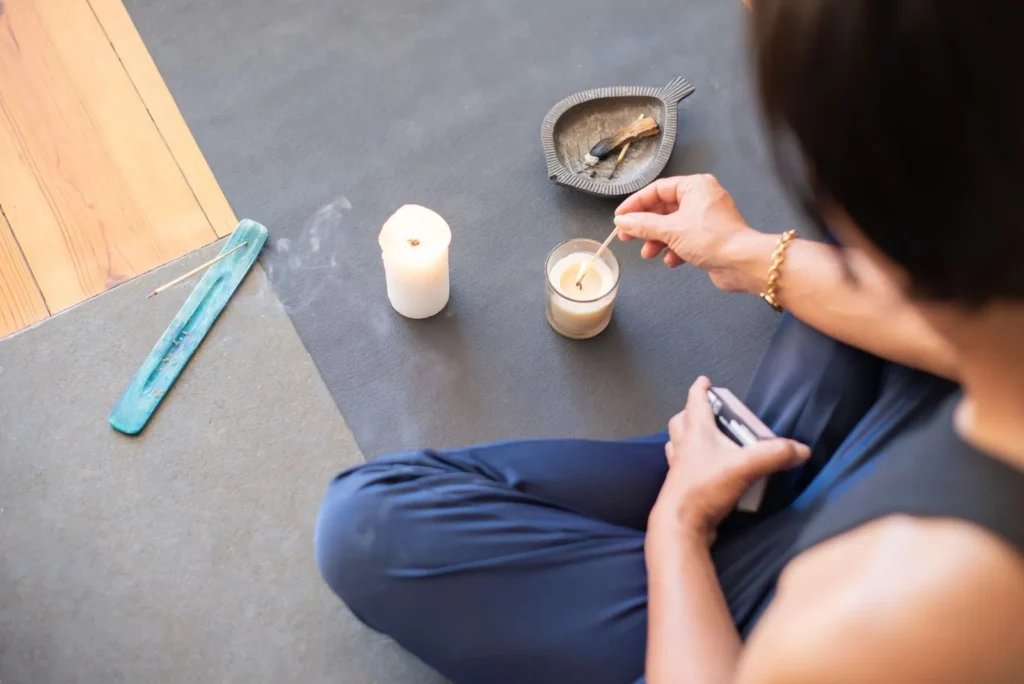
Trataka meditation is a yogic practice of gazing steadily at one point, usually a candle flame, and then closing your eyes to hold its afterimage in your mind. It trains attention and is not an eye treatment. Below you get the exact steps, a four-week build-up, the honest limits of what it can do, and the safety rules that matter, from flame distance to who should see a doctor first.
What is trataka meditation in yoga?
Trataka meditation (also spelled tratak, or called trataka yoga) is a concentration practice from Hatha Yoga. You fix a soft, steady gaze on one object, most often a candle flame, for a short time, then close your eyes and keep attention on the glowing afterimage. A session usually takes 5 to 15 minutes.
The word is Sanskrit for “to gaze”. The Hatha Yoga Pradipika, a 15th-century text, lists it among the six shatkarmas, the traditional cleansing practices. Unlike its companions jal neti and kapalbhati kriya, which work on the nose and breath, trataka works on attention. For the full set in context, see our guide to the six shatkarma kriyas.
Teachers describe two stages: bahiranga trataka, the outer gazing at the flame, and antaranga trataka, the inner stage of resting attention on the afterimage. Together they make up what most people call candle gazing meditation.
How to do trataka: a step-by-step walkthrough
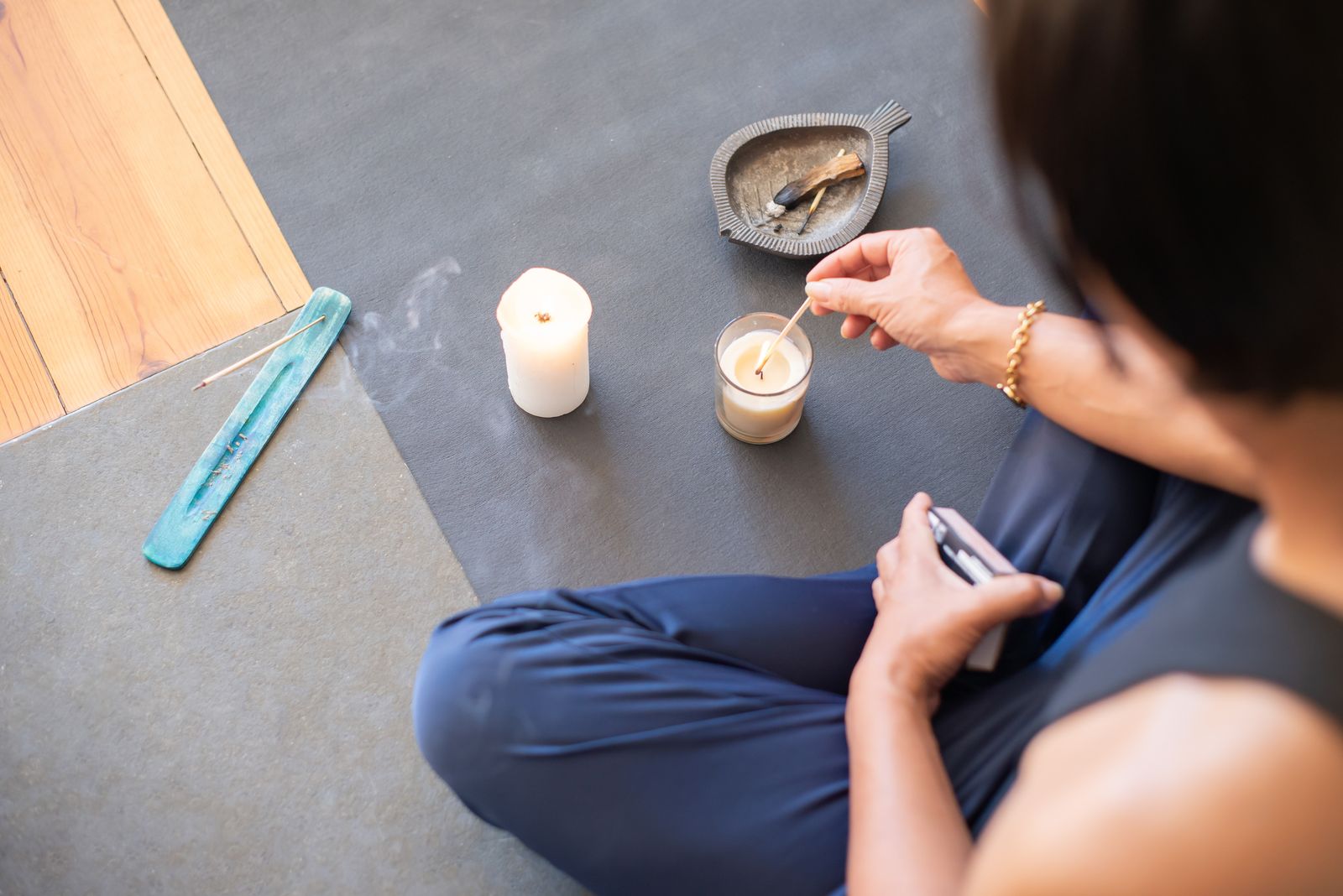
To do trataka, sit upright with a small candle flame at eye level, about an arm’s length (60 to 90 cm) away in a dim, draught-free room. Gaze softly at the flame for 20 to 60 seconds, close your eyes and watch the afterimage until it fades, then repeat for about three rounds.
- Prepare the room. Dim the lights but do not make the room pitch dark. Switch off the fan so the flame stays still, and silence your phone.
- Place the flame. Put a plain candle or small diya on a stable, non-flammable base so the flame sits level with your eyes. Too high or low, and you will crane your neck and tense your face.
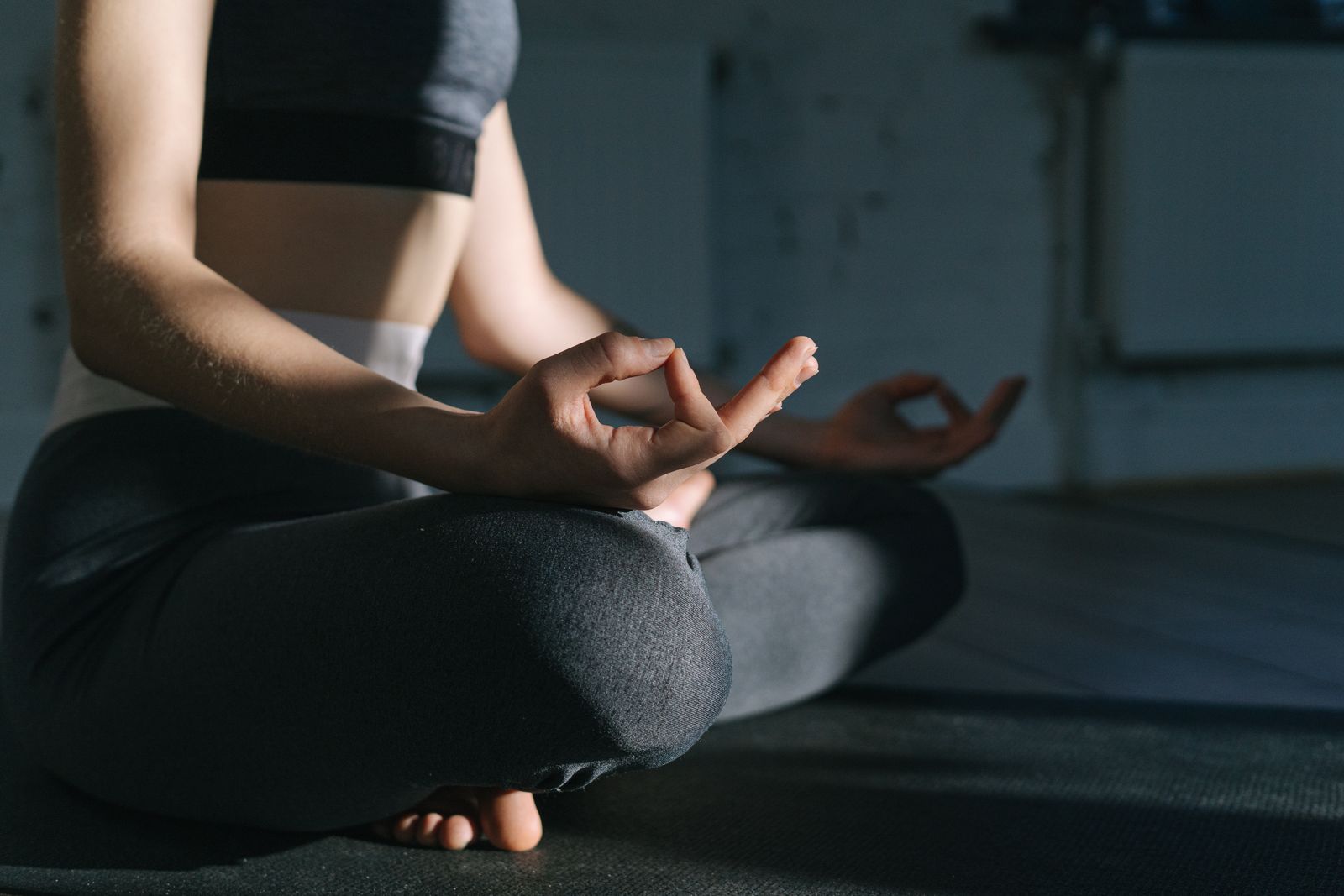
- Sit steadily. Sukhasana on a cushion, or upright on a chair with feet flat. Spine tall, shoulders soft, hands on the knees. A few yoga poses beforehand make the posture easier to hold.
- Gaze softly. Rest your eyes on the tip or base of the flame. Think “resting”, not “staring”. Blink whenever you need to; the goal is steadiness, not winning a no-blink contest.
- Close your eyes at the first strong watering, dryness or strain, not after it. Hold your attention on the glow behind your eyelids, traditionally placed between the eyebrows. Do not chase it with your eyeballs; when it fades, simply rest.
- Repeat for about three rounds, then sit with eyes closed for one to two minutes before returning to your day.
Trataka for beginners: a four-week build-up plan
A sensible trataka for beginners plan starts with three rounds of 20 to 30 seconds of gazing and a session of about 3 to 5 minutes, then adds time slowly over four weeks. The gaze times below are ceilings, not targets. If your eyes feel tired, stay at the earlier week for as long as you like.
| Week | Gaze per round | Afterimage per round | Rounds | Total session (about) |
|---|---|---|---|---|
| Week 1 | 20 to 30 seconds | 20 to 30 seconds | 3 | 3 to 5 minutes |
| Week 2 | 30 to 60 seconds | 30 to 60 seconds | 3 | 5 to 7 minutes |
| Week 3 | 1 to 2 minutes | about 1 minute | 3 | 7 to 10 minutes |
| Week 4 | 1 to 3 minutes | 1 to 2 minutes | 3 | 10 to 15 minutes |
Practise 4 to 6 days a week at the same time of day. Regularity matters more than length, and there is no need to go beyond week 4.
Candle and diya safety: set-up checklist
The flame is the first safety issue, so treat it like any open flame at home.
- Distance: keep the flame at least an arm’s length away, about 60 to 90 cm. Never lean towards it.
- Clothing and surroundings: keep dupattas, saree pallus, loose hair, curtains, papers and mosquito coils well clear. Use a plain, unscented candle or small diya on a steady base such as a steel plate or tile.
- Air: fan off, window facing the flame closed. A flickering flame is harder on the eyes and the mind.
- Never strain: gaze softly, never force your eyes open, and close them the moment you feel pressure, burning or heavy watering. Stop at once for eye pain, a headache, dizziness or blurred vision.
- Put it out: never leave a lit flame unattended, and extinguish it fully when you finish.
Who should check with a doctor first, or skip trataka?
If you have an eye condition such as glaucoma, a retinal problem or recent eye surgery, speak to your eye doctor before trying trataka and follow their advice over any article. People with epilepsy or migraine should also get a doctor’s go-ahead, because flickering light can be a trigger for some.
- Eye conditions: glaucoma, retinal disorders, an eye infection, severe dry eye, or recent eye surgery, including cataract or laser procedures. Ask your ophthalmologist what is acceptable and when.
- Epilepsy or seizure history: do not gaze at a flickering flame unless your neurologist agrees. If they do, a still dot is usually the gentler object.
- Migraine: skip practice during a migraine or aura, and start with a dot and very short rounds.
- Contact lens wearers: gazing can feel drying.
- Dissociation, panic or trauma history: learn this with a qualified teacher rather than alone.
- Children and teens: only with an experienced adult present, in very short rounds.
Whoever you are, new eye pain, sudden blurring, flashes of light or shadows in your vision need an eye doctor promptly, not more practice. If blurring or a headache has not eased a few minutes after you stop and rest with eyes closed, get it checked.
Myth check: can trataka improve eyesight or cure eye problems?
No. There is no reliable evidence that trataka corrects short-sightedness, astigmatism or any other eye condition, and Fitstrot does not claim it does. Treat it as a concentration practice only. Never stop wearing prescribed glasses or lenses, or delay an eye check, because of it.
Some old texts and videos promise to “cure” eye disease. Those claims rest on tradition and personal stories, so we do not repeat them. If you spend long hours on screens, the dull, well-understood habits are the ones that matter: regular screen breaks, normal blinking, a comfortable screen distance and a routine eye test with an optometrist.
What can trataka realistically give you?
Realistically, trataka gives you a simple way to practise single-pointed attention. It is mostly an exercise in noticing that your mind has wandered and bringing it back, which is the core skill of most meditation. Many practitioners say they feel calmer afterwards. That is personal experience, not a treatment.
- A concrete anchor. A flame is easier to hold than an invisible breath for many people, which suits those who find meditation for beginners routines too abstract.
- A bridge to deeper practice. The same steadiness can carry over to breath awareness or mantra.
It will not replace medical care for anxiety, insomnia or low mood. If those affect your daily life, speak to your doctor and treat meditation as a supportive habit.
Troubleshooting: what to do when trataka feels wrong
Most early problems come from gazing too long, sitting badly or a draughty room. If the same problem keeps returning, stop practising and talk to a doctor.
| What you notice | Likely reason | What to do |
|---|---|---|
| Heavy watering within seconds | Gazing too hard, draught on the face | Close your eyes, shorten the next gaze to 15 to 20 seconds, switch off the fan |
| Dry, gritty or burning eyes | Suppressed blinking, air conditioning, contact lenses | Blink freely, remove lenses if comfortable, stop for the day; see an eye doctor if dryness persists |
| Headache or tension behind the eyes | Frowning, forcing the gaze, session too long | Stop now. Next time soften the forehead and halve the time. Recurring headaches need a doctor |
| No afterimage, or it keeps jumping | Room too bright, eyes closed too early, eyeballs chasing it | Dim the room a little, gaze a few seconds longer, keep the eyes still behind the lids. A faint image is fine |
| Dizziness or blurred vision that does not clear | Strain, or something unrelated to the practice | Stop and rest with eyes closed. If it does not settle within a few minutes, see an eye doctor |
Can you practise trataka without a candle?
Yes. A black dot about 2 to 3 cm wide on white paper, fixed at eye level on a wall, is a common candle-free version of trataka. It has no flame, no flicker and no fire risk, which makes it a sensible first choice for beginners, shared homes and anyone advised to avoid flickering light.
- Black dot (bindu): still, simple and easy to set up with a marker.
- Small diya: familiar in most Indian homes and a good fit for evening practice, with the fire precautions above.
- Never the sun or bright lights. Skip sun gazing and never use an LED torch or any intense light.
When is the best time to practise trataka?
Early morning, before breakfast, is the traditional time because the house is quiet and the mind is less crowded. Evening works too. Leave about 2 to 3 hours after a full meal and practise at the same time daily so it becomes a habit.
Many people add trataka after a short asana session, when the body is already warm and still. For guided support, our online yoga classes guide explains how to pick a class that includes meditation.
Trataka vs other meditation techniques
Trataka is a focused-attention practice with an external anchor you can see. Breath meditation uses an internal sensation, mindfulness watches whatever arises, and yoga nidra is done lying down. The best one is the one you will practise regularly.
| Practice | Anchor | Eyes | Posture | Good for |
|---|---|---|---|---|
| Trataka | Flame or dot, then afterimage | Open, then closed | Seated, upright | A visible anchor and a short, structured routine |
| Breath-focused meditation | Breath at the nostrils or belly | Closed | Seated | Absolute beginners, no equipment |
| Mindfulness meditation | Thoughts, sounds, sensations | Open or closed | Seated or walking | Noticing mental habits in daily life |
| Yoga nidra | Guided body and awareness scan | Closed | Lying down | Winding down and rest |
| Guided meditation | A teacher’s voice | Usually closed | Seated or lying | Following along without self-direction |
For a wider map of styles, read our overview of meditation techniques.
Trataka meditation FAQs
How long should a trataka session last?
Beginners do well with about 3 to 5 minutes in week one, building towards 10 to 15 minutes over about four weeks. That is roughly three rounds of gazing and afterimage. Longer is not better. If your eyes feel tired or your head aches, shorten the session or stop for the day.
Is trataka safe to practise every day?
For most healthy adults, a short daily session with a safe flame set-up and no strain is generally considered low risk. It is not suitable for everyone. If you have an eye condition, recent eye surgery, epilepsy or migraine, check with your doctor first, and stop on eye pain, headache or dizziness.
Can I do trataka without a candle?
Yes. A black dot on white paper, a small diya or a simple symbol works with the same steps. A dot is often the easiest to start with because it does not flicker and carries no fire risk. Never use the sun, a torch or any intense light as the object.
What if I cannot see the afterimage?
That is common, especially in the first week. Keep the room dim, gaze softly a few seconds longer, then close your eyes without squeezing them. If nothing appears, rest attention on the darkness and the sense of stillness. Do not strain to produce an image; the gazing stage still builds focus.
Should I avoid blinking during trataka?
Traditional instructions say to gaze without blinking, but never force it. Blink whenever you need to, close your eyes at the first strong watering, dryness or discomfort, and stop if pain appears. A relaxed, steady gaze matters more than a long unblinking one.
A calm next step
Learning posture and pacing from a teacher makes any gazing practice safer and steadier. For a guided routine of breathwork, stillness and seated practice, book a session in Fitstrot’s online yoga classes.
This article is general educational information about a yoga concentration practice. It is not medical advice and does not diagnose or treat any condition.


