
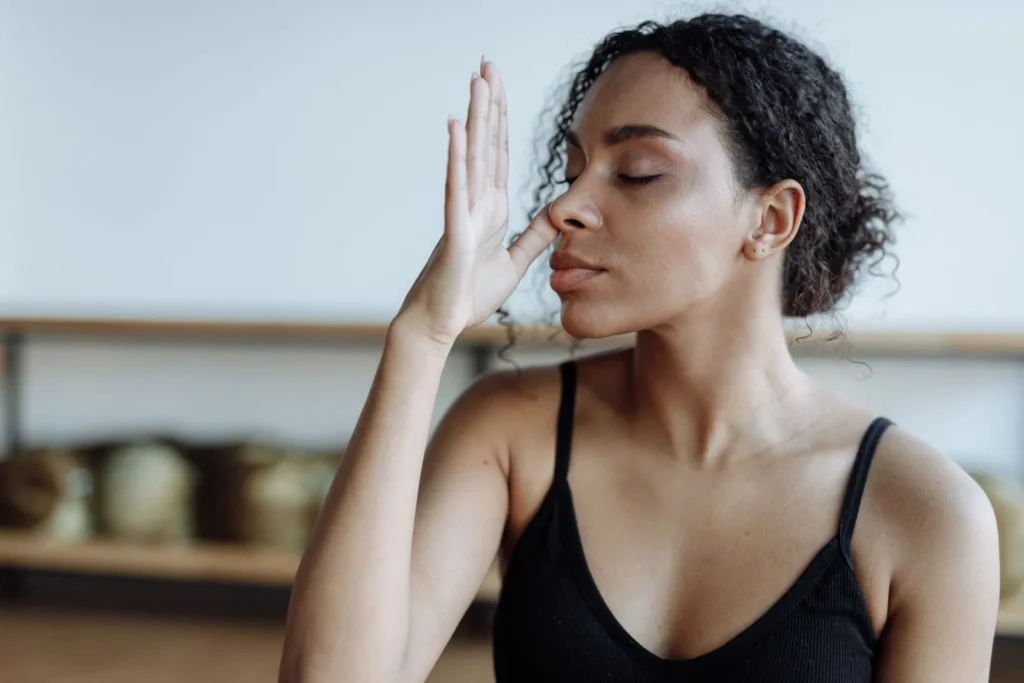
Kapalbhati kriya is a traditional yogic breathing practice made of short, sharp exhalations through the nose, with each inhale left to happen on its own as the belly relaxes. It is taught seated, on an empty stomach, in small rounds of about 20 breaths. This guide covers the technique step by step, a cautious four-week build-up, who should skip it, and what the practice can and cannot honestly do. Treat it as a skill to learn gently, not as a treatment for any condition.
What is kapalbhati kriya, and what does the name mean?
Kapalbhati kriya is a hatha yoga breathing technique in which you exhale forcefully through the nose by snapping the lower belly inward, then let the inhale refill the lungs passively. The name joins kapala (skull) and bhati (shining). Beginners usually practise about 20 breaths per round, two or three rounds, for under five minutes in total.
In classical hatha texts, kapalbhati sits among the six shatkarma, or cleansing, practices, which is why the word “kriya” is attached to it. Most modern classes teach it as a short energising breath drill at the start of a session and group it with pranayama, which is why you will also see it called kapalbhati pranayama. The wider set is covered in our guide to the shatkarma kriyas, and jal neti is another of the six. For a shorter overview, see our kapalbhati primer.
How do you do kapalbhati kriya step by step?
Sit upright with hands on your knees and breathe normally for three breaths. Inhale gently, then push air out through the nose with a quick inward snap of the lower belly. Let the inhale happen by itself. Do 20 exhalations at about one per second, rest 30 to 60 seconds, and repeat for two rounds.
Here is the same kapalbhati breathing walkthrough with the form cues that matter most:
- Set your seat. Sukhasana (easy cross-legged pose) on a folded blanket, or a chair with both feet flat. Keep the spine tall, shoulders loose and jaw soft. Rest the palms on the knees.
- Settle with three normal breaths. Close your eyes and notice the belly rising and falling.
- Take one comfortable inhale through the nose, no more than about three quarters full.
- Snap the exhale. Draw the lower belly, just below the navel, sharply toward the spine. The air leaves through the nostrils with a short puff. The chest and shoulders stay still; only the belly works.
- Release and let the inhale arrive. Relax the belly completely. Do not sip or pull air in.
- Repeat at about one breath per second until you reach 20. At the end, breathe in, then out slowly, and rest with normal breathing.
- Check in. If you feel steady, begin the next round. If you feel dizzy or tight anywhere, stop.
The same slow, form-first approach applies to learning yoga poses: get the pattern right before you add speed or repetitions.
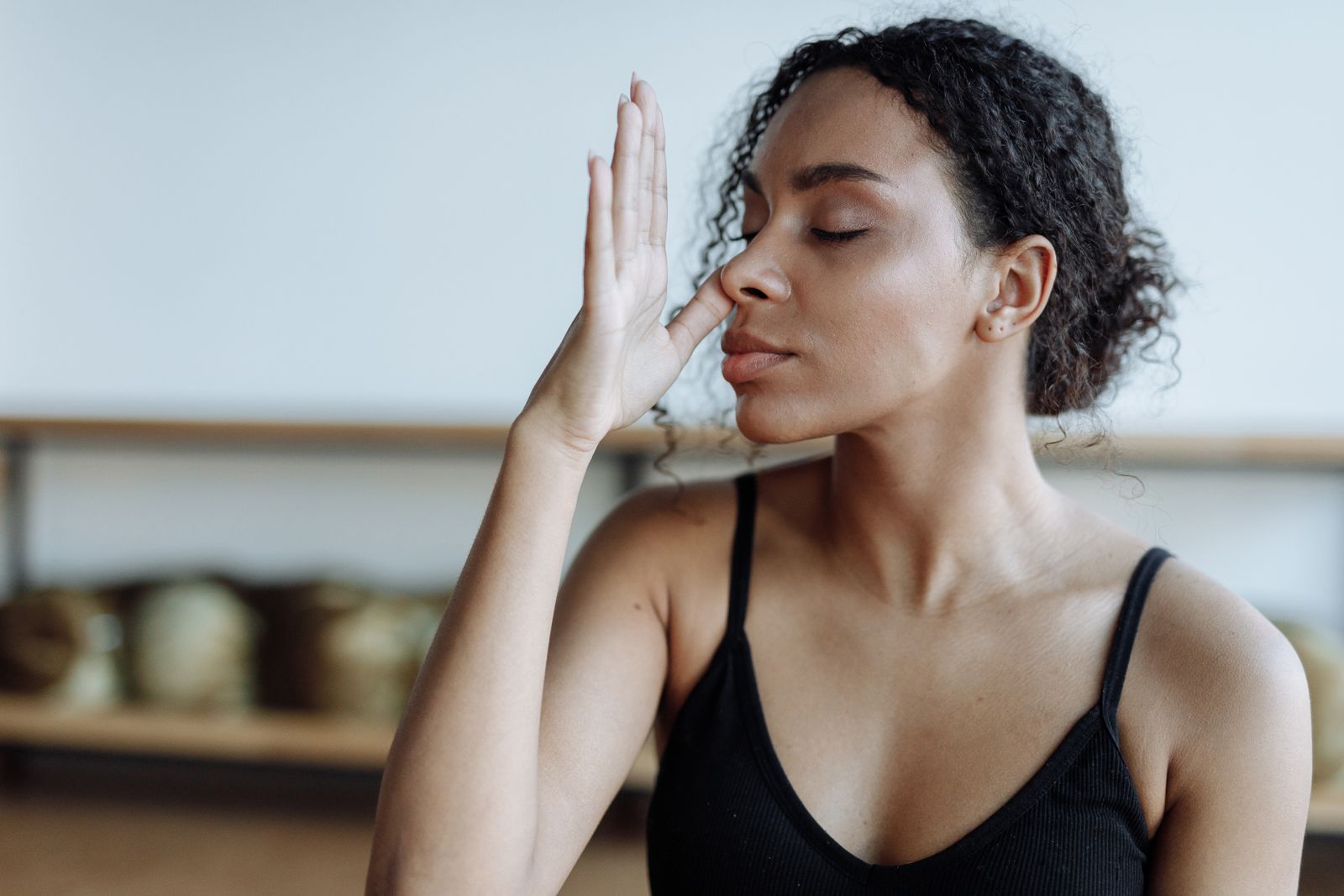
A four-week build-up plan for kapalbhati for beginners
Speed and count are the usual ways beginners go wrong, so build slowly. The table below is a cautious starting structure, not a target. If any week feels strained, repeat it rather than moving on. Do it once a day, in the morning, on an empty stomach.
| Week | Rounds x exhalations | Pace | Rest between rounds | Total time (about) |
|---|---|---|---|---|
| Week 1 | 2 x 20 | About 1 per second | 45 to 60 seconds of normal breathing | 2 minutes |
| Week 2 | 3 x 20 | About 1 per second | 45 seconds | 2.5 to 3 minutes |
| Week 3 | 3 x 30 | About 1 per second | 30 to 45 seconds | 3 minutes |
| Week 4 | 3 x 40 | About 1 per second, never rushed | 30 to 45 seconds | 3.5 to 4 minutes |
Most people never need more than this. Going well past five minutes in total, or past roughly 50 breaths per round, is something to do only with an experienced teacher watching.
How does kapalbhati compare with bhastrika, ujjayi and slow belly breathing?
In kapalbhati only the exhale is active and sharp, while the inhale is passive. In bhastrika, both inhale and exhale are forceful, which makes it more demanding. Ujjayi and slow belly breathing stretch both phases and are calm in tempo. So kapalbhati vs bhastrika is mainly a question of effort and intensity.
| Practice | Inhale | Exhale | Tempo | Typical feel |
|---|---|---|---|---|
| Kapalbhati | Passive, automatic | Short, sharp, belly-driven | Quick, about 1 per second | Brisk, alert |
| Bhastrika | Forceful | Forceful | Quick and more effortful | Vigorous, heating |
| Ujjayi | Slow, controlled, slight throat narrowing | Slow, controlled | Slow | Steady, focused |
| Slow belly breathing | Gentle | Gentle | Slow and even | Settling, calm |
Kapalbhati is the gentler of the two rapid techniques, but it is a poor choice when you want to wind down. Pick a slow technique for that.
Five kapalbhati myths worth dropping
- “It melts belly fat.” No breathing exercise removes fat from one area. Fat loss comes from your overall eating, movement and sleep. If that is your goal, see our yoga for weight loss guide and use breathing as a small add-on at most.
- “It detoxifies the blood.” Your liver, kidneys and lungs do that work, and rapid breathing does not change it.
- “The faster, the better.” Speed is a common cause of dizziness and sloppy form.
- “It can replace medical treatment.” It cannot, and it should never be used instead of seeing a doctor or in place of any prescribed treatment.
- “Kapalbhati kriya and kriya yoga are the same.” They are not. Here “kriya” means a cleansing action. Kriya yoga is a separate path of practice, explained in our kriya yoga article.
What can kapalbhati kriya honestly offer?
Teachers usually describe kapalbhati as a short, energising breath drill that trains the abdominal muscles to contract on the exhale and leaves you feeling alert. Evidence for specific health outcomes is limited, so treat reported effects as personal experiences, not guarantees. Many people simply use it as a two-to-four-minute morning wake-up before asanas or meditation.
- Breath and belly awareness. You learn to feel the lower belly engage and release, a skill that carries into other practices.
- A quick energiser. It needs no equipment, and many people say they feel more awake afterwards.
- A bridge into stillness. Some practitioners use a round or two before sitting for trataka meditation or other quiet practice, then follow it with slow breathing.
Notice what is not on the list: treatment of any disease or a guaranteed change in any health number. Anyone promising those is going beyond what can honestly be said.
Who should not do kapalbhati? Precautions before you start
Skip kapalbhati kriya if you are pregnant, or have high blood pressure, a heart condition, a hernia, recent abdominal surgery, epilepsy or vertigo. Traditional teaching also advises skipping it during menstruation. The forceful abdominal pumping raises pressure inside the belly and changes your breathing quickly. If you are unsure whether you are in a risk group, ask your doctor first.
| Situation | Why caution is advised | What to do |
|---|---|---|
| Pregnancy | Repeated forceful belly contractions and pressure changes | Skip it. Ask your doctor which gentle breathing, if any, suits you |
| High blood pressure or any heart condition | Rapid, forceful breathing can change how you feel quickly | Get your doctor’s clearance before trying it; otherwise choose slow breathing |
| Hernia or recent abdominal surgery | Strong abdominal pumping adds pressure to the area | Skip it until your surgeon or doctor says otherwise |
| Epilepsy or seizure history | Rapid breathing is commonly advised against | Skip it and speak to your neurologist or doctor |
| Vertigo or frequent dizziness | Quick breathing can bring on lightheadedness | Skip it; slow, even breathing is the safer choice |
| Menstruation | Traditional guidance, not a proven medical rule | Many teachers advise skipping it during your period; do slow breathing instead |
| Glaucoma or other eye-pressure problems | Strain from forceful breathing is commonly advised against | Ask your eye doctor before attempting it |
| Asthma, COPD, migraine or acid reflux | Fast breathing and belly pressure can aggravate symptoms for some people | Check with your doctor, then start with very short, slow rounds under a qualified teacher |
This list is guidance, not a medical screen. If you have any diagnosed illness, speak to your doctor before you begin.
When should you stop, and when should you see a doctor?
Stop right away if you feel dizzy, lightheaded, nauseous, or notice tingling in your hands or lips, chest tightness, pounding heartbeat, headache or breathlessness. Return to normal breathing and sit or lie down until you feel steady. Do not push through to finish a round.
See your doctor if:
- The same symptoms come back each time you practise, even at a slow pace.
- Dizziness, headache or breathlessness lasts beyond a few minutes after you stop.
- You have a diagnosed heart, lung, eye, blood pressure or neurological condition and are not sure whether this practice is suitable.
Chest pain, fainting or severe breathlessness need urgent medical attention, not another attempt. Please do not change or stop any prescribed medicine because of a breathing practice, and do not use kapalbhati in place of treatment your doctor has advised.
Troubleshooting: why does kapalbhati feel wrong?
- Your chest and shoulders jump. You are breathing from the chest. Place one hand on the lower belly and move only that hand. Slow right down until the belly does the work.
- You feel dizzy within a few breaths. You are likely going too fast or too hard. Stop, breathe normally, and restart at half the pace with a gentler snap. If it keeps happening, stop practising and speak to a doctor.
- You are pulling the inhale in. Relax the belly fully after each snap and let it fall outward. The inhale should feel like nothing.
- Your nose is blocked. Skip the session rather than forcing air through it.
- You feel sick or gassy. You have probably eaten too recently. Leave a longer gap next time.
When is the best time to do kapalbhati?
Early morning on an empty stomach is the traditional time. Leave roughly 3 to 4 hours after a full meal and about 2 hours after a light snack, since belly pumping on a full stomach can cause nausea. Avoid it near bedtime because it is energising. Chai or breakfast comes afterwards.
For many Indian households the easiest slot is right after waking and a wash, before the first chai. Do your rounds, rest for a minute, then move to gentle stretches or a seated practice. If you can only practise in the evening, leave several hours after your last meal and finish a couple of hours before sleep.
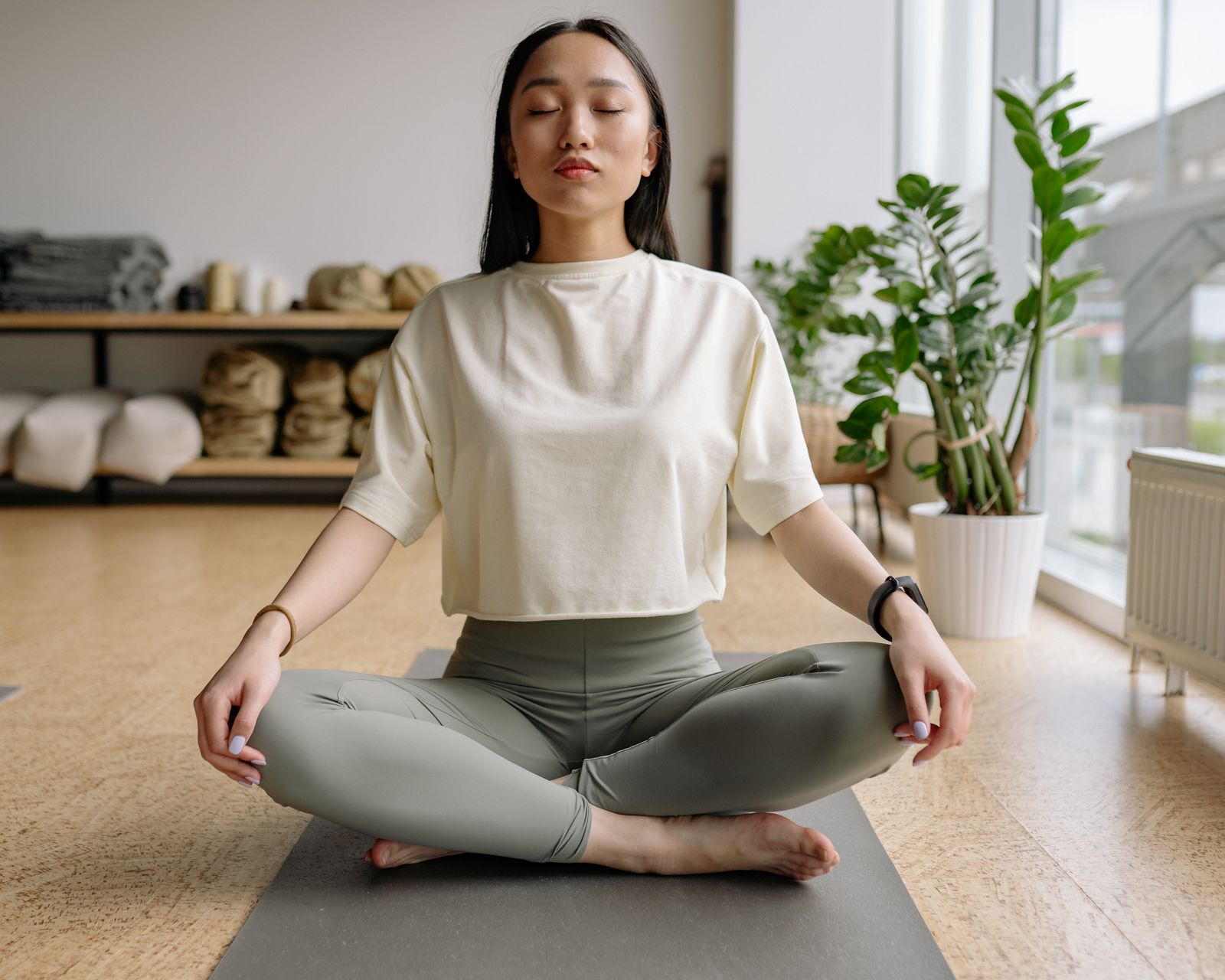
Kapalbhati for desk workers, beginners and older adults
Complete beginners. Follow the four-week table and learn the belly snap before anything else. Practise slowly, with a hand on your belly, or have a teacher watch your technique in a live class.
Desk workers. One round of 20 on a firm chair before you start work, well away from lunch, is plenty. Keep your feet flat and your back tall.
Older adults and people with health conditions. Speak to your doctor first. If cleared, start with rounds of about 10 slow breaths, rest longer between rounds, and practise with a qualified teacher. Many people in this group are better served by gentle, slow breathing.
Frequently asked questions about kapalbhati kriya
Is kapalbhati the same as pranayama?
Not strictly. Classical texts list kapalbhati among the six shatkarma cleansing kriyas, while pranayama refers to formal breath-control practices. Modern classes often teach them together, so kapalbhati is commonly called a pranayama in everyday use even though the traditional categories differ.
How many rounds of kapalbhati should a beginner do?
Begin with two rounds of 20 exhalations, resting 45 to 60 seconds in between, and build to three rounds over about two weeks. Never chase a number if you feel strained.
Can you do kapalbhati every day?
Most healthy adults can practise it once a day in the morning on an empty stomach, provided no precaution applies to them. Keep rounds short and the pace steady. If you feel dizzy, tired or sore, take a rest day and slow down.
Can you do kapalbhati after eating or lying down?
No to both. After eating, the belly pumping can cause nausea, so wait 3 to 4 hours after a full meal. Lying down restricts the belly movement and makes the breath harder to control, so practise seated with the spine upright.
What should you feel afterwards, and what is not normal?
Most people feel alert and slightly warm around the belly and chest. A few seconds of mild lightheadedness can happen in the early days and should pass with normal breathing. Persistent dizziness, headache, chest discomfort or breathlessness is not normal. Stop and speak to your doctor.
Learn it with live feedback. Book an online yoga class with Fitstrot, tell your instructor about any health condition before the first session, and have your pace and posture corrected in real time.


