
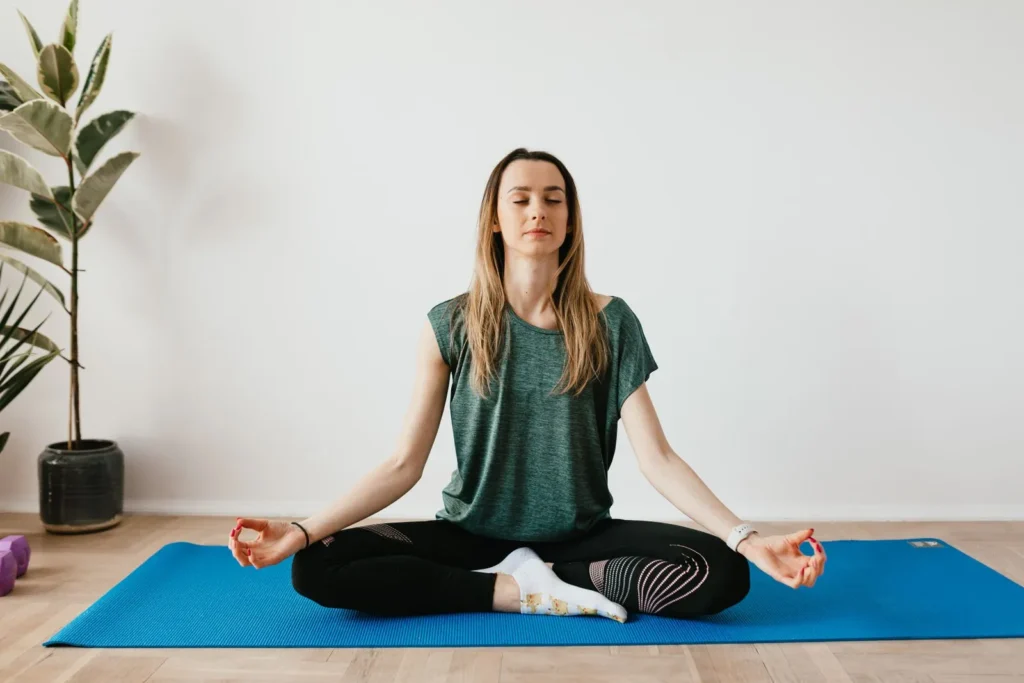
Ujjayi breathing is a slow nose breath in which you gently narrow the back of your throat, so every inhale and exhale makes a soft, ocean-like hiss. It is taught in hatha, vinyasa and ashtanga classes across India and abroad, because the sound gives your mind one steady thing to follow while you move or sit. This guide covers how to do it step by step, a simple four-week build-up, common mistakes, and who should check with a doctor first.
Safety note: ujjayi is a gentle relaxation and awareness practice, not a treatment for any condition. Keep the effort light, never force the throat or hold your breath, and stop if you feel dizzy or light-headed. Check the “who should be careful” section below before you start.
What is ujjayi breathing, and what does the name mean?
Ujjayi breathing is a yoga breath technique in which you inhale and exhale through the nose while slightly narrowing the throat, producing a soft sound like distant ocean waves. The Sanskrit name is usually translated as “victorious” or “conquering” breath. It is slower than everyday breathing, often roughly 6 to 10 breaths a minute.
The sound comes from the glottis, the small opening between the vocal cords at the back of the throat. A slight narrowing there makes the air brush past with a gentle rushing tone. That is why English-speaking teachers often call it “ocean breath”, and why some call it the “whisper breath”. In traditional teaching it sits among the basic pranayama (breath control) practices, alongside kapalbhati and bhramari pranayama, and is usually learned first. For the wider picture, see our guide to breathing exercises.
How do you do ujjayi breathing step by step?
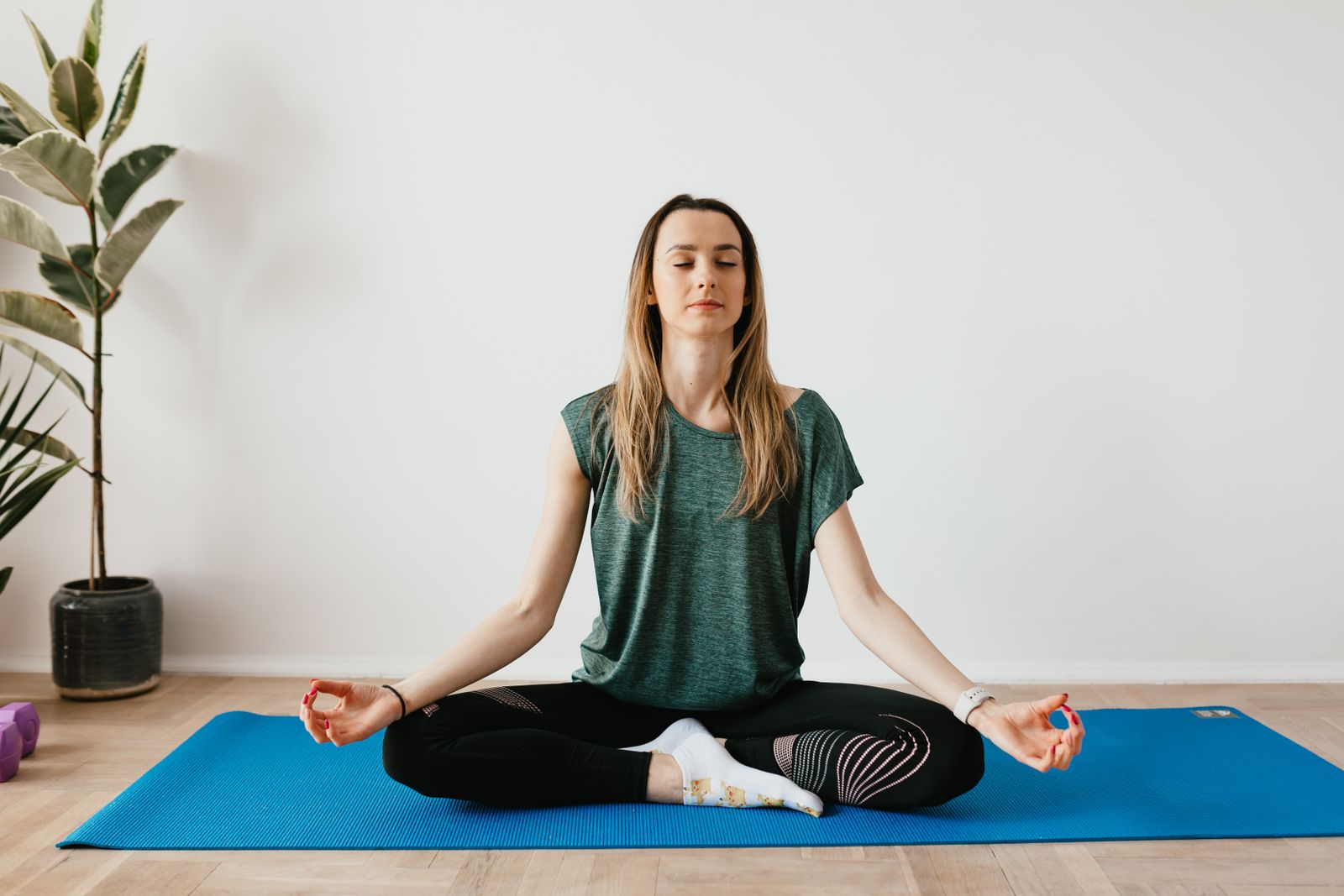
Sit tall, close your mouth and breathe through your nose. First practise a soft “haaa” exhale with the mouth open, as if fogging a mirror. Then close the lips and keep that same slight throat narrowing while you inhale and exhale through the nose for 2 to 3 minutes, using only about 30 percent of your effort.
- Sit comfortably. Cross-legged on a folded blanket, or on a chair with feet flat on the floor. Lengthen the spine without stiffening it.
- Relax the face. Soften the jaw, tongue, forehead and shoulders.
- Breathe naturally for 5 to 6 breaths.
- Whisper “haaa”. With the mouth open, exhale slowly as if fogging a mirror. Notice the slight narrowing at the back of the throat.
- Close the mouth and keep the narrowing. Exhale through the nose with the same soft hiss. It should be audible to you, but barely to someone a metre away.
- Add the inhale. Breathe in through the nose with the same gentle narrowing. Make the inhale and exhale similar in length at first, about 3 to 4 counts each.
- Let the belly and lower ribs move. On the inhale the lower ribs and belly widen softly; on the exhale they settle. The chest should not heave.
- Finish with 3 to 5 normal breaths. Release the throat narrowing completely, then open your eyes.
Once the sound is steady while you sit still, you can carry it into gentle movement, including seated yoga mudra practice and floor stretches.
What does a sensible 4-week ujjayi build-up look like?
A sensible build-up starts at 2 to 3 minutes a day and reaches 5 to 10 minutes of seated practice by about week 4. If you feel strain, repeat the previous week; short, calm sessions most days beat one long, forced one.
| Week | Daily time (seated) | Breath length | What to focus on |
|---|---|---|---|
| Week 1 | 2 to 3 minutes | About 3 counts in, 3 counts out | Finding the soft sound; relaxing jaw and shoulders |
| Week 2 | 3 to 5 minutes | About 4 counts in, 4 counts out | Even sound on both inhale and exhale; belly and lower ribs moving |
| Week 3 | 5 minutes, plus a few breaths during gentle stretching | About 4 in, 4 to 6 out, only if comfortable | Keeping the sound steady when the body moves |
| Week 4 | 5 to 10 minutes, or under a full class | Whatever feels easy and smooth | Effortless sound; stopping early if the throat feels dry or tired |
Why does ujjayi breathing sound like the ocean?
Ujjayi sounds like the ocean because slightly narrowing the glottis slows the airflow and makes it vibrate softly as it passes. The same narrowing naturally lengthens each breath. The sound is a built-in feedback signal: if it turns ragged or disappears, your pace has probably outrun your breath.
If the hiss turns breathy or strained, soften the throat or shorten the movement rather than pushing harder.
What are the benefits of ujjayi breathing, and what can it not do?
The most dependable benefits of ujjayi breathing are practical: the audible, slow breath helps many people stay focused, pace their movement and feel calmer. It is a relaxation and awareness practice. It does not cure any condition and should never replace medical care.
- A steady point of focus. The sound works a little like a mantra, giving a wandering mind something simple to return to.
- Better pacing. Because the sound slows when you rush, it discourages hurried, breath-holding movement in poses and transitions.
- A calmer feel. Slow, even breathing is widely used to help the body settle, and many people find ujjayi pleasantly soothing.
- Body awareness. It teaches you to notice where your breath moves and where you hold tension, a small part of the wider benefits of yoga.
Research on pranayama is still limited and mixed, so treat these as gentle supports rather than guarantees.
Myth check: is a louder, tighter and longer ujjayi better?
No. A louder, tighter or longer ujjayi is not better, and forcing it is the quickest way to get a sore throat or feel light-headed. The correct version is soft, smooth and comfortable, with a throat narrowing so slight that you would hardly notice the effort.
- Myth: “The louder it is, the more it works.” A loud rasp usually means the throat is over-tightened. A whisper-soft sound is just as effective.
- Myth: “You should hold your breath at the top.” Basic ujjayi has no breath holds. Skip them.
- Myth: “It detoxes the body or burns belly fat.” Ujjayi burns almost no extra calories and does not “detox” anything. Fat loss comes from food, movement and sleep, not from a throat sound.
How is ujjayi different from kapalbhati, bhramari and other breathing exercises?
Ujjayi is a slow, smooth, throat-narrowed breath for steady focus, while kapalbhati uses quick, forceful exhales to energise, and bhramari adds a humming sound to settle the mind. Anulom vilom alternates nostrils. Choosing the wrong one for the moment, such as an energising practice just before bed, can work against your goal.
| Technique | How it works | Typical feel | Best used for | Extra caution |
|---|---|---|---|---|
| Ujjayi | Slow nose breath, gentle throat narrowing, soft ocean sound | Steady, grounding | Focus during asana; calm seated practice | Keep the throat soft; stop if dizzy |
| Kapalbhati | Rapid, forceful exhales with passive inhales | Energising, warming | Morning practice, with a teacher | More demanding; many health conditions and pregnancy call for medical advice first |
| Bhramari | Slow breath with a humming sound on the exhale | Soothing, quiet | Winding down before meditation or bed | Keep the hum gentle |
| Anulom vilom | Alternate nostril breathing | Balanced, even | Settling the mind before sitting | Avoid breath holds as a beginner |
How does ujjayi breathing fit into vinyasa, ashtanga and hatha classes?
In flowing classes, ujjayi acts as a metronome linking breath to movement: the breath leads, and you rise on the inhale and fold on the exhale. The sound also lets a whole room stay roughly in sync, and it warns you when you are moving faster than you can breathe.
In vinyasa yoga and ashtanga yoga, ujjayi runs continuously from the first sun salutation to the final rest, which is why teachers keep reminding you about it. It is easy to lose the throat sound once a hard pose grabs your attention. In slower hatha yoga it is used more gently, and many people settle with a few minutes of it before meditation for beginners, then release it for silent sitting.
Can ujjayi breathing help with anxiety, stress and sleep?
Ujjayi breathing can help some people feel calmer, because slow, rhythmic breathing gives the mind something simple to follow. It is not a treatment for anxiety or insomnia. If worry or poor sleep is frequent or affecting daily life, speak to a doctor or mental health professional.
A minute of quiet ujjayi at your desk or on a metro ride draws little attention. For a wider toolkit, see our guide to yoga for anxiety. In the evening, a few unhurried rounds can sit before yoga nidra as part of a wind-down routine.
Honest caution: if focusing on the breath makes you feel more anxious or tight in the chest, stop and breathe normally.
What goes wrong with ujjayi, and how do you fix it?
Most ujjayi problems come from trying too hard: too much throat tightening, too much volume, or too much speed. Fix them by easing off, slowing down and relaxing the face. If something feels wrong, such as dizziness, stop and return to normal breathing.
| Problem | Likely cause | What to do |
|---|---|---|
| Harsh, raspy sound | Throat narrowed too much | Loosen the throat until the sound is a soft whisper |
| Dry or sore throat afterwards | Over-constricting or practising too long | Shorten the session, relax the throat, and sip water afterwards |
| Light-headed or dizzy | Breathing too deeply or too fast, or holding the breath | Stop at once, breathe normally, sit until it passes; see a doctor if it keeps happening |
| Sound vanishes during a flow | Moving faster than the breath | Slow the movement and match it to the breath |
| Tight shoulders, jaw or forehead | Concentrating on the throat sound | Pause, drop the shoulders, unclench the jaw, restart more softly |
| Chest heaves, belly stays still | Upper-chest breathing | Place a hand on the lower ribs and practise belly breathing first |
Who should be careful with ujjayi breathing, and when should you see a doctor?
Ujjayi is generally considered gentle for most healthy adults when practised softly. However, some people should check with a doctor before trying any pranayama: those with high or low blood pressure, heart conditions, asthma or other lung conditions, throat conditions, or pregnancy. Practise only at gentle effort, and stop if you feel dizzy or light-headed.
Please see your doctor, or ask a qualified teacher to adapt the practice, before starting if any of these apply to you:
- Blood pressure that is high, low or not well controlled
- Any heart condition or history of fainting
- Asthma, COPD or any other breathing condition
- Pregnancy (avoid breath holds and any strong effort)
- A sore throat, persistent hoarseness, throat or neck problems, or recent throat or neck surgery
Whatever your health, stop immediately if you feel dizzy, light-headed, short of breath, or notice chest pain or throat pain, and return to normal breathing. Seek medical help if symptoms continue. Never change or stop any medicine because of a breathing practice; that decision belongs to your doctor.
Frequently asked questions about ujjayi breathing
Is ujjayi breathing the same as ocean breath?
Yes. “Ocean breath” is the common English nickname for ujjayi breathing, named after the soft, wave-like sound made by the gentle throat narrowing. Both names describe the same slow nose breath used across hatha, vinyasa and ashtanga yoga.
Should ujjayi breathing be loud or quiet?
Quiet. Ujjayi should be soft and even, audible mainly to you and barely to someone a metre away. A loud, forced or raspy sound usually means the throat is over-narrowed, which can cause strain instead of calm.
Can I practise ujjayi breathing lying down?
Yes. You can practise ujjayi seated, standing or lying down. Most beginners learn the throat sound seated first, then try it lying on the back with knees bent, and later carry it into movement.
How long should I practise ujjayi breathing each day?
Start with 2 to 3 minutes a day and build up to 5 to 10 minutes of seated practice over several weeks. Under a yoga class, it simply runs for the whole session. Regular short practice matters more than long sessions, and gentle effort always comes first.
Does ujjayi breathing help with sleep?
It may help some people wind down. A few gentle rounds before bed can feel settling, particularly alongside restful practices such as yoga nidra. It is not a treatment for insomnia, so see a doctor if sleep problems persist.
Learn it live with a teacher
Ujjayi is easiest to get right when someone can hear and correct it. Book a session in Fitstrot’s online yoga classes and ask your instructor to check your ujjayi breathing in real time, with adjustments to suit your own health and pace.


