

A yoga mudra is a hand, finger or body gesture held during meditation, breathing practice or an asana to give the mind one steady point of focus. The Sanskrit word is usually translated as “seal” or “gesture”. Most people searching for it mean hand mudras such as Gyan Mudra, where the tip of the thumb touches the tip of the index finger, but the same words also name a seated forward fold, Yoga Mudrasana. This guide covers both: finger positions, step-by-step alignment, modifications, and who should skip what.
What is the difference between a mudra, an asana and pranayama?
An asana is a physical posture, pranayama is breath control, and a mudra is a gesture or “seal”, usually made with the hands. A simple seated session uses all three: settle into an asana such as Sukhasana (easy pose), steady the breath, then hold one mudra for a few minutes so attention stops drifting.
Classical hatha yoga texts describe dozens of mudras, many combined with bandhas (internal locks) and breathing. Modern classes mostly teach hasta mudras, the hand versions, because you can do them anywhere. The traditional framework assigns an element to each finger: thumb for fire, index for air, middle for space, ring for earth and little finger for water. You do not have to accept that framework to use the practice. Holding a precise position simply gives the mind a small, specific job, which is why mudras are usually paired with slow breathing in online yoga classes that focus on meditation.
Pictures of Shiva as Adiyogi, the first yogi, usually show a hand in Gyan or Chin mudra, close variants of the thumb-and-index-finger seal. It is a symbol of stillness, not an instruction manual. For the wider family of gestures, see our guide to mudras and their benefits.
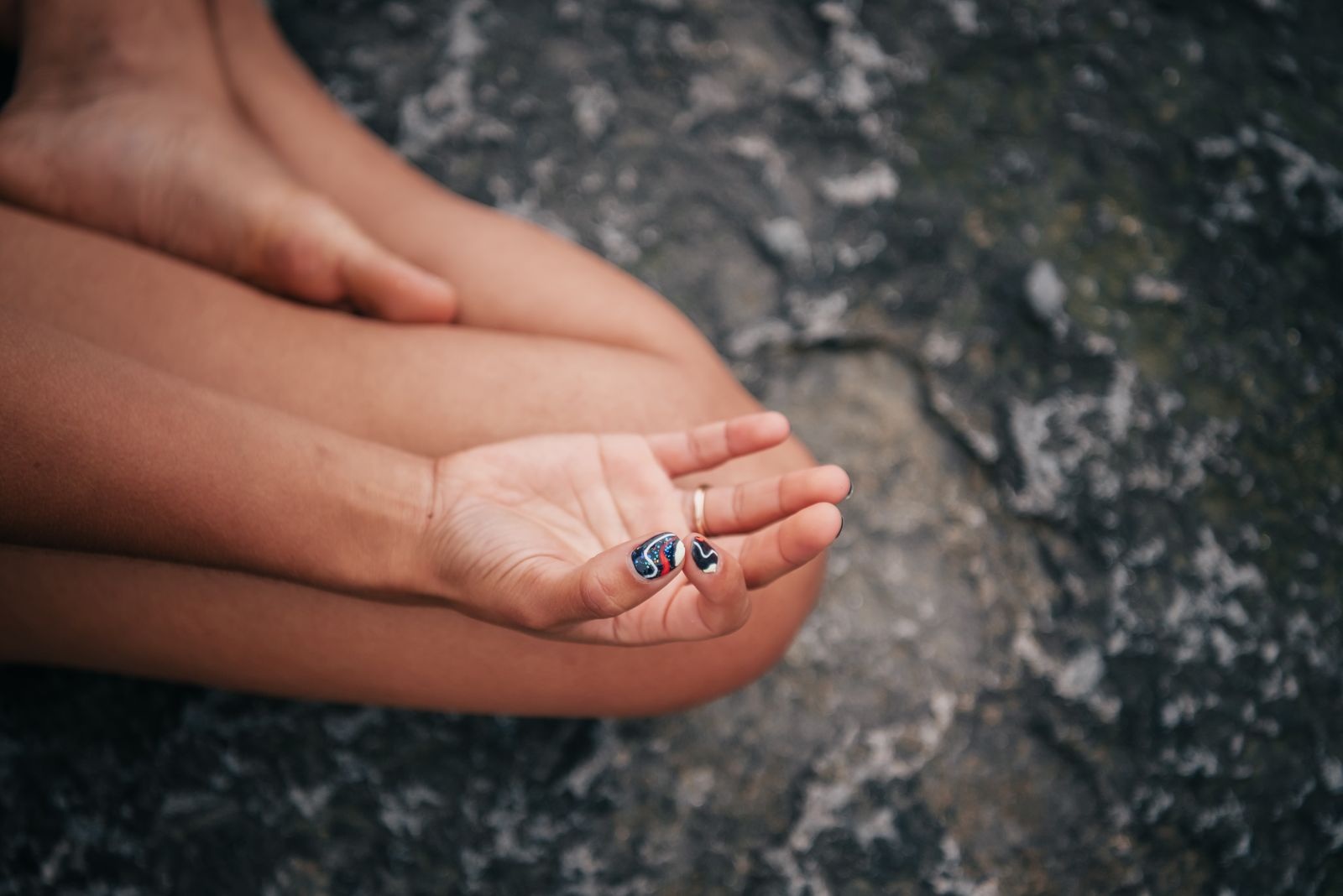
Yoga mudra chart: seven common hand mudras at a glance
Here are the yoga mudra names most often taught to beginners, with the finger position and the meaning traditionally attached to each. Treat the associations as traditional symbolism, not clinical claims.
| Mudra | Finger position | Traditionally associated with | Beginner cue |
|---|---|---|---|
| Gyan Mudra | Thumb tip touches index tip; other three fingers extended | Focus, calm, clarity | Light contact, like holding a petal |
| Vayu Mudra | Index finger curls to the base of the thumb; thumb rests over it | Settling restlessness (the “air” element) | Thumb rests, it does not press |
| Prithvi Mudra | Thumb tip touches ring fingertip | Grounding, steadiness | Keep the other three fingers long |
| Prana Mudra | Thumb tip touches ring and little fingertips | Energy, alertness | Index and middle fingers stay soft |
| Apana Mudra | Thumb tip touches middle and ring fingertips | A sense of release and balance | Wrists neutral, not bent |
| Shunya Mudra | Middle finger curls to the base of the thumb; thumb rests over it | Stillness, the “space” element | Stop if the finger strains |
| Surya Mudra | Ring finger curls to the base of the thumb; thumb rests over it | Warmth, energy | Short holds first, about 5 minutes |
For a printable yoga mudra reference, copy this chart into your notes and sketch each hand beside its row.
How do you practise a hand mudra correctly, step by step?
Sit with an upright spine on the floor or a chair, rest your hands on your thighs, form the finger position with light contact, keep the other fingers relaxed and breathe slowly through the nose. Begin with about 5 minutes a day and add a minute or two each week.
- Set the seat. Sit on a folded blanket or cushion so your hips are slightly higher than your knees. On a chair, keep both feet flat and the back of the knees clear of the seat edge.
- Stack the spine. Lengthen up through the crown of the head, draw the chin back a little and let the ribs sit over the pelvis rather than flaring forward.
- Place the hands. Rest the backs of the hands on the thighs, palms up for an open, receptive feel or palms down for a steadier, grounded feel. Both are traditional.
- Form the mudra. Bring the fingertips together gently. There should be contact, not pressure, and no white knuckles.
- Soften the rest. Keep the free fingers long but loose, wrists neutral, elbows slightly away from the body, shoulders dropping away from the ears.
- Breathe. Inhale and exhale through the nose at an easy pace. A count of 4 in and 6 out works well. Do not hold the breath.
- Time it. Practise on an empty stomach or one to two hours after a meal, at the same time daily if you can. Release slowly, shake the hands out and sit for a few quiet breaths.
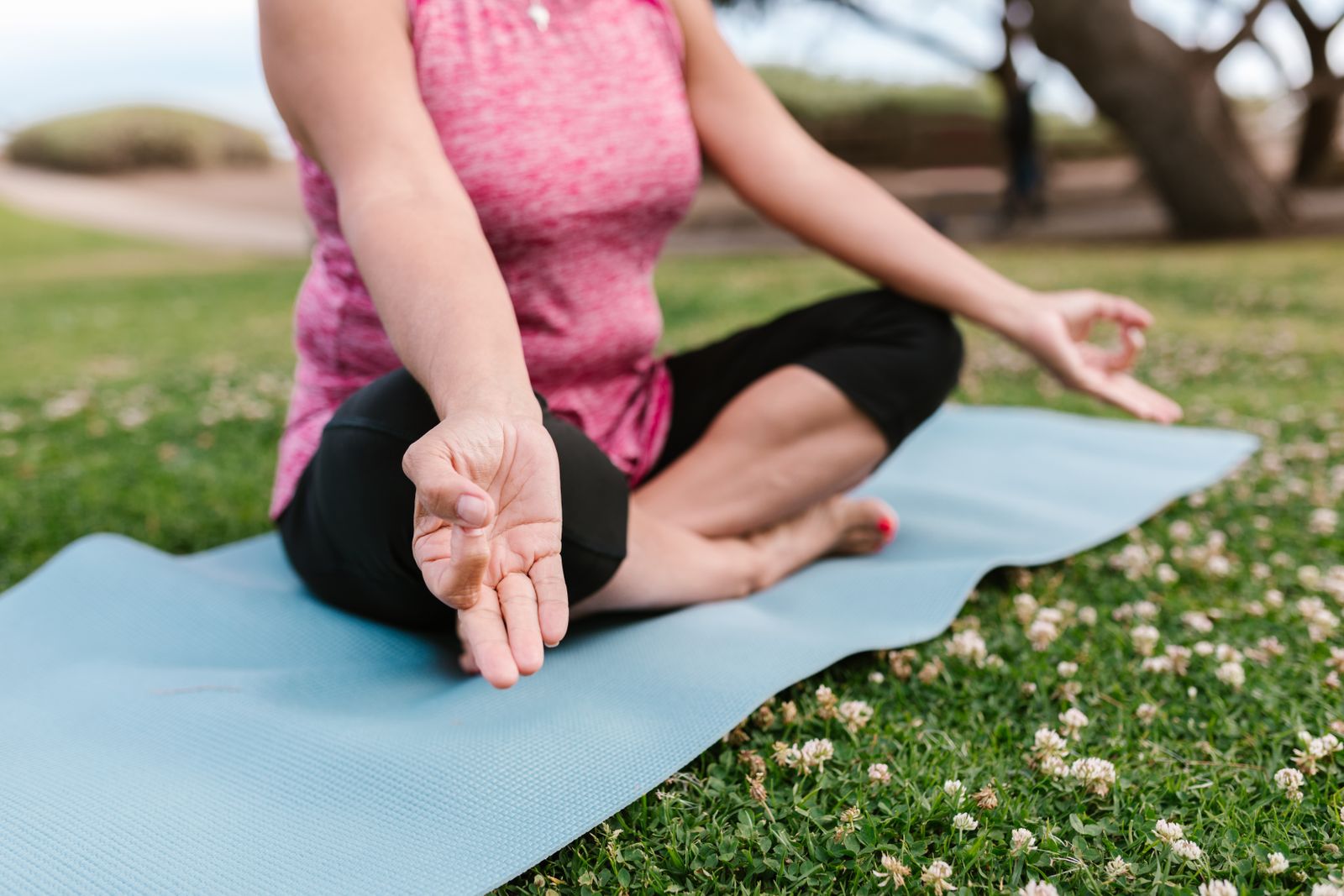
Troubleshooting: numb hands, an aching back and a racing mind
- Fingertips tingle or whiten. You are pressing too hard. Lighten the contact until you can barely feel it. If tingling or numbness continues after you release, stop and ask a doctor.
- Lower back rounds after a few minutes. Sit higher on a cushion or move to a chair, or lean against a wall.
- Knees ache in cross-legged sitting. Do not push for lotus. Use a chair or support each knee with a rolled blanket.
- The mind keeps wandering. That is normal. Count ten breaths, then start again at one.
How do you do Yoga Mudrasana, the psychic union pose?
Yoga Mudrasana is a seated forward fold: sit cross-legged, clasp your hands behind your back, lengthen the spine as you inhale, then fold forward from the hips as you exhale, aiming the forehead towards the floor. Hold for about 5 to 8 slow breaths and rise on an inhale. Skip or modify it with back, knee or hip problems.
- Sit. Take Sukhasana on a folded blanket. Use Padmasana (lotus) only if your hips and knees open into it without any pain.
- Clasp. Bring both arms behind you and clasp the fingers, or hold one wrist with the opposite hand. Roll the shoulders back and down.
- Lengthen. Inhale, lift the chest and stretch the crown of the head up.
- Fold. Exhale and hinge forward from the hips, leading with the chest rather than the head. Let the clasped hands float up behind you as far as is comfortable.
- Rest. Bring the forehead towards the floor or onto a cushion. Keep both sitting bones grounded and the neck long.
- Breathe. Take 5 to 8 slow breaths, then inhale and rise with a long spine.
- Switch. Cross the legs the other way and repeat, so both hips get equal time.
Never bounce or force the forehead down. You should feel a stretch, never a sharp pinch in the knee, hip or lower back.
Yoga Mudrasana modifications at a glance
| Version | Best for | Set-up | Watch for |
|---|---|---|---|
| Chair fold | Stiff hips, knee discomfort, desk workers | Sit on the front half of a sturdy chair, feet flat, hinge forward and rest the hands on the thighs or a table | Keep the spine long; do not slump into the chest |
| Supported fold | Tight hamstrings or lower back | Stack two cushions or a bolster in front of you and rest the forehead on them | Height should let you relax, not strain the neck |
| Towel or dupatta hold | Tight shoulders that cannot clasp | Hold a towel or dupatta behind the back with hands shoulder-width apart | Shoulders stay away from the ears |
| Full lotus version | Experienced practitioners only | Padmasana with both knees comfortable on the floor | Any knee twinge means come out at once |
Myth check: can a mudra treat a condition or burn fat?
No. Holding a finger position does not treat medical conditions, replace medicines or burn a meaningful number of calories. A mudra is a focus and relaxation tool. Links to digestion, headaches or weight are traditional beliefs, not proven treatments, so use mudras alongside, never instead of, medical care and regular movement.
Searches like “yoga mudra for weight loss” are common, so to be plain: a calmer mind may help you notice stress eating, which is a modest benefit, but it is not a way to lose fat. If weight is your goal, build real activity first with our guides to yoga for weight loss and vinyasa yoga, and treat mudras as a small mindset add-on. If you get frequent or severe headaches, see a doctor rather than relying on hand gestures.
Who should skip or modify yoga mudra practice?
Simple hand mudras are low-strain and suit most people, but Yoga Mudrasana and any mudra paired with breath-holding need care. Skip or modify the forward fold in pregnancy, with back, knee or hip pain, or after abdominal surgery, and speak to your doctor first if you have high blood pressure or a heart or lung condition.
- Pregnancy: avoid Yoga Mudrasana and deep forward folds, since they compress the belly. Hand mudras with natural breathing are generally gentle, but avoid breath retention and check with your doctor or a prenatal-trained teacher. Our yoga for beginners guide covers slow, safe starts.
- Back problems: with a slipped disc, sciatica or acute pain, avoid the fold and sit on a chair for hand mudras.
- Knee or hip issues: skip lotus and cross-legged floor sitting. Use a chair or a supported seat.
- High blood pressure, glaucoma or vertigo: keeping the head below the heart can be unsuitable. Ask your doctor before folding forward.
- Breath-holding: if you pair a mudra with Anulom Vilom or Bhramari Pranayama, keep the breath smooth and unforced, with no retention, until a qualified teacher guides you.
Stop at once if you feel pain, dizziness or tingling that does not fade. This is general guidance, not medical advice. If you have a diagnosed condition, check with your doctor before starting.
A 4-week beginner mudra routine
Here is a gentle progression for the first month. Keep the sessions short and regular rather than long and occasional.
| Week | Mudra | Time per day | Pair it with |
|---|---|---|---|
| 1 | Gyan Mudra | 5 minutes | Natural breathing, eyes closed |
| 2 | Gyan, then Prithvi Mudra | 5 minutes each | Breathing 4 counts in, 6 counts out |
| 3 | Vayu or Prana Mudra, your choice | 8 to 10 minutes | Counting ten breaths, then starting over |
| 4 | Your favourite mudra | 10 minutes | A few rounds of gentle breathing, then silent sitting |
Add Yoga Mudrasana once or twice a week at the end of a session, only if the fold feels comfortable. Our yoga at home guide shows how to set up a space. Another gesture-based practice to explore later is Yoni Mudra.
Yoga mudra in Hindi, Gujarati and Tamil: do the names change?
The gestures do not change. In Hindi the term is written योग मुद्रा, and teachers in Hindi, Gujarati and Tamil classes keep the Sanskrit names such as Gyan Mudra and Vayu Mudra while explaining the technique in the local language.
Yoga mudra FAQs
What is mudra in yoga?
A mudra in yoga is a symbolic hand, finger or body gesture used during meditation, pranayama or asana practice to support focus and a calm state of mind. Most often it means touching particular fingertips together, though some, like Yoga Mudrasana, involve the whole body. Each gesture carries a traditional meaning, but none is a medical treatment.
How long should you hold a yoga mudra?
Beginners can start with 5 minutes a day and build to about 10 to 15 minutes over several weeks. Some traditional teachings suggest much longer holds, but there is no need to chase them. Regular short sessions are easier to keep up, and you should release any mudra that causes discomfort or tingling.
Can beginners practise yoga mudras without a teacher?
Yes, simple hand mudras such as Gyan Mudra are low-strain and suitable for most beginners to try alone, using light finger contact and natural breathing. A teacher helps with hand position, posture and safe pairing with pranayama, and is strongly recommended before trying Yoga Mudrasana or any breath retention.
Is yoga mudra the same as a hand mudra?
Not exactly. “Yoga mudra” is a broad phrase for any mudra practised in yoga, and it is also the name of a specific seated forward bend, Yoga Mudrasana. Most people searching for it want hand mudras like Gyan or Vayu Mudra, which are simpler than the full-body fold.
What is yoga mudra in Hindi?
In Hindi, yoga mudra is written योग मुद्रा and means the same as in Sanskrit: a gesture or “seal” formed with the hands or body in yoga and meditation. The names of individual mudras such as Gyan Mudra stay unchanged, and only the spoken instruction is in Hindi.
Want someone to check your hand position and your forward fold? Book a live session on our online yoga classes page and ask your teacher to review your mudra alignment in the very first class.


