
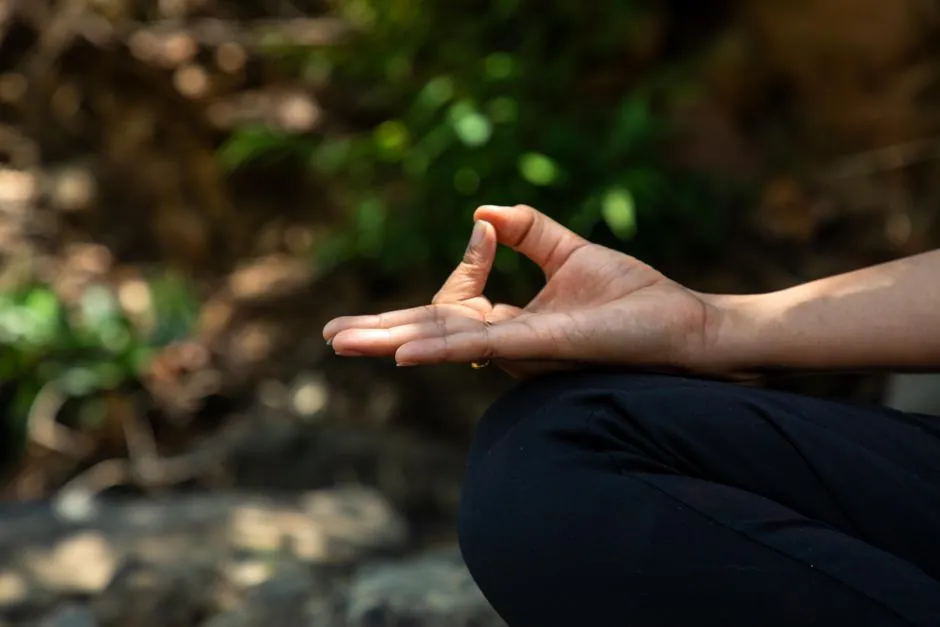
Gyan mudra is the simplest hand position in yoga. You touch the tip of your index finger to the tip of your thumb, keep the other three fingers relaxed and straight, and rest your hands on your knees. It is also one of the most over-sold practices online. This guide sets out how to do gyan mudra correctly, how long to hold it, what the research actually supports, and how to pair it with breathing and meditation so the practice is worth your time.
One honest point before we start. Gyan mudra on its own has very little direct scientific research behind it. Most of what people feel comes from sitting still, slowing the breath and paying attention, and those parts do have decent evidence. Treat the mudra as the anchor of a practice, not a remedy.
What is gyan mudra? Gyan mudra meaning explained
Gyan mudra (also written jnana mudra) means “gesture of knowledge”: jnana is Sanskrit for knowledge and mudra means seal or gesture. The index fingertip touches the thumb tip, the other three fingers stay extended, and the hands rest on the knees. It is used during seated meditation and pranayama as a steady, low-effort point of focus.
In the classic reference text used by most Indian yoga schools, Swami Satyananda Saraswati’s Asana Pranayama Mudra Bandha (Bihar School of Yoga, first published 1973), jnana mudra is described as the “psychic gesture of knowledge” and chin mudra as the “psychic gesture of consciousness”. The traditional symbolism is easy to remember. The thumb stands for universal consciousness, the index finger for the individual self, and the joined tips for the two meeting.
In plain terms, the mudra gives your hands a fixed place to rest and a light touch point to notice. When your mind wanders, feeling that fingertip contact is an easy way to come back, the same “notice and return” skill described in our guide to chitta vritti, the fluctuations of the mind.
How to do gyan mudra: a step-by-step walkthrough
Most mistakes happen in the seat, not the fingers, so the steps start from the ground up. On a chair, keep both feet flat and follow steps 2 to 7.
| Step | What to do | Form cue | Common error |
|---|---|---|---|
| 1. Choose a seat | Sit in sukhasana (easy cross-legged), padmasana, vajrasana or on a chair | Hips slightly higher than knees; use a folded blanket or cushion | Forcing padmasana with stiff hips, which strains the knees |
| 2. Stack the spine | Lengthen through the crown of the head, chin slightly tucked | Ears over shoulders, shoulders over hips | Slumping, which makes deep breathing harder |
| 3. Rest the hands | Place the backs of the wrists or hands on the knees or thighs | Arms heavy, elbows soft and close to the body | Reaching the hands too far forward, which rounds the upper back |
| 4. Join thumb and index finger | Bring the tip of the index finger to the tip of the thumb | Contact light enough to hold a sheet of paper | Pressing hard, which tires the hand and whitens the fingertips |
| 5. Extend the other fingers | Middle, ring and little fingers straight but relaxed, close together | No tension in the knuckles or the back of the hand | Locking the fingers straight or letting them curl into a fist |
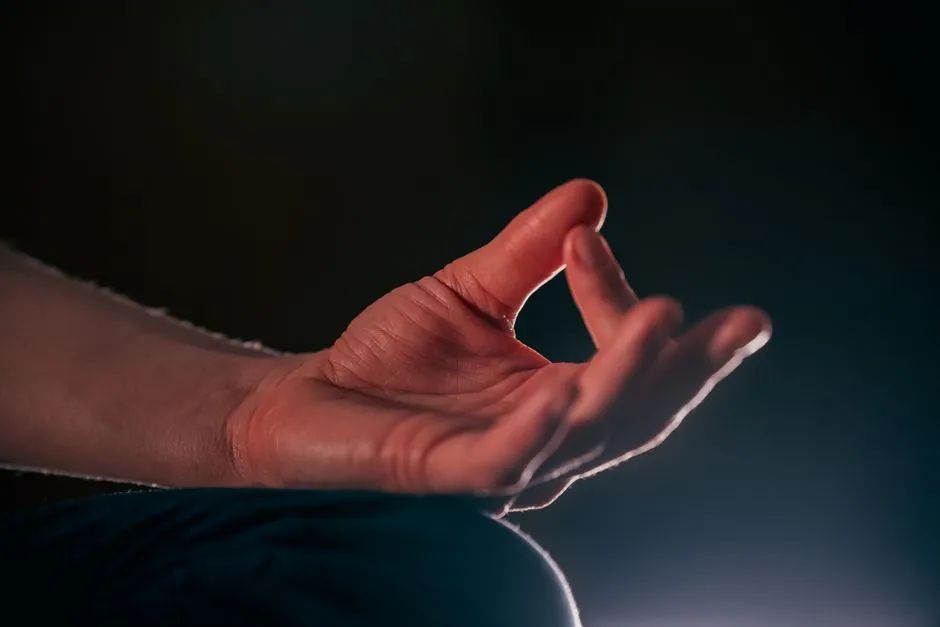
| 6. Set the palm direction | Palms down for jnana mudra; palms up for chin mudra | Pick one and keep it the whole session | Flipping the hands back and forth mid-practice |
| 7. Settle the breath | Close the eyes, breathe through the nose, let the belly move | Aim for an easy exhale slightly longer than the inhale | Holding the breath or forcing a slow count |
Use both hands at once so the shoulders stay level. If one hand is injured, rest it flat and hold the mudra with the other.
Gyan mudra vs chin mudra vs jnana mudra: are they the same?
Gyan mudra and jnana mudra are the same mudra, just two spellings of the Sanskrit. Chin mudra uses the same finger shape but turns the palms upward. In the Bihar School tradition, jnana mudra is done palms down and chin mudra palms up. Other schools use the names differently, so the finger shape matters more than the label.
There is no single official rule. If your teacher uses the names the other way round, follow your teacher. Many teachers describe palms-down jnana mudra as more “grounding” and a good choice when you feel restless. Palms-up chin mudra is described as more “open” and a good choice when you feel dull or sleepy. That is a tradition, not a measured effect. Try each for a week and keep whichever helps you sit longer.
Benefits of chin mudra compared with jnana mudra benefits
The benefits claimed for chin mudra and the jnana mudra benefits listed on most sites are almost identical: calm, focus and better concentration. No study has compared palms-up with palms-down, so there is no evidence that one is better than the other. Palms-up can let the chest open slightly; palms-down keeps the arms heavier and steadier over long sits. Choose by comfort.

Mudras for meditation: gyan mudra and 4 relatives compared
Gyan mudra belongs to a small family of hand positions used in seated practice. These are the ones you are most likely to meet in an Indian yoga class, as described in Asana Pranayama Mudra Bandha.
| Mudra | Hand shape | Palm | Traditional meaning | Where you will meet it |
|---|---|---|---|---|
| Jnana (gyan) mudra | Index fingertip to thumb tip, other three fingers straight | Down, on knees | Gesture of knowledge | Meditation, nadi shodhana, long seated holds |
| Chin mudra | Same as jnana mudra | Up, on knees | Gesture of consciousness | Meditation, pranayama, chanting |
| Chinmaya mudra | Thumb and index tips touch, other three fingers folded into the palm | Down or up | “Pervaded by consciousness” | Sectional (mid-chest) breathing drills |
| Adi mudra | Thumb tucked into the palm, fingers curled over it in a loose fist | Down | “First gesture”, as held by a newborn | Sectional (upper-chest) breathing drills |
| Dhyana mudra | Hands in the lap, right palm resting on left, thumb tips touching | Up, in lap | Gesture of meditation | Long silent sitting, Buddhist-style practice |
Pranayama classes often use chin, chinmaya and adi mudra in sequence to guide the breath into different parts of the chest. If you are new, stay with gyan mudra for a few weeks first.
Gyan mudra benefits: what is claimed and what is actually evidenced
There is no randomised controlled trial showing that gyan mudra by itself improves memory, sleep or any disease. The benefits people notice are best explained by the seated practice around it. A 2014 JAMA Internal Medicine meta-analysis of 47 trials found meditation programmes gave moderate improvements in anxiety, depression and pain.
That meta-analysis, by Goyal and colleagues at Johns Hopkins (JAMA Internal Medicine, 2014), pooled 3,515 participants. For anxiety, mindfulness programmes showed an effect size of 0.38 at 8 weeks. The same review found low or insufficient evidence for effects on attention, sleep and weight. That matters, because “better focus” and “better sleep” are the two gyan mudra benefits most often promised online.
When we searched PubMed for trials on jnana, chin or gyan mudra, we found almost nothing that measured a health outcome. The closest is a small 2018 study in the International Journal of Yoga from Bengaluru. It compared 29 people doing mudra practice for 10, 15 and 20 minutes on three days with 32 controls. It measured “electrophotonic imaging” of the fingertips, which is not an established clinical measure. It does not show any health benefit.
| Common claim | Where the claim comes from | What the research shows | Fair verdict |
|---|---|---|---|
| Reduces stress and anxiety | Yoga tradition, meditation practice | Meditation programmes: moderate evidence for anxiety (47 trials, 2014). Yoga: a 2020 review of 12 studies found lower perceived stress in all of them | Likely, when the mudra is part of regular meditation |
| Improves concentration | Name (“knowledge”), teacher reports | Slow breathing training improved sustained attention in one 40-person trial (2017); meditation’s effect on attention is rated low or insufficient | Possible via breathing and meditation; not proven for the mudra |
| Sharpens memory, boosts IQ | Popular mudra books and blogs | No trials found | Unsupported |
| Cures insomnia | Blogs, social media | Yoga helps sleep in several groups; meditation’s effect on sleep rated insufficient in the 2014 meta-analysis | Can be part of a wind-down routine, not a treatment |
| Treats Alzheimer’s, diabetes, BP | Mudra-therapy marketing | No trials found for the mudra; mindfulness-based programmes lowered BP in a 2020 review of 14 studies | Unsupported for the mudra; never a substitute for treatment |
| Balances the air (vayu) element | Ayurvedic and tantric theory | Not a testable claim | A belief, not a medical effect |
The yoga and meditation figures come from the US National Institutes of Health: the NCCIH yoga evidence summary (2020 stress review: 12 studies, 672 participants) and the NCCIH meditation evidence summary (2020 blood-pressure review: 14 studies, over 1,100 participants).
Gyan mudra benefits in Hindi (हिंदी में सार)
ज्ञान मुद्रा में तर्जनी उंगली का सिरा अंगूठे के सिरे से मिलाया जाता है और बाकी तीन उंगलियाँ सीधी रखी जाती हैं। इसके सबसे भरोसेमंद फायदे मुद्रा से अकेले नहीं, बल्कि उसके साथ किए गए ध्यान और धीमी साँस से आते हैं: तनाव में कमी, मन का शांत होना और बैठने की आदत बनना। याददाश्त बढ़ाने या बीमारी ठीक करने के दावों का कोई वैज्ञानिक प्रमाण नहीं है। रोज़ 5 मिनट से शुरू करें और धीरे-धीरे 15–20 मिनट तक ले जाएँ।
How long should you hold gyan mudra, and when?
No study has set an ideal duration for gyan mudra. A practical plan is 5 minutes a day in week 1, building to 15–20 minutes by week 4, in one or two sittings. The only mudra study in PubMed used 10, 15 and 20 minutes. Consistency matters more than length: 10 minutes daily beats one 60-minute session a week.
Some popular guides insist on 45 minutes a day. No trial backs that number. Mayo Clinic’s guide to meditation says that even a few minutes of meditation can help restore calm.
Good times to practise:
- Early morning, before tea and phone, when the house is quiet.
- Straight after asana practice, when the body is warm and it is easier to sit still.
- 30 minutes before sleep, as part of a wind-down routine.
After a heavy lunch of rice, dal and sabzi, wait about 2 hours or keep it to 5 minutes.
| Week | Minutes per day | Seat | Breath pairing | Focus cue |
|---|---|---|---|---|
| 1 | 5 (1 sitting) | Chair or sukhasana on a cushion | Natural nasal breathing | Count 10 breaths, restart at 1 if you lose count |
| 2 | 8–10 (1 sitting) | Sukhasana or vajrasana | Exhale slightly longer than inhale (e.g. 4 in, 6 out) | Notice the fingertip contact at each exhale |
| 3 | 12–15 (1–2 sittings) | Sukhasana or ardha padmasana | 5 minutes nadi shodhana, then quiet breathing | Label wandering thoughts “thinking”, return to breath |
| 4 | 15–20 (1–2 sittings) | Your most stable seat | 5 minutes bhramari or slow breathing, then silent sitting | Rest attention on the breath at the nostrils |
Pairing gyan mudra with pranayama and meditation
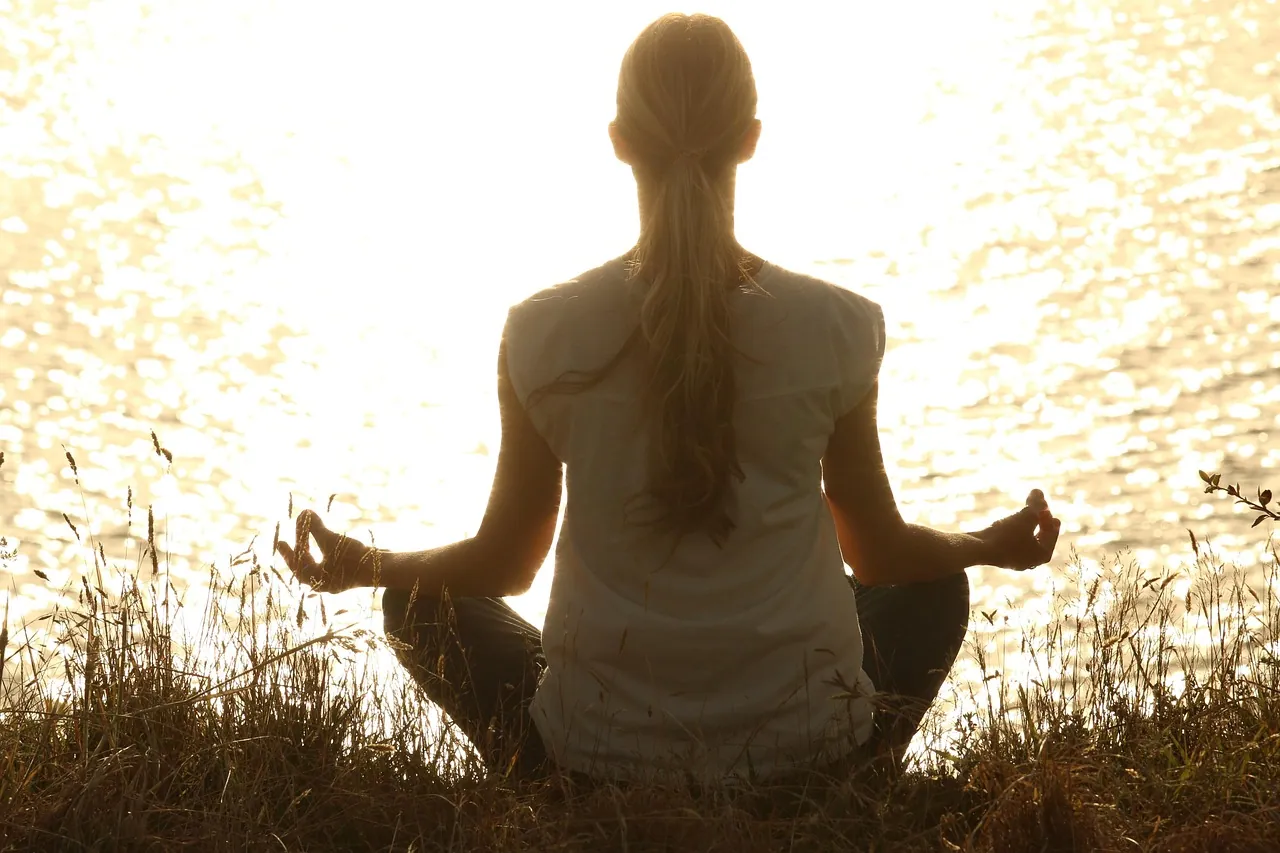
This is where the useful effects are. A 2018 systematic review in Frontiers in Human Neuroscience looked at slow breathing below 10 breaths per minute. Only 15 of 2,461 screened papers met its criteria, and they showed higher heart-rate variability, more alpha brain-wave activity and more reported relaxation and alertness. A 2017 randomised trial of 40 healthy adults gave one group 20 sessions of diaphragmatic breathing over 8 weeks, at about 4 breaths per minute with a feedback device. That group improved in sustained attention and had lower cortisol levels than the controls.
Gyan mudra fits naturally with three practices:
- Nadi shodhana (alternate-nostril breathing): the left hand stays in gyan mudra on the knee while the right hand works the nostrils. Start with 5 rounds.
- Bhramari (humming bee breath): a long humming exhale naturally slows the breath rate to around 4–6 breaths a minute.
- Breath-counting or mantra meditation: the fingertip contact becomes a second anchor next to the breath. For more methods to try while in the mudra, see our guide to meditation techniques.
The mudra also links to the philosophy behind the name. Jnana yoga is the path of knowledge and self-enquiry, and gyan mudra is its traditional hand gesture. If that side interests you, read our explainer on jnana yoga.
Myth check: 5 things gyan mudra will not do
- It will not raise your IQ or exam marks by itself. A calmer 10-minute pre-study routine may help you settle, but no study shows a finger position improves memory.
- It will not replace sleep hygiene. Screens off, a fixed bedtime and no late chai matter more.
- It will not treat BP, diabetes, thyroid or dementia. Keep taking prescribed medicines and follow up with your doctor.
- Harder pressure does not mean stronger effect. The traditional instruction is a light touch. Pressing hard only builds tension.
- Longer is not always better. Forcing 45 minutes with aching knees teaches your body that sitting is painful. Build up slowly.
Gyan mudra side effects and troubleshooting
Gyan mudra has no known physical side effects beyond minor finger or wrist stiffness. The real risks come from the sitting posture and the meditation. A 2020 review of 83 studies with 6,703 people found about 8% reported some adverse effect from meditation, most often anxiety or low mood.
That figure is from the NCCIH meditation summary above. Mayo Clinic notes that meditation does not replace medical treatment and may worsen symptoms in some mental health conditions. If you have a history of panic attacks, trauma, psychosis or severe depression, talk to your doctor or therapist before starting long silent sits.
- Tingling or numb fingers: usually pressing the tips too hard, or wrists bent sharply. Fix: lighten the touch; rest the hands on the thighs so the wrists are straight.
- Knee or ankle pain: usually forced padmasana or hips lower than knees. Fix: sit higher on a cushion, use sukhasana or a chair.
- Lower-back ache after 10 minutes: usually a slumped, unsupported pelvis. Fix: raise the seat; sit against a wall for the first weeks.
- Legs “fall asleep”: usually pressure behind the knees in cross-legged sitting. Fix: switch the front leg each session; stand and walk after.
- Feeling sleepy: usually from practising after meals or late at night. Fix: try palms-up chin mudra, eyes half-open, earlier in the day.
- Racing thoughts or anxiety increases: usually sitting too long, too soon, or sensitivity to silent practice. Fix: shorten to 5 minutes, keep eyes open, focus on the exhale; seek support if it persists.
Who benefits most, and how to adapt it
Students before study or exams
A 5-minute sit with slow exhales before a study block helps switch from phone mode to focus mode. Treat it as a transition ritual, not a memory booster.
Desk workers and corporate teams
Sit on the front half of your office chair, feet flat, hands on the thighs in the mudra, and take 10 slow breaths between meetings. No mat needed.
Older adults and people with stiff hips or knees
Use a chair. The NCCIH yoga summary notes that adults aged 65 and above are treated in emergency departments for yoga injuries at higher rates than younger people, and sprains and strains of the knee and lower leg are the most common. There is no reason to sit on the floor to do gyan mudra.
People with arthritis in the hands
If the thumb joint hurts, let the index finger rest against the side of the thumb instead of tip-to-tip. If that is still painful, rest the hands open. The breathing and attention are what count.
Learning with a teacher vs on your own
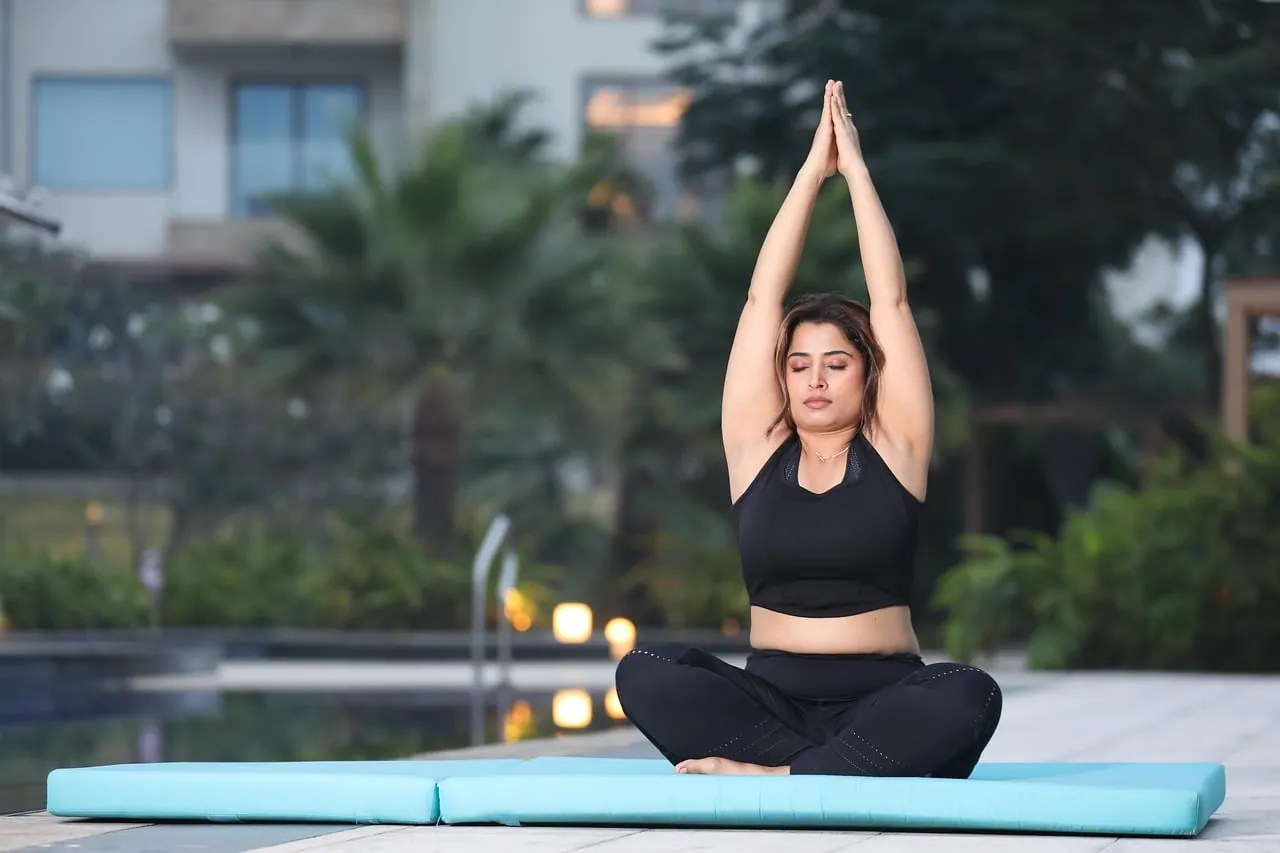
The hand shape is easy to learn from a guide. Where a teacher helps is the seat: most people quit meditation because their knees, back or neck hurt. A live teacher can check hip height, spine and pranayama rhythm in the first few sessions, before bad habits form. To open the hips for sitting, our guide to yoga poses is a good place to start.
Frequently asked questions about gyan mudra
Can I do gyan mudra lying down?
Yes. Lie on your back with hands beside your body, palms up, for example during a bedtime body scan. You are more likely to fall asleep, which is fine at night but not ideal for concentration practice.
Is gyan mudra the same as chin mudra?
The finger shape is the same: index fingertip to thumb tip, three fingers extended. In the Bihar School tradition, jnana (gyan) mudra is done palms down and chin mudra palms up. Other schools swap or merge the names. No research shows one works better than the other.
How many minutes a day should I do gyan mudra?
Start with 5 minutes a day and build to 15–20 minutes over 4 weeks. No study has set an ideal time. Daily short practice is more useful than occasional long sessions.
Does gyan mudra improve memory?
There is no clinical trial showing that gyan mudra improves memory. Slow breathing training improved sustained attention in a 2017 trial of 40 adults, so pairing the mudra with slow breathing before study may help you focus. That is different from a memory boost.
Are there any side effects of gyan mudra?
The hand position itself is harmless. Possible problems come from sitting too long in a strained posture (knee, back or ankle pain) or from long silent meditation, which caused adverse effects such as anxiety in about 8% of participants across 83 studies (2020 review). Start short and adjust your seat.
Can I do gyan mudra while walking or at work?
You can hold it at your desk or seated in a cab or metro. It is not used while walking, because the hands are meant to rest still.
Which hand should I use for gyan mudra?
Use both hands at the same time, resting on the knees or thighs, so the shoulders stay level. If one hand is injured or arthritic, it is fine to hold the mudra with one hand and rest the other flat.
Try it tonight: sit on a cushion or chair, join your index finger and thumb, and take 10 slow breaths with a longer exhale. If you want a teacher to check your seat and guide your pranayama live, book a trial of Fitstrot’s online yoga classes.


