

Breathing exercises are deliberate changes to how you breathe: slower, longer or more rhythmic than the automatic breathing you do all day, practised for a few minutes to settle the mind, steady the body and build awareness. This is the general overview: the main techniques, how to choose between them, a four-week plan, troubleshooting and safety. Nadi shodhana, ujjayi and bhastrika have their own dedicated guides; here you see how they all fit together.
What are breathing exercises, and what do they actually do?
Breathing exercises are structured patterns of inhaling, pausing and exhaling that you practise on purpose, usually for 3 to 15 minutes. Slowing the breath to roughly 5 to 8 breaths a minute, with a longer exhale, tends to feel calming within a few minutes, while brisk patterns feel energising. They support wellbeing; they do not treat disease.
Most adults at rest breathe about 12 to 20 times a minute, and under stress the breath tends to turn shallow, fast and high in the chest. Breathing runs on autopilot but can also be steered consciously, which makes it one of the few handles you have on how settled you feel. A longer exhale is commonly linked with a calmer state, which is why so many techniques lean on it.
In the yoga tradition, this practice is called pranayama, and it is taught as its own discipline alongside postures and meditation. You do not need any tradition to try simple deep breathing exercises, but the traditional techniques give you a useful menu in three families:
- Calming: belly breathing, a longer exhale, bhramari. These lower the pace and are good for evenings and stressful moments.
- Balancing: alternate nostril breathing and box breathing. These ask for steady, even counts and focus.
- Energising: kapalbhati and bhastrika. These use brisk, forceful breaths and need more care and a gradual build-up.
Which breathing exercise should you choose?
For most beginners the best breathing exercises are belly breathing and a slow 4-in, 6-out exhale, because they need no hand positions and carry little risk. Add anulom vilom or bhramari after a week or two. Treat kapalbhati, bhastrika and other forceful techniques as later, optional steps, never the starting point.
| Technique | Basic pattern | What it feels like | Best time | Level and caution |
|---|---|---|---|---|
| Belly (diaphragmatic) breathing | Inhale 4 counts, belly rises; exhale 4 to 6 counts | Calm, grounding | Bedtime, any quiet moment | Beginner; very low risk |
| Box breathing | Inhale 4, hold 4, exhale 4, hold 4 | Steady, focused | Midday reset, before a task | Beginner; shorten holds to 2 if uncomfortable |
| Anulom vilom (alternate nostril) | Inhale left, exhale right, inhale right, exhale left | Balanced, quiet | Morning, after belly breathing | Beginner to intermediate; no forced holds |
| Bhramari (humming bee) | Gentle inhale, long hum on the exhale | Soothing vibration | Evening, end of a session | Beginner; keep the hum soft |
| Ujjayi (ocean breath) | Slight throat narrowing, audible soft breath | Even, rhythmic | During yoga movement | Intermediate; keep it gentle |
| Kapalbhati | Short, sharp exhales, passive inhale | Warm, alert | Morning, empty stomach | Later stage; many people should avoid it (see safety section) |
How do you do these breathing exercises step by step?
Sit tall in a chair or cross-legged on the floor, relax your shoulders and jaw, and breathe through the nose unless told otherwise. Practise each technique for 2 to 5 minutes, never strain for a bigger breath, and stop if you feel dizzy. Most people can learn the first three techniques in a single sitting.
On the floor, sukhasana (easy pose) on a folded blanket is plenty; a chair with feet flat works just as well.
1. Belly breathing (diaphragmatic breathing)
Place one hand on your chest and one on your belly. Breathe in through the nose for about 4 counts so the belly hand rises more than the chest hand, then breathe out slowly for 4 to 6 counts. Continue for 3 to 5 minutes. This trains the diaphragm, your main breathing muscle, to do the work instead of the neck and shoulders.
2. Extended-exhale breathing
Keep the same belly breath but lengthen the exhale: in for 4, out for 6. If 6 feels strained, use 4 in and 5 out. Never gasp to finish the count. It is the simplest way to calm down quickly.
3. Box breathing
Breathe in for 4, hold for 4, breathe out for 4, hold for 4, and repeat for 6 to 8 rounds. If holding feels tense, cut the holds to 2 counts or skip them.
4. Anulom vilom (alternate nostril breathing)
Rest your left hand on your knee. With the right thumb, close the right nostril and inhale through the left; close the left with the ring finger, release the right and exhale through it; inhale through the right, switch, and exhale through the left. That is one round. Begin with 5 rounds, light and silent. The full method is in our anulom vilom guide.
5. Bhramari (humming bee breath)
Inhale gently through the nose, then exhale on a soft, steady hum, like a bee, with lips closed and teeth slightly apart. Five to seven rounds is enough. It suits the end of a session or bedtime; see the bhramari pranayama guide.
6. Kapalbhati (optional, later stage)
Kapalbhati uses short, sharp exhales through the nose, pulling the lower belly in, with a passive inhale in between. Because it is forceful, learn it with a teacher and build up slowly from 10 to 20 strokes. Skip it if anything in the safety section applies to you. See the kapalbhati guide.
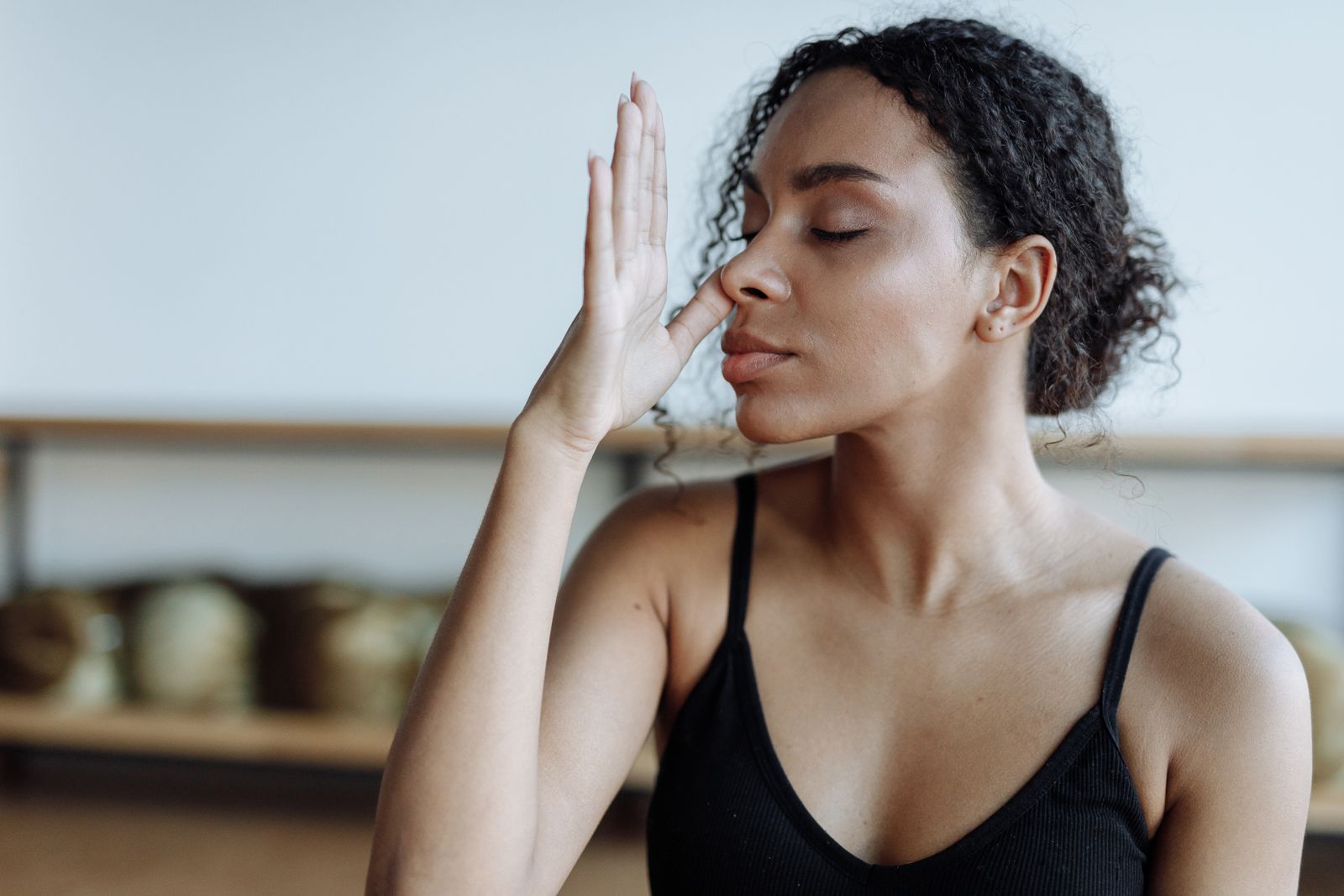
Myth check: is a deeper, faster, harder breath a better one?
No. Forcing big, fast breaths is the most common beginner mistake and the usual cause of dizziness. Good breathing exercises feel smooth, quiet and comfortable, with a relaxed face and shoulders. If you are straining, you are doing too much, and a smaller, slower breath is the fix.
- “More minutes means more benefit.” Not really. Five relaxed minutes every day usually does more for you than one long, tense session on Sunday.
- “Breathing exercises cure asthma, high blood pressure or anxiety.” They do not. They can be a supportive habit next to medical care, never a replacement for it. See our guides on yoga for asthma and yoga for blood pressure for a careful look at how gentle practice fits in.
How long should you do breathing exercises each day?
Five to 15 minutes a day is a realistic target for beginners, and it can be split into short sessions of 2 to 5 minutes. Start with about 5 minutes in week one and add a few minutes only when everything feels easy. Regularity matters more than length, so a daily habit beats an occasional long practice.
| Week | Morning | Midday | Evening | Total per day |
|---|---|---|---|---|
| Week 1 | Belly breathing, 3 min | – | Extended exhale (4 in, 6 out), 2 min | About 5 min |
| Week 2 | Belly breathing, 3 min | Box breathing, 6 rounds (about 2 min) | Extended exhale, 3 min | About 8 min |
| Week 3 | Belly breathing 2 min, then anulom vilom 5 rounds | Box breathing, 2 min | Bhramari, 5 rounds | About 10 min |
| Week 4 | Belly breathing 2 min, anulom vilom 7 to 10 rounds | Box breathing or extended exhale, 2 to 3 min | Bhramari 5 to 7 rounds, then 2 min quiet breathing | About 10 to 12 min |
Treat the table as a template: if a week feels hard, repeat it. Leave roughly 2 to 3 hours after a heavy meal before belly-focused practice.
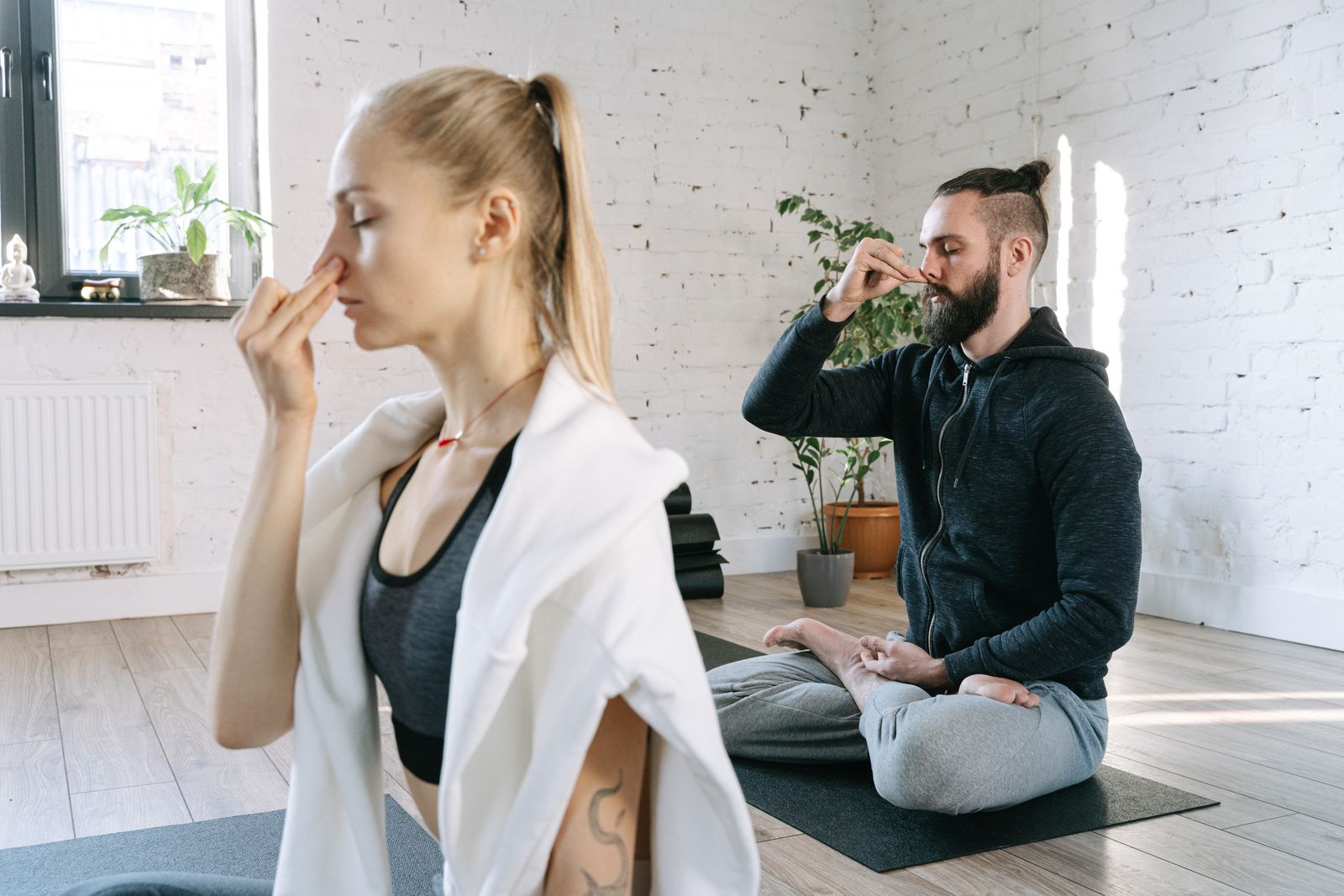
Troubleshooting: why does it feel wrong?
Most problems come from trying too hard, going too fast or slouching. Usually the fix is the same: stop, breathe normally for a minute, and restart smaller and slower. Persistent symptoms are a reason to see a doctor, not to push through.
| What you notice | Likely cause | What to try |
|---|---|---|
| Dizziness or lightheadedness | Breathing too fast or too deep; long holds | Stop and rest. Next time use a smaller breath, no holds and fewer minutes. |
| Tingling in fingers or around the mouth | Overbreathing | Return to normal breathing. Shorten the session and slow the pace. |
| Chest or shoulders rising, neck tense | Using the upper chest instead of the diaphragm | Place a hand on the belly and aim to move that hand first. Drop the shoulders. |
| Mind wandering or falling asleep | Normal; breath work is relaxing | Count rounds, sit upright, or move the session earlier in the day. |
Which breathing exercises suit stress, sleep and yoga practice?
For stress, use a longer exhale or box breathing for 2 to 3 minutes. For sleep, use belly breathing or bhramari for 5 to 10 minutes in a dim room. Yoga students can add a short seated practice to their classes. These are simple supports, and they sit alongside sleep, food and movement, not above them.
- Office or study stress: Two minutes of box breathing between tasks resets focus. Pair this habit with our guide to yoga for stress.
- Anxious moments: Slow, extended-exhale breathing can take the edge off everyday worry. If anxiety is frequent or hard to control, see a professional, and read our note on yoga for anxiety.
- Bedtime: Lie on your back, breathe into the belly, make each exhale a little longer than the inhale, and keep the lights low.
- Yoga students: In moving styles such as vinyasa and ashtanga, the breath is woven through the postures, usually as ujjayi, so a separate five minutes of seated practice still adds value.
Who should see a doctor before trying breathing exercises?
Gentle belly breathing is safe for most healthy adults. See your doctor first if you have asthma, COPD or another lung condition, a heart condition, high or low blood pressure, are pregnant, or have persistent anxiety or panic. Forceful techniques such as kapalbhati and bhastrika carry the most precautions.
- Asthma, COPD or other lung conditions: Ask your doctor which techniques suit you and keep your prescribed medicines and inhalers with you. Never stop or change them on the strength of a breathing practice.
- Heart conditions, high or low blood pressure, or a history of stroke: Avoid fast, forceful breathing and long holds unless your doctor agrees. Keep to slow, relaxed breathing.
- Pregnancy: Stay with gentle, slow breathing and skip forceful abdominal techniques and breath holds. Ask your doctor or midwife before starting anything new.
- Persistent anxiety, panic attacks or low mood: Breathing exercises can be a helpful extra but are not a treatment. Some people find that focusing on the breath makes panic worse, so go gently and talk to a doctor or mental health professional.
- Hernia, recent abdominal or eye surgery, or ulcers: Avoid forceful abdominal techniques unless cleared by your doctor.
Stop at once if you feel dizzy, faint, short of breath, or notice chest pain or palpitations, and seek medical help if these do not settle quickly. Learning with a qualified teacher who can watch your posture and pace is safer than learning from videos alone.
Frequently asked questions about breathing exercises
What is the best breathing exercise for beginners?
Belly (diaphragmatic) breathing is the best place to begin. It needs no special hand positions: breathe in through the nose for about 4 counts so the belly rises, and breathe out for 4 to 6 counts. Practise for 3 to 5 minutes daily, then add anulom vilom or bhramari after a week or two.
How long should you do breathing exercises each day?
Five to 15 minutes a day is a sensible range for beginners, split into two or three short sessions if you like. Start with around 5 minutes and extend slowly. A short daily habit usually works better than an occasional long session, and you should never push through dizziness to hit a time target.
Can breathing exercises replace medical treatment?
No. Breathing exercises can support relaxation and general wellbeing alongside medical care, but they do not replace prescribed treatment for asthma, blood pressure, heart disease, anxiety or any other condition. Keep following your doctor’s advice and take your medicines as directed. Mention your breathing practice at your next appointment.
Is it normal to feel dizzy during breathing exercises?
Mild lightheadedness can happen when beginners breathe too fast, too deeply or hold the breath too long. Stop, breathe normally and rest until it passes, then restart with smaller, slower breaths and no holds. If dizziness keeps returning, or comes with chest pain or fainting, speak to a doctor.
What is the difference between pranayama and regular deep breathing?
Regular deep breathing is simply taking slower, fuller breaths with no set pattern. Pranayama is the traditional yogic system of defined techniques, each with its own pattern of inhale, hold and exhale, and often a particular posture or hand position. Many pranayama techniques build on simple deep breathing exercises.
Want to learn these techniques with a teacher watching your posture and pace? Book an online session with Fitstrot’s online yoga classes and ask your instructor to start you on a beginner breathing sequence.


