

Every Sun Salutation has a moment where you fold forward and let your head and arms hang toward the floor. That shape is hastapadasana, the Hand-to-Foot Pose, and it feels simple until tight hamstrings or a sore lower back turn it into a tug of war. This guide covers how to do hastapadasana step by step, which props make it comfortable, what the standing forward bend actually stretches, and who should skip or modify it. You do not need to touch the floor to do it well.
What is hastapadasana and what does the name mean?
Hastapadasana is a standing forward fold in which you hinge from the hips and bring your hands down toward your feet. The name joins three Sanskrit words: hasta (hand), pada (foot) and asana (pose), so it translates as Hand-to-Foot Pose. In Surya Namaskar it follows the upward stretch of Talasana.
Names and details vary between schools. Some lineages call this fold padahastasana or uttanasana, while others reserve padahastasana for the version where the hands slide under the feet. If a teacher uses one of these words, ask which version they mean. This guide covers the classic shape: legs close to straight, spine long, palms beside the feet, head heavy. Its upward-reaching partner is Talasana (Palm Tree Pose).
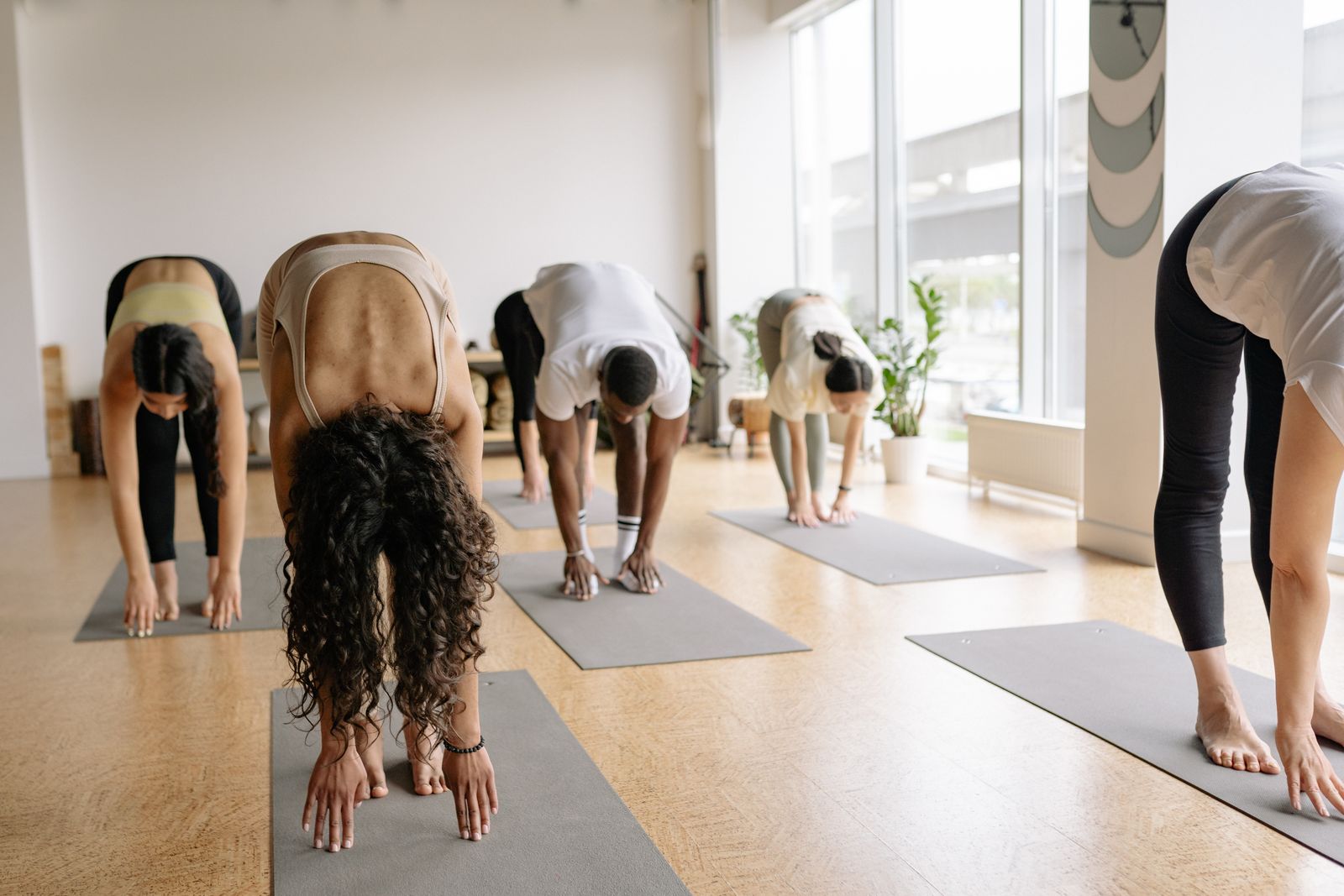
How do you do hastapadasana step by step?
Stand in Tadasana with feet hip-width apart, inhale and reach your arms overhead, then exhale and hinge forward from the hips with a long spine. Lower your hands to the floor, blocks or shins, soften the knees, relax the neck and stay for five to eight breaths. Rise with a flat back on an inhale.
- Set your feet. Stand with feet hip-width apart, weight spread evenly across the heels and the balls of the feet. Keep the knees soft.
- Inhale, reach up. Sweep both arms overhead and lengthen through the sides of the waist.
- Exhale, hinge. Send the hips back and lead with the chest. Think of folding at the creases where thighs meet the pelvis, not at the waist. Keep the back long until the torso is roughly parallel to the floor.
- Fold down. Go only as far as the spine stays long. Bring the hands to the floor beside the feet, or to blocks or shins if the floor is out of reach.
- Soften. Keep a micro-bend in the knees, let the head and neck hang heavy, and move the shoulders away from the ears.
- Breathe. Take five to eight slow breaths. On each exhale let the torso get heavier; do not pull yourself deeper.
- Come out with control. Place hands on hips, bend the knees, and inhale up with a flat back, lifting the head last.
Alignment checkpoints at a glance
Run through these five checks every time; they prevent most of the strain people feel in this pose.
| Checkpoint | What it should feel like | Common error | Quick fix |
|---|---|---|---|
| Hip hinge | Stretch behind the thighs, back long | Curling the lower back to reach the floor | Bend the knees, lift the hands onto blocks |
| Foot pressure | Even across heels and balls of feet | Weight tipping onto the toes | Draw the hips back over the ankles |
| Knees | Soft, a slight bend | Snapping the knees straight | Keep a visible micro-bend |
| Neck | Loose, head hanging | Craning to look at the shins | Let the chin drop and gaze at the floor |
| Shoulders | Broad, away from the ears | Hunching and gripping | Rest the hands lower and exhale the shoulders down |
What props and modifications help if your hands do not reach the floor?
If your hands do not reach the floor, bend your knees generously and place yoga blocks, a stack of books or the seat of a sturdy chair under your hands. Keep the spine long and the hold to about five breaths. Reach is a result of weeks of practice, never a requirement for doing the pose well.
Most beginners have tight hamstrings, so props are the standard way to learn it. Choose the version that keeps your back long.
| Version | Set-up | Best for | Typical hold |
|---|---|---|---|
| Bent-knee fold | Knees bent, belly resting on the thighs, fingertips or palms on the floor | Tight hamstrings, first weeks of practice | 5 breaths |
| Hands on blocks | One block under each hand, medium or tall setting | Keeping the spine long when the floor feels far | 5 to 8 breaths |
| Hands on shins | Hands rest on the shins or just above the knees | Lower back sensitivity, stiff mornings | 3 to 5 breaths |
| Chair or counter fold | Hands on a stable chair seat or counter, hips back, torso flat like a table | Very tight hamstrings, desk workers, older adults | 5 breaths |
| Full straight-leg fold | Legs close to straight, palms flat beside the feet | Comfortable hamstrings and a steady hip hinge | 5 to 8 breaths |
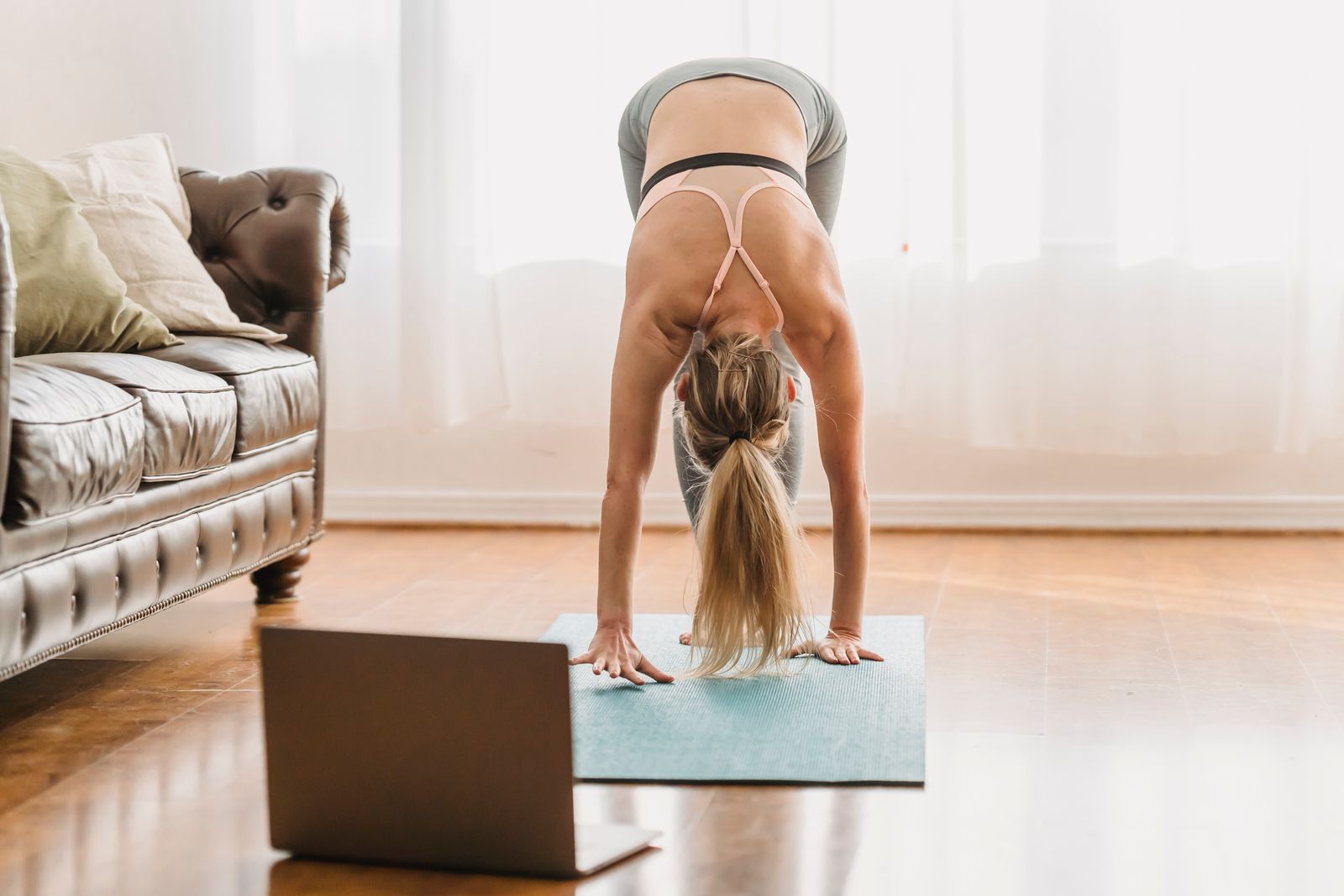
Two myths about hastapadasana, corrected
Myth: your palms must touch the floor. They need not. The point of the pose is a long spine and a relaxed fold at the hips. Palms on blocks and a bent knee is the same pose at a different depth, and it is often the safer one.
Myth: locking the knees gives a deeper stretch. It tends to move the load onto the hamstring attachments near the sit bones and the lower back. A small bend lets the muscle belly lengthen, and many people actually fold further that way.
What are the benefits of hastapadasana?
Practised gently, hastapadasana lengthens the hamstrings, calves and back muscles, and many people find it eases stiffness after long sitting. Slow breathing in the hold often feels calming. It is not a treatment for any medical condition, and flexibility changes usually take several weeks of regular practice.
- Hamstring and calf length: Regular, gentle holds can gradually increase how far you can hinge forward, which supports other yoga poses that use a forward hinge.
- Back relief for some people: Hanging with soft knees takes load off the spine for a few breaths, which many desk workers find pleasant. If a fold increases back pain, skip it that day.
- Calm and focus: Forward folds draw attention inward, and a long exhale in the hold helps many people feel settled.
- Gentle abdominal compression: Light pressure of the belly against the thighs is why forward folds feature in routines built around yoga for digestion. Practise on an empty stomach, or wait about two to three hours after a heavy meal.
Who should avoid or modify hastapadasana?
Skip or modify hastapadasana if you have an acute lower back injury, a disc problem, active sciatica, a recent hamstring strain, glaucoma or uncontrolled high blood pressure, or if you are pregnant. Check with your doctor or physiotherapist first. Sharp, shooting or tingling pain means stop and come out slowly.
These are the main hastapadasana contraindications and how to adjust:
- Lower back pain or disc problems: Avoid deep folds during flare-ups or after recent surgery. Once cleared, use a chair or counter fold with a flat back instead of hanging.
- Sciatica: Pain or tingling that travels down the leg can worsen with a deep hamstring stretch. Do not push through it; ask a clinician which movements suit you.
- Hamstring injury: A recent strain or tear needs rest and clearance first. Return with bent knees and a small range.
- Glaucoma or high blood pressure: With the head below the heart, pressure in the head and eyes can rise. People with glaucoma or poorly controlled blood pressure are usually advised to keep the head at or above heart level, for example with a chair fold, and to confirm with their doctor.
- Pregnancy: Use a wider stance, hands on a chair or wall, and a shallow hinge so the belly is not compressed. Check with your doctor or a prenatal yoga teacher, especially in the second and third trimesters.
See your doctor or physiotherapist if a forward fold causes pain that lingers, numbness, or any symptoms you cannot explain. Yoga does not replace medical advice.
Troubleshooting: what common sensations in the fold mean
| What you feel | Likely cause | What to try |
|---|---|---|
| Pull behind the thighs | Normal hamstring stretch | Stay, breathe, keep a slight bend in the knees |
| Ache across the lower back | Rounding at the waist instead of hinging at the hips | Bend the knees more and raise the hands onto blocks or shins |
| Sharp pain near the sit bone | Overloaded hamstring attachment | Come out, rest, and return with a smaller range |
| Pressure in the head or eyes | Head hanging below the heart | Shorten the hold or use a chair fold; check with your doctor if it repeats |
| Tingling or shooting pain down a leg | Possible nerve irritation | Stop, come out slowly and speak to a clinician |
How does hastapadasana fit into Surya Namaskar?
In the classic twelve-step Surya Namaskar, hastapadasana appears twice: as the third position, after Pranamasana and the upward stretch, and again as the tenth on the way back up. Because it comes early, it is a quick check of hamstring tightness before the lunge and plank.
Inside a round you hold it for just one or two breaths, so the fold is dynamic rather than a long stretch. The alternation between reaching up and folding down mobilises the spine in both directions, which is why Surya Namaskar works as a warm-up. If your palms stay off the floor in a flowing round, bend the knees; rhythm matters more than depth.
How does hastapadasana vs uttanasana look in practice? In many vinyasa and ashtanga classes, the same shape is cued as uttanasana, with more freedom to bend the knees and place the hands beside or in front of the feet. In hatha-style teaching, the straighter-leg, palms-beside-feet version is often described as hastapadasana. If you move between styles, see our guides to hatha yoga, vinyasa yoga and ashtanga yoga. Build the hamstring length patiently and deeper leg-stretching shapes such as Samakonasana become more approachable.
How long and how often should you practise hastapadasana?
Hold hastapadasana for five to eight slow breaths, roughly 30 to 45 seconds, once or twice per session. Three to five sessions a week is a sensible target. Inside a Surya Namaskar round you stay for only one or two breaths. Expect gradual change over several weeks, not days.
Breath is the control knob. Fold on the exhale, which softens the belly and lets the hips hinge without force. In the hold, breathe slowly through the nose, and let the exhale run a little longer than the inhale. If breathing turns tight, ease up. This exhale-to-release habit appears across pranayama, and after a standing sequence you can sit for a few minutes of quiet breathing, perhaps with Yoni Mudra.
Hastapadasana for desk workers, runners and gym-goers
Desk workers: Long office days plus a commute mean hours of sitting. A one-minute chair fold or soft-knee hang every few hours is easier to keep up than one long weekend stretch.
Runners and gym-goers: Tight hamstrings and calves are common. Fold gently after a session, with warm muscles, not right before a fast run or heavy deadlifts. A trainer in 1-on-1 personal training can fit mobility work around your split.
Frequently asked questions about hastapadasana
What does hastapadasana mean in Sanskrit?
Hastapadasana combines three Sanskrit words: hasta (hand), pada (foot) and asana (pose or seat). Together the name means Hand-to-Foot Pose, describing the way the hands travel down toward the feet during a standing forward bend.
Is hastapadasana the same as uttanasana?
They are closely related standing forward folds and look alike. Hastapadasana in Surya Namaskar usually stresses straighter legs and palms beside the feet, while uttanasana in vinyasa classes often allows more knee bend and varied hand placement. Teachers use the names differently, so ask yours.
How long should you hold hastapadasana?
As a standalone stretch, hold for five to eight slow breaths, about 30 to 45 seconds. Inside Surya Namaskar the pose lasts just one or two breaths before you move on. Come out earlier if you feel pain, dizziness or pressure in the head.
Can beginners with tight hamstrings do hastapadasana?
Yes. Bend the knees generously and rest the hands on blocks, shins or a sturdy chair instead of forcing the palms down. The pose is useful at any depth, and reach tends to improve gradually over weeks of gentle, regular practice.
Who should not do hastapadasana?
People with acute lower back injury, disc problems, active sciatica, a recent hamstring strain, glaucoma or uncontrolled high blood pressure should avoid the full fold unless their doctor or physiotherapist agrees. Pregnant practitioners should use a wider stance and a shallow hinge, with guidance from their doctor or a prenatal teacher.
Want someone to check your hip hinge and pick the right props for your body? Join a live session in Fitstrot’s online yoga classes and bring your hastapadasana questions.


