
Yoga for varicose veins is a supportive habit, not a treatment. Gentle movement and leg elevation can ease the heavy, aching, swollen feeling many people get by evening, especially after a day on their feet. They will not close faulty valves or make visible veins disappear. This guide covers who should check with a doctor first, the red flags that need medical care, a handful of safe poses, what to avoid, and a four-week plan you can follow at home.
Can yoga help varicose veins?
Yoga can help with the symptoms of varicose veins, such as heaviness, aching and ankle swelling, mainly through calf movement and leg elevation. It cannot repair damaged vein valves or remove veins that have already bulged. Treat it as a supportive habit alongside medical advice, never as a replacement for it.
Here is why movement matters. Blood in your legs has to travel upward, against gravity, to reach the heart. Healthy veins have one-way valves that stop it sliding back down. In varicose veins those valves weaken, so blood pools in the lower leg and the vein wall stretches, twists and bulges. Your calf muscles act as a second pump: every time you flex your ankle or walk, they squeeze the deep veins and push blood upward. Standing or sitting still for hours switches that pump off, which is why legs often feel worst at the end of a long shift.
See your doctor first if any of this applies to you
This is general education, not a diagnosis. Get a doctor or vascular specialist to look at your legs before you start, and certainly before you try any pose below, if you fall into any of these groups:
- You have ever had a blood clot, deep vein thrombosis (DVT) or a clot in the lungs.
- One leg is currently painful, swollen, tender or heavier than the other.
- You have open sores, hardened skin near the ankle, or a recent vein procedure.
- You have uncontrolled high blood pressure, heart failure or another heart condition, or you have been told not to lie with your legs raised.
- You are pregnant and your legs are swelling fast.
Stop and get medical care promptly if you notice:
- Sudden swelling in one leg, especially with calf pain or tightness.
- Redness, warmth or a tender, hard cord along a vein.
- A sore or ulcer near the ankle that is not healing, or any bleeding from a vein.
- Chest pain, sudden breathlessness, coughing or a racing heart, particularly alongside leg symptoms. Treat this as an emergency and call 112 in India.
Never stop or change a prescribed medicine, including blood thinners, because of yoga. Ask the doctor who prescribed it.
What can yoga do compared with other options?
Yoga improves comfort by adding calf movement and leg elevation, but only a medical procedure can close or remove a damaged vein. Most people do best combining several supportive habits, with a doctor deciding whether stockings or a procedure make sense for their legs.
| Approach | What it can do | What it cannot do | Worth knowing |
|---|---|---|---|
| Gentle yoga | Adds calf movement, eases heaviness, helps you stay active | Remove veins or repair valves | Keep holds short; skip strong inversions without approval |
| Leg elevation | Lets gravity drain pooled blood from the lower leg | Fix faulty valves | Roughly 10 to 15 minutes, legs above heart level, a few times a day |
| Compression stockings | Give graduated pressure that supports blood flow | Cure the veins | Strength and fit should come from a doctor, not guesswork |
| Medical procedures | Close or remove damaged veins | Prevent new ones forming | Decided after a vascular assessment |
| Oils and home pastes | Feel soothing for some people | Shrink veins; there is no reliable proof they do | Never rub hard over a bulging vein |
Myth: you can stretch, press or massage varicose veins away
Varicose veins are a structural problem inside the vein, so no pose, foam roller, deep massage or hard thumb pressure will push them back. Pressing firmly on a bulging vein can cause pain and bruising, and if a clot is present it is the last thing you want to do. A realistic goal is lighter, less swollen legs, not different-looking veins.
Which yoga poses are safe for varicose veins?
Gentle, low-effort poses suit most people: legs-up-the-wall for 5 to 10 minutes, ankle pumps and circles for 1 to 2 minutes, short bridge holds of 3 to 5 breaths, and a strap-assisted reclining leg stretch. Keep every hold short, stay pain-free, and check with your doctor first if any warning sign above applies to you.
| Pose | How to do it | How long | Be careful if |
|---|---|---|---|
| Viparita Karani (legs up the wall) | Lie on your back, hips a hand-width or more from the wall, legs resting up the wall with soft knees | 5 to 10 minutes | Feet tingle or go numb; you have a heart or blood pressure condition |
| Ankle pumps and circles | Lying or seated, point and flex the feet, then circle each ankle slowly both ways | 1 to 2 minutes per leg | You feel sharp calf pain |
| Supta Padangusthasana (reclining leg stretch) | Loop a strap around the foot, not the calf, lift the leg and keep the knee slightly bent | 5 breaths, each side | You pull hard or feel pressure behind the knee |
| Setu Bandhasana (bridge, low lift) | Feet hip-width apart, lift hips only as high as is comfortable, keep the neck relaxed | 3 to 5 breaths, 3 rounds | Neck discomfort or dizziness |
| Heel raises at a wall | Hold the wall, rise onto the toes, lower slowly | 10 to 15 reps, twice | Balance is unsteady |
| Supported reclining butterfly (Supta Baddha Konasana) | Lie back with a cushion under each knee, soles together, arms relaxed | 2 to 3 minutes | Knees feel strained or the groin feels tight |
Walkthrough: legs up the wall, step by step
Legs up the wall for varicose veins is the pose most people start with, because it asks for almost no muscular effort.
- Sit sideways with one hip touching the wall, then lie back and swing your legs up as you turn.
- Slide your hips to a comfortable distance from the wall. If the backs of your thighs feel tight, move further away and bend your knees a little.
- Rest your arms by your sides and breathe slowly through the nose for 5 to 10 minutes.
- To come out, bend your knees, roll to one side, rest for a minute, then sit up slowly.
Which poses and habits should you skip with varicose veins?
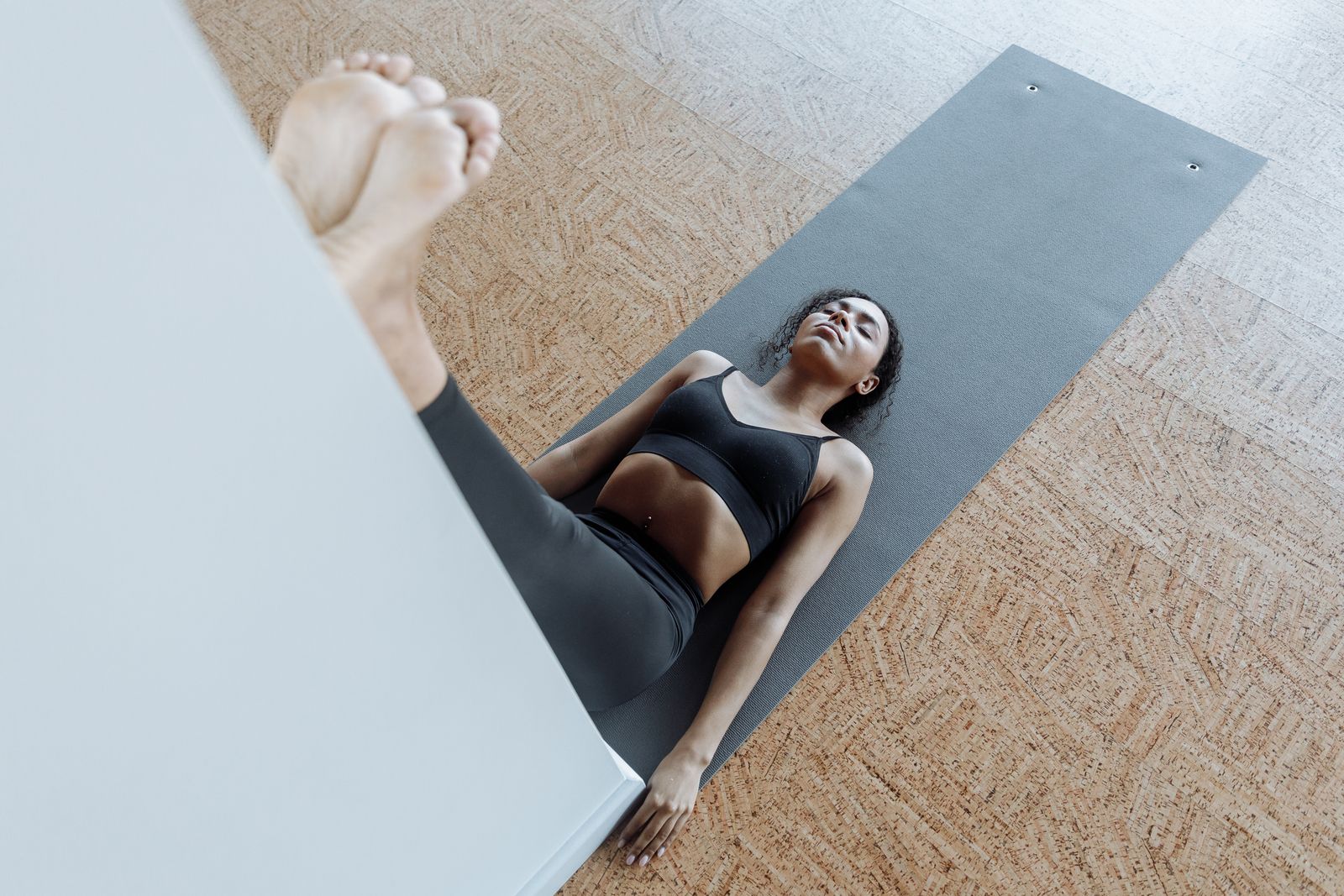
Skip long static holds, deep squats such as malasana held for minutes, strong inversions like headstand or shoulder stand unless your doctor approves, hot yoga, and anything that presses hard on a vein. Prefer holds of under a minute, with 30 to 60 seconds of gentle movement between poses.
- Long static standing poses: holding warrior or tree pose for minutes keeps blood pooling in the lower leg.
- Deep, prolonged squats and kneeling on the heels: keep them brief or skip them.
- Strong inversions: headstand, shoulder stand and plough are best avoided unless a doctor has said they are fine for you.
- Hard pressure on veins: no foam rolling over bulging veins, no digging a block or elbow into the calf, no tight straps over the vein.
- Hot rooms and hot yoga: heat widens veins and can make legs feel heavier.
- Long cross-legged sitting: 20 minutes or more can leave legs stiff and tingling.
- Breath holds and forceful breathing: stick to slow, relaxed breathing, as in online yoga for stress relief.
A four-week gentle routine you can start at home
Start with this one-week pattern and repeat it for four weeks, adding only a minute or two where it feels easy. Never push legs-up-the-wall beyond 10 minutes. Many people notice their legs feel lighter within a few weeks, but this varies, and the veins themselves will look the same.
| Day | Practice | Time | Note |
|---|---|---|---|
| Monday | Ankle pumps and circles, legs up the wall | 10 to 12 minutes | Evening |
| Tuesday | Heel raises, reclining leg stretch with strap, short bridge | 15 to 20 minutes | Rest between poses |
| Wednesday | Easy walk plus legs up the wall | 20 minutes walk, 5 to 10 minutes pose | Easy pace |
| Thursday | Ankle pumps, supported reclining butterfly, slow breathing | 15 minutes | Relaxed breathing |
| Friday | Full gentle sequence: ankles, heel raises, bridge, strap stretch, legs up the wall | 20 to 25 minutes | Stop if legs ache |
| Saturday | Easy walk or a light chair-based session | 20 to 30 minutes | Sit when needed |
| Sunday | Rest, with leg elevation on a sofa or bed | 10 to 15 minutes | Legs above heart level |
On every day, add ankle pumps whenever you have been still for 30 to 45 minutes. If you have been advised compression stockings, ask your doctor whether to wear them during practice.
Troubleshooting: when your legs feel worse after yoga
- Legs feel heavy or throbbing afterwards: your holds were probably too long or the room too warm. Shorten each hold, practise in a cooler space and finish with 5 minutes of leg elevation.
- Feet tingle or go numb in legs-up-the-wall: move your hips a little further from the wall, soften the knees and come out sooner next time.
- One leg suddenly swells: this is a red flag, not a troubleshooting problem. Get medical care the same day.
For desk workers, teachers, shopkeepers and nurses: movement breaks through the day
If your job keeps you in one position, small breaks matter more than one long session. Every 30 to 45 minutes, do 10 to 15 heel raises, pump your ankles for a minute and walk for 2 to 3 minutes. Put your feet up for 10 to 15 minutes in the evening.
A chair yoga routine is a good fit for desk work, and yoga for seniors shows how to scale movements for older legs and joints. For stiffness from long standing, try yoga for back pain and yoga for lower back pain, skipping anything on the avoid list above.
Extra body weight adds pressure on leg veins, so slow, steady weight management helps; yoga for weight loss offers a gentle starting point. Avoid crash diets.
Which yoga style suits varicose veins best?
Restorative and chair-based classes usually suit varicose veins best because holds are supported and effort is low. Slow vinyasa can work if it keeps moving, while yin needs shorter holds. Fast power flows and hot classes are poor fits for most people with leg vein problems.
- Restorative yoga relies on props and relaxation, and includes poses like legs up the wall.
- Vinyasa yoga keeps the legs moving, but pick a slow class and avoid long standing holds.
- Yin yoga uses long holds, which is a poor match here. If you try it, keep holds to 1 to 2 minutes and avoid positions that squeeze the legs.
If you are new to yoga, types of yoga helps you compare styles, and benefits of yoga explains what regular practice can realistically offer.
Frequently asked questions about yoga for varicose veins
Is yoga safe if I have varicose veins?
Gentle yoga is generally considered safe for most people with mild varicose veins, especially leg elevation, ankle movement and short supported poses. Avoid long static holds, strong inversions and hot classes. If you have had a clot or have a painful, swollen leg, get a doctor’s approval before you start.
Can yoga cure varicose veins?
No. Yoga cannot repair damaged vein valves or remove veins that have already bulged. It can ease heaviness and swelling by improving calf movement and leg elevation. Only procedures decided by a vascular doctor can close or remove a vein, so see a doctor if the veins bother you.
How long should I stay in legs up the wall for varicose veins?
Most people do well with 5 to 10 minutes, once or twice a day, usually in the evening after being on their feet. Come out sooner if your feet tingle, go numb or you feel pain. People with heart or blood pressure conditions should check with a doctor first.
Can yoga make varicose veins worse?
Gentle yoga rarely makes varicose veins worse, but some habits can aggravate symptoms: long static standing poses, deep squats held for minutes, hot rooms, strong inversions and pressing hard on veins. If a leg becomes red, warm, painful or suddenly swollen, stop and see a doctor.
When should I see a doctor about varicose veins?
See a doctor if your legs ache daily, your skin darkens or itches near the ankle, or a vein looks inflamed. Seek urgent care for sudden one-leg swelling, redness, warmth, an ulcer, bleeding, or chest pain and breathlessness. Call 112 in an emergency.
Next step
Once your doctor has cleared you, book a beginner session in Fitstrot’s online yoga classes and tell the instructor about your varicose veins up front, so the poses and holds can be adjusted for your legs.


