
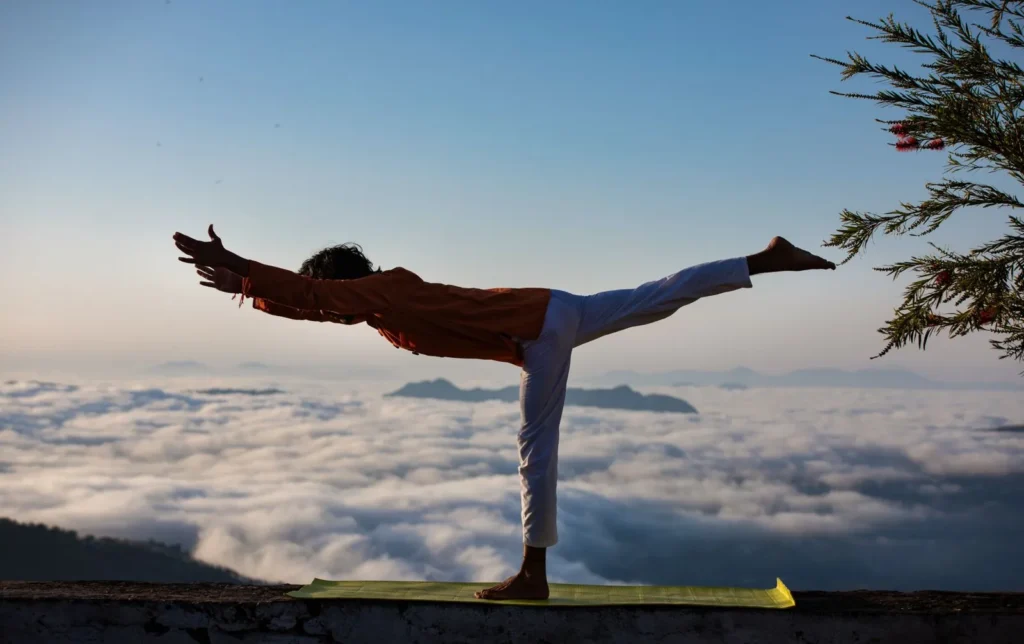
Yoga for stamina means using held poses, flowing sequences and slow breathing to build the capacity to keep going, whether that is a full class, a flight of stairs or a long workday. It will not turn you into a marathon runner in a month. Practised 4 to 5 days a week for 8 to 12 weeks, though, it can improve how long you hold a pose, how steadily you breathe under effort and how quickly you recover. This guide covers the poses, a 25-minute flow, a 4-week plan and the safety limits.
What does stamina mean, and can yoga actually build it?
Stamina is your ability to keep working at a steady effort without tiring early. It has three parts: heart and lung efficiency, muscular endurance and breath control. Yoga trains muscular endurance and breath control directly, and heart-lung fitness more modestly. Expect small gains in 4 to 8 weeks of regular practice and clearer ones by about 12 weeks.
Think of a yoga session as endurance training for your legs, core and shoulders. Holding Chair Pose or Warrior II asks the same muscle to keep working for 30 seconds or more while you stay calm and keep breathing. That skill carries over to everything else you do. If you want your stamina work to feed a fat-loss goal, our guide to yoga for weight loss shows how to shift the same poses toward more movement.
Which yoga poses build stamina best? A pose-by-pose table
The poses that build stamina fastest make a large muscle group hold effort while you keep breathing evenly. The table below gives starting hold times for a beginner. Treat them as ranges, shorten them if your form breaks down, and stop if anything hurts.
| Pose | Beginner hold | Breath cue | Form cue |
|---|---|---|---|
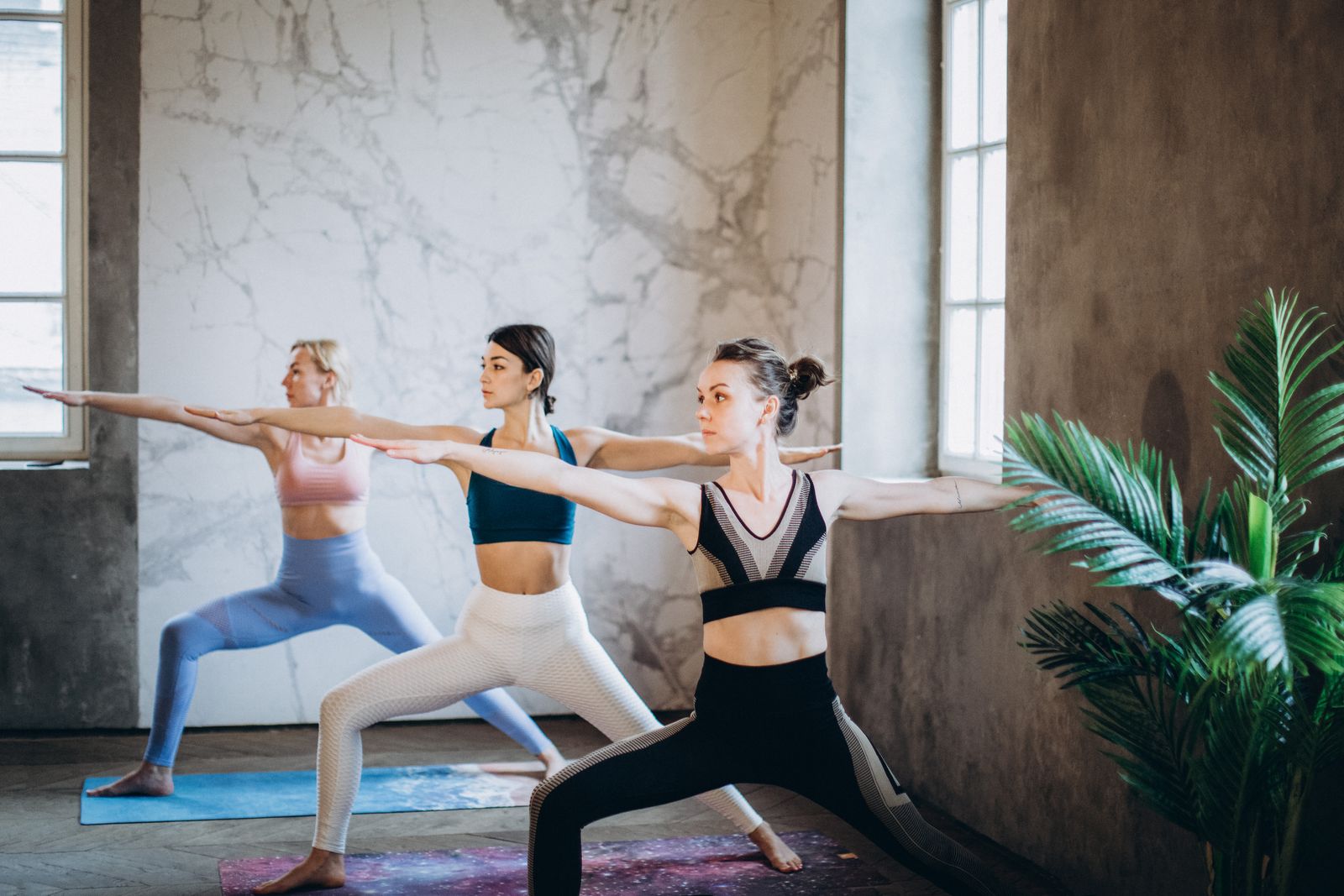
| Warrior II (Virabhadrasana II) | 20-40 seconds per side | Breathe in and out for a count of 4 through the nose | Front knee stays over the ankle; shoulders stacked over hips |
| Chair Pose (Utkatasana) | 15-30 seconds | Long, slow exhale as you sink lower | Weight in the heels, chest lifted, knees tracking over the toes |
| Plank | 15-30 seconds | Never hold the breath; exhale as effort rises | Wrists under shoulders, ribs drawn in, hips level |
| Boat Pose (Navasana) | 10-20 seconds | Breathe into the sides of the ribs | Keep the chest tall; bend the knees if the lower back rounds |
| Bridge Pose (Setu Bandhasana) | 20-30 seconds | Inhale to lift, exhale to lower | Press through the feet, squeeze the glutes, keep the neck still |
| Sun Salutation (Surya Namaskar) | 3-6 rounds, slowly | One breath per movement | Step back softly; keep the knees bent if hamstrings are tight |
Warrior poses are also the foundation of most standing sequences, and our yoga sequence guide shows how to link them into longer flows. For a wider view of the styles that suit endurance, see types of yoga.
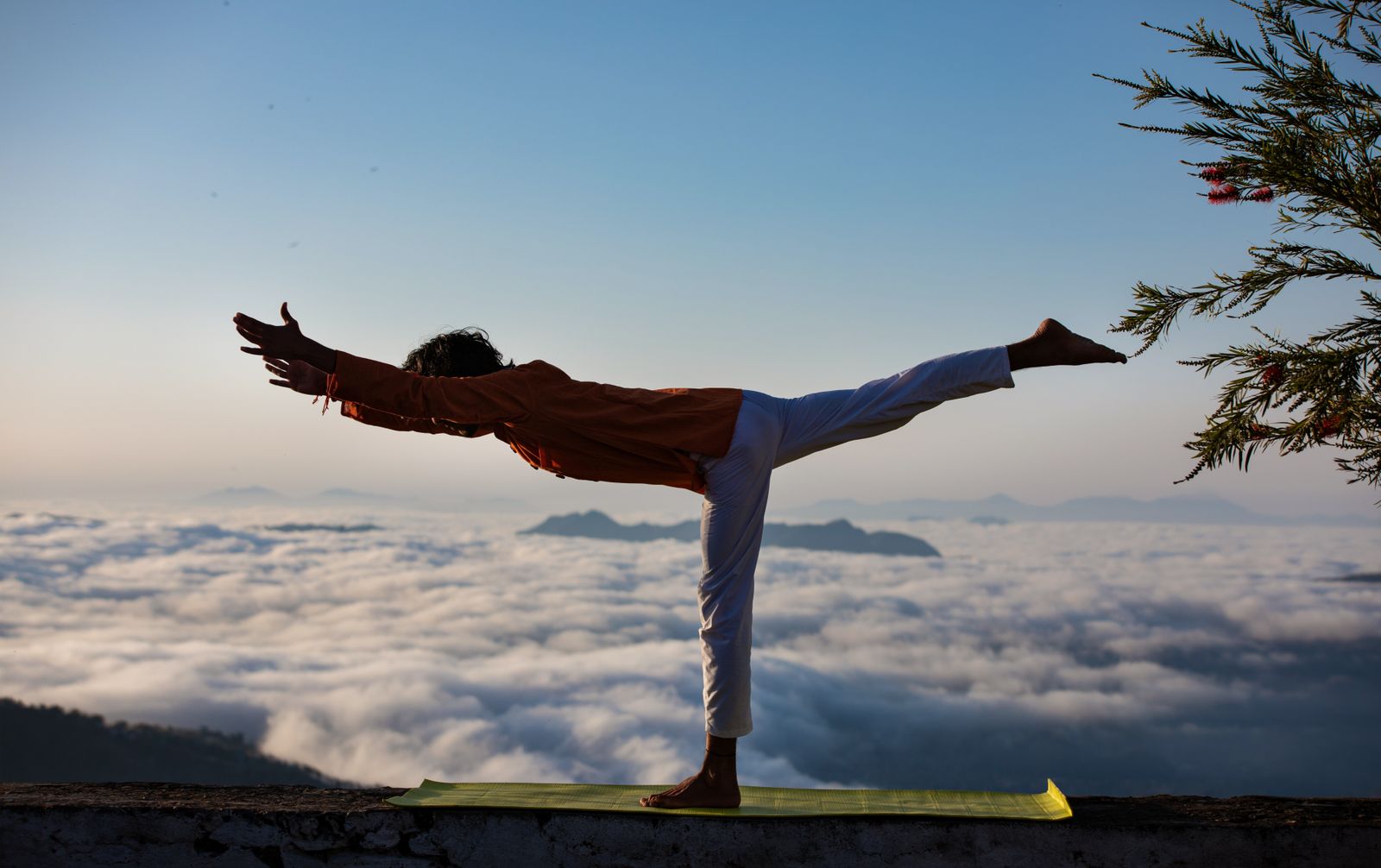
Myth check: is yoga too gentle to build stamina?
Partly a myth. A slow class where you stretch and rest between poses will not challenge your endurance much. A sequence with long holds, few rests and steady breathing will. Many beginners are surprised when their thighs shake in Chair Pose at 20 seconds.
The honest limit is this: yoga alone is unlikely to raise heart-lung fitness as much as brisk walking, cycling, swimming or dance-based cardio. If your main aim is cardiovascular stamina, combine yoga with 20 to 30 minutes of brisk walking on two or three days a week. Our zumba for stamina guide covers a higher-intensity option that pairs well with a yoga base.
How do I do a 25-minute yoga flow for stamina? A walkthrough
A 25-minute flow that links Sun Salutations, standing holds and a short breathing finish is enough to build stamina when repeated 3 to 4 times a week. Move slowly, keep your breath steady through the nose, and rest in Child Pose whenever you need to. Use this order.
- Minutes 1-3, settle: Sit or lie down and breathe slowly into the belly. Aim for an even count of 4 in and 4 out.
- Minutes 4-9, Sun Salutations: Do 3 to 4 slow rounds, one breath per movement. If you run out of breath, pause in Mountain Pose and restart.
- Minutes 10-16, standing holds: Warrior II, then Chair Pose, then Warrior I on each side, 20 to 40 seconds per pose, resting 10 seconds between.
- Minutes 17-20, core and back: Plank, Boat Pose and Bridge Pose, two short holds each. Keep exhaling through the effort.
- Minutes 21-25, cool-down: Forward fold, a gentle seated twist and a few minutes of lying on your back with slow breathing.
Does pranayama help stamina, and which breathing is safe?
Slow breathing practices help you stay calm and use your breath efficiently when you are working hard. Forceful techniques such as Kapalabhati and Bhastrika are stimulating and are not suitable for everyone. Beginners should start with slow belly breathing and gentle alternate-nostril breathing for about 5 minutes, without holding the breath.
A calm, even breathing pattern matters because shallow, rapid breathing makes any effort feel harder. Practising slow breathing for a few minutes after your poses teaches your body to settle quickly. Forceful breathing does not strengthen your heart and can cause light-headedness, so learn it from a qualified teacher rather than from a video, and skip it entirely if you fall into any group in the safety section below. For a gentler mind-and-breath foundation, try meditation for beginners.
What does a 4-week yoga plan for stamina look like day by day?
A simple 4-week plan uses three active sessions, two breath-and-hold sessions and two recovery days per week, adding 5 to 10 seconds to each hold every week. Use this table as a template for week 1 and extend it gradually. Sessions last about 20 to 30 minutes.
| Day | Session | Time | How it should feel |
|---|---|---|---|
| Monday | Sun Salutations plus Warrior II and Chair Pose | 25 minutes | Moderate; you can still speak a short sentence |
| Tuesday | Slow breathing plus gentle stretching | 15 minutes | Easy and calming |
| Wednesday | The 25-minute flow above | 25 minutes | Moderate to challenging |
| Thursday | Plank, Boat Pose and Bridge Pose holds plus breathing | 20 minutes | Muscles tired but breath steady |
| Friday | Sun Salutations plus standing holds | 25-30 minutes | Moderate; add a few seconds to each hold |
| Saturday | Brisk walk or easy activity you enjoy | 20-30 minutes | Comfortable pace |
| Sunday | Full rest or light stretching | As needed | Recovered |
Each week, add 5 to 10 seconds to each hold or one extra Sun Salutation round, but never both at once. If you feel unusually drained, repeat the previous week instead of pushing on. Adaptation happens during recovery, so the rest days are part of the plan. If you want to build the strength side as well, see yoga for strength.
How does yoga compare with other ways to build stamina?
No single activity is best for every body. Yoga is easy on the joints and strong for muscular endurance and breath control, while walking, dance and running build heart-lung fitness faster. The table compares them so you can combine them sensibly.
| Activity | Mainly builds | Joint stress | Best used for |
|---|---|---|---|
| Held yoga poses | Muscular endurance, balance, breath control | Low | Beginners, desk workers, recovering from time off |
| Flowing yoga (Surya Namaskar) | Light cardio plus endurance | Low to moderate | A warm-up or a short daily routine |
| Brisk walking | Heart and lung fitness | Low | Almost everyone, 20-30 minutes on most days |
| Zumba or dance fitness | Cardio and coordination | Moderate | People who stick to music-led workouts |
| Running | Heart and lung fitness, leg endurance | Higher | Those with a base of fitness and good footwear |
Why am I still tiring early? Troubleshooting common problems
- You hold your breath in hard poses. This makes fatigue arrive faster. Shorten the hold until you can keep exhaling smoothly.
- Your legs shake within 15 seconds. That is normal early on. Hold for less time, repeat the pose twice and build up over weeks.
- You feel dizzy when you come up. Rise slowly, avoid practising on an empty stomach after a long gap, and sip water. If dizziness keeps happening, stop and see a doctor.
- You practise right after a heavy meal. Leave 2 to 3 hours after a full thali and about an hour after a light snack.
- You are inconsistent. Three short sessions a week beat one long one. Pick fixed days.
- You sleep too little. Stamina is built in recovery, and poor sleep undoes progress.
Food also matters. A banana or a few soaked dates 30 to 45 minutes before practice gives quick fuel, and a meal of dal, roti or rice, sabzi and curd afterwards supports recovery. Drink water through the day, not only during practice. If you want a plan built around your own diet, our online nutritionist consultation can match meals to your training days.
Who should avoid or modify yoga for stamina?
Yoga for stamina is supportive exercise. It is not a treatment or a cure for any medical condition. Check with your doctor before starting, and modify or avoid these practices if any of the following applies:
- High blood pressure that is not well controlled, or any known heart condition: avoid forceful breathing and long strenuous holds.
- Pregnancy: avoid forceful breathing, deep core work like Boat Pose and long strenuous holds; practise only with guidance from your doctor and a prenatal-trained teacher.
- Recent surgery, a hernia or an abdominal condition: skip core-heavy poses and forceful breathing until cleared.
- Glaucoma, vertigo or frequent dizziness: avoid inversions and fast transitions.
- Diabetes treated with insulin or tablets that can lower blood sugar: do not practise on an empty stomach and carry a quick sugar source.
- Epilepsy, severe asthma or a lung condition: avoid forceful breathing unless your doctor agrees.
- A new injury, fever or infection: rest until recovered.
See your doctor first, and stop immediately if needed. Stop and seek medical help if you get chest pain or pressure, fainting, sudden severe breathlessness, a racing or irregular heartbeat, or a sharp pain. Do not stop or change any medicine because you have started yoga. Unexplained tiredness that lasts for weeks is not a yoga problem. It deserves a medical check for causes such as anaemia, thyroid problems or poor sleep.
Yoga for stamina for beginners, runners and desk workers
Complete beginners: Start with 10 to 15 second holds, 2 to 3 Sun Salutation rounds and 3 sessions a week. Learn the basic alignment first. A live teacher helps more than a video here. Begin with the pose table above and the week-1 plan.
Runners and cyclists: Use yoga on easy days, not before a hard session. Warrior II and Chair Pose build leg endurance, and hip openers can ease tightness. It supports your main training; it does not replace it.
Desk workers: Long sitting leaves hips tight and shoulders rounded, which wastes energy. Pair these holds with yoga for posture and yoga for flexibility so movement feels less tiring.
Teenagers and young adults: Short, regular sessions are fine. If you are following a yoga to increase height routine, keep intensity moderate and prioritise sleep and food, since growth depends on them. For a broader picture of what regular practice offers, read the benefits of yoga.
Frequently asked questions about yoga for stamina
How long does yoga take to improve stamina?
Most beginners notice they can hold poses longer within 3 to 4 weeks of regular practice. Clearer changes, such as feeling less breathless on stairs, usually take 8 to 12 weeks of 3 to 5 sessions a week. Results vary with your starting fitness, sleep, food and consistency.
Can beginners do yoga for stamina?
Yes. Beginners should start with shorter holds of 10 to 20 seconds, 2 to 3 Sun Salutation rounds and plenty of rest between poses. Add a few seconds each week as your breathing stays steady. Check with your doctor first if you have a health condition.
Is yoga or running better for stamina?
They build different things. Running improves heart and lung fitness faster but is harder on the joints. Yoga builds muscular endurance and breath control with lower impact. Many people do both, using yoga on easier days. Neither is better for everyone.
How many days a week should I practise yoga for stamina?
Three to five days a week works for most healthy adults, with at least one full rest day. Fewer than three sessions slows progress, while daily hard sessions without rest can leave you drained. Increase gradually.
Is Kapalabhati safe for everyone?
No. Kapalabhati is a forceful breathing technique and is not suitable for people with high blood pressure, heart conditions, pregnancy, hernia, recent surgery, epilepsy or severe asthma. Learn it from a qualified teacher and ask your doctor first. Slow belly breathing is a safer starting point.
Want someone to check your Warrior II and Chair Pose alignment in week one? Book a live session in Fitstrot’s online yoga classes and build your stamina with a trainer watching your form.


