

Many people try yoga for face glow for a simple reason: after a few minutes of forward bends and slow breathing, your cheeks look flushed and your face feels lighter. That flush is real but short-lived. This guide separates what yoga can reasonably do for how your face looks, such as better circulation, less tension, calmer stress and better sleep, from what it cannot do, like cure acne, remove pigmentation or erase wrinkles. You will get a 15-minute routine, a safety section on inversions and the daily habits that matter just as much as the mat.
Does yoga for face glow actually work?
Partly. Yoga gives a quick flush from increased blood flow, and regular practice can reduce jaw and forehead tension, lower stress and improve sleep, all of which make skin look fresher. It will not change skin type, pigmentation or scars. Treat it as a supportive habit, not a treatment, and expect gradual change over weeks.
The word “glow” is also doing a lot of work. In everyday use it usually means skin that looks rested, evenly hydrated and relaxed, with less puffiness under the eyes. Those things depend heavily on sleep, water, food, sun protection and stress, and yoga touches several of them at once. That is why a yoga routine is a sensible part of a glow plan, but rarely the whole plan.
What yoga can and cannot do: a realistic expectations table
Use this table to set honest expectations before you start. The timeframes are rough, since people respond differently.
| Claim you may hear | Realistic? | What actually happens | Rough timeframe |
|---|---|---|---|
| “Instant glow after yoga” | Yes, but temporary | Blood flow and warmth rise; flush fades within an hour or two | Right after a session |
| Less puffiness and tension | Often | Relaxed jaw, forehead and neck; better sleep helps morning puffiness | 2-4 weeks of regular practice |
| More even, fresher-looking skin | Sometimes | Comes from sleep, hydration, diet and sun care together with yoga | 8-12 weeks |
| Clears acne | No | Lower stress may help a little; acne needs proper skincare or a dermatologist | Not a reliable outcome |
| Removes pigmentation or dark spots | No | Pigmentation needs sun protection and medical guidance | Not a reliable outcome |
| Erases wrinkles | No | Relaxed expressions may soften the look slightly; lines remain | Subtle at best |
If you are searching mainly for a tighter jawline or a slimmer look, our posts on face yoga and yoga for glowing skin cover those angles. This page stays on the broader question of a rested, radiant face.
How yoga supports a glow: circulation, stress and sleep
Three mechanisms matter, and none of them involve a magic pose.
- Circulation. Forward bends, downward dog and gentle leg-up positions change how blood moves through the head and face for a short time. That is why the cheeks look pink afterwards. Regular movement of any kind also supports general circulation.
- Stress and tension. Long periods of stress tighten the jaw, brow and shoulders and often show on the face as a tired, drawn look. Slow breathing with long exhales calms the body’s stress response, and releasing the jaw and neck can soften an expression.
- Sleep. A short evening practice helps many people wind down. Better sleep is probably the single biggest reason people look more rested, because tired skin looks dull and the under-eyes look heavy. Our guide to yoga for sleep has a gentle night sequence.
The same circulation idea is why scalp-focused poses are discussed for hair, which we cover in yoga for hair growth. The broader list of physical and mental gains from a steady practice is in benefits of yoga.
A 15-minute face glow routine, minute by minute
This routine suits most healthy adults and needs no flexibility. Practise it in the morning or early evening, on an empty or light stomach, with a mat and a glass of water nearby.
| Minutes | Practice | How to do it | Form cue |
|---|---|---|---|
| 0-2 | Seated breathing | Inhale for 4 counts, exhale for 6 counts, about 10 rounds | Soften the jaw, drop the shoulders |
| 2-4 | Neck rolls and cat-cow | 8 slow cat-cow rounds, then small neck rolls each way | Move with the breath, never force the neck |
| 4-6 | Uttanasana (standing forward bend) | Hold 5 slow breaths with bent knees, roll up slowly | Let the head hang heavy; come up slowly to avoid dizziness |
| 6-8 | Adho Mukha Svanasana (downward dog) | Hold 5-8 breaths, rest in child’s pose between rounds | Bend the knees if hamstrings are tight |
| 8-10 | Anjaneyasana or low lunge twist | 30-40 seconds each side | Keep the chest open, breathe evenly |
| 10-12 | Face release | Open the mouth wide, then relax; slowly lift and lower eyebrows; gentle cheek smiles, 8 reps each | Light touch only, no pressing or dragging the skin |
| 12-15 | Legs up the wall or Savasana | Rest 3 minutes with slow breathing | Stay warm; skip if it gives you reflux or discomfort |
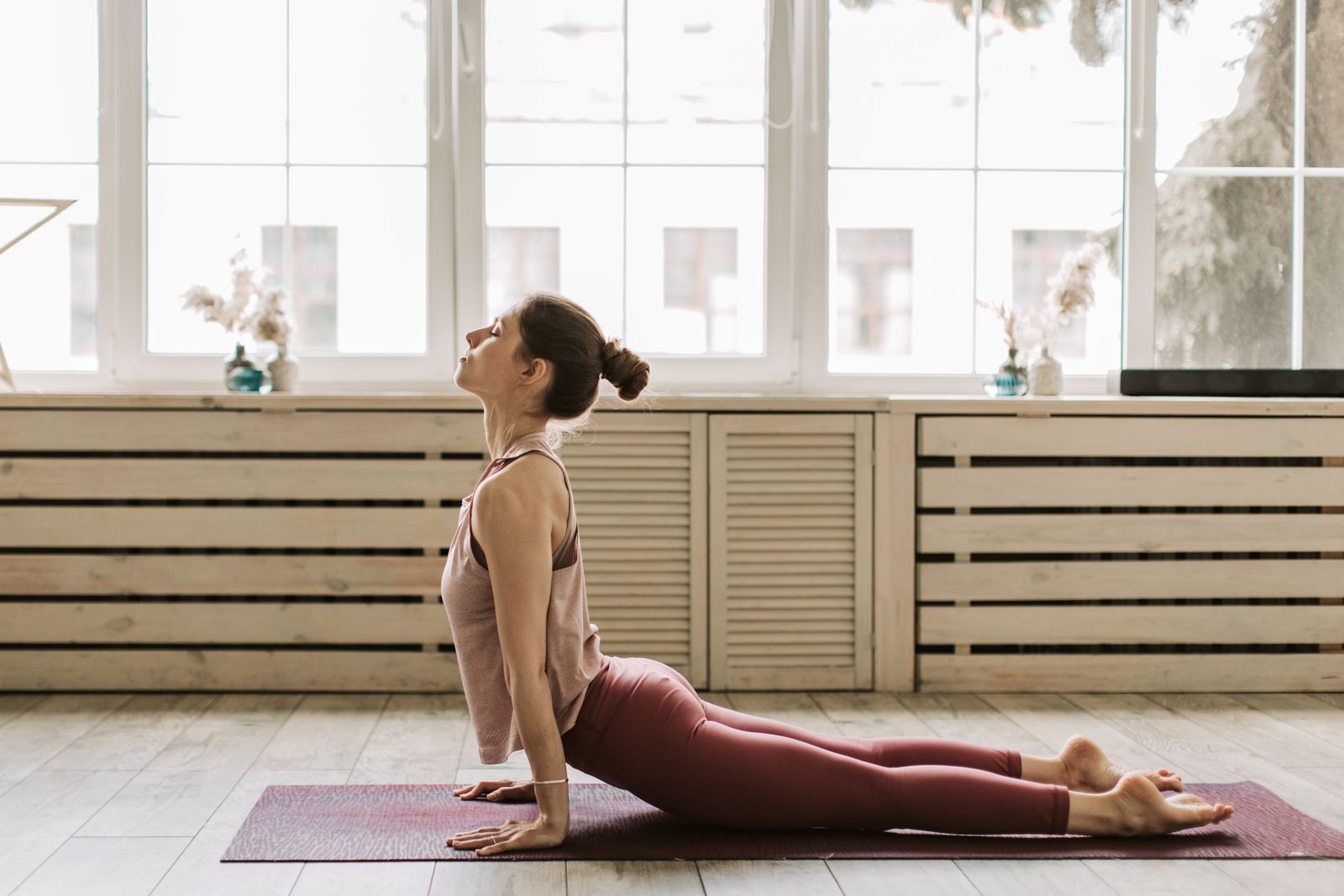
If you are new to yoga, learn the basic poses first with our yoga for beginners guide. If you want something with more movement, a flowing session such as Vinyasa yoga warms the whole body before the face-focused part.
Are inversions necessary, and are they safe?
No, inversions are not necessary. Mild options such as standing forward bend, downward dog and legs up the wall give the same circulation effect with far less risk. Full shoulder stand and headstand put load on the neck and are best learned with a qualified teacher, if at all.
Several people should avoid or modify head-low poses and ask a doctor first: those with high blood pressure, glaucoma or other eye pressure conditions, neck or spine problems, migraines, ear problems, heart conditions, or anyone who is pregnant. Women may also prefer gentler positions during heavy periods. Come out of any forward bend slowly. Dizziness, a pounding headache or pressure in the eyes means stop and rest.
Myth check: detox, “instant fairness” and daily hours
- “Yoga detoxes your skin.” Your liver and kidneys handle waste. Sweating and movement feel good but are not a detox treatment.
- “Yoga can make you fairer.” No practice changes your natural skin tone. A healthy glow is about looking rested and healthy, not lighter.
- “More hours means more glow.” Fifteen steady minutes most days beat one long weekend session. Overdoing facial exercises can create tension, so keep them light.
Sleep and hydration: the glow habits yoga cannot replace
If you do the routine every day and still look tired, check these basics first. The figures below are general guides for healthy adults, so adjust for your climate, activity and doctor’s advice.
| Habit | General target | Indian-friendly ways to meet it | Note |
|---|---|---|---|
| Sleep | About 7-9 hours a night | Fixed bedtime, screens off 30-45 minutes earlier, 10-minute evening stretch | Irregular sleep shows quickly under the eyes |
| Fluids | Roughly 2-3 litres a day, more in heat or heavy sweating | Water, buttermilk, nimbu pani without too much sugar, coconut water | People with kidney, heart or liver conditions should follow their doctor’s limits |
| Fruits and vegetables | Several servings daily | Seasonal fruit, salads, sabzi, dal with greens | Colourful plates supply vitamins and fibre |
| Protein | A source at each meal | Dal, curd, paneer, eggs, sprouts, nuts | Skin repair needs protein |
| Sun protection | Daily when outdoors | Sunscreen suited to your skin, hat, shade | Sun is a major cause of dullness and uneven tone |
If your goal also includes a leaner face or body, pair the routine with a sustainable eating pattern, and read yoga for weight loss for how practice and food work together without crash dieting.
How long does it take to see a difference?
The flush appears right after a session and fades within an hour or two. Many people feel less facial tension and notice less morning puffiness within two to four weeks of near-daily practice, while a steadier, rested look usually takes eight to twelve weeks. Some people see little visible change, and that is normal.
Take a photo in natural light on day one, then every two weeks, same place and time. Daily mirror checks will mislead you because lighting, water intake and sleep change how your face looks from one day to the next.
Which approach for which person?
- Oily or acne-prone skin: keep facial exercises light, wash hands first and never press on active breakouts. See a dermatologist for persistent acne.
- Dry or mature skin: hydration, sleep and sun care do most of the work. Use the routine for relaxation and gentle circulation.
- Men: the same mechanisms apply. Jaw clenching from stress is common, so the face-release minutes help.
- Desk workers: add two-minute neck and shoulder breaks, since forward-head posture adds to tension. For eye strain, see yoga for eyesight.
- Over 40 or on medication: keep the poses gentle and check head-low positions with your doctor.
Troubleshooting: no glow after three weeks?
- You skip days. Aim for five days a week and shorten the session rather than skipping it.
- You are sleeping under six hours. Fix sleep first, because no routine compensates for that.
- You drink little water. Keep a bottle with you and sip across the day.
- Your face still looks dull or puffy for no clear reason. Persistent dullness, new puffiness, sudden hair or skin changes, tiredness or paleness can have medical causes such as thyroid issues or low iron. Get a check-up instead of adding more yoga.
- A rash, painful acne or new dark patches appear. See a dermatologist. Yoga is not a treatment for skin disease.
Practise with a live teacher at home
If you would like alignment cues, breathing guidance and a routine you can keep, try our online yoga classes, or read how live sessions work in our guide to online yoga classes. For a view of different styles to rotate through, see types of yoga.
Frequently asked questions
Can yoga really give you a glowing face?
It can make your face look fresher by improving circulation, easing tension and supporting better sleep, but it cannot change your skin type or treat skin conditions. The most noticeable effect is usually a temporary flush, with subtler changes over several weeks.
How many minutes a day should I practise yoga for face glow?
Fifteen minutes on most days is enough for most people. A short daily practice is easier to keep and more useful than one long weekend session. Even five or ten minutes counts on busy days.
Which yoga poses are best for face glow?
Gentle head-low poses like standing forward bend, downward dog and legs up the wall are good starting points, along with slow breathing and light jaw and forehead release. You do not need shoulder stand or headstand to get the benefit.
Is it safe to do inversions for face glow?
Mild inversions are fine for many healthy adults, but full shoulder stand or headstand strain the neck and are not suitable for everyone. If you have high blood pressure, eye pressure problems, neck issues or are pregnant, check with your doctor first.
Can yoga replace skincare for a glowing face?
No. Yoga supports circulation, stress and sleep, while skincare protects and hydrates the skin surface and sunscreen guards against sun damage. Use both, and see a dermatologist for acne, pigmentation or other persistent skin concerns.
Next step: do the 15-minute routine for seven days in a row, take a baseline photo today, and compare after two weeks, or join a live online yoga class to get your form checked.


