
Yoga for eyesight is a set of gentle eye exercises, breathing practices and postures that ease screen fatigue, dryness and tension around the eyes. It supports comfort and focusing stamina. It does not cure or reverse myopia, hyperopia, astigmatism or any eye disease, and it never replaces glasses, treatment or an eye test. Below: what genuinely helps, a 12-minute routine, and who should skip certain practices.
See an eye doctor first if any of this applies. Get checked promptly for sudden loss or blurring of vision, flashes of light, a shower of new floaters, a shadow or curtain across your sight, eye pain, a red eye with reduced vision, double vision, or halos around lights. Speak to an ophthalmologist before starting if you have glaucoma, a retinal problem, diabetes-related eye changes, recent eye surgery or injury, or severe myopia. Never change or stop prescribed eye drops or medicines because of anything you read here.
Can yoga for eyesight really improve your vision?
Yoga can reduce eye strain, dryness and focusing fatigue, so your eyes feel more comfortable through a screen-heavy day. It cannot change the shape of the eyeball or cornea, so it will not remove a spectacle number or treat glaucoma, cataract or retinal disease. Think of it as supportive care alongside regular eye check-ups.
Long close-up work keeps the focusing muscles tense, cuts your blink rate and dries the eye surface. A useful test: if blur appears after a long screen session and clears with a break, that is fatigue worth working on. If it does not clear, book an eye test instead of adding exercises.
Who should avoid or modify eye yoga
- Glaucoma, retinal tears or detachment, weak retina: skip Trataka, forceful breathing (Kapalbhati, Bhastrika) and head-down holds unless your ophthalmologist clears you.
- Recent eye surgery, injury or active infection: avoid eye exercises until your doctor says it is safe.
- Photosensitive epilepsy or flicker-triggered seizures: do not gaze at a flame; ask your neurologist first.
- High blood pressure or heart conditions: avoid deep inversions and forceful breathing.
- Neck problems: do not attempt shoulder stand or plough pose.
- Pregnancy: stay with blinking, palming and near-far focus. Any sudden vision change in pregnancy needs a doctor the same day.
Myth check: what eye yoga can and cannot do
| Common claim | What is actually true |
|---|---|
| Eye yoga will let me throw away my glasses. | Glasses correct an error caused by the shape of the eye, which exercises do not change. Keep your prescription and test your eyes as your doctor advises. |
| Trataka cures eye diseases. | No yoga practice treats glaucoma, cataract or retinal disease. Trataka is a concentration and strain-relief practice. |
| The longer I stare, the better it works. | Forced staring leaves eyes dry and sore. Short, relaxed rounds with rests work better. |
| Rubbing the eyes hard refreshes them. | Pressing irritates the eye. Palming rests it with warmth and no pressure. |
How do you practise Trataka step by step?
Trataka is a steady gaze at one point, usually a diya or candle flame, held at eye level about an arm’s length away. Begin with 30 to 60 seconds of gentle gazing, close your eyes and hold the afterimage for a short while, then repeat three to five rounds in a calm, draft-free room.
- Sit upright, shoulders loose, jaw unclenched, with the flame at eye level and away from any fan.
- Gaze at the tip of the flame softly. Blink when you need to and let the eyes water if they want to. Never force an unblinking stare.
- After 30 to 60 seconds, close your eyes and watch the afterimage between the eyebrows until it fades.
- Rest for a few breaths, then repeat for three to five rounds, and finish with a minute of palming.
Build up slowly, to about five minutes in total over several weeks, and stop at the first burning, pain or headache. If you would rather avoid a flame, a small black dot on a plain wall at eye level is a gentler focal point, though anyone with seizure or eye conditions should check with their doctor first.
The core eye exercises, in plain language
- Palming: rub your palms warm and cup them over closed eyes without touching the eyeballs for 30 to 60 seconds. The quickest way to relax tired eyes.
- Slow blinking: close the eyes fully and open them slowly, 10 to 15 times, to spread the tear film that screens let dry out.
- Figure-eight: trace a large sideways eight with your eyes only, head still, for one minute in each direction.
- Side-to-side and up-down: move the eyes slowly, pausing at each end.
- Near-far focusing: focus on a thumb held at arm’s length, then on something across the room, alternating for one to two minutes.
Which asanas support eye comfort, and which should you skip?
Gentle forward folds, cat-cow and cobra release the neck and shoulder tension that usually travels with eye strain. Deep inversions such as shoulder stand and plough raise pressure around the head and neck, so skip them with glaucoma, retinal problems, high blood pressure or neck issues, and learn them only from a qualified teacher.
- Marjaryasana-Bitilasana (cat-cow): eases the neck and upper back that stiffen at a desk.
- Bhujangasana (cobra): counters forward head posture. Keep it low and gentle.
- Balasana (child’s pose): a calm rest that lets the forehead and eyes soften.
- Uttanasana and Adho Mukha Svanasana: useful for many people, but hold for a few breaths and rise slowly. With glaucoma or any retinal condition, ask your ophthalmologist before using head-down positions at all.
Forward head posture strains the neck and eyes together, so our guide to yoga for back pain pairs well with this routine.
Pranayama for tired eyes: what is gentle and what is not
Breathing helps the eyes indirectly, by calming the nervous system and relaxing the forehead, face and neck. Slow, gentle breathing is the right choice here, and forceful techniques deserve caution.
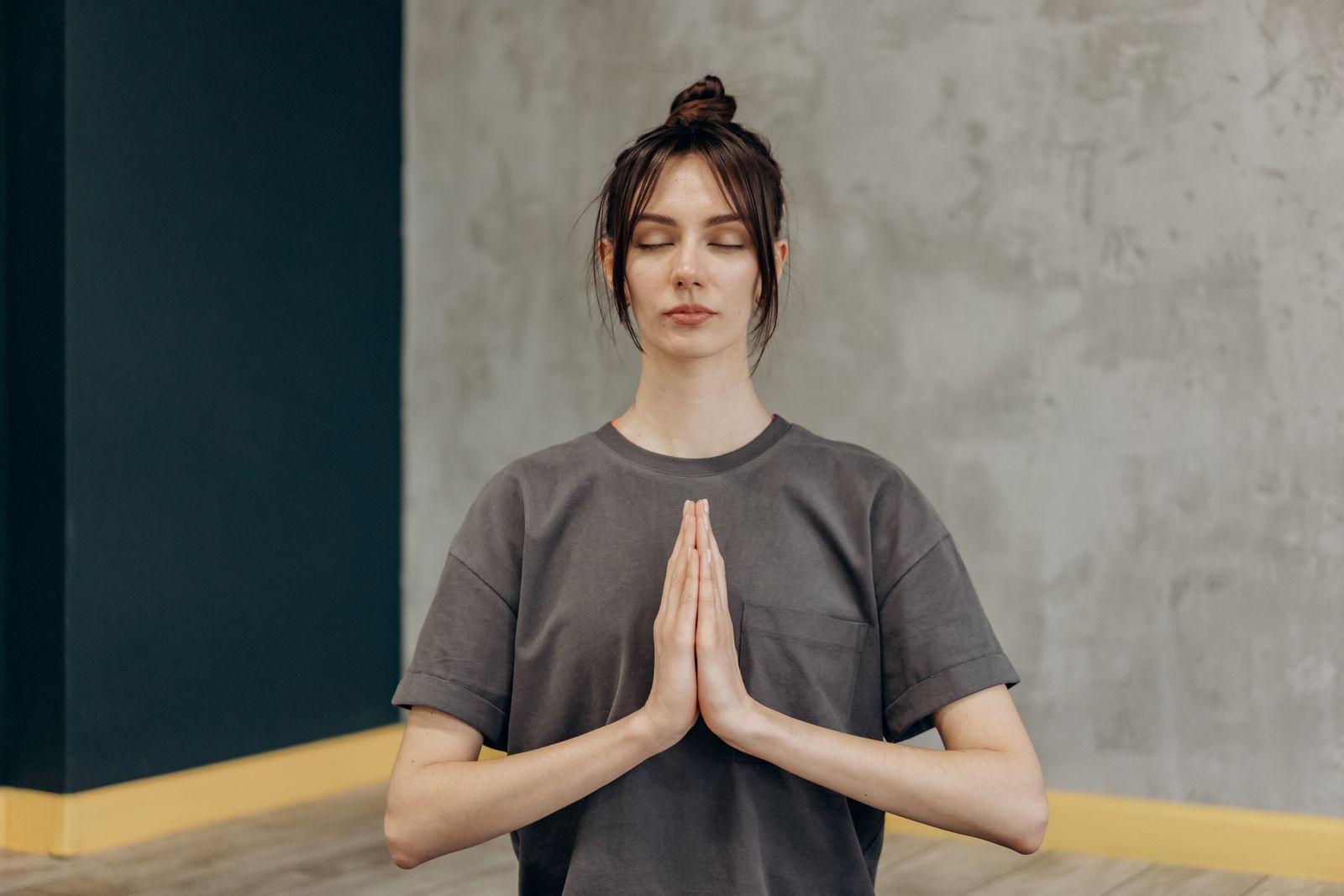
- Anulom Vilom (alternate nostril breathing): slow and even, suitable for most people. No holding or straining.
- Bhramari (humming bee breath): hum softly on a long exhale with closed eyes, hands resting on your lap. Do not press the eyes.
- Kapalbhati and Bhastrika: fast, forceful breathing that raises pressure in the body. Avoid with glaucoma, retinal problems or high blood pressure.
For broader tension work, see yoga for stress and yoga for anxiety.
A 12-minute daily eye yoga routine at home
Use this as a morning practice or a mid-afternoon screen break. Three to five sessions a week is a sensible start, and any step that hurts should be skipped.
| Step | Time | How to do it |
|---|---|---|
| 1. Slow blinking | 1 min | 10 to 15 full, slow blinks, sitting upright |
| 2. Palming | 1 min | Warm palms over closed eyes, no pressure |
| 3. Figure-eight | 2 min | One minute each direction, head still |
| 4. Side-to-side and up-down | 1 min | Slow movements, brief pause at each end |
| 5. Near-far focusing | 2 min | Thumb at arm’s length, then a distant object |
| 6. Trataka and afterimage | 3 min | Soft gazing for 30 to 60 seconds, then closed eyes, two to three rounds |
| 7. Palming to close | 1 min | Repeat step 2 |
| 8. Seated breathing | 1 min | Slow Anulom Vilom or humming exhales |
| Total | 12 min | Skip step 6 if you are on the avoid list above |
On busy days, a three-minute version of steps 1, 2 and 5 still helps. See yoga at home for setting up a routine.
Does yoga for eyesight help with digital eye strain?
Yes, as a regular break habit. Screens make people blink noticeably less and keep the eyes locked at one distance. Palming, deliberate blinking and near-far focusing counter both. The 20-20-20 rule sets the timing: every 20 minutes, look at something about 20 feet away for 20 seconds.
Also keep the screen about an arm’s length away, slightly below eye level, and keep any fan or AC from blowing straight onto your face.
Does yoga help dark circles and puffy eyes?
Only indirectly. Better sleep, lower stress and good hydration can make tired eyes look less puffy, but dark circles often come from genetics, skin pigmentation, allergies or nutritional gaps, which yoga does not change. Sudden or persistent swelling around the eyes should be checked by a doctor. For the skin side, see yoga for glowing skin.
Which yoga style is best for eye health?
No single style wins. What matters is consistency and a pace you can sustain without strain, ideally with an instructor who knows your eye history. Slower Hatha suits gazing and relaxation, while Vinyasa adds circulation but needs care with head-down transitions.
| Style | Pace | How it helps your eyes | Watch out for |
|---|---|---|---|
| Hatha | Slow, deliberate | Easy to learn safe form and build calm concentration | Holding head-down poses too long |
| Vinyasa | Flowing, faster | Keeps circulation and energy up | Repeated head-down transitions with glaucoma or high blood pressure |
| Restorative or yin | Slow, long holds | Releases stress and pairs well with palming | Dry eyes if you drift off; blink and rehydrate |
Compare Hatha yoga with vinyasa yoga, or browse types of yoga for the full picture.
Troubleshooting: when eye yoga makes your eyes feel worse
- Burning or dryness during Trataka: you are likely staring too hard. Blink normally, shorten the round, and move away from any fan or AC draft. Stop if contact lenses feel dry.
- Headache or a tight forehead: you are squinting or clenching. Soften the jaw and brow and reduce the time. A headache that keeps returning deserves a doctor’s opinion.
- Spots or lingering afterimages: a brief afterimage after flame gazing is normal. Persistent spots, new floaters or flashes are not; get an eye examination promptly.
Eye yoga for different people
Office workers: use the three-minute version at your desk. Students: do near-far focusing between chapters and palming before bed. People over 40: trouble reading small print is a normal change in focusing ability, so exercises may help comfort but you may still need reading glasses. Children: blinking games, palming and near-far focusing suit them. Skip Trataka, forceful breathing and inversions. A child who squints, sits very close to screens or complains of headaches should see a paediatric eye doctor.
How long until you notice a difference?
Many people feel relief from palming and blinking within the first few sessions. Less end-of-day fatigue usually builds over two to four weeks of near-daily practice, and the focus benefits of Trataka over roughly four to eight weeks. None of these timelines apply to a spectacle number, which stays the same.
If comfort has not improved after a couple of months, book an eye check instead of practising harder.
Habits that make eye yoga work better
Most adults do best with seven to nine hours of sleep, and sleep loss is a common reason for gritty, tired eyes. Drink water through the day and eat a balanced Indian plate with leafy greens like palak and methi, fruits such as papaya, and nuts like walnuts. These support long-term eye health but are not a quick fix. The benefits of yoga overview shows how the wider practice supports sleep and calm. If stress is also showing up in your hair, see yoga for hair growth and yoga for hair fall.
Frequently asked questions about yoga for eyesight
Can yoga really improve eyesight naturally?
Yoga can ease eye strain, dryness and focusing fatigue through blinking, palming, near-far focusing and calm breathing. It cannot reverse myopia, hyperopia, astigmatism or eye disease. Use it as a supportive daily habit alongside your glasses, treatment and regular eye check-ups.
Is Trataka safe to practise every day?
For most healthy adults, a few minutes of gentle Trataka is fine if you build up slowly and stop at any burning or pain. Avoid it with glaucoma, retinal problems, recent eye surgery or photosensitive epilepsy unless your doctor clears you.
Can eye yoga fix myopia or remove glasses?
No. Myopia comes from the shape and length of the eyeball, which exercises cannot change. Eye yoga may make your eyes feel less tired, but keep wearing your prescribed correction and have your eyes tested as your doctor advises.
What is the fastest eye yoga exercise for tired eyes at work?
Palming. Rub your palms warm, cup them gently over closed eyes without pressing, and rest for 30 to 60 seconds. Add ten slow blinks and a minute of near-far focusing, and the whole break takes under three minutes.
Should children practise yoga for eyesight?
Simple exercises such as blinking games, palming and near-far focusing are generally suitable for children. Skip Trataka, forceful breathing and inversions. Any child with squinting, headaches or a diagnosed eye condition should see a paediatric eye doctor first.
Want someone to check your technique and build a short eye-comfort sequence around your screen hours? Join a live session in FitStrot’s online yoga classes and tell your trainer about any eye condition before you begin.


