

Done regularly, yoga for glowing skin is a supportive habit, not a skin treatment. A steady practice can lower stress, improve sleep, loosen tight shoulders and jaw, and leave a brief post-session flush, and those are the things that make a face look rested rather than dull. It will not erase acne, pigmentation or scars. This guide gives you a 20-minute routine, a day-by-day starter week, the people who should modify or skip certain poses, and the signs that mean a doctor should look at your skin instead.
Can yoga really give you glowing skin?
Yoga can support a healthier-looking complexion, but it cannot treat skin conditions. Practising about 20 minutes, 5 days a week, may lower stress, improve sleep and ease facial tension, which can show up as less puffiness and a more rested look within roughly 4 to 6 weeks. It works alongside sunscreen, water and food, never instead of them.
The effect is indirect. Slow breathing calms the body, and chronic stress can aggravate breakouts and dullness in some people. Better sleep gives skin more time to repair overnight, and gentle twists help many people feel less bloated. Forward folds briefly change blood distribution, which is why cheeks look flushed after a session. That flush fades within minutes, so judge progress by the weeks, not the mirror. If you are new to the practice, the benefits of yoga overview explains the whole-body picture before you narrow to skin.
Myth check: does yoga detox your skin or cure acne?
No. Skin is not cleaned by twisting or inverting, and “flushing toxins” is a marketing phrase, not a physiological process. Your liver and kidneys handle waste. Yoga cannot cure acne, melasma, eczema or scars. What it can do is reduce one trigger, stress, and build habits that make your skincare more consistent.
Facial exercises that tone cheek and jaw muscles are popular, but the evidence for lasting change is thin, so treat them as a relaxation habit, not a lift, and skip them over painful or infected spots. If your concern is patchy colour in particular, read yoga for uneven skin tone for a more targeted and equally honest take.
The 20-minute routine for glowing skin at a glance
Do this in the morning on a mostly empty stomach, or at least 2 to 3 hours after a meal. Keep every pose comfortable and the breath smooth. Total time is about 20 minutes.
| Order | Pose or practice | Time | Form cue | Why it is here |
|---|---|---|---|---|
| 1 | Sukhasana (easy pose), slow breathing | 2 min | Sit tall, soften the jaw, inhale for 4 counts, exhale for 6 | Settles stress before you move |
| 2 | Marjaryasana-Bitilasana (cat-cow) | 1 min | Move with the breath, shoulders away from the ears | Releases neck and upper back |
| 3 | Surya Namaskar (sun salutation) | 3 rounds, about 3 min | Slow pace, knees bent if hamstrings are tight | Warms the body, builds gentle circulation |
| 4 | Adho Mukha Svanasana (downward dog) | 2 x 5 breaths, about 1.5 min | Knees soft, press the floor away, neck relaxed | Mild inversion, opens shoulders |
| 5 | Uttanasana (standing forward fold) | 5-8 breaths, about 1 min | Let the head hang heavy, rise up slowly | Calms the nervous system |
| 6 | Bhujangasana (cobra) | 3 x 5 breaths, about 1.5 min | Low lift, elbows bent, do not crunch the neck | Opens chest, counters screen posture |
| 7 | Setu Bandhasana (bridge) | 2 x 5 breaths, about 1.5 min | Feet hip-width, neck long, do not turn the head | Gentle alternative to shoulder stand |
| 8 | Ardha Matsyendrasana (seated twist) | 5 breaths per side, about 2 min | Lengthen first, then rotate from the ribs | Eases digestion and bloating |
| 9 | Viparita Karani (legs up the wall) | 3 min | Hips near the wall, a folded blanket under the pelvis is optional | Supported, low-effort inversion |
| 10 | Anulom Vilom (alternate nostril breathing) | 2 min | Soft, silent breath, no forcing or holding | Slows the heart rate |
| 11 | Shavasana (final rest) | 2 min | Eyes closed, face and tongue relaxed | Lets the stress response settle |
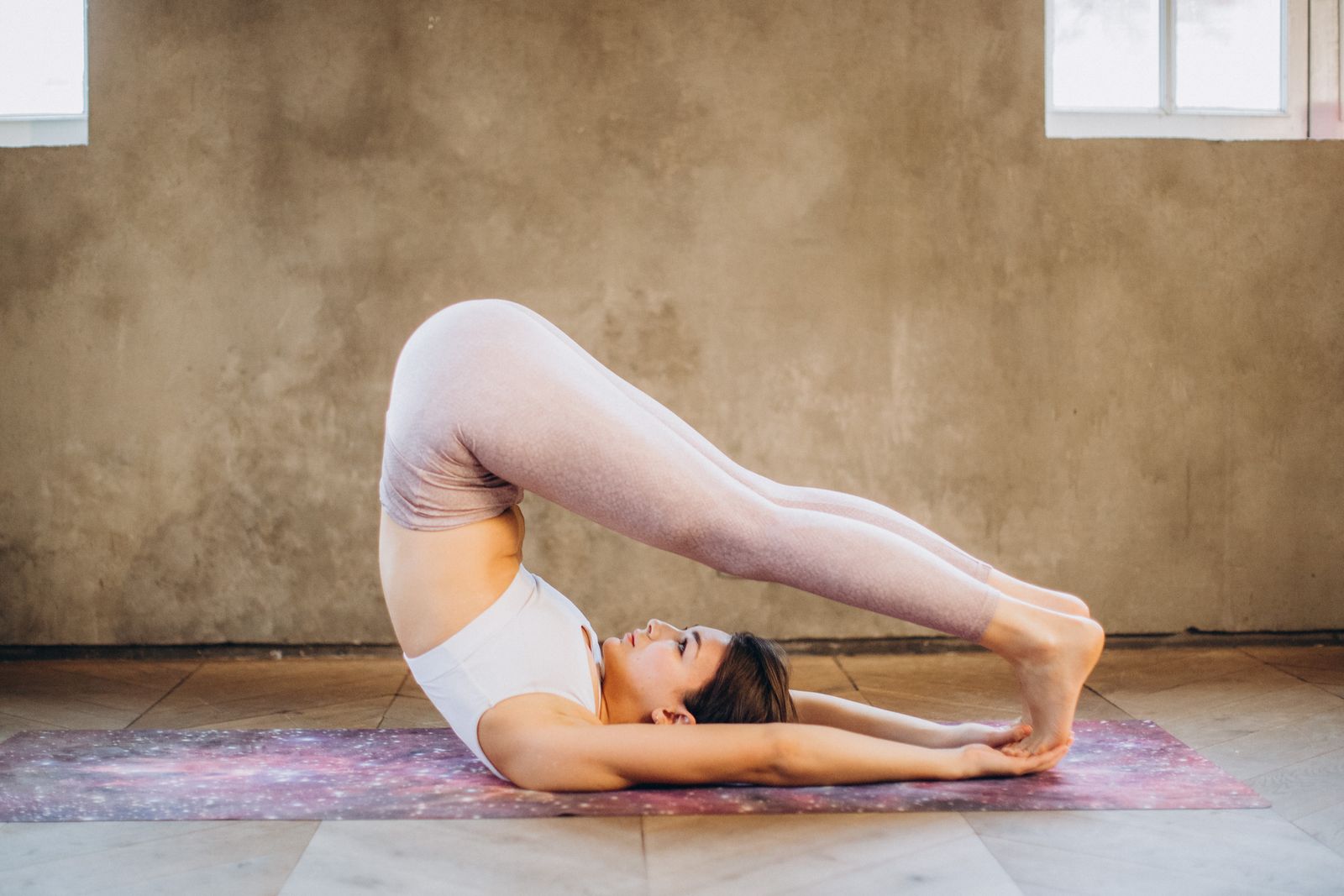
Notice what is missing: shoulder stand and plough pose. They are often listed for skin, but they put real load on the neck, and the extra blood to the face is not worth the strain. Bridge and legs-up-the-wall are milder alternatives. To have the flow guided live, try Fitstrot’s online yoga classes.
Which yoga style is best for glowing skin: Hatha, Vinyasa or Kundalini?
No single style wins. Hatha suits beginners because slow holds teach safe alignment, Vinyasa suits people who want a sweaty, heart-raising session, and Kundalini or restorative classes suit stress-driven skin because they lean on breathwork and rest. Choose the one you will attend 4 to 5 times a week, since consistency matters more than style.
| Style | Pace | Best suited to | What it offers your skin goals |
|---|---|---|---|
| Hatha | Slow, longer holds | Beginners, anyone learning alignment | Safe practice of forward folds, bridge and twists without rushing |
| Vinyasa | Flowing, builds heat | People who enjoy movement and a light sweat | More cardiovascular effort and stress relief; skin benefit is mostly through mood and sleep |
| Kundalini | Moderate, breath and chant focused | Stress-related dullness or restlessness | Heavy emphasis on breathwork and relaxation |
| Restorative or yin | Very slow, supported | Poor sleepers, burnout, over-40s | Deep rest that supports the sleep skin repairs itself in |
Compare Hatha yoga and vinyasa yoga to feel the difference in pacing, or browse the wider types of yoga if neither appeals.
Your first week, day by day
Start smaller than you think you should; a routine you finish beats a perfect one you abandon.
| Day | Session | Time | Focus |
|---|---|---|---|
| Monday | Full routine from the table above | 20 min | Learn the order, keep it easy |
| Tuesday | Sun salutations, bridge, Anulom Vilom | 12 min | Light day, breath first |
| Wednesday | Full routine | 20 min | Smooth transitions between poses |
| Thursday | Twists, forward folds, Shavasana | 15 min | Digestion and calm |
| Friday | Full routine | 20 min | Hold folds and cobra a breath longer |
| Saturday | Restorative: legs up the wall, slow breathing | 15 min | Sleep and recovery |
| Sunday | Rest or a gentle walk | As you like | Take a weekly photo in the same light |
Take that photo in the same light and compare after 4 weeks, not daily. Skin renews over roughly 4 to 6 weeks, slower with age, so earlier changes are mostly puffiness and mood.
Do breathing exercises help skin?
Breathing practices help skin only indirectly, by calming the stress response and improving sleep. Two to five minutes of slow Anulom Vilom or Bhramari is low risk for most healthy adults. Forceful techniques such as Kapalbhati need more care and should be skipped by several groups, listed further down.
Anulom Vilom is the gentlest starting point: breathe in through one nostril, out through the other, with no breath-holding while you are a beginner. Bhramari, the humming bee breath, produces a low hum on the exhale and tends to relax the face and jaw. Kapalbhati, the sharp rhythmic exhale, briefly raises abdominal and blood pressure, so learn it from a teacher. Stop if you feel dizzy.
Troubleshooting: when your skin has not changed after a month
Usually because yoga is only one of several levers. Check these before blaming the routine:
- Inconsistency. Two sessions a week rarely produce visible change. Aim for 4 to 5.
- Sleep. Most adults need roughly 7 to 9 hours. A morning flow cannot cancel 5 hours of sleep.
- Sunscreen. Daily broad-spectrum sunscreen of SPF 30 or higher does more for tone and ageing than any pose.
- Sweat and touch. Wash your face after practice and avoid touching or wiping it with a dirty towel mid-session.
- New products. Changing creams every week makes it impossible to tell what is working.
- Underlying causes. Hormonal conditions, thyroid problems, iron or vitamin deficiencies and some medicines affect skin. Yoga does not fix them.
What to pair with yoga for a visible difference
Water, food, sleep and sun protection do the heavy lifting. For most healthy adults, roughly 2 to 3 litres of fluid a day (water, buttermilk, nimbu pani without much sugar) is a sensible target, unless a doctor has restricted your fluids. Build plates around dal, vegetables, seasonal fruit such as papaya, guava and oranges, curd, a small handful of nuts, and enough protein from dal, paneer, eggs or fish if you eat them.
If you want a plan built around your preferences, allergies and budget, an online nutritionist consultation is more reliable than a viral “glow diet”. Skin and hair often move together, so you may also like yoga for hair growth and yoga for hair fall, while tired, strained eyes from long screen hours are covered in yoga for eyesight. If weight loss is also on your list, yoga for weight loss uses many of the same habits.
Adapting the routine to your life
Students and desk workers: shorten the routine to 10 minutes (cat-cow, down dog, forward fold, bridge, breathing). People over 40: favour slower holds, restorative poses and sleep. New mothers: wait for your doctor’s clearance and begin with breathing and gentle stretches, not inversions or twists.
Who should skip or modify certain poses
Most of the routine is gentle, but these groups should check with a doctor first and modify or skip the practices named:
- Neck injury, cervical spondylosis or disc problems: skip bridge with head movement, forward-fold hanging and any shoulder stand or plough.
- High blood pressure or heart conditions: avoid Kapalbhati, breath-holding, and long head-down positions.
- Glaucoma or raised eye pressure: avoid inversions, including downward dog and legs up the wall, unless your eye doctor agrees.
- Pregnancy: avoid deep twists, lying flat on the back for long, forceful breathing and inversions. Use a prenatal-trained teacher.
- Hernia or recent abdominal surgery: avoid Kapalbhati and strong twists.
- Vertigo, severe migraine or low blood pressure: come up from folds very slowly and skip inversions.
- Heavy menstrual flow: many teachers advise skipping inversions on heavy days; choose rest instead.
- Active, painful or infected skin: do not massage or press the face.
Stop any pose that causes pain, dizziness, chest discomfort or a pounding head, and do not push through it.
See your doctor or dermatologist if…
Yoga is supportive only. It is not a cure for any skin condition and must never replace medical care. Book a doctor or dermatologist visit if you notice:
- Painful, cystic or scarring acne, or acne that keeps returning despite good habits
- Dark, thick or velvety patches, or sudden pigmentation, especially around the neck or underarms
- A mole or spot that changes in size, colour or shape, or a sore that does not heal
- Persistent itching, rash, swelling of the face, or yellowing of the skin or eyes
- Skin changes along with irregular periods, rapid weight change, fatigue or hair loss
Do not stop, skip or change any prescribed medicine or cream because of yoga. If you have a medical condition, are pregnant, or take regular medication, ask your doctor which poses and breathing practices are safe before you start. For food-related questions, see a registered dietitian.
Frequently asked questions about yoga for glowing skin
Which yoga is best for glowing skin?
No single style is best. Hatha is a safe start for learning alignment, Vinyasa adds movement and sweat, and Kundalini or restorative classes add breathwork and rest. Pick the one you can do 4 to 5 times a week, and combine gentle folds, twists and slow breathing for the most benefit.
How long does yoga take to show results on the skin?
Many people notice less puffiness and a calmer, more rested look within 1 to 2 weeks, while changes in overall glow usually take roughly 4 to 6 weeks of regular practice. Results vary with age, sleep, diet, sunscreen use and any underlying skin condition, so nothing is guaranteed.
Can yoga replace skincare or treat acne?
No. Yoga may reduce stress-related triggers and support sleep, but it does not cleanse, moisturise or protect skin from the sun, and it cannot treat acne. Keep a basic routine of cleanser, moisturiser and sunscreen, and see a dermatologist for persistent or painful acne.
Is it safe to do inversions every day for skin?
Gentle inversions such as downward dog and legs up the wall are fine daily for most healthy adults. Avoid them if you have glaucoma, uncontrolled high blood pressure, neck problems or are pregnant without guidance, and skip shoulder stand and plough unless a qualified teacher supervises you.
Can I do yoga for glowing skin at home without a teacher?
Yes, the gentle routine above can be done at home on a mat, but beginners benefit from live correction of alignment and breathing. Start slowly, avoid forceful breathing and deep inversions on your own, and see our guide on yoga at home for setup tips.
Want someone to check your form and keep you consistent? Try a session in Fitstrot’s online yoga classes and start with the 20-minute routine above.


